Micro cover glass market size forecast 2026: Expected to reach 243 million USD by 2032.
What is Micro Cover Glass? The micro cover glass market continues to expand steadily, driven by demand in areas such as microscopic observation, pathological diagnosis, cellular research, and material analysis. The global market size is expected to reach approximately 181 million USD by 2025 and 243 million USD by 2032, with a CAGR of 4.2% projected from 2026 to 2032. The global production volume in 2025 is estimated to be around 630 million pieces, with an average market price of about 0.3 USD per piece. Micro cover glass is characterized by its thinness and high flatness, allowing it to protect samples while minimizing impact on the optical path, making it an essential consumable in life sciences and medical testing. Global Market Size of Micro Cover Glass According to the latest research report published by Global Reports, titled "Global Market Size, Share, Company Rankings, Sales, and Demand Trends Forecast for Micro Cover Glass (2026-2032)," the global market size for micro cover glass is expected to expand from approximately 181 million USD in 2025 to about 190 million USD in 2026. It is projected to continue growing at an average annual growth rate (CAGR) of 4.2%, reaching around 243 million USD by 2032.
Inquire About This Product
basic information
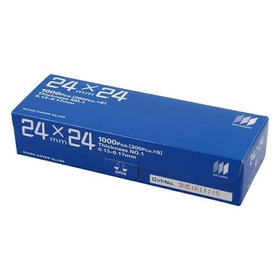
Optical Precision Supporting the Demand for Micro Cover Glass In the micro cover glass market, there is a shift from simple supply of thin glass plates to high-precision products with managed optical properties. Surface flatness, thickness uniformity, refractive index, and transparency are directly linked to the quality of microscopic images. Matsunami Glass Industry offers fine thickness specifications according to applications, such as No.1 standard at 0.13–0.17mm and No.1S at 0.16–0.19mm. For super-resolution observation, products with even more controlled thickness tolerances are available, making precise processing of micro cover glass increasingly important for high magnification and fluorescence observation. Competition by Material and Shape in the Micro Cover Glass Market In the micro cover glass market, soda-lime glass and borosilicate glass are the main materials. In particular, borosilicate glass is widely adopted in research and clinical fields due to its transparency and stability suitable for optical applications. The shapes primarily include square, round, and rectangular, with specifications diversifying according to applications from standard microscopic observation to cell culture. Matsunami Glass Industry's round products are set with optical qualities such as borosilicate glass, refractive index of 1.5255±0.0015, and flatness of less than 0.010mm.
Price range
Delivery Time
Applications/Examples of results
Advancements in Micro Cover Glass for Cellular and Pathological Applications The growth areas of the micro cover glass market include cell culture, fluorescence staining, and pathological diagnosis. For cell culture, products with low autofluorescence specifications, as well as surface treatments such as polylysine and collagen, are being utilized, enhancing cell adhesion design. Matsunami Glass Industry offers culture products that not only meet standards compatible with culture containers of 13mm and 25mm diameters but also include sterilized products. As a result, micro cover glass is expanding its applications from consumables for observation to functional components that influence experimental conditions. Automation Compatibility of Micro Cover Glass as a New Competitive Axis In pathology testing and research facilities, as processing volumes increase, micro cover glass is also required to be compatible with automatic mounting devices. Thermo Fisher Scientific has developed cover glass for automatic embedding devices, and Matsunami Glass Industry provides dedicated products for automatic embedding devices, as well as surface-treated products that reduce adhesion in high-humidity environments. These developments suggest that in the future, not only the quality of the glass itself but also factors such as transportability, break resistance, compatibility with devices, and packaging forms will influence competitiveness in the market.
Company information

Global Reports integrates industrial information from around the world and provides highly accurate market intelligence to support corporate decision-making. We deliver in-depth analyses based on numerical data and facts, including market size, share, industry structure, price trends, growth forecasts, rankings of major companies, and competitive trends, with clear information categorized by country, region, and application. Leveraging a rich database that has supported the business growth of over 65,000 companies and an international research network, we accompany our clients in their global expansion and continuous growth.