Japan RF Coaxial Isolator Industry Report 2026: Growth Outlook to Reach 206 Million USD
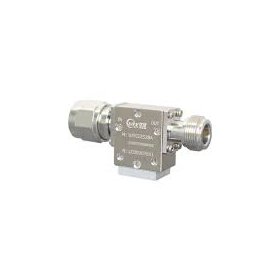
What is an RF Coaxial Isolator? The global market for RF coaxial isolators is expanding against the backdrop of advancements in 5G base stations, satellite communications (SATCOM), radar, and RF systems for defense and aerospace. The market size is expected to grow from approximately 193 million USD in 2025 to about 260 million USD in 2026, with a compound annual growth rate (CAGR) of 5.1% from 2026 to 2032, reaching around 277 million USD by 2032. The global sales volume in 2025 is estimated to be about 6.3 million units, with an average selling price of approximately 30.5 USD per unit. RF coaxial isolators are passive RF and microwave components that utilize ferrite, serving the role of allowing signals to pass in one direction while blocking and absorbing reflected waves and reverse energy. It is crucial for protecting sensitive RF devices such as amplifiers and transmitters from reflected power and maintaining stable operation of the system.
Inquire About This Product
basic information
Global Market Size of RF Coaxial Isolators According to the latest research report published by Global Reports titled "Global Market Size, Share, Company Rankings, Sales, and Demand Trend Forecast for RF Coaxial Isolators (2026-2032)," the global market size for RF coaxial isolators is expected to expand from approximately 193 million USD in 2025 to about 206 million USD in 2026. It is projected to continue growing at a compound annual growth rate (CAGR) of 5.1%, reaching approximately 277 million USD by 2032.
Price range
Delivery Time
Applications/Examples of results
High Frequency Advancement Driven by 5G and Satellite Communication In RF coaxial isolators, there is a shift in demand from traditional communication equipment to 5G NR, private networks, satellite communication terminals, and radar. These systems require high signal quality and protection performance of RF components, necessitating isolators with low insertion loss, high isolation, and frequency stability. Particularly in the market, there is a transition from narrowband products to wideband and multi-band compatible products. Frequency bands are classified into below 1GHz, 1-6GHz, 6-15GHz, and above 15GHz, and with the high frequency advancement of 5G, defense radar, and satellite links, it has become crucial to design systems that maintain stable characteristics across a wide frequency range.
Company information

Global Reports integrates industrial information from around the world and provides highly accurate market intelligence to support corporate decision-making. We deliver in-depth analyses based on numerical data and facts, including market size, share, industry structure, price trends, growth forecasts, rankings of major companies, and competitive trends, with clear information categorized by country, region, and application. Leveraging a rich database that has supported the business growth of over 65,000 companies and an international research network, we accompany our clients in their global expansion and continuous growth.