Japan Foundry Ceramic Foam Filter Industry Report 2026: Growth Outlook to Reach 225 Million USD
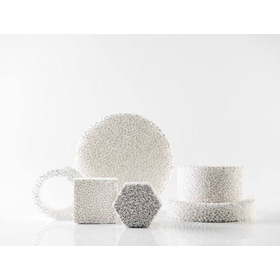
A ceramic foam filter for casting is a three-dimensional porous ceramic component that captures oxides, slag, non-metallic inclusions, and other impurities while regulating the flow of molten metal during pouring into molds. Typically, it is produced by impregnating a polyurethane foam with a ceramic slurry, followed by drying, degreasing, and high-temperature sintering. By forming complex flow paths within, it promotes the mechanical capture of foreign substances and their adhesion to surfaces, thereby suppressing turbulence, secondary oxidation, and air entrapment during pouring. The main materials used include alumina, silicon carbide, and zirconia, and the ceramic foam filter for casting is selected based on the type of metal being cast, pouring temperature, flow rate, and the required cleanliness of the molten metal.
Inquire About This Product
basic information
Global Market Size of Ceramic Foam Filters for Casting According to the latest research report published by Global Reports titled "Global Market Size, Share, Company Rankings, Sales, and Demand Trend Forecast for Ceramic Foam Filters for Casting (2026-2032)," the global market size for ceramic foam filters for casting is expected to expand from approximately 216 million USD in 2025 to about 225 million USD in 2026. The compound annual growth rate (CAGR) from 2026 to 2032 is projected to be 4.2%, reaching approximately 287 million USD by 2032. As quality demands increase for castings in the automotive, aerospace, industrial machinery, and energy equipment sectors, ceramic foam filters for casting continue to maintain demand as process materials that support the reduction of inclusions and improvement of casting yield.
Price range
Delivery Time
Applications/Examples of results
The global sales volume in 2025 is estimated to be approximately 60,000 cubic meters, with applications differentiated by material type. The world sales volume of ceramic foam filters for casting in 2025 is estimated to be around 60,000 cubic meters. The main materials for the products are alumina-based, silicon carbide (SiC)-based, and zirconia-based, which are used according to their chemical compatibility with molten metals and thermal shock resistance. Alumina-based filters are widely used in aluminum and aluminum alloy casting, while silicon carbide-based filters are suitable for iron-based casting such as gray cast iron and ductile cast iron. Zirconia-based filters can withstand high-temperature environments, making them suitable for casting carbon steel, stainless steel, and special alloys.
Company information

Global Reports integrates industrial information from around the world and provides highly accurate market intelligence to support corporate decision-making. We deliver in-depth analyses based on numerical data and facts, including market size, share, industry structure, price trends, growth forecasts, rankings of major companies, and competitive trends, with clear information categorized by country, region, and application. Leveraging a rich database that has supported the business growth of over 65,000 companies and an international research network, we accompany our clients in their global expansion and continuous growth.