World Multiband Bandpass Filter Industry Report 2026: Growth Forecast to Market Size of 337 Million USD
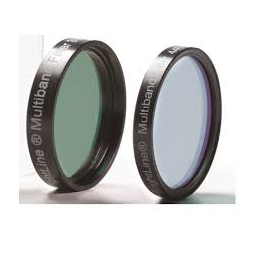
A multi-band pass filter is an optical filter that provides multiple independent transmission wavelength bands within a single optical element, selectively allowing light from each band to pass while suppressing other wavelengths. Its demand is expanding in applications such as fluorescence microscopy, flow cytometry, molecular diagnostics, and multispectral imaging, where efficient detection of multiple wavelengths is required. According to the latest research report published by Global Reports titled "Global Market Size, Share, Company Rankings, Revenue, and Demand Trend Forecast for Multi-Band Pass Filters (2026-2032)," the global market for multi-band pass filters is expected to expand from approximately \$315 million in 2025 to about \$337 million in 2026, with a projected compound annual growth rate (CAGR) of 7.1% from 2026 to 2032, reaching approximately \$510 million by 2032.
Inquire About This Product
basic information
Structure and Technical Differentiation of Multi-Band Pass Filters Multi-band pass filters are manufactured by forming multilayer thin films on substrates such as fused quartz, optical glass, silicon, and germanium. Film deposition technologies such as ion beam sputtering and magnetron sputtering enable the realization of multiple transmission bands and high cutoff performance outside the bands. The products include filters with dual, triple, quad, and more than five bands, as well as fluorescence excitation and fluorescence emission filters, and multi-wavelength compatible dichroic mirrors. The performance of multi-band pass filters is not determined solely by the number of transmission bands. In addition to the center wavelength, full width at half maximum, transmittance, out-of-band cutoff performance, and steepness of wavelength transitions for each band, changes in characteristics due to incident angle and polarization, temperature stability, and wavefront accuracy are also important. As the number of bands increases, the complexity of thin film design and control of the deposition process increases, making it more challenging to ensure measurement of wavelength characteristics, manufacturing yield, and reproducibility during mass production. In high-performance products, technology that balances transmittance and cutoff performance for each band while allowing multiple wavelengths to pass through is crucial for competitiveness.
Price range
Delivery Time
Applications/Examples of results
Fluorescent detection and multispectral imaging drive demand. The main demand areas for multi-bandpass filters are life sciences and diagnostic equipment. In applications such as fluorescence microscopy, flow cytometry, real-time PCR, sequencing, and multiplex molecular analysis, selective transmission of multiple wavelengths is required to identify different fluorescent dyes and target signals. Compared to configurations that mechanically switch multiple single-band filters, multi-bandpass filters reduce the need for filter wheels, drive mechanisms, and multiple fixtures, contributing to miniaturization of devices, reduction of measurement time, and alleviation of optical system alignment burdens. Demand is expanding beyond medical and research applications to include industrial machine vision, agricultural image analysis, infrared sensing, astronomical observation, optical communication, and wavelength-multiplexed displays. In astronomical observation, there are applications that combine wavelength bands such as Hα, OIII, and SII to obtain the information necessary for color imaging. In such applications, the design is crucial not only for the selection of target wavelengths but also for compatibility with imaging conditions and optical systems.
Company information

Global Reports integrates industrial information from around the world and provides highly accurate market intelligence to support corporate decision-making. We deliver in-depth analyses based on numerical data and facts, including market size, share, industry structure, price trends, growth forecasts, rankings of major companies, and competitive trends, with clear information categorized by country, region, and application. Leveraging a rich database that has supported the business growth of over 65,000 companies and an international research network, we accompany our clients in their global expansion and continuous growth.