3D Printed Cobalt-Based Alloy Powder Industry Report 2026: Market Size of 102 Million USD and Future Outlook
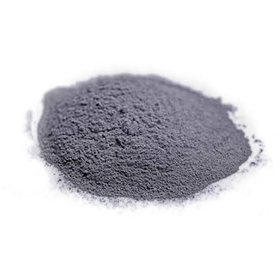
3D printed cobalt-based alloy powder refers to a type of metal powder used in 3D printing, primarily spherical metal powders such as CoCrMo and CoCrW. The global market for 3D printed cobalt-based alloy powder is expected to expand from approximately \$91.35 million in 2025 to about \$100.2 million in 2026, growing at a CAGR of 11.1% from 2026 to 2032, and reaching around \$192 million by 2032. The global production volume in 2025 was approximately 487.15 tons. This powder is utilized in processes such as Laser Powder Bed Fusion (LPBF), Electron Beam Melting (EBM), and Directed Energy Deposition (DED). It is known for its excellent wear resistance, corrosion resistance, high-temperature stability, and biocompatibility, supporting high-value applications in fields such as dentistry, orthopedics, aerospace, molds, and industrial components.
Inquire About This Product
basic information
Global Market Size of 3D Printed Cobalt-Based Alloy Powders According to the latest research report published by Global Reports, "Global Market Size, Share, Company Rankings, Sales, and Demand Trend Forecast for 3D Printed Cobalt-Based Alloy Powders (2026-2032)," the global market size for 3D printed cobalt-based alloy powders is expected to expand from approximately 91.35 million USD in 2025 to about 102 million USD in 2026. It is projected to continue growing at a compound annual growth rate (CAGR) of 11.1%, reaching approximately 192 million USD by 2032.
Price range
Delivery Time
Applications/Examples of results
Manufacturing Technology and Quality Control of 3D Printed Cobalt-Based Alloy Powders 3D printed cobalt-based alloy powders are produced using methods such as inert gas atomization, plasma atomization, and a combination of vacuum induction melting and gas atomization. Particle size distribution, sphericity, flowability, oxygen content, and uniformity of chemical composition influence powder layering, melting behavior, and molding density. The main raw material, cobalt, is significantly affected by price fluctuations, while added elements such as chromium, molybdenum, and tungsten adjust corrosion resistance, wear resistance, and high-temperature properties. The performance of protective gases like argon and nitrogen, as well as the atomization equipment, directly impacts powder quality and reproducibility between batches.
Company information

Global Reports integrates industrial information from around the world and provides highly accurate market intelligence to support corporate decision-making. We deliver in-depth analyses based on numerical data and facts, including market size, share, industry structure, price trends, growth forecasts, rankings of major companies, and competitive trends, with clear information categorized by country, region, and application. Leveraging a rich database that has supported the business growth of over 65,000 companies and an international research network, we accompany our clients in their global expansion and continuous growth.

![[English Market Research Report] Oil and Gas Pipeline Industry](https://image.mono.ipros.com/public/product/image/cd9/2001075164/IPROS4984032014564749522.png?w=280&h=280)