Factors for the Expansion of the Perovskite Encapsulation Film Business and Market Opportunities

The perovskite encapsulation film market is rapidly growing and is expected to reach a size of 5.88 million USD by 2026.
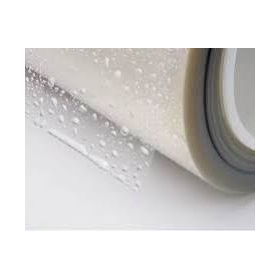
A perovskite encapsulation film is a functional polymer film used in single-junction perovskite solar cells, perovskite-silicon tandem solar cells, and flexible solar cell modules. It is placed between the solar cell layer and the cover glass, back sheet, and flexible barrier substrate, serving functions such as adhesion, gap filling, stress relief, electrical insulation, and optical coupling, while also suppressing degradation caused by moisture, oxygen, ultraviolet light, and heat.
Inquire About This Product
basic information
Global Market Size of Perovskite Encapsulation Films According to the latest research report published by Global Reports, titled "Global Market Size, Share, Company Rankings, Sales, and Demand Trend Forecast for Perovskite Encapsulation Films (2026-2032)," the global market for perovskite encapsulation films is expected to expand from 3.68 million USD in 2025 to 5.88 million USD in 2026, reaching 99 million USD by 2032. The compound annual growth rate (CAGR) from 2026 to 2032 is projected to be 60.0%. The shipment volume in 2025 is estimated to be approximately 800,000 square meters, with an average price of about 4.6 USD per square meter and a gross profit margin of around 25-38%. As the market expands, the transition from prototype supply to large-scale, continuous production will become crucial.
Price range
Delivery Time
Applications/Examples of results
Material Technology | Low-Temperature Processing and High Water Vapor Barrier Properties The main materials include low-crystallinity polyolefin elastomer (POE), thermoplastic polyolefin (TPO), and co-extruded polyolefin-based films. In conventional EVA sealing, there is a possibility of decomposition of the perovskite layer, interfacial damage, and electrode corrosion due to heat during lamination. Therefore, it is important to select materials based on laminate temperatures ranging from below 110°C to above 140°C. High light transmittance, low elasticity, low thermal shrinkage, suppression of acidic volatile components, and resistance to moisture, heat, and ultraviolet light are also key required properties.
Company information

Global Reports integrates industrial information from around the world and provides highly accurate market intelligence to support corporate decision-making. We deliver in-depth analyses based on numerical data and facts, including market size, share, industry structure, price trends, growth forecasts, rankings of major companies, and competitive trends, with clear information categorized by country, region, and application. Leveraging a rich database that has supported the business growth of over 65,000 companies and an international research network, we accompany our clients in their global expansion and continuous growth.