Rapid growth trend! What are the secrets to the carbon steel seamless steel pipe market size exceeding 43.607 billion USD by 2026?
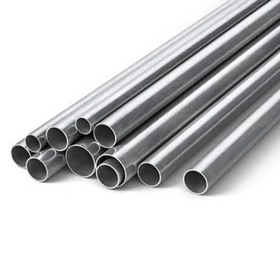
What is Carbon Steel Seamless Steel Pipe Carbon steel seamless steel pipe is a hollow steel pipe formed by heating and piercing round steel pieces made of carbon steel, carbon manganese steel, or micro-alloy steel, and shaping them through processes such as rolling or extrusion. Its structure, which has no welded seams, makes it easier to handle internal pressure, repeated loads, and high-temperature environments. The global production volume in 2025 is estimated to be about 35.5 million tons, with an average price of approximately 1,180 USD per ton and a gross profit margin of about 12-20%. Global Market Size of Carbon Steel Seamless Steel Pipe According to the latest research report published by Global Reports titled "Global Market Size, Share, Company Rankings, Sales, and Demand Trend Forecast for Carbon Steel Seamless Steel Pipe (2026-2032)," the carbon steel seamless steel pipe market is expected to experience stable growth driven by demand from oil and gas development, power generation equipment, petrochemicals, and industrial machinery. The global market size is projected to expand from approximately 41.89 billion USD in 2025 to about 43.67 billion USD in 2026, reaching around 55.496 billion USD by 2032. The compound annual growth rate (CAGR) from 2026 to 2032 is expected to be 4.1%.
Inquire About This Product
basic information
Energy development and precision machining applications support demand. The main demand for carbon steel seamless steel pipes comes from the oil and gas industry. Onshore and offshore drilling, oil well maintenance, crude oil and natural gas transportation facilities, and refinery upgrades support the demand for oil country tubular goods (OCTG), line pipes, and pressure piping. In power generation and petrochemical facilities, pressure resistance and quality stability are emphasized. Furthermore, in construction machinery, hydraulic cylinders, automotive parts, and industrial machinery, there is a growing demand for small-diameter, thick-walled, and high-dimensional precision pipes. Precision pipes produced through cold drawing and cold rolling can easily enhance added value in applications where dimensional tolerances and surface quality are critical. On the other hand, standard structural pipes and fluid transport pipes continue to face competition from welded steel pipes, particularly in large-diameter and low-pressure applications, in addition to price competition.
Price range
Delivery Time
Applications/Examples of results
Manufacturing technology and quality assurance determine competitiveness. The product competitiveness of carbon steel seamless steel pipes is influenced by the cleanliness of the steel, uniformity of wall thickness, low-temperature toughness, hydrogen sulfide resistance, homogeneity of heat treatment, non-destructive testing over the entire length, and traceability of quality data. The manufacturing process is broadly categorized into hot-finished pipes, cold drawn/cold rolled pipes, and other forming methods, requiring process selection based on outer diameter and application. In June 2026, the American Petroleum Institute (API) announced the 47th edition of the line pipe standard API Spec 5L, updating requirements for manufacturing, inspection, testing, and traceability. Steel pipes for carbon dioxide transportation are also included, necessitating carbon steel pipe manufacturers to confirm suitability for specific applications and strengthen quality management systems. In hydrogen transportation, material selection and verification considering hydrogen embrittlement, fatigue cracking, and the integrity of connections become crucial.
Company information

Global Reports integrates industrial information from around the world and provides highly accurate market intelligence to support corporate decision-making. We deliver in-depth analyses based on numerical data and facts, including market size, share, industry structure, price trends, growth forecasts, rankings of major companies, and competitive trends, with clear information categorized by country, region, and application. Leveraging a rich database that has supported the business growth of over 65,000 companies and an international research network, we accompany our clients in their global expansion and continuous growth.