Humic acid-based organic fertilizer market size 2026-2032: Significant expansion with a growth rate of 7.6%.
Humic acid-based organic fertilizers are produced from mineral-derived raw materials such as weathered coal, lignite, peat, and leonardite, as well as agricultural residues, livestock manure, and food processing by-products. The main components are humic acid, fulvic acid, and stable organic carbon, and depending on the product, they may contain nitrogen, phosphorus, potassium, and trace elements. They support the formation of soil aggregates, water retention, nutrient-holding capacity, cation exchange capacity, and root development, and are suitable for use in combination with chemical fertilizers and microbial materials. According to the latest research report published by Global Reports titled "Global Market Size, Share, Company Rankings, Sales, and Demand Trend Forecast for Humic Acid-based Organic Fertilizers (2026-2032)," the humic acid-based organic fertilizer market is expanding in response to soil degradation and the improvement of fertilization efficiency. The global market size is expected to grow from approximately 186 million USD in 2025 to around 200 million USD in 2026, and is projected to reach about 310 million USD by 2032. The compound annual growth rate (CAGR) from 2026 to 2032 is forecasted to be 7.6%. The global shipment volume in 2025 is estimated to be around 580,000 tons, with an average price of approximately 320 USD per ton and a gross profit margin of about 20-30%.
Inquire About This Product
basic information
Soil improvement and nutrient utilization efficiency drive the market. Due to the decrease in organic matter, soil salinization, and the increase in droughts and heavy rains, agriculture is shifting from expanding fertilizer input to focusing on soil function and nutrient utilization efficiency. Humic acid-based organic fertilizers have the potential to meet the demand for regenerative agriculture, organic farming, farmland productivity recovery, and fertilizer optimization. Instead of completely replacing conventional compound fertilizers, it is important to incorporate them into existing fertilization systems. A field trial and meta-analysis of corn published in 2026 reported that the combination of humic acid resulted in a yield increase of 34.0% to 43.1% under test conditions compared to conventional urea application. However, the effectiveness is influenced by raw materials, application rates, soil, crops, and climate. Manufacturers are required to provide not only the content ratio but also regional demonstration data and explanations of cost-effectiveness.
Price range
Delivery Time
Applications/Examples of results
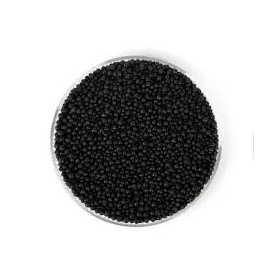
Standardization of Quality and Differentiation of Products by Use The challenges in the humic acid-based organic fertilizer market are the compositional differences and quality variations among raw materials. The humic acid content alone is insufficient to fully evaluate biological activity and effectiveness in the field; heavy metals, soluble salts, moisture content, particle size, and the maturity of composting are also critical factors for quality control. For products designed for bulk transport, logistics costs and inventory burdens also pressure profitability. On the demand side, while grains and industrial crops support shipment volumes, high humic acid content, low salt and low chloride levels, uniform particle size, and rapid disintegration are emphasized for vegetables, fruit trees, greenhouse cultivation, seedbeds, and lawns. Product forms are categorized into standard granules, powders, pellets, and flakes, and are classified by humic acid content as less than 25%, 25-35%, 35-50%, and over 50%. Raw materials include leonardite, weathered coal, lignite, peat, and humified biomass materials.
Company information

Global Reports integrates industrial information from around the world and provides highly accurate market intelligence to support corporate decision-making. We deliver in-depth analyses based on numerical data and facts, including market size, share, industry structure, price trends, growth forecasts, rankings of major companies, and competitive trends, with clear information categorized by country, region, and application. Leveraging a rich database that has supported the business growth of over 65,000 companies and an international research network, we accompany our clients in their global expansion and continuous growth.