LED Turn Signal Light Investment Analysis Information 2026: Explaining the Growth Strategy to a Scale of 1,730 Million USD
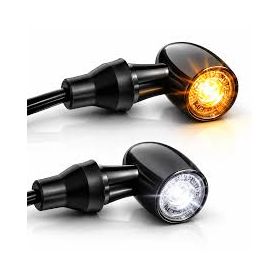
What is an LED Turn Signal Light? An LED turn signal light is an exterior signal lamp that communicates the intentions of a vehicle's right and left turns, lane changes, and hazard activation to surrounding road users. In addition to independent lamps at the front and rear, there are side repeaters, door mirror-integrated types, bumper lamps, and integrated types with headlamps or rear combination lamps. When evaluating the market, it is necessary to distinguish it from general lighting LEDs and automotive lighting as a whole, and to consider it as an in-vehicle signal lamp equipped with visibility and safety functions based on regulations. Global Market Size of LED Turn Signal Lights According to the latest research report published by Global Reports titled "Global Market Size, Share, Company Rankings, Sales, and Demand Trend Forecast for LED Turn Signal Lights (2026-2032)," the LED turn signal light market is expanding against the backdrop of advancements in automotive exterior design and the proliferation of electronically controlled lamps. The global market size is expected to reach approximately \$1.73 billion in 2026, up from about \$1.6 billion in 2025. The compound annual growth rate (CAGR) from 2026 to 2032 is projected to be 8.1%, with an expected growth to approximately \$2.761 billion by 2032.
Inquire About This Product
basic information
Dynamic lighting and optical design as factors for product differentiation LED turn signal lights are evolving from a structure centered around traditional blinking functions to an electronically controlled module equipped with sequential lighting, dimming, light guides, and pixelated light expressions. In high-end passenger cars, the lighting patterns become part of brand identity and vehicle design, with the uniformity of light and timing of illumination also influencing product value. Stanley Electric showcases the "Dimming Turn Signal," co-developed with Mazda, as a product example, which was first adopted in Japan in the MAZDA CX-30. Such examples demonstrate that LED turn signal lights maintain their fundamental signaling function while also being utilized for visual effects and brand expression. From a technical standpoint, factors such as luminous intensity, light distribution angle, blinking cycle, light color, thermal stability, electromagnetic compatibility (EMC), waterproof and dustproof properties, vibration resistance, and communication compatibility with body control modules are crucial. UNECE Regulation No. 6 targets direction indicators for automobiles and trailers, requiring that the design of LED turn signal lights simultaneously meets aesthetic and regulatory compliance.
Price range
Delivery Time
Applications/Examples of results
Demand expanding from passenger cars to commercial vehicles and motorcycles The main demand for LED turn signal lights is from passenger car manufacturers, but applications are also expanding to commercial vehicles, trailers, motorcycles, agricultural and industrial vehicles, and the aftermarket. While thin designs and sequential lighting contribute to differentiation in passenger cars, visibility in bad weather, durability, ease of replacement, and reliability over long-term use are emphasized for trucks and trailers. North American Lighting manufactures turn signals, reverse lights, brake lights, high-mounted stop lights, and rear combination lamps. LED turn signal lights are supplied both as independent components and as lamp units that integrate multiple signaling functions, requiring product designs tailored to the mounting position and vehicle application.
Company information

Global Reports integrates industrial information from around the world and provides highly accurate market intelligence to support corporate decision-making. We deliver in-depth analyses based on numerical data and facts, including market size, share, industry structure, price trends, growth forecasts, rankings of major companies, and competitive trends, with clear information categorized by country, region, and application. Leveraging a rich database that has supported the business growth of over 65,000 companies and an international research network, we accompany our clients in their global expansion and continuous growth.