Japan Wafer Grinding and Laminating Integrated Machine Industry Report 2026: Growth Outlook to 198 Million USD Scale
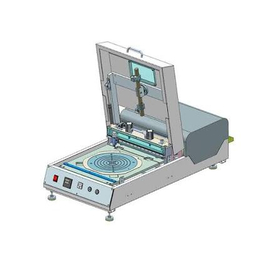
What is a Wafer Grinding and Lamination Integrated Machine? A Wafer Grinding and Lamination Integrated Machine is a manufacturing device designed for post-processing that integrates and coordinates processes such as back grinding of semiconductor wafers, stress relief polishing, cleaning and drying, protective tape removal, mounting onto dicing frames, application of dicing tape and DAF (Die Attach Film), re-mounting, and transport of ultra-thin wafers. It reduces the number of transportations between processes, minimizes wafer damage and contamination, and enhances the continuity of processes from grinding to dicing and die bonding preparation. Global Market Size of Wafer Grinding and Lamination Integrated Machines According to the latest research report published by Global Reports titled "Global Market Size, Share, Company Rankings, Sales, and Demand Trend Forecast for Wafer Grinding and Lamination Integrated Machines (2026-2032)," the global market for wafer grinding and lamination integrated machines is expected to expand from approximately \$170 million in 2025 to about \$198 million in 2026, with an average annual growth rate (CAGR) of 10.8% from 2026 to 2032, reaching approximately \$366 million by 2032.
Inquire About This Product
basic information
The demand for advanced packaging that supports wafer grinding and laminating integrated machines is driven by the sophistication of HBM, chiplets, 2.5D and 3D packaging, fan-out, and SiP (system-in-package). In AI-oriented logic semiconductors and high-bandwidth memory, there is a need for both miniaturization and processing precision to densely integrate multiple chips. When the wafer thickness reaches 50μm, 30μm, or even lower, warping, cracking, localized stress, and damage during transport significantly impact yield. Managing grinding, stress relief, tape processing, and mounting as a series of processes is directly linked to the stable production of ultra-thin wafers.
Price range
Delivery Time
Applications/Examples of results
Technical Challenges and Value of Process Integration for Wafer Grinding and Lamination Integrated Machines When evaluating the performance of wafer grinding and lamination integrated machines, important factors include thickness accuracy (TTV) after processing, warpage, surface quality, stability of tape application and removal, and wafer breakage rate. This is particularly critical for ultra-thin wafers, where residual stress and minute defects generated during grinding can lead to cracking in subsequent processes. Therefore, it is necessary to optimize grinding conditions, stress relief, cleaning, and transport in an integrated manner. By 2026, advanced packaging capabilities for AI semiconductors will become a supply constraint, necessitating higher precision and processing capacity from the equipment. Automation, including connections with SECS/GEM and MES, is also a factor that will influence the introduction of these systems into mass production lines.
Company information

Global Reports integrates industrial information from around the world and provides highly accurate market intelligence to support corporate decision-making. We deliver in-depth analyses based on numerical data and facts, including market size, share, industry structure, price trends, growth forecasts, rankings of major companies, and competitive trends, with clear information categorized by country, region, and application. Leveraging a rich database that has supported the business growth of over 65,000 companies and an international research network, we accompany our clients in their global expansion and continuous growth.