Analysis of Investment in LCD Display Target Materials 2026: Explaining the Growth Strategy to Reach a Scale of 1,315 Million USD
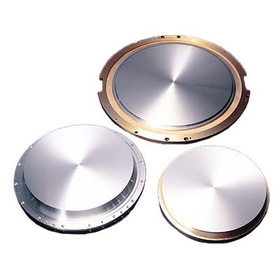
What is liquid crystal display target material? Liquid crystal display target material refers to high-purity metal and oxide materials used in the sputtering process during the manufacturing of TFT-LCD panels. These include ITO, IZO, IGZO, molybdenum, aluminum, copper, titanium, and chromium, and are used for the formation of transparent electrodes, wiring, barrier layers, contact layers, and oxide semiconductor films. In the market, uniformity of film formation, low dust generation, stable sputtering characteristics, and the ability to accommodate large substrates are important. Global market size of liquid crystal display target material According to the latest research report published by Global Reports titled "Global Market Size, Share, Company Rankings, Sales, and Demand Trend Forecast for Liquid Crystal Display Target Material (2026-2032)," the global market for liquid crystal display target material is expected to expand from approximately 1.25 billion USD in 2025 to about 1.315 billion USD in 2026, growing at a compound annual growth rate (CAGR) of 4.3% from 2026 to 2032, and is projected to reach approximately 1.693 billion USD by 2032.
Inquire About This Product
basic information
High-generation factories supporting LCD display target materials and changes in applications The demand for LCD display target materials is supported by panels for televisions, monitors, and laptops, as well as automotive, industrial, medical, and commercial displays. Although the LCD panel market is in a mature stage, the demand for materials is being bolstered by large televisions, LCDs with Mini LED backlighting, and high refresh rate IT panels. By 2026, the expansion of 8.6-generation LCD production capacity is expected to progress, with this generation's lines projected to account for approximately 26% of the world's LCD production capacity. As adaptations to large substrates advance, target materials will require stricter quality control regarding larger size, higher density, uniformity of crystal grains, bonding strength, and low arcing properties.
Price range
Delivery Time
Applications/Examples of results
Quality Control and Recycling Technology of LCD Display Target Materials In LCD display target materials, it is important to control not only the purity and density of the materials but also to suppress particle generation during film formation, nodule formation, arc discharge, and variations in film thickness. If the quality of the target becomes unstable, it can affect the yield of the panels and the operational efficiency of the production line, making customer certification and reproducibility between lots a barrier to entry. In 2026, research was reported on recycling used ITO targets to regenerate high-density targets and transparent conductive films. Technologies that enhance the utilization efficiency of raw materials such as indium are gaining attention as measures to respond to fluctuations in resource prices and waste disposal costs. However, it is essential to verify the film formation quality and long-term stability to apply recycled materials to mass production processes.
Company information

Global Reports integrates industrial information from around the world and provides highly accurate market intelligence to support corporate decision-making. We deliver in-depth analyses based on numerical data and facts, including market size, share, industry structure, price trends, growth forecasts, rankings of major companies, and competitive trends, with clear information categorized by country, region, and application. Leveraging a rich database that has supported the business growth of over 65,000 companies and an international research network, we accompany our clients in their global expansion and continuous growth.