Rapid growth trend! What is the secret to the iSIM module market size surpassing 165 million USD by 2026?
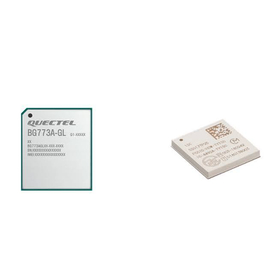
What is an iSIM module? An iSIM module is a communication module that integrates the SIM authentication function into a cellular communication SoC, secure area, and tamper-resistant integrated security mechanism, allowing connection to mobile networks without the need for removable SIM cards or independent eSIM chips. By integrating the SIM functionality within the device, it reduces the number of components, implementation area, and power consumption, enabling remote management of contract information and network switching. Global Market Size of iSIM Modules According to the latest research report published by Global Reports titled "Global Market Size, Share, Company Rankings, Revenue, and Demand Trend Forecast for iSIM Modules (2026-2032)," the global market for iSIM modules is estimated to be approximately \$95 million in 2025 and is expected to expand to about \$165 million in 2026. The compound annual growth rate (CAGR) from 2026 to 2032 is projected to be 31.2%, with an expected reach of approximately \$842 million by 2032. The rapid growth is driven by the miniaturization and energy efficiency of IoT devices, as well as the demand to efficiently manage large groups of devices spanning multiple countries.
Inquire About This Product
basic information
Low-power IoT drives initial demand The spread of iSIM modules is expected to progress primarily in the low-power IoT sector, including smart meters, asset tracking devices, logistics equipment, POS terminals, wearables, medical devices, industrial sensors, smart city infrastructure, and agricultural and environmental monitoring devices. In these devices, not only communication performance but also battery life, PCB area, component costs, and simplification of manufacturing processes influence product competitiveness. In particular, dual-mode LPWA modules that support both NB-IoT and LTE-M have a high affinity with iSIM. By omitting SIM slots, trays, and independent eSIM chips, it is possible to reduce the bill of materials (BOM) and alleviate the burden of SIM integration during manufacturing and inventory management. For communication operators and MVNOs, the ability to streamline connection management for IoT devices deployed across borders through remote provisioning is also an advantage.
Price range
Delivery Time
Applications/Examples of results
Coexistence with eSIM and Technical Challenges The iSIM module does not immediately replace the eSIM. eSIMs are already adopted in many consumer devices and cellular IoT devices, and existing authentication and operational infrastructures are in place. On the other hand, for iSIM to be widely adopted, responses from telecommunications operators, the maturation of authentication systems, and the accumulation of adoption records by OEMs are necessary. From a technical perspective, it is essential to ensure not only the integration of SIM functions but also secure provisioning, compatibility with telecommunications operators, compliance with standard specifications, secure individual authentication during manufacturing, and reliability during long-term operation. Particularly in large-scale IoT deployments, failures in initial setup or deficiencies in connection management can affect numerous devices, making the protection of authentication information and the stability of remote management infrastructure crucial.
Company information

Global Reports integrates industrial information from around the world and provides highly accurate market intelligence to support corporate decision-making. We deliver in-depth analyses based on numerical data and facts, including market size, share, industry structure, price trends, growth forecasts, rankings of major companies, and competitive trends, with clear information categorized by country, region, and application. Leveraging a rich database that has supported the business growth of over 65,000 companies and an international research network, we accompany our clients in their global expansion and continuous growth.