Global Low ESR Electrolytic Capacitor Industry Outlook 2026-2032: Analyzing the Background of Increasing Demand and a Growth Rate of 6.9%
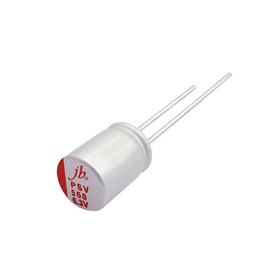
What is a low ESR electrolytic capacitor? A low ESR electrolytic capacitor is an electrolytic capacitor with reduced equivalent series resistance (ESR), serving as an electronic component that suppresses ripple current in power circuits, reduces heat generation, and stabilizes voltage. The global production volume is estimated to reach 15.6 billion units by 2025, with an average selling price of \$0.24 per unit. Driven by the demand for high output in AI servers, electric vehicles (EVs), communication equipment, and renewable energy-related devices, there is an increasing need for products that achieve both low ESR and high ripple current capability. Global market size of low ESR electrolytic capacitors According to the latest research report published by Global Reports titled "Global Market Size, Share, Company Ranking, Sales, and Demand Trend Forecast for Low ESR Electrolytic Capacitors (2026-2032)," the global market size for low ESR electrolytic capacitors is expected to expand from \$3.744 billion in 2025 to \$3.827 billion in 2026, growing at a compound annual growth rate (CAGR) of 6.9% from 2026 to 2032, and reaching \$5.711 billion by 2032.
Inquire About This Product
basic information
The technological evolution and product characteristics of low ESR electrolytic capacitors Low ESR electrolytic capacitors are classified into aluminum electrolytic capacitors, solid electrolytic capacitors, and conductive polymer hybrid capacitors. By optimizing the electrolyte, conductive polymer materials, electrode structure, and manufacturing processes, internal resistance is reduced, improving responsiveness and charge/discharge characteristics in high-frequency domains. Particularly in power circuits where high ripple currents flow, heat generation due to ESR affects component lifespan, so reducing ESR contributes to simplifying heat dissipation design and enhancing reliability. In product development, in addition to reducing impedance, extending lifespan in high-temperature environments, miniaturization, and increasing voltage resistance are important. Aluminum electrolytic capacitors excel in balancing capacitance and cost, conductive polymer types offer low ESR and high-frequency characteristics, and hybrid types have strengths in voltage resistance and durability. It is crucial to select based on the necessary voltage, operating temperature, and ripple current for each application.
Price range
Delivery Time
Applications/Examples of results
Demand for low ESR electrolytic capacitors driven by AI servers and EVs In AI servers, the high performance of GPUs and CPUs has led to challenges such as increased current in power circuits and the need for rapid response to load fluctuations. Low ESR electrolytic capacitors are required to suppress voltage fluctuations, reduce heat generation, and accommodate high-density mounting. In May 2026, Nichicon developed the "KBA series," a stacked conductive polymer aluminum solid electrolytic capacitor with a height of less than 2mm and an ESR of 4.5mΩ, and began mass production. This product achieves both a large capacity of 470μF and a low profile, serving as an example of miniaturization in power components for AI servers. Demand is also expanding in the automotive sector. In July 2026, Taiyo Yuden commercialized the "HVX" and "HTX" series of hybrid aluminum electrolytic capacitors compliant with AEC-Q200. They offer 46 varieties, including 80V rated products, and have introduced products that can handle ripple currents of 3,900mArms at 135°C. The high voltage and large current requirements in 48V automotive power supplies and ADAS-related circuits are becoming a new growth area for low ESR technology.
Company information

Global Reports integrates industrial information from around the world and provides highly accurate market intelligence to support corporate decision-making. We deliver in-depth analyses based on numerical data and facts, including market size, share, industry structure, price trends, growth forecasts, rankings of major companies, and competitive trends, with clear information categorized by country, region, and application. Leveraging a rich database that has supported the business growth of over 65,000 companies and an international research network, we accompany our clients in their global expansion and continuous growth.