Water turbidity sensor investment analysis information 2026: Explaining the growth strategy to a scale of 101 million USD.
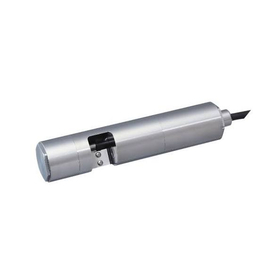
What is an underwater turbidity sensor? An underwater turbidity sensor is an optical water quality measurement device that is immersed in water to measure the scattering and attenuation of light caused by suspended particles, continuously monitoring the turbidity of water in numerical values such as NTU or FNU. It is used in wastewater treatment, rivers and lakes, drinking water intake, aquaculture, ocean observation, and industrial water, with the proliferation of online water quality monitoring supporting the market. Global market size of underwater turbidity sensors According to the latest research report published by Global Reports titled "Global Market Size, Share, Company Rankings, Sales, and Demand Trend Forecast for Underwater Turbidity Sensors (2026-2032)," the global market for underwater turbidity sensors is expected to expand from approximately 95 million USD in 2025 to about 101 million USD in 2026, growing at an average annual growth rate (CAGR) of 6.1% from 2026 to 2032, and is projected to reach approximately 144 million USD by 2032.
Inquire About This Product
basic information
Optical measurement and automatic cleaning technology influence product competitiveness. The mainstream underwater turbidity sensors utilize infrared light and include the 90-degree scattering method, backscattering method, transmission and attenuation method, and absorption and scattering combined method. The measurement principles are selected based on water quality and particle concentration, with measurement ranges set for various applications from low turbidity drinking water to high concentration sludge and suspended solids. Product forms are categorized into standalone probes, turbidity and SS (suspended solids) combined sensors, modules for multiparameter water quality meters, and sensors for marine and deep water applications. In recent years, automatic cleaning mechanisms that reduce the adhesion of dirt and biofilms to optical windows, external light correction, and compatibility with digital communication have become important. In April 2026, Nexisense announced the AL4060, which combines automatic cleaning with a mechanical brush and signal processing technology, designed for continuous monitoring of wastewater, rivers, and oceans. Additionally, in May of the same year, Yosemitech released the Y4002 multiparameter water quality meter, which simultaneously measures seven parameters including turbidity and features a design that reduces maintenance burden during long-term operation with an automatic cleaning brush.
Price range
Delivery Time
Applications/Examples of results
Wastewater treatment and surface water monitoring are the main demand areas. The demand for underwater turbidity sensors is primarily centered around wastewater treatment and surface water monitoring. In wastewater treatment facilities, turbidity and SS composite measurements, as well as high concentration compatibility, are emphasized to understand sludge concentration, changes in treatment processes, and effluent water quality. In rivers and lakes, they are used to monitor turbidity changes due to rainfall and sediment runoff, which also aids in watershed management and water quality monitoring during disasters. In drinking water and raw water applications, the stability of measurements in low turbidity ranges is crucial, and in aquaculture, there is expected demand for real-time monitoring to capture changes in water quality.
Company information

Global Reports integrates industrial information from around the world and provides highly accurate market intelligence to support corporate decision-making. We deliver in-depth analyses based on numerical data and facts, including market size, share, industry structure, price trends, growth forecasts, rankings of major companies, and competitive trends, with clear information categorized by country, region, and application. Leveraging a rich database that has supported the business growth of over 65,000 companies and an international research network, we accompany our clients in their global expansion and continuous growth.