Micro Thermoelectric Cooling Device Market Size Forecast 2026: Expected to Reach 695 Million USD by 2032.
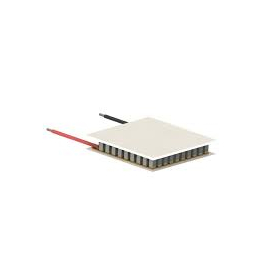
What is a Micro Thermoelectric Cooling Device? A Micro Thermoelectric Cooling Device is a small solid-state cooling component that utilizes the Peltier effect to transfer heat through electric current, primarily targeting ultra-compact products with maximum dimensions of 10mm. It is incorporated into optical transceivers, lasers, infrared detectors, LiDAR, medical analysis devices, and more, achieving localized cooling and high-precision temperature stabilization. Global Market Size of Micro Thermoelectric Cooling Devices According to the latest research report published by Global Reports titled "Global Market Size, Share, Company Rankings, Revenue, and Demand Trend Forecast for Micro Thermoelectric Cooling Devices (2026-2032)," the global market is expected to expand from 420 million USD in 2025 to 436 million USD in 2026, reaching 695 million USD by 2032, with a projected CAGR of 8.1% from 2026 to 2032. The shipment quantity in 2025 is expected to reach approximately 50.8 million units.
Inquire About This Product
basic information
Market growth driven by optical communication and AI infrastructure The largest sector supporting the demand for micro thermoelectric cooling devices is optical communication, which accounted for approximately 44% of market revenue in 2025. With the transition to high-speed optical communication such as 800Gbps and 1.6Tbps, managing heat generation in laser diodes and ensuring wavelength stability have become crucial. Temperature fluctuations affect optical output and signal quality, leading to increased demand for compact TECs that provide stable cooling capabilities even in tight installation spaces. Furthermore, in infrared and X-ray detectors, cooling is required to suppress dark current; in medical analysis devices, temperature cycle control for PCR and other processes is necessary; and in LiDAR, stabilization of optical component operation is demanded. The diversification of these applications is expanding the use of micro thermoelectric cooling devices from components for communication equipment to foundational technologies supporting precision sensing.
Price range
Delivery Time
Applications/Examples of results
Technological Innovations Driven by Miniaturization and Multi-Stage Cooling In product development, multi-stage cooling technologies such as two-stage and three-stage systems are gaining attention in addition to single-stage systems. Single-stage systems have advantages in mass production and cost, and are becoming widespread mainly in optical communication and general temperature stabilization applications. On the other hand, multi-stage systems can secure a large temperature difference, making them suitable for infrared detectors and high-sensitivity analytical instruments. In February 2026, Tark Thermal Solutions announced the OptoTEC MSX series, which can handle a temperature difference of 100 to 120°C in a vacuum environment, achieving a minimum cooling surface dimension of 2.0×4.0mm. Such product development indicates the market direction towards achieving both ultra-miniaturization and high cooling performance. However, with miniaturization, managing heat dissipation design, solder joints, the flatness of ceramic substrates, and thermal cycle durability becomes more challenging. Manufacturing companies are required to possess comprehensive technical capabilities that include not only cooling performance but also mounting accuracy and long-term reliability.
Company information

Global Reports integrates industrial information from around the world and provides highly accurate market intelligence to support corporate decision-making. We deliver in-depth analyses based on numerical data and facts, including market size, share, industry structure, price trends, growth forecasts, rankings of major companies, and competitive trends, with clear information categorized by country, region, and application. Leveraging a rich database that has supported the business growth of over 65,000 companies and an international research network, we accompany our clients in their global expansion and continuous growth.