Market size of rubber powder derived from waste tires 2026-2032: Significant expansion with a growth rate of 3.6%.
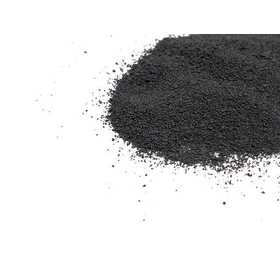
Waste tire-derived rubber powder refers to the granular or powdered recycled rubber material obtained by crushing and grinding used passenger car, truck, bus, and off-road vehicle tires, while removing iron and fibers. It is classified into coarse rubber, standard crumb rubber, fine powder rubber, and ultra-fine rubber powder, and is utilized in rubber products, modified asphalt, automotive parts, artificial turf, flooring materials, adhesives, and more. According to the latest research report published by Global Reports titled "Global Market Size, Share, Company Rankings, Revenue, and Demand Trend Forecast for Waste Tire-Derived Rubber Powder (2026-2032)," the global market size for waste tire-derived rubber powder is expected to expand from approximately 1.045 billion USD in 2025 to about 1.076 billion USD in 2026, and is projected to reach around 1.331 billion USD by 2032, with a CAGR of 3.6% forecasted for the period from 2026 to 2032.
Inquire About This Product
basic information
Market value influenced by particle size and quality Global production is estimated at approximately 3.714 million tons, with an average selling price at the factory shipment stage of about $281 per ton. The top five companies account for only about 25.5% of sales share, and the market is dispersed due to differences in recovery systems, raw material procurement costs, transportation distances, and demand destinations. In addition to Genan, Liberty Tire Recycling, CRM Rubber, and Tyrecycle, the fine powder businesses of Lehigh Technologies and Tinna form a major group of companies. The global average gross profit margin is estimated at around 22%, with high-purity fine powders and micro-powders being easier to add value, while coarse products are influenced by freight costs and local processing expenses.
Price range
Delivery Time
Applications/Examples of results
Conversion of Use and Technical Challenges The demand for rubber powder derived from waste tires is expanding beyond artificial turf infill and rubber mulch to include rubber-modified asphalt, molded and extruded products, automotive parts, building materials, paints, and composite materials. In July 2026, the Auckland Transport Agency began trials to utilize materials derived from used tires for road paving. The plan is to replace about 25% of the synthetic polymer in asphalt binders with recycled polymers, using approximately 1 ton to verify long-term performance. In these applications, in addition to the formulation amount, compatibility with binders, dispersibility, and durability influence the decision-making process.
Company information

Global Reports integrates industrial information from around the world and provides highly accurate market intelligence to support corporate decision-making. We deliver in-depth analyses based on numerical data and facts, including market size, share, industry structure, price trends, growth forecasts, rankings of major companies, and competitive trends, with clear information categorized by country, region, and application. Leveraging a rich database that has supported the business growth of over 65,000 companies and an international research network, we accompany our clients in their global expansion and continuous growth.