World Polarized Imaging Sensor Industry Report 2026: Growth Forecast to Market Size of 185 Million USD
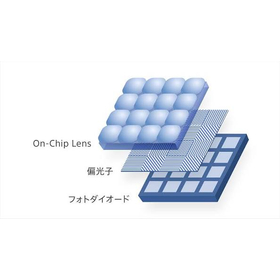
What is a Polarization Image Sensor? A polarization image sensor is an imaging device that incorporates a fine array of polarizers at the pixel level or on the imaging surface to capture information about the polarization direction and state, in addition to the intensity and color of light. It can visualize reflections, scattering, birefringence, and internal stresses in materials, which are difficult to capture with conventional CMOS image sensors, and is utilized in industrial inspection and scientific measurement. Global Market Size of Polarization Image Sensors According to the latest research report published by Global Reports titled "Global Market Size, Share, Company Rankings, Revenue, and Demand Trend Forecast for Polarization Image Sensors (2026-2032)," the global market size for polarization image sensors is estimated to be approximately 165 million USD in 2025, with expectations to reach around 185 million USD in 2026. It is projected to expand at a compound annual growth rate (CAGR) of 9.8%, reaching approximately 324 million USD by 2032.
Inquire About This Product
basic information
Trends in Polarization Image Sensor Technology and Product Structure In the market, there is a shift from traditional methods using external polarization filters to compact and high-speed products that integrate polarization sampling functions within the imaging sensor. One of the mainstream approaches is the CMOS sensor using the DoFP (Division of Focal Plane) method, which arranges fine polarizers in multiple directions on the imaging surface. Sony's Polarsens series is a representative commercial platform of area scan type, with industrial cameras using models like IMX250, IMX264, and IMX253 supporting market proliferation. The product configurations vary widely, including monochrome and color polarization sensors, line scan types, micro-polarizer junction types, high-speed imaging types, and SWIR compatibility. In the future, improvements in quantum efficiency and extinction ratio, enhancement of measurement accuracy for polarization angles, reduction of polarization noise, color image reconstruction, and support for full Stokes measurement will be the focus of technological development.
Price range
Delivery Time
Applications/Examples of results
Industrial inspection and robotics drive demand. The largest demand areas are machine vision and surface inspection. On glossy surfaces like metals and resins, it can be difficult to distinguish between reflected light and defects using standard images. By utilizing polarization information, it becomes easier to identify scratches, oil films, and surface conditions based on differences in reflective characteristics. In the inspection of glass and plastic films, it is possible to visualize the distribution of stress and birefringence, which is expected to be applied in quality control for semiconductor wafers and display manufacturing. Future growth areas include object recognition and grasping by robots, environmental recognition for autonomous driving, outdoor surveillance, aerospace, and remote sensing. Even for objects with poor color and brightness information, insights into material and shape can be obtained from polarization characteristics, making it a technology that complements traditional image recognition.
Company information

Global Reports integrates industrial information from around the world and provides highly accurate market intelligence to support corporate decision-making. We deliver in-depth analyses based on numerical data and facts, including market size, share, industry structure, price trends, growth forecasts, rankings of major companies, and competitive trends, with clear information categorized by country, region, and application. Leveraging a rich database that has supported the business growth of over 65,000 companies and an international research network, we accompany our clients in their global expansion and continuous growth.