Japan Lithium-Ion Hybrid Capacitor Industry Report 2026: Growth Outlook to Reach 4,377 Million USD
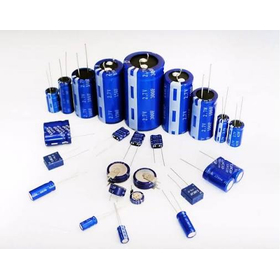
What is a lithium-ion hybrid capacitor? The global market for lithium-ion hybrid capacitors (LIHC) is expected to expand from approximately 4.216 billion USD in 2025 to about 4.377 billion USD in 2026, growing at a compound annual growth rate (CAGR) of 10.8% from 2026 to 2032, and reaching around 8.099 billion USD by 2032. According to the latest research report published by Global Reports titled "Global Market Size, Share, Company Rankings, Sales, and Demand Trend Forecast for Lithium-Ion Hybrid Capacitors (2026-2032)," lithium-ion hybrid capacitors are energy storage devices that combine the high energy density of lithium-ion batteries with the high power and rapid charge/discharge capabilities of electric double-layer capacitors (EDLC). The global production volume in 2025 is estimated to be around 620 million units, with demand from smart grids, railways, automotive electronics, industrial equipment, and renewable energy supporting market expansion.
Inquire About This Product
basic information
Technical Characteristics and Market Growth of Lithium-Ion Hybrid Capacitors Lithium-ion hybrid capacitors generally consist of a negative electrode pre-doped with lithium, a positive electrode using activated carbon, and an organic electrolyte. By combining the battery-type negative electrode reaction with the capacitor-type positive electrode reaction, they achieve higher operating voltage and energy storage capacity compared to conventional electric double-layer capacitors, making them suitable for rapid charge and discharge and longer lifespan compared to lithium-ion batteries. The reduction of internal resistance and suppression of self-discharge are also important features for applications that require quick responsiveness to power fluctuations.
Price range
Delivery Time
Applications/Examples of results
The performance and mass production capabilities influenced by pre-lithiation technology In the development of lithium-ion hybrid capacitors, in addition to balancing energy density and power density, the precision of the pre-lithiation process is a critical issue. The irreversible lithium consumption that occurs during initial charge and discharge reduces capacity and cycle life, necessitating proper control of lithium supply, electrode interfaces, and electrolyte composition. A study published in "Electrochimica Acta" in October 2026 validated a processing protocol of about 2 hours by optimizing the reaction rate for pre-lithiation of hard carbon anodes using lithium oxalate. For application in mass production processes, the focus will be on reducing processing time and ensuring uniformity between electrodes. Additionally, a study published in the academic journal "Small" on October 30, 2026, reported energy densities of 10 to 45 Wh/kg and power densities of 0.5 to 1,200 W/kg for hybrid capacitors using titanate-based anodes. The expansion of options for anode materials is expected to enhance performance design tailored to specific applications.
Company information

Global Reports integrates industrial information from around the world and provides highly accurate market intelligence to support corporate decision-making. We deliver in-depth analyses based on numerical data and facts, including market size, share, industry structure, price trends, growth forecasts, rankings of major companies, and competitive trends, with clear information categorized by country, region, and application. Leveraging a rich database that has supported the business growth of over 65,000 companies and an international research network, we accompany our clients in their global expansion and continuous growth.