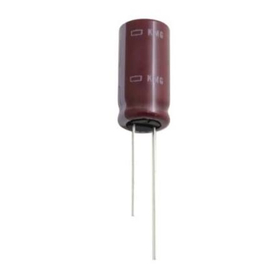
Rapid growth trend! What are the secrets behind the polar capacitor market size exceeding 3.955 billion USD by 2026?
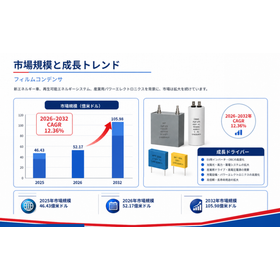
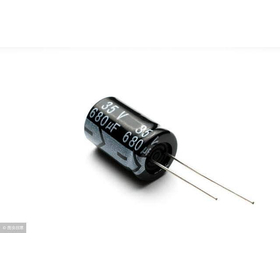
What is a polarized capacitor? A polarized capacitor is a type of capacitor that is connected to a circuit in a specific direction, with defined positive and negative terminals. It mainly consists of aluminum electrolytic capacitors and tantalum electrolytic capacitors. Its characteristic is the use of the oxide film formed on the electrode surface as a dielectric, allowing for a large capacitance in a compact size. Global market size of polarized capacitors According to the latest research report published by Global Reports titled "Global Market Size, Share, Company Rankings, Sales, and Demand Trends Forecast for Polarized Capacitors (2026-2032)," the global market size for polarized capacitors is expected to expand from 3.834 billion USD in 2025 to 3.955 billion USD in 2026, growing at a compound annual growth rate (CAGR) of 5.2%, and reaching 5.361 billion USD by 2032. The global production volume in 2025 is projected to be 21.3 billion units, with an average selling price of 0.18 USD per unit.
Inquire About This Product
basic information
Factors Supporting the Applications and Market Growth of Polarized Capacitors Polarized capacitors are widely used for smoothing in DC circuits and energy storage due to their ability to secure a large capacitance per unit volume and their cost advantages. Their main applications include power adapters, consumer electronics, computers, automotive electronics, industrial control devices, renewable energy equipment, and communication power supplies. Factors supporting market growth include the proliferation of electronic devices, the electronic control of automobiles, advancements in industrial automation, and the expansion of renewable energy-related equipment. In these systems, stable operation of power circuits and suppression of voltage fluctuations are crucial, requiring polarized capacitors to have stable capacitance characteristics and long-term reliability. There is particularly high demand for products that can withstand temperature changes and variations in electrical load in automotive electrical equipment and industrial power supplies.
Price range
Delivery Time
Applications/Examples of results
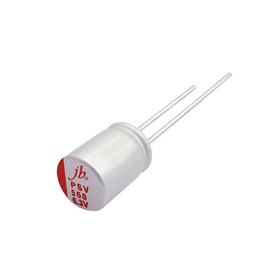
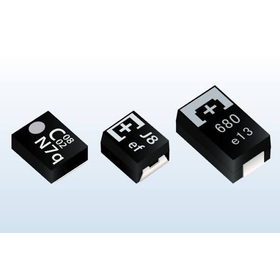
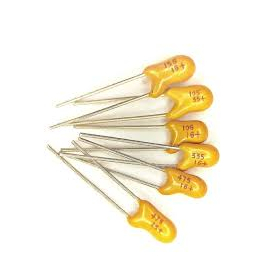
Trends in Aluminum Electrolytic and Tantalum Electrolytic Capacitor Technology Products are mainly classified into aluminum electrolytic capacitors and tantalum electrolytic capacitors. Aluminum electrolytic capacitors are relatively low-cost and easy to increase in capacity, making them suitable for a wide range of applications such as power supplies and industrial equipment. On the other hand, tantalum electrolytic capacitors are used in electronic devices where miniaturization and capacity stability are emphasized. There are product groups categorized by voltage: below 25V, 25-35V, 35-55V, and above 55V, as well as by maximum operating temperature, ranging from below 105°C to above 145°C, necessitating specification selection according to application. Recent technological developments have focused on reducing equivalent series resistance (ESR), improving high-temperature resistance, extending lifespan, and achieving miniaturization and high capacity. Solid aluminum electrolytic capacitors that use conductive polymers contribute to the high efficiency of power circuits by leveraging their low equivalent series resistance and excellent high-frequency characteristics. Design considerations include heat generation due to ripple current, evaporation and degradation of the electrolyte, resistance to surge voltage, and thermal load in the mounting environment. Particularly in automotive and industrial applications that operate for long periods in high-temperature environments, lifespan evaluation during actual use, in addition to rated conditions, significantly influences product selection.
Company information

Global Reports integrates industrial information from around the world and provides highly accurate market intelligence to support corporate decision-making. We deliver in-depth analyses based on numerical data and facts, including market size, share, industry structure, price trends, growth forecasts, rankings of major companies, and competitive trends, with clear information categorized by country, region, and application. Leveraging a rich database that has supported the business growth of over 65,000 companies and an international research network, we accompany our clients in their global expansion and continuous growth.