World Metal Foil Current Sensor Chip Resistor Industry Report 2026: Market Size Projected to Grow to 450 Million USD
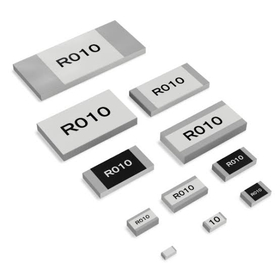
What is a metal foil current sensor chip resistor? A metal foil current sensor chip resistor is a low-resistance surface-mounted electronic component that uses metal foil or precision alloys as the resistive element, detecting circuit current from the voltage drop that occurs when current passes through. It is used for current monitoring, overcurrent protection, power control, energy management, and is characterized by low resistance, low temperature coefficient, low parasitic inductance, and excellent pulse resistance and measurement stability. Global market size of metal foil current sensor chip resistors According to the latest research report published by Global Reports, titled "Global Market Size, Share, Company Rankings, Sales, and Demand Trend Forecast for Metal Foil Current Sensor Chip Resistors (2026-2032)," the global market size for metal foil current sensor chip resistors is expected to reach 428 million USD in 2025, 450 million USD in 2026, and expand to 600 million USD by 2032. The CAGR from 2026 to 2032 is projected to be 4.9%.
Inquire About This Product
basic information
Vehicle-mounted, industrial equipment, and data centers drive demand. The background of market growth includes the electrification of automobiles, industrial automation, communication infrastructure, and the expansion of data centers. In battery management systems, motor drives, voltage regulators, and power conversion devices, it is necessary to continuously and accurately measure current while minimizing power loss. Particularly in electric vehicles, robots, and AI servers, there is an increasing demand for components that achieve both low resistance and high heat dissipation performance, as high current and high-density mounting on circuit boards advance.
Price range
Delivery Time
Applications/Examples of results
Technical differences between 2-terminal and 4-terminal Kelvin types Products are mainly divided into 2-terminal and 4-terminal Kelvin types. The 2-terminal type has a relatively simple structure and is suitable for a wide range of applications such as power supplies, consumer devices, and communication equipment. On the other hand, the 4-terminal type separates the current path from the voltage detection path, which helps to suppress measurement errors caused by the resistance of terminals, solder joints, and circuit board wiring. This type is increasingly adopted in areas requiring high-precision current monitoring, such as automotive batteries and server power supplies. In technology development, emphasis is placed on reducing resistance to milliohms or lower, miniaturization, high power density, and stability against temperature changes. Designs that combine precision alloys, wide terminal structures, metal foil structures on ceramic substrates, and electron beam welding are advancing to suppress parasitic inductance and localized heating. Sulfur resistance, automotive quality certification, and high pulse tolerance are also important factors for product differentiation.
Company information

Global Reports integrates industrial information from around the world and provides highly accurate market intelligence to support corporate decision-making. We deliver in-depth analyses based on numerical data and facts, including market size, share, industry structure, price trends, growth forecasts, rankings of major companies, and competitive trends, with clear information categorized by country, region, and application. Leveraging a rich database that has supported the business growth of over 65,000 companies and an international research network, we accompany our clients in their global expansion and continuous growth.