Approaches to Maintenance to Reduce Equipment Failures | Example of Loss Calculation
Aitsuin Column Materials

Despite the inspections, the breakdowns are not decreasing. This explains how to choose among the four types of maintenance and how to quantify the losses from a single breakdown.
"The equipment suddenly stopped, and while waiting for repairs, production came to a complete halt." "Even though inspections are being conducted, the number of failures is not decreasing." This document organizes the five causes of equipment failure and explains the differences between corrective maintenance, preventive maintenance, predictive maintenance, and improvement maintenance. It also describes how to choose maintenance methods by categorizing equipment into A, B, and C based on the impact when it stops. In the calculation example, the loss from equipment failure that stops six times a year for four hours each time amounts to 3.6 million yen annually. Even with an operating rate of 99.4%, this results in significant losses. By investing 1 million yen annually in preventive maintenance to reduce failures by half, there is a gain of 800,000 yen per year. The document outlines a five-step approach starting from the equipment ledger, initial actions when failures occur, and two examples of reducing failures in the maintenance field. *The figures are examples for explanation purposes. For more details, please download the PDF or feel free to contact us.

Inquire About This Product
basic information
【Overview of the Document】 - Format: PDF (A4) - Target Audience: Personnel responsible for factory maintenance and equipment management, manufacturing department heads, business owners 【Contents】 - Five causes of equipment failure and the times when failures are likely to occur - Differences between corrective maintenance, preventive maintenance, predictive maintenance, and improvement maintenance - How to choose maintenance based on equipment importance (A, B, C) - Five steps to advance maintenance (equipment ledger → importance → inspection checklist → records → review) - Initial actions and four steps for preventing recurrence when a failure occurs - Example calculations of failure losses (MTBF, MTTR, operating rate) - Strategies for managing maintenance in factories with limited personnel - Two examples of reducing failures in the maintenance field *This document explains concepts and does not guarantee the effectiveness of maintenance.
Price information
The materials can be downloaded for free. For inquiries about creating a conservation system, we will provide individual guidance after discussing the details.
Delivery Time
※We will propose a course of action that aligns with the content and timing of your consultation. Please feel free to contact us first.
Applications/Examples of results
【For those who】 - The same failure keeps recurring. - There are few maintenance personnel, and they are also handling other jobs. - I want materials to explain within the company how much money can be spent on preventive maintenance. - I want to know the condition of old equipment before it breaks down. 【How to use this document (example)】 1. List the main equipment and categorize them into A, B, and C based on the impact when they stop. 2. Start keeping a record of failures (paper or spreadsheet is fine). 3. Calculate the loss from one failure and the annual loss. 4. Consider preventive maintenance, predictive maintenance, and improvement maintenance for equipment with significant losses. First, please start by keeping a record of failures.
catalog(1)
Download All Catalogs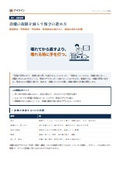
Company information

Aitsuin Co., Ltd. is a company that provides services such as support for building digital twins, the introduction of IoT sensors, and consulting for labor-saving and automation. Leveraging years of experience in maintenance and design in the manufacturing industry, we support problem-solving while closely aligning with the field, focusing on digital twins and IoT. We will guide small and medium-sized manufacturing sites facing various challenges, such as being understaffed and having excessive labor and time spent on the same tasks, towards appropriate solutions.