
See Distance Measuring Device's detailed category ranking


High-precision 3D scanning just by walking. A field-complete handheld 3D laser scanner that even beginners can handle.


The wafer sensor is a suitable measuring instrument for equipment improvement. It allows for objective measurements and enables easy acquisition of numerical parameters that indicate improvement effects.


A lightweight green laser system that is resistant to water absorption and capable of underwater surveying, suitable for surveying mountainous areas, river regions, and coastal areas.


This is a building gauge measuring device for railway operators. It allows for easy measurement of the deviation and height of the trolley wire. It is particularly helpful in reducing measurement time at night.


Industry-standard mapping software supported by experts.


An evolved version of the Kilbimeter that allows for the calculation of the area and volume of rectangles and cubes through multiplication functions.


Anyway, it's easy! Just click. With the use of telecentric lenses on both sides, highly accurate automatic image dimension measurement is possible!


A device that performs the functions of two or three roles in one unit! A crane proximity detection device with built-in distance functionality.


It is a gauge for measuring the width, diameter, radius, and depth of grooves for snap rings, E-rings, O-rings, etc., processed at the back of the hole.

Measurement of the inner diameter, irregularities, and distortions of large-diameter pipes and tubes can be performed quickly using a 2D laser scanner.

Software that visualizes the terrain of archaeological sites and streamlines excavation research.


Equipped with a new type of EDM mechanism and a reference point measurement program. A high-spec model packed with features. Certified by the Geospatial Information Authority of Japan as Class 2A and Class 3 total station.


Compact and lightweight (50g) for outdoor use with long-range detection (10m). It reliably detects people and vehicles as an obstacle sensor, and does not detect rain or snow.



Anyone can easily and accurately measure the bottom diameter of grooves in the inner diameter, such as snap ring grooves.

The precision of each tooth is crucial. We manufacture spline gauges, spline mandrels, spline arbors, and serration gauges that excel in inspection and measurement.

Understand the height and position of the beam without interrupting construction.


For measuring the adhesive application amount of laminate film.
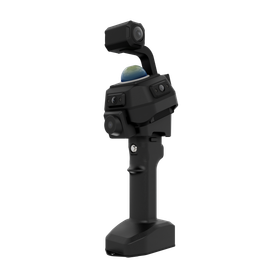


Low price, compact and lightweight, low power consumption, iSafe laser distance measuring module.


Maintain Japanese quality with a large automatic inspection facility featuring an anechoic chamber structure!


Diameter measuring tape: Simply roll it out and read the scale to measure in units of 1/100 mm. Ideal for measuring large outer diameters, inner diameters, and the inner diameter of O-rings.


This is a laser distance meter that does not require a specified reflector.


Ultrasonic flaw detector suitable for a wide range of applications.


Contributing to significant improvements in work efficiency and cost reduction in various fields requiring high-precision positioning through the use of real-time data from electronic reference points! Also compatible with public surveying!


Japan Radio Co., Ltd. (JRC) radar exploration device (rebar detector, buried object detector), RC Radar Handy Search NJJ-105

If you are looking for a used RC radar detector and rebar detector, StructureScan SIR-EZHR, come to us! We guarantee operation and ship after calibration!


Space-saving parking! A one-person electric mini car with speed and power.

This is a building gauge measuring device for railway operators. It measures the distance from the track side and the platform side to scaffolding. Please use it for construction work during limited hours at night.

Laser distance sensors have a proven track record in industrial applications worldwide. They offer high-speed measurement at 250Hz, are compliant with IP65, and can measure in temperatures ranging from -40 to +60°C.
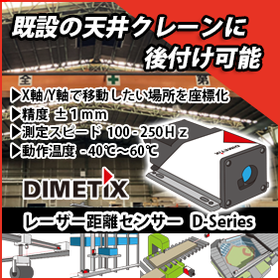
When transporting heavy objects, use a retrofitted laser distance sensor on the overhead crane to measure and control the positioning on the X/Y axis within 50-100 meters.
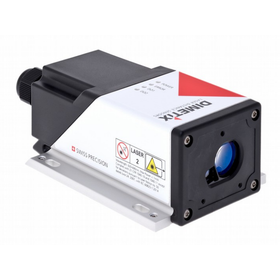
When transporting heavy objects, retrofitting a laser distance sensor to an existing overhead crane allows for measuring position information and controlling to avoid collisions through coordinate management.

High-precision and quick measurements of the diameter, roundness, displacement, unevenness, and strain of large cylindrical shapes are possible using a 2D laser scanner.
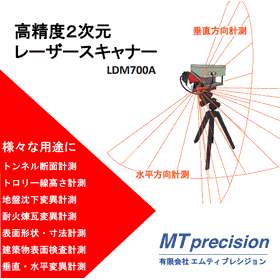
High-precision 2D laser scanner that realizes efficiency and labor-saving in furnace inspections.


Leave everything from product purchase to calibration, repair, and retrofit to us.


Introducing the overview of the onboard measuring device "NK-2000"! The inspiration for its creation came from the machining site.


High precision, high speed, and low-cost single-point sensor. A sensor that can be embedded for thickness, distance, and height measurement. Also ideal for semiconductor wafer inspection applications.

It is suitable for a variety of applications and is also ideal for OEM. It is compact, lightweight, and has a robust design. Each measurement mode and parameter setting can be configured.

Software for creating 2D and 3D topographic maps to visualize pollution conditions and accelerate analysis.

Strong support for the design and analysis of solar power generation systems.
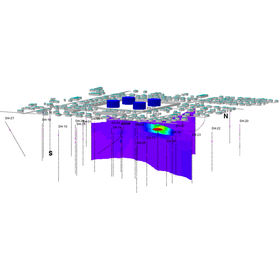
Software for the management, analysis, and visualization of geological information for the environment, geotechnical engineering, mining, and the petroleum industry.

The introduction of models with "photogrammetry functions" and "laser rangefinders" has expanded the scope of work for a single operator!


Using a 3D laser scanner, we provide a comprehensive service from plant measurement and drawing creation to manufacturing!


Intelligent stereo camera with real-time automatic adjustment feature

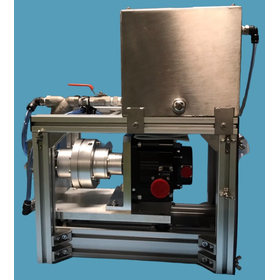
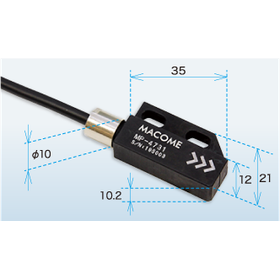

Solving the challenges of food filling engineering! Measuring 15mm non-contact and fine-tuning positioning.

A new type of "two-dimensional measuring machine" that pursues high rigidity and high precision based on a grade 0 stone plate.

An absolute linear displacement sensor that excels in environmental resistance and can be used under vibration, shock, and high-temperature conditions.


Capable of measuring even minute changes - 'Servo-type Water Level Gauge'


This model is compact, lightweight, and has low power consumption, weighing 125g and consuming 2W. There is also a version available with magnetic shielding.


There are many achievements with vehicle inspection machines, etc. It is suitable for driving simulators and positioning, among others.

Measurements can be taken at high temperatures without a cooling device.

High temperature, flames, dust, no problem.

Next-generation precision ultrasonic thickness gauge achieves stable measurements at 0.001mm increments.

The most powerful ultrasonic thickness gauge in Dakota. Capable of measuring the thickness of GFRP, CFRP, rubber, high-density polyethylene, and cast metals.


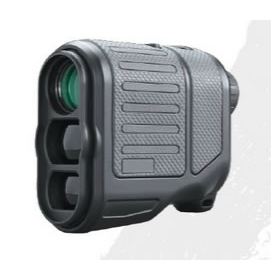
[Demo unit available] A laser rangefinder that can instantly measure distances from 0m to 1000m (reflective targets can be detected up to 2000m) with easy operation.

"Compatible with demo units" Together with a 133g "stress-free" companion. Laser rangefinder Lightspeed, Simmons Venture.


Leave it to us for gauges and jigs! Custom orders are also available!
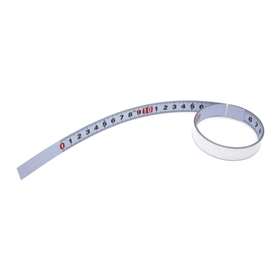

It has adhesive on the back. When attached to dedicated machines, workbenches, or corner materials, it allows for easy dimension measurement.

It is a gauge for measuring grooves. It can accommodate many measurement targets such as groove width, groove depth, groove angle, groove length, groove diameter, and groove pitch.

To accurately and easily detect points behind walls and floors, use HILTI's Transporter PX10! Affordable rentals are available at SSR!


Lightweight and convenient to carry, made of aluminum! A lightweight and durable aluminum telescopic pole.

It is a building gauge measuring device for railway operators. Its main purpose is to be used for measuring the clearance of structures on platforms.

This is a building gauge measuring device for railway operators. Its main purpose is to easily measure the clearance from railway equipment such as signals. It aims to shorten nighttime work.

Dimetix laser distance sensors are used in industrial applications around the world. They achieve high-speed measurements of 250Hz and are compliant with IP65.



Automatic measurement is possible with a laser distance sensor. It eliminates reading errors and mistakes in recording, allowing for accurate measurements in a short time.

No need to bring a PC on-site! This is a construction limit measuring device that can measure using only the measuring instrument. We can provide demo units for loan/rental. Reports are also easy to create.

Retrofit existing cranes with laser distance sensors to digitalize crane position information, coordinate the factory, and reduce collisions and transportation time.

When transporting heavy objects, use a retrofitted laser distance sensor on the overhead crane to measure and control the positioning on the X/Y axis within 50-100 meters.

Can measure distances up to 500m with an accuracy of ±1mm! Maximum measurement rate of 250Hz/IP65 compliant/operates in environments up to +60°C.

This is a laser distance sensor capable of data collection with an accuracy of ±1mm up to 100m in environments of -40℃ and below, with a maximum frequency of 250Hz. It can be used in freezers.

It is possible to measure the roundness of large cylindrical objects over 10 meters. X-axis/Y-axis data is provided in real-time. This enables the measurement of roundness on-site.

High-precision and quick measurement of the length, roundness, displacement, unevenness, and strain of tunnel segments can be achieved using a 2D laser scanner.

High-precision and rapid measurement of hand measurements, displacement, unevenness, and strain at civil engineering sites can be achieved using a 2D laser scanner. This contributes to labor saving.

High-precision 2D laser scanner capable of measuring in horizontal/vertical directions. Achieves measurements of displacement, strain, subsidence, and erosion that were not possible before. [Demo unit available]
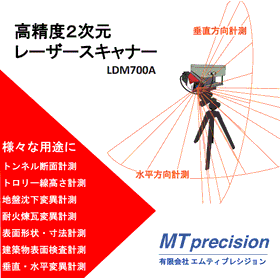
Accurate and quick measurement of incinerator wear. Contributes to work efficiency.

You can easily measure any shape of line, regardless of scale! The operation is also simple.

Simply set the imaging unit on the processing machine to start CAD measurement immediately! Movement between processing machines is possible without wiring.

Improvement in processing accuracy and reduction in processing time have been achieved! We will introduce various benefits.

Born from repeated trial and error! A camera-based measurement system for processing machines that breaks the conventional wisdom of processed product measurement.


Inherit the functions of INSPIRE 1 and enhance safety, reliability, and intelligent features.

Affordable distance sensors for measuring film and coating thickness, as well as non-contact thickness measurement. Strong performance on slopes, achieving a distance direction resolution of 20nm!

Original products from Kurita Techno!! We handle everything from design to development in-house.

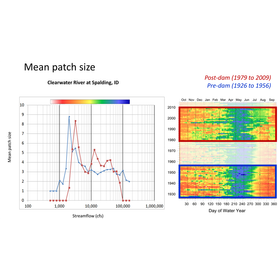
Optimal plot solutions for the environment, water chemistry, and resource/energy sectors.

Industry-standard topographic mapping software that supports the visualization of geological structures.

Visualize sunlight simulation with Surfer to maximize real estate value.

Real-time automatic measurement of subsidence and uplift! Numerous achievements in various locations such as roads, ground, bridges, railways, and buildings.


Improved visibility of the laser dot when using the Leica DISTO outdoors!!

It's okay even when there are no subjects, as long as there is a target plate!