
List of Physics and chemistry equipment products
- classification:Physics and chemistry equipment
1141~1155 item / All 15646 items


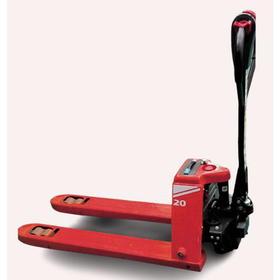
Reduce the workload from handling heavy objects! Here are five case studies that solved customer challenges! We are also accepting free consultations and tests tailored to your work!

- Other conveying machines


Strong cold wind from room temperature to -13°C! Depending on the usage environment, you can choose between the combo type or the separate type!
- Cooling system

April 10, 2024 (Wednesday) to April 12, 2024 (Friday) Notice of Participation in Nagoya Manufacturing World 2024
Sanwa Shiki Ventilator Co., Ltd. will be exhibiting at the 2024 Monozukuri World (Nagoya) held at Port Messe Nagoya. We will also be showcasing our large cooling fans and cool/warm ambient products. Date: April 10, 2024 - April 12, 2024 Opening: 10:00 AM Location: Nagoya Port Messe (Exhibition Hall 1) *Our booth: 19-1 We would be grateful if you could visit us if you have the time.
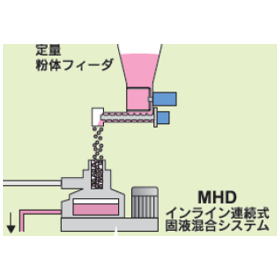

From powder supply to dispersion, defoaming, and transfer. A dispersion machine line compatible with high-viscosity slurries has been established.
- Emulsifier/Disperser
- Powder Supply Device
- Dispersion/emulsification equipment/homogenizer
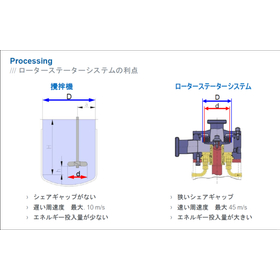
What are the reasons for changes in results from the lab to mass production? Causes and countermeasures for the deterioration of distributed quality during scale-up.
Despite obtaining good dispersion results in the lab, the challenge of unstable quality upon mass production occurs in many settings. The main cause of this is that the dispersion conditions are not replicated due to differences in scale. In lab equipment, the smaller size leads to higher energy density, making shear and flow more uniform, while in mass production equipment, the larger scale often results in insufficient dispersion energy at the same rotational speed and processing time. Additionally, differences in equipment structure and flow patterns can cause variations in the shear history and residence time experienced by particles, leading to differences in the dispersion state. Furthermore, simple scale-up does not ensure that critical parameters such as flow rate, residence time, and shear intensity match, making it difficult to reproduce the same results as in the lab. To address these challenges, it is essential to focus on process design based on dispersion energy density and flow conditions rather than merely increasing equipment size. By designing the system so that particles pass through the processing area under consistent conditions, it is possible to achieve reproducible dispersion quality even when the scale changes, as seen in inline continuous processing.
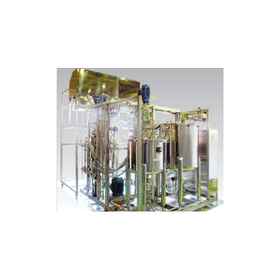
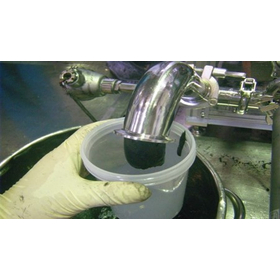
Inline dispersion system for continuous processing and stable dispersion of high-viscosity slurries.
- Emulsifier/Disperser
- Powder Supply Device
- Dispersion/emulsification equipment/homogenizer
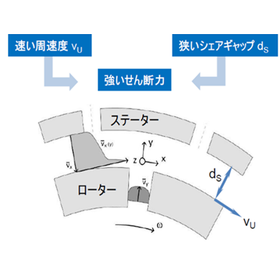
What is the relationship between viscosity and dispersion efficiency? The reason why dispersion becomes difficult under high viscosity conditions.
In dispersion processes, viscosity is an important factor that significantly affects dispersion efficiency. Generally, as viscosity increases, fluidity decreases, making it more difficult for dispersion energy to be transmitted to the particles. When viscosity is low, liquids flow easily, and shear energy is widely transmitted throughout the system, making it relatively easy to break apart particle agglomerates. On the other hand, as viscosity increases, flow becomes localized, and shear tends to be concentrated near the equipment. As a result, there is a mixture of particles that receive sufficient energy and those that do not, leading to variability in the dispersion state. Additionally, under high viscosity conditions, the movement of particles is also restricted, making collisions and breakdowns between agglomerates less likely. Consequently, even if the mixture appears homogeneous, there may be undispersed regions remaining internally. To enhance dispersion efficiency, it is crucial to implement appropriate shear conditions and flow designs according to viscosity. Particularly in inline continuous processing, it is possible to provide uniform shear to the particles within the flow, allowing for efficient transmission of dispersion energy even under high viscosity conditions. In dispersion processes, optimizing flow, shear, and processing time while considering the effects of viscosity is key to achieving stable dispersion quality.
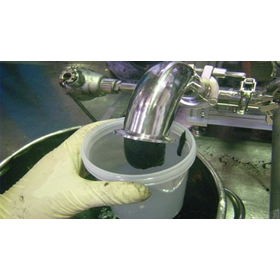
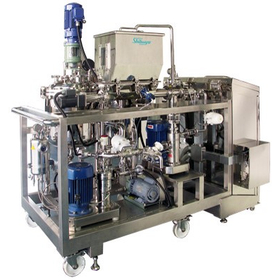
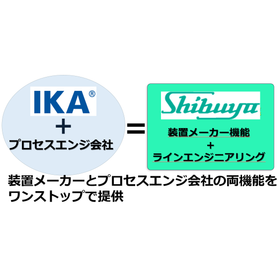
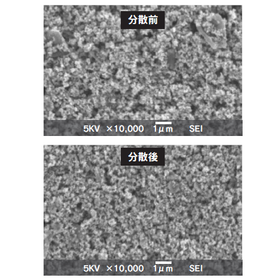
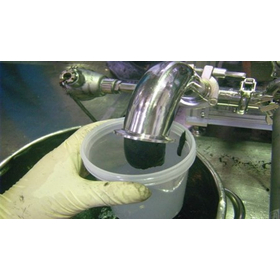
Supports high-viscosity dispersion of positive and negative electrode slurries. Assists in quality stabilization and mass production scale-up through continuous processing.
- Emulsifier/Disperser
- Powder Supply Device
- Dispersion/emulsification equipment/homogenizer
What is the relationship between viscosity and dispersion efficiency? The reason why dispersion becomes difficult under high viscosity conditions.
In dispersion processes, viscosity is an important factor that significantly affects dispersion efficiency. Generally, as viscosity increases, fluidity decreases, making it more difficult for dispersion energy to be transmitted to the particles. When viscosity is low, liquids flow easily, and shear energy is widely transmitted throughout the system, making it relatively easy to break apart particle agglomerates. On the other hand, as viscosity increases, flow becomes localized, and shear tends to be concentrated near the equipment. As a result, there is a mixture of particles that receive sufficient energy and those that do not, leading to variability in the dispersion state. Additionally, under high viscosity conditions, the movement of particles is also restricted, making collisions and breakdowns between agglomerates less likely. Consequently, even if the mixture appears homogeneous, there may be undispersed regions remaining internally. To enhance dispersion efficiency, it is crucial to implement appropriate shear conditions and flow designs according to viscosity. Particularly in inline continuous processing, it is possible to provide uniform shear to the particles within the flow, allowing for efficient transmission of dispersion energy even under high viscosity conditions. In dispersion processes, optimizing flow, shear, and processing time while considering the effects of viscosity is key to achieving stable dispersion quality.
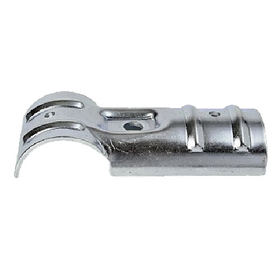

Innovation in single-tube pipes
- Stainless steel container
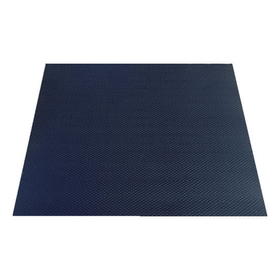
It covers the gaps in the mesh, preventing small items and bags from falling and preventing casters from sinking. We use high-load capacity "Daiaboard."
- Stainless steel container
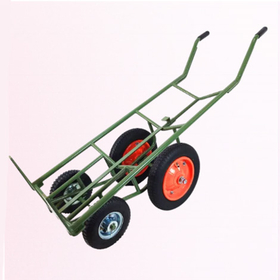
Multi-functional transport vehicle
- Stainless steel container
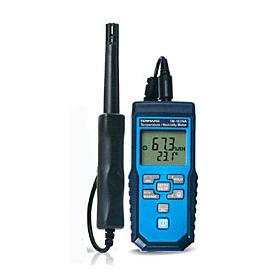
The MI1M-294NAM is a high-precision, multifunctional digital thermometer and hygrometer that can measure and display temperature, humidity, dew point temperature, and wet bulb temperature.
- Stainless steel container
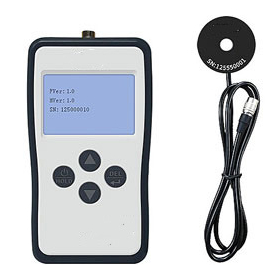
The MI1UVS-236M is a UV intensity meter that can support 11 types of probes.
- Stainless steel container
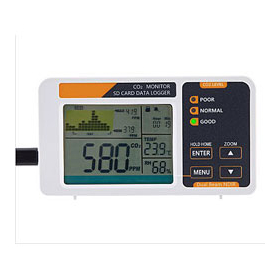
The MI1G-611H is a 4-in-1 CO2 monitor that measures CO2 concentration, ambient temperature, relative humidity, and real-time clock.
- Stainless steel container
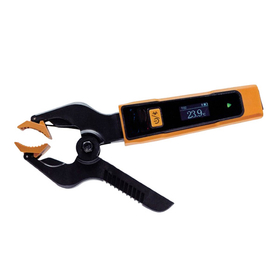
This one device will change the common sense of temperature clamps.
- Stainless steel container
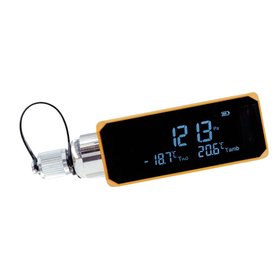
A vacuum gauge with a beautiful form and a clear display.
- Stainless steel container
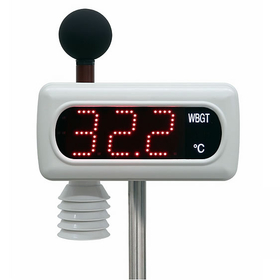
60mm high brightness large dot LED display! Lightweight and compact, with cyclic display of measurement values for clear visibility in hot environments.
- Stainless steel container


A comprehensive catalog featuring equipment and facilities handled by Nikko, including mixing, heating, crushing, conveying, and engineering!
- Mixer/agitator
![New Type Disk Atomizer [Sharpegg]](https://image.mono.ipros.com/public/product/image/f88/2000426517/IPROS80063311428999588323.jpeg?w=280&h=280)

Achieving a sharp particle size distribution!
- Drying Equipment