
List of Technical and Reference Books products
- classification:Technical and Reference Books
1~15 item / All 1713 items


It won't break even after 1 million repetitions! A mat switch with reliable operation, high durability, and low price. Suitable for options in machine tools as well. Please consult us about delivery t...
- Sensors


We can accommodate high resistance over 10,000 ohms, with diameters ranging from approximately 30 mm to 8 inches, and we also offer thinning and chip processing arrangements!
- Other semiconductors
- Processing Contract
- Wafer
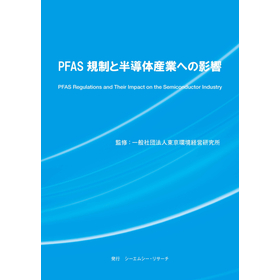

An easy-to-understand explanation of the latest trends in PFAS regulations, which are being strengthened globally!
- Technical and Reference Books
- Other semiconductors
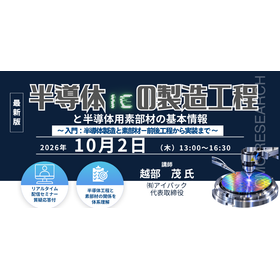
10/2 Web Seminar "Fundamentals of Semiconductor Manufacturing Processes and Materials"
■Title: "Manufacturing Process of Semiconductors (ICs) and Basic Information on Semiconductor Components" ~ Introduction: Semiconductor Manufacturing and Components - From Pre-Process to Implementation ~ This seminar systematically explains the overall picture of semiconductor manufacturing, from the IC manufacturing process to the implementation on circuit boards. Participants will learn about the flow of pre-process, post-process, and implementation processes, as well as the roles and necessities of the components used in each stage. Attendees will acquire basic information on semiconductor manufacturing and gain knowledge useful for the development of semiconductor components and the expansion of their own technologies. 【Knowledge Gained from the Seminar】 - Basic information on semiconductor manufacturing - Technical information on Japanese technologies active in the semiconductor field - Potential for expanding one's own technologies into the semiconductor field 【Target Audience for the Seminar】 - Individuals interested in basic technical information about semiconductor (IC) manufacturing - Individuals interested in the components used in IC manufacturing - Individuals interested in Japanese technologies (equipment, components) active in IC manufacturing
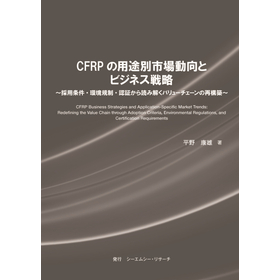
Reconstructing the value chain through the lens of employment conditions, environmental regulations, and certifications!
- Technical and Reference Books
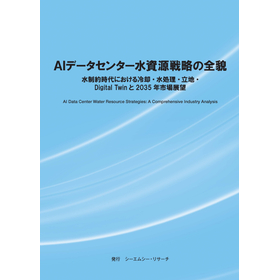
Cooling, water treatment, location, Digital Twin, and market outlook for 2035 in the era of water constraints!
- Technical and Reference Books
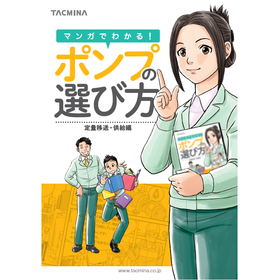

[Case of Trouble] Clearly Understand with Manga! How to Choose the Right Pump and Measures Against Selection Mistakes
- Technical and Reference Books
- Positive Displacement Pump
- Other pumps
![[Information] Differences between J...](https://image.mono.ipros.com/public/product/image/f11/2001486386/IPROS15773240856844668548.jpeg?w=280&h=280)

A must-see for waste disposal businesses! A service that offers affordable pricing with overwhelming cost performance and time efficiency.
- Technical and Reference Books
![[A Must-See for Waste Generators] E...](https://image.mono.ipros.com/public/product/image/6e2/2001482234/IPROS98839779021463242548.png?w=280&h=280)
Introduction to waste classification, Waste Management Law, and Industrial Waste Disposal Contract, etc.!
- Technical and Reference Books


A comprehensive explanation of the basics of thermal issues in control panels, as well as points related to the operation of control panels and energy-saving measures, spanning a total of 24 pages.
- Technical and Reference Books
![[Data] Classification of Non-Water-...](https://image.mono.ipros.com/public/product/image/f26/2000645264/IPROS02613700727502226673.jpeg?w=280&h=280)
A clear explanation of the classification of non-water-soluble cutting oils as hazardous materials according to fire safety laws!
- Technical and Reference Books

【Information "Classification of Non-Water-Soluble Cutting Oils as Hazardous Materials" Now Available】A clear explanation of the classification of hazardous materials according to the Fire Service Act!
[Information "Classification of Hazardous Materials for Non-Water-Soluble Cutting Oils" Released] Under the Fire Service Act, items that have a high risk of fire occurrence, a significant risk of fire spread if a fire occurs, and a high level of difficulty in extinguishing fires are designated as "hazardous materials." A crucial concept in the storage of hazardous materials is the designated quantity. This document summarizes the classification of hazardous materials and their respective designated quantities, so if you are interested, please download the PDF from the related catalog below or feel free to contact us. [Contents] ■ Hazardous materials under the Fire Service Act ■ Classification of hazardous materials for non-water-soluble cutting oils

[Free Distribution - 20 Pages in Total] A comprehensive explanation of the principles of electricity and the relationship between electricity and magnetism. For everyone who works with electricity dai...
- Technical and Reference Books
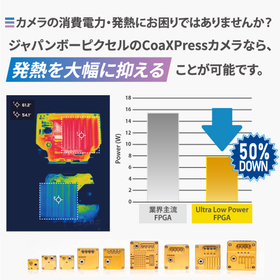

No need for heat sinks or cooling fans! Contributes to space-saving in monitoring systems.
- Monochrome camera
- Technical and Reference Books
- Visual Inspection Equipment
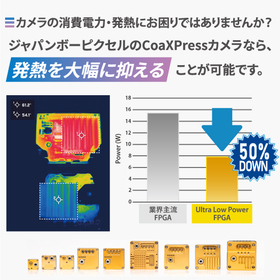
No need for heat sinks or cooling fans! Contributes to space-saving in signal systems.
- Monochrome camera
- Technical and Reference Books
- Visual Inspection Equipment

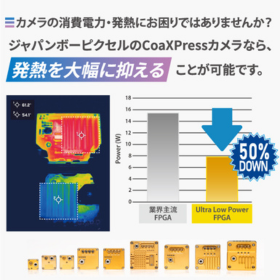
With Japan Bopixel's "CoaXPress camera," it is possible to significantly reduce heat generation!
- Monochrome camera
- Technical and Reference Books
- Visual Inspection Equipment
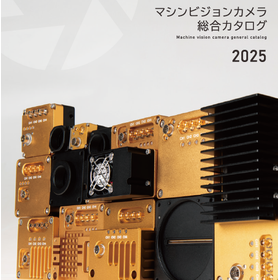
Japan Bo Pixel Product Comprehensive Catalog
[Latest] Japan Bo-Pixel Product Comprehensive Catalog [2025.08.A] You can download it from the bottom of this page > Related Catalogs. ■ Japan Bo-Pixel's CoaXPress Cameras High-speed and high-resolution, yet compact and fanless CoaXPress cameras. By adopting "next-generation key devices," we are addressing the traditional issue of heat generation, leveraging the advantages unique to latecomer manufacturers to take a new approach. [Contents] ■ CoaXPress Area Scan Camera ■ CoaXPress Line Scan Camera ■ CameraLink ■ 3D Camera ■ DLP Projector *For detailed information and specifications, please contact us.
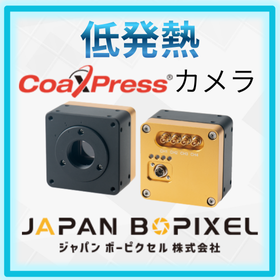
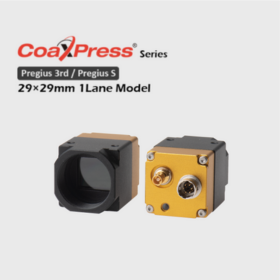
[Exhibition at Nepcon Japan 2026] CoaXPress camera that does not require a fan or heat sink. With a low heat generation design, you no longer have to worry about heat management.
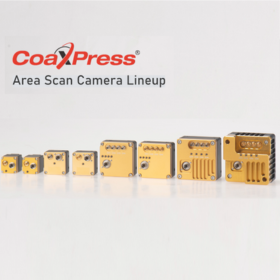
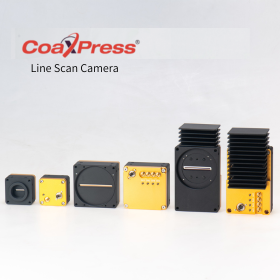
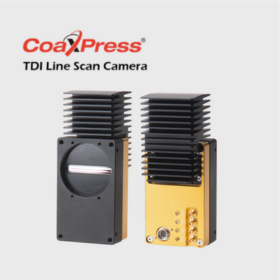
- Monochrome camera
- Technical and Reference Books
- Visual Inspection Equipment
Japan Bo Pixel Product Comprehensive Catalog
[Latest] Japan Bo-Pixel Product Comprehensive Catalog [2025.08.A] You can download it from the bottom of this page > Related Catalogs. ■ Japan Bo-Pixel's CoaXPress Cameras High-speed and high-resolution, yet compact and fanless CoaXPress cameras. By adopting "next-generation key devices," we are addressing the traditional issue of heat generation, leveraging the advantages unique to latecomer manufacturers to take a new approach. [Contents] ■ CoaXPress Area Scan Camera ■ CoaXPress Line Scan Camera ■ CameraLink ■ 3D Camera ■ DLP Projector *For detailed information and specifications, please contact us.