
List of Emulsifier/Disperser products
- classification:Emulsifier/Disperser
46~90 item / All 707 items


Reduce the workload from handling heavy objects! Here are five case studies that solved customer challenges! We are also accepting free consultations and tests tailored to your work!

- Other conveying machines


We can accommodate high resistance over 10,000 ohms, with diameters ranging from approximately 30 mm to 8 inches, and we also offer thinning and chip processing arrangements!
- Other semiconductors
- Processing Contract
- Wafer
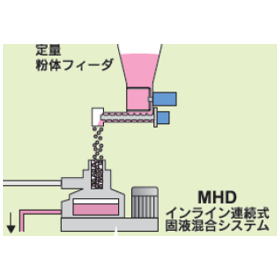

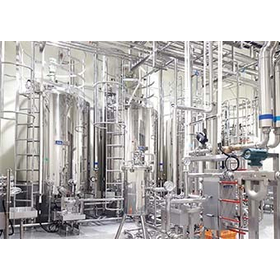
From powder supply to dispersion, defoaming, and transfer. A dispersion machine line compatible with high-viscosity slurries has been established.
- Emulsifier/Disperser
- Powder Supply Device
- Dispersion/emulsification equipment/homogenizer
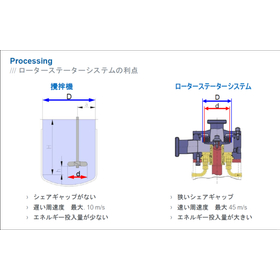
What are the reasons for changes in results from the lab to mass production? Causes and countermeasures for the deterioration of distributed quality during scale-up.
Despite obtaining good dispersion results in the lab, the challenge of unstable quality upon mass production occurs in many settings. The main cause of this is that the dispersion conditions are not replicated due to differences in scale. In lab equipment, the smaller size leads to higher energy density, making shear and flow more uniform, while in mass production equipment, the larger scale often results in insufficient dispersion energy at the same rotational speed and processing time. Additionally, differences in equipment structure and flow patterns can cause variations in the shear history and residence time experienced by particles, leading to differences in the dispersion state. Furthermore, simple scale-up does not ensure that critical parameters such as flow rate, residence time, and shear intensity match, making it difficult to reproduce the same results as in the lab. To address these challenges, it is essential to focus on process design based on dispersion energy density and flow conditions rather than merely increasing equipment size. By designing the system so that particles pass through the processing area under consistent conditions, it is possible to achieve reproducible dispersion quality even when the scale changes, as seen in inline continuous processing.
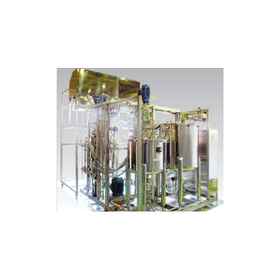
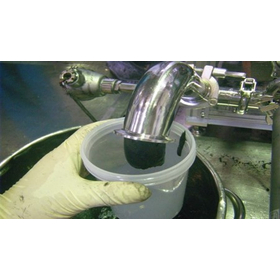
Inline dispersion system for continuous processing and stable dispersion of high-viscosity slurries.
- Emulsifier/Disperser
- Powder Supply Device
- Dispersion/emulsification equipment/homogenizer
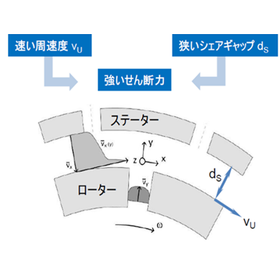
What is the relationship between viscosity and dispersion efficiency? The reason why dispersion becomes difficult under high viscosity conditions.
In dispersion processes, viscosity is an important factor that significantly affects dispersion efficiency. Generally, as viscosity increases, fluidity decreases, making it more difficult for dispersion energy to be transmitted to the particles. When viscosity is low, liquids flow easily, and shear energy is widely transmitted throughout the system, making it relatively easy to break apart particle agglomerates. On the other hand, as viscosity increases, flow becomes localized, and shear tends to be concentrated near the equipment. As a result, there is a mixture of particles that receive sufficient energy and those that do not, leading to variability in the dispersion state. Additionally, under high viscosity conditions, the movement of particles is also restricted, making collisions and breakdowns between agglomerates less likely. Consequently, even if the mixture appears homogeneous, there may be undispersed regions remaining internally. To enhance dispersion efficiency, it is crucial to implement appropriate shear conditions and flow designs according to viscosity. Particularly in inline continuous processing, it is possible to provide uniform shear to the particles within the flow, allowing for efficient transmission of dispersion energy even under high viscosity conditions. In dispersion processes, optimizing flow, shear, and processing time while considering the effects of viscosity is key to achieving stable dispersion quality.
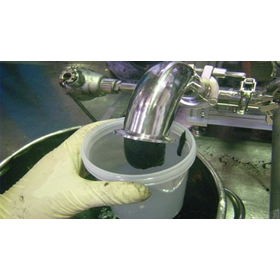
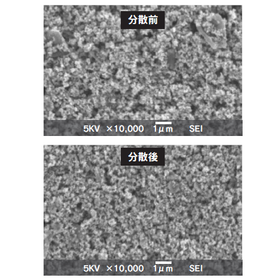
Supports high-viscosity dispersion of positive and negative electrode slurries. Assists in quality stabilization and mass production scale-up through continuous processing.
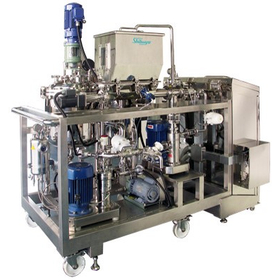
- Emulsifier/Disperser
- Powder Supply Device
- Dispersion/emulsification equipment/homogenizer
What is the relationship between viscosity and dispersion efficiency? The reason why dispersion becomes difficult under high viscosity conditions.
In dispersion processes, viscosity is an important factor that significantly affects dispersion efficiency. Generally, as viscosity increases, fluidity decreases, making it more difficult for dispersion energy to be transmitted to the particles. When viscosity is low, liquids flow easily, and shear energy is widely transmitted throughout the system, making it relatively easy to break apart particle agglomerates. On the other hand, as viscosity increases, flow becomes localized, and shear tends to be concentrated near the equipment. As a result, there is a mixture of particles that receive sufficient energy and those that do not, leading to variability in the dispersion state. Additionally, under high viscosity conditions, the movement of particles is also restricted, making collisions and breakdowns between agglomerates less likely. Consequently, even if the mixture appears homogeneous, there may be undispersed regions remaining internally. To enhance dispersion efficiency, it is crucial to implement appropriate shear conditions and flow designs according to viscosity. Particularly in inline continuous processing, it is possible to provide uniform shear to the particles within the flow, allowing for efficient transmission of dispersion energy even under high viscosity conditions. In dispersion processes, optimizing flow, shear, and processing time while considering the effects of viscosity is key to achieving stable dispersion quality.
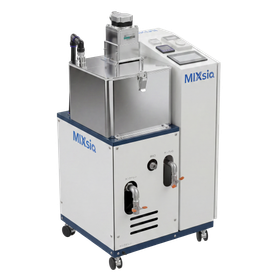

Dispersion, mixing, and emulsification in one machine.
- Emulsifier/Disperser
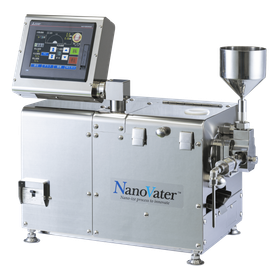

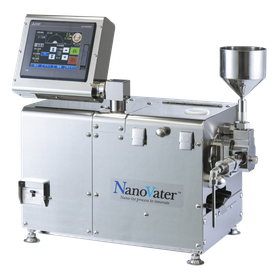
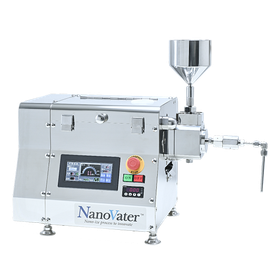
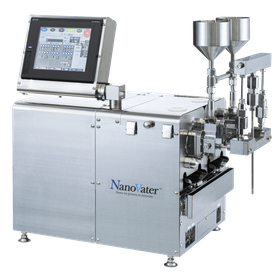
Introducing a wet media-free micronization experimental machine that performs three functions: emulsification, dispersion, and crushing, all in one unit!
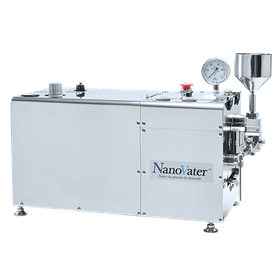
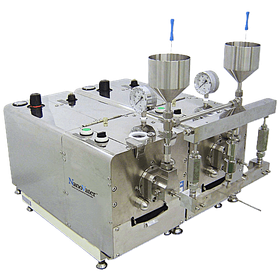
- Emulsifier/Disperser
- Homogenizer


For a wide range of applications in emulsification, dispersion, suspension, and dissolution! An emulsifying and dispersing machine that enables high-speed continuous processing.
- Emulsifier/Disperser
- Dispersion/emulsification equipment/homogenizer
- Mixer/agitator

Powerful shear force! Preparation of transparent emulsions is possible with a smaller amount of emulsifier!
- Emulsifier/Disperser
- Homogenizer
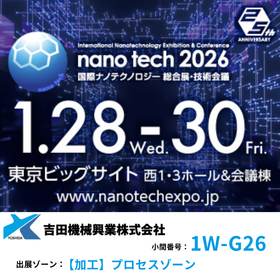
We will be exhibiting at nano tech 2026!
Nano tech is an exhibition that explores the social implementation of future technologies centered around nanotechnology, which is an important common foundational technology for research and development. It brings together innovative materials and next-generation devices, realizing the commercialization of research and development and co-creation of innovation. Many companies involved in nanotechnology will be exhibiting, so please feel free to visit for information gathering! At our booth, we will showcase processing examples of metal nanoparticles and PVB resin, as well as the "Nano Vator," which can emulsify, disperse, fiberize, and crush all in one machine, the "Damatri" for liquid separation and mixing piping, and the "Multi Damatri," which also accommodates mixing of high-viscosity and high-concentration materials! We look forward to your visit!


Even for first-time users, after inserting the sample, emulsification and dispersion processing can be performed simply by tapping the operation screen four times, using shear force from high pressure...
- Emulsifier/Disperser

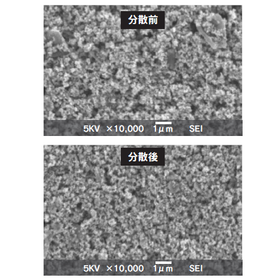
We propose "Damatri System" and "NanoVator" for the uniform dispersion and mixing of carbon nanotubes. Comparison images with propeller stirring are currently available.

- Emulsifier/Disperser
- Homogenizer

We will be exhibiting at the International Powder Technology Exhibition Osaka 2025!
The International Powder Technology Exhibition Osaka "POWTEX2025" is a specialized exhibition related to "powder technology." At the exhibition, many companies involved in powder technology will showcase the latest technologies and products from major companies, as well as displays related to future materials and powder simulation. We encourage you to visit for information gathering. And please stop by our booth as well! At this exhibition, we plan to showcase the "NanoVator," which can emulsify, disperse, fiberize, and crush with a single machine, and the "Damatri," which can mix and dissolve materials that tend to clump together using just one pipe, along with other processing samples. We look forward to your visit!

【20th Anniversary Sales Campaign Now Underway!】Introducing a tabletop experimental device equipped with three modes: "Constant Discharge, Double Discharge, and Different Discharge."
- Emulsifier/Disperser
- Homogenizer

We will be exhibiting at CITE JAPAN 2025!
The Cosmetics Industry Technology Exhibition (CITE JAPAN) is an exhibition aimed at providing a meaningful platform for information exchange through displays and technical presentations related to useful and cutting-edge materials, technologies, and services in the cosmetics industry, contributing to the development of the cosmetics industry. Many companies involved in cosmetics will be exhibiting, so please come and gather information! At our booth, we will showcase the "NanoVator," which can emulsify, disperse, fiberize, and crush with a single unit, as well as the "Damatri," which can mix and dissolve materials that tend to clump together using just one pipe, and the "Micro 305," which is used as a cosmetic ingredient. We will also be distributing samples! Please feel free to stop by!

【20th Anniversary Sales Campaign Ongoing!】No power supply needed, dustproof! Introducing an air-driven tabletop experimental device.
- Emulsifier/Disperser
- Homogenizer
We will be exhibiting at nano tech 2026!
Nano tech is an exhibition that explores the social implementation of future technologies centered around nanotechnology, which is an important common foundational technology for research and development. It brings together innovative materials and next-generation devices, realizing the commercialization of research and development and co-creation of innovation. Many companies involved in nanotechnology will be exhibiting, so please feel free to visit for information gathering! At our booth, we will showcase processing examples of metal nanoparticles and PVB resin, as well as the "Nano Vator," which can emulsify, disperse, fiberize, and crush all in one machine, the "Damatri" for liquid separation and mixing piping, and the "Multi Damatri," which also accommodates mixing of high-viscosity and high-concentration materials! We look forward to your visit!

【20th Anniversary Sales Campaign Now Underway!】Parallel connection of two conventional units expands processing capacity! Air-type tabletop experimental machine capable of pulsation reduction operatio...
- Emulsifier/Disperser
- Homogenizer

We will be exhibiting at the Food Development Expo 2025!
The Food Development Expo is a specialized exhibition for research and development, quality assurance, and manufacturing engineers in the food sector! Many companies related to the four major themes of food—health, taste, safety and quality, and food long life—will be exhibiting. Our company plans to exhibit at the Safety & Technology Japan (S-tec Japan) booth. We will showcase the "Damatri System," which can be used for the dispersion and mixing of thickeners necessary in the food industry, and the "Nano Vator," which can emulsify, disperse, fiberize, and crush all in one machine! Please feel free to stop by!

【20th Anniversary Sales Campaign Now Underway!】Introducing a compact tabletop experimental device designed to meet the demand for space-saving solutions.
- Emulsifier/Disperser
- Homogenizer

NanoVita 20th Anniversary Campaign
This year marks the 20th anniversary of the "NanoVita," and you can purchase a limited edition at an affordable price. If you have any challenges in the emulsification, dispersion, crushing, or fiber separation processes, please consider this opportunity!


Achieves stable emulsification and dispersion with high uniformity without surfactants.
- Emulsifier/Disperser
- Dispersion/emulsification equipment/homogenizer
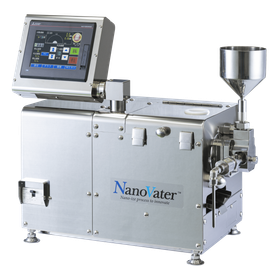
【20th Anniversary Sales Campaign Now Underway!】Introducing a wet media-less micronization experimental machine that performs three functions: "emulsification, dispersion, and crushing" all in one devi...
- Emulsifier/Disperser
- Homogenizer
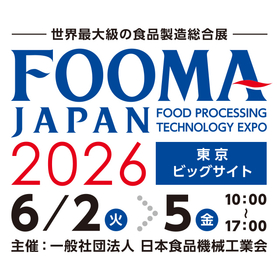
We will be exhibiting for the first time at FOOMA JAPAN 2026! (June 2-5)
FOOMA JAPAN is one of the largest comprehensive exhibitions for food manufacturing in the world, aimed at the exchange and dissemination of technology and information related to food machinery, equipment, and associated devices. Many companies from a wide range of exhibition and display fields will participate, covering the entire food manufacturing process from upstream to downstream. We encourage you to visit for information gathering, and please stop by our booth as well! At this exhibition, we will showcase the "NanoVator," which can emulsify, disperse, defiber, and crush with a single unit, as well as the "Damatri," which can mix and dissolve materials that tend to clump together using just one pipe, along with other processing samples. We look forward to your visit!


A leaflet is being distributed that teaches the basics of ultrasonic homogenizers!
- Emulsifier/Disperser

A leaflet is being distributed that teaches the basics of ultrasonic homogenizers!
- Emulsifier/Disperser

A leaflet is being distributed that teaches the basics of ultrasonic homogenizers!
- Emulsifier/Disperser

The fusion of humanity and technology is the eternal dream of Mitsui Electric Machinery.
- Emulsifier/Disperser

Peace of mind from domestic manufacturers! This is equipment with many years of experience and a proven track record!
- Emulsifier/Disperser

Free demo unit rental campaign underway!
Don't let the coronavirus defeat you! In response, our company will be conducting a campaign to lend out demo units of our tabletop coater and ultrasonic homogenizer models. The reservation period for this campaign will be from April 15 to the end of May, and the actual lending dates will be discussed separately. You can make a reservation by the end of May, and it is also acceptable to borrow after July. Reservations will be on a first-come, first-served basis, so please contact us as soon as possible.
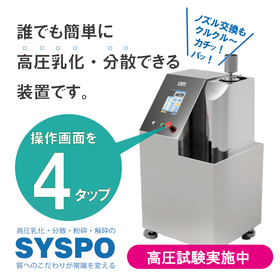
Even for first-time users, after inserting the sample, emulsification and dispersion processing can be performed simply by tapping the operation screen four times, using shear force from high pressure...
- Emulsifier/Disperser
- Dispersion/emulsification equipment/homogenizer
- Other emulsification and dispersion equipment
![[Development] Easy for anyone! Wet ...](https://image.mono.ipros.com/public/product/image/2055635/IPROS7456020742174166211.png?w=280&h=280)
Even for first-time users, after inserting the sample, emulsification and dispersion processing can be performed simply by tapping the operation screen four times, using shear force from high pressure...
- Emulsifier/Disperser
- Dispersion/emulsification equipment/homogenizer
- Other emulsification and dispersion equipment
![[Research] Easy for anyone! Wet hig...](https://image.mono.ipros.com/public/product/image/2055635/IPROS15684142523708266956.png?w=280&h=280)
Even for first-time users, after inserting the sample, emulsification and dispersion processing can be performed simply by tapping the operation screen four times, using shear force from high pressure...
- Emulsifier/Disperser
- Dispersion/emulsification equipment/homogenizer
- Other emulsification and dispersion equipment
![[Food] Easy for anyone! Wet high-pr...](https://image.mono.ipros.com/public/product/image/2055635/IPROS13943035918138962759.png?w=280&h=280)
Even for first-time users, after inserting the sample, emulsification and dispersion processing can be performed simply by tapping the operation screen four times, using shear force from high pressure...
- Emulsifier/Disperser
- Dispersion/emulsification equipment/homogenizer
- Emulsifying and dispersing machine
![[Pharmaceuticals] Easy for anyone! ...](https://image.mono.ipros.com/public/product/image/2055635/IPROS5737608608798882530.png?w=280&h=280)
Even for first-time users, after inserting the sample, emulsification and dispersion processing can be performed simply by tapping the operation screen four times, using shear force from high pressure...
- Emulsifier/Disperser
- Dispersion/emulsification equipment/homogenizer
- Emulsifying and dispersing machine
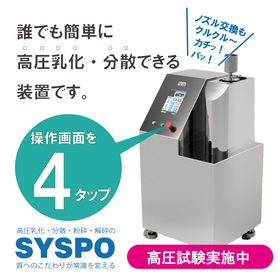
Even for first-time users, after inserting the sample, you can perform emulsification and dispersion processing simply by tapping the operation screen four times, thanks to the shear force generated b...
- Emulsifier/Disperser
- Cell dispersion reagent
- Dispersion/emulsification equipment/homogenizer

Integrated dispersion and classification mechanism - New Ultra Separator
- Crusher
- Separation device
- Emulsifier/Disperser
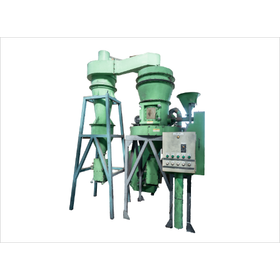
Integration of dispersion and classification mechanisms contributes to improved reactivity.
- Crusher
- Separation device
- Emulsifier/Disperser
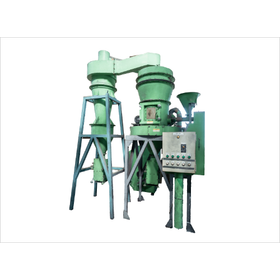
Integration of dispersal and classification mechanisms contributes to uniform fertilizer application.
- Crusher
- Separation device
- Emulsifier/Disperser
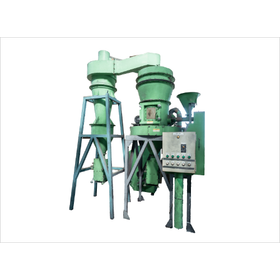
Integration of dispersion and classification mechanisms contributes to resource recovery.
- Crusher
- Separation device
- Emulsifier/Disperser
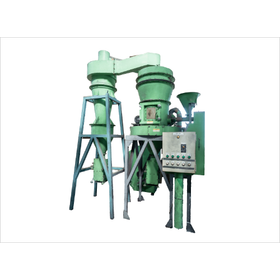
Integrated dispersion and classification mechanism - fine powder classifier
- Crusher
- Separation device
- Emulsifier/Disperser
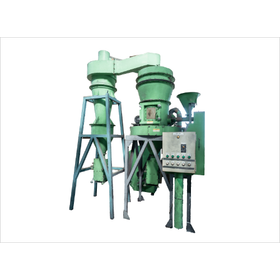
Integrated dispersion and classification mechanism - New Ultra Separator
- Crusher
- Separation device
- Emulsifier/Disperser
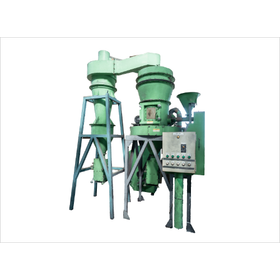
Integrated dispersion and classification mechanism - New Ultra Separator
- Crusher
- Separation device
- Emulsifier/Disperser
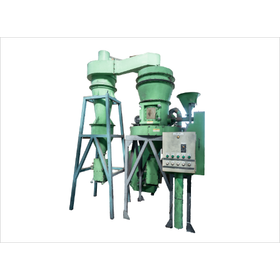
Integration of dispersion and classification mechanisms contributes to improved productivity.
- Crusher
- Separation device
- Emulsifier/Disperser
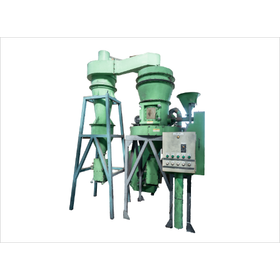
Integration of dispersion and classification mechanisms for particle size adjustment in food.
- Crusher
- Separation device
- Emulsifier/Disperser
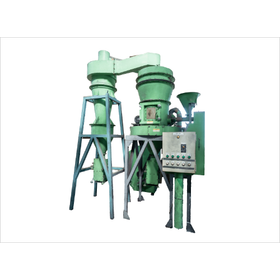
Integrated dispersion and classification mechanism - New Ultra Separator
- Crusher
- Separation device
- Emulsifier/Disperser
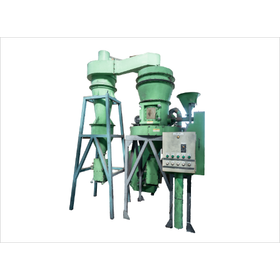
Integrated dispersion and classification mechanism - fine powder classifier
- Crusher
- Separation device
- Emulsifier/Disperser

Even for first-time users, after inserting the sample, emulsification and dispersion processing can be performed simply by tapping the operation screen four times, using shear force from high pressure...
- Emulsifier/Disperser
- Fine grinding machine


ULREA is a forced thin-film microreactor, a reaction device based on a new principle that utilizes the microchannel formation technology we have independently developed.


- Emulsifier/Disperser

We will be exhibiting at the 31st Interphex Japan!
We will be exhibiting at the 31st Interphex Japan! Period: June 27 (Wednesday) to June 29 (Friday), 2018 Venue: Tokyo Big Sight, East Hall 3 If you would like an invitation ticket, please let us know.
![[Free Gift] Gadelius Industry Produ...](https://image.mono.ipros.com/public/product/image/5a4/2000334719/IPROS5886392164521717641.jpg?w=280&h=280)

[Free Gift] A wide variety of products expected to perform well in various fields are featured!
- Filling and bottling machines
- Emulsifier/Disperser
- Other cleaning machines