
List of Sensors products
- classification:Sensors
676~690 item / All 1283 items


Reduce the workload from handling heavy objects! Here are five case studies that solved customer challenges! We are also accepting free consultations and tests tailored to your work!

- Other conveying machines


Strong cold wind from room temperature to -13°C! Depending on the usage environment, you can choose between the combo type or the separate type!
- Cooling system

April 10, 2024 (Wednesday) to April 12, 2024 (Friday) Notice of Participation in Nagoya Manufacturing World 2024
Sanwa Shiki Ventilator Co., Ltd. will be exhibiting at the 2024 Monozukuri World (Nagoya) held at Port Messe Nagoya. We will also be showcasing our large cooling fans and cool/warm ambient products. Date: April 10, 2024 - April 12, 2024 Opening: 10:00 AM Location: Nagoya Port Messe (Exhibition Hall 1) *Our booth: 19-1 We would be grateful if you could visit us if you have the time.


No batteries needed for passive RFID! Custom tag sizes are also available.
- Sensors


It is a filter designed to transmit light in two specific wavelength bands while blocking (preventing) other wavelength bands. It is ideal for surveillance cameras and similar applications.
- Surveillance Cameras
- Other optical parts
- Sensors

I have added 'A Comprehensive Explanation of Near-Infrared in 5 Minutes!' to the technology trend keywords.
Light includes "visible light," which can be seen by the human eye, and invisible light. Near-infrared (NIR) is one type of "invisible light" located right next to visible light. In fact, it is deeply involved in various devices and industrial processes around us, and its importance has been increasing in recent years. We will explain clearly from the basics of "What is near-infrared?" to the fields in which it is used, and its relationship with optical coating technology. 01: What is near-infrared? — Organizing the "companions" of light 02: Where is near-infrared used? — Expanding application fields 03: The relationship between near-infrared and optical coatings — The power of "thin films" that enhance performance 04: The precision required for near-infrared filters Summary: The key to utilizing near-infrared lies in precise optical thin films Near-infrared compatible filter "Artisan Infrared" For more details, please visit our company website.


We can accommodate from just one unit! We provide high-quality sensors that go a step further for both thermocouples and temperature resistance thermometers, meeting your company's needs.
- Sensors
- Sensors

Over 500 successful projects and a rich lineup of film deposition processing. With 100 years of experience since our founding, we contribute to our customers' technological innovations through optical...
- Sensors
- LED lighting
- Other optical parts
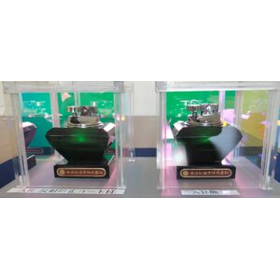
Co-creation proposal! Added 'Stationery/Office Supplies × Optical Thin Films' as a technical trend keyword.
Even in the current era of accelerating digitalization, stationery and office supplies remain indispensable to our work and learning. Not only traditional products like notebooks and writing instruments, but also electronic whiteboards, tablet devices, conference systems, digital signage, and authentication cards are becoming increasingly advanced in office spaces year by year. In particular, recent market changes such as hybrid work, the ICT transformation in education, the development of smart offices, enhanced information security, and the introduction of sensing technologies have made "visibility," "usability," and "information reading accuracy" significantly influence product value. Among these, the technology for "controlling light" has begun to attract attention. 01: Stationery and office supplies are becoming "information devices." 02: AR coatings change "visibility" and "ease of work." 03: The evolution of digital stationery and sensing technology. 04: New possibilities for "attractive stationery" and optical thin films. Summary: The next stationery and office supplies will be differentiated by "light." For more details, please visit our company website.

It is a historic chemical products trading company founded in the 7th year of the Taisho era, and at the same time, it is a technology company that performs cutting-edge processing such as optical thi...
- Sensors
- Laser Components
- Surveillance Cameras
Report on Obtaining ISO 45001 (Occupational Health and Safety Management System) Certification
We are pleased to announce that Adachi New Industry Co., Ltd. has obtained certification for the international standard for occupational health and safety management systems, "ISO 45001," in May 2026. ISO 45001 is an international standard aimed at reducing the risks of workplace accidents and occupational diseases, and continuously improving the work environment so that employees can work safely and healthily. With this certification, our company will establish an even more organized and systematic safety and health management system, further promoting the creation of an environment where all employees can engage in their work with peace of mind. Our company is already operating an environmental management system, "ISO 14001" (obtained in June 2004), and a quality management system, "ISO 9001" (obtained in March 2018). With the acquisition of ISO 45001, we have been able to establish a management system based on international standards in the three areas of quality, environment, and occupational health and safety. Moving forward, Adachi New Industry Co., Ltd. will continue to provide high-quality products and services to our customers, as well as strive to create a workplace environment where each employee can take pride in their work, through relentless improvement and challenges. We appreciate your continued support and patronage.

It is a high light-transmitting ITO coating that combines an ITO film (transparent conductive film) with a dielectric multilayer anti-reflective film. It prevents condensation while allowing high tran...
- Other optical parts
- Sensors
- Surveillance Cameras
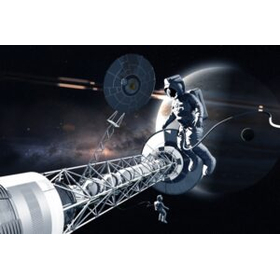
Co-creation proposal! Added 'Space × Optical Films' as a technology trend keyword.
Outer space is the most challenging and promising field for optical thin films. Environmental factors that are completely different from those on the ground—vacuum ultraviolet, high-energy particles, extreme thermal cycles, atomic oxygen—simultaneously pose threats to the thin films, while it is precisely these films that maintain the accuracy of sensing, communication, and observation. As the trend of New Space accelerates, the scenarios in which optical thin films influence the competitiveness of space development are increasing. We aspire to be more than just a "coating manufacturer"; we want to be partners who think together from the very beginning of development. It is perfectly fine if the requirements are not yet solidified or if we are still in the preliminary stages of specifications. We hope this can serve as a starting point for dialogue with engineers working on space products. Chapter 01: The Three Barriers that the Space Environment Poses to Optical Thin Films Chapter 02: Main Applications of Space × Optical Thin Films—Where Thin Films Thrive Chapter 03: How to Choose Optical Thin Films—The Trinity of Materials, Design, and Process Chapter 04: Proposal for Co-Creation Steps—"Start Small and Grow Steadily" Summary—Together, Let’s Take on the Challenge of Space with the Power of Thin Films.

It is an optical thin-film filter that reduces the reflectance at specific wavelengths and improves transmittance. By increasing the amount of light, it contributes to energy saving and power reductio...
- Other optical parts
- lens
- Sensors
Co-creation proposal! Added 'Space × Optical Films' as a technology trend keyword.
Outer space is the most challenging and promising field for optical thin films. Environmental factors that are completely different from those on the ground—vacuum ultraviolet, high-energy particles, extreme thermal cycles, atomic oxygen—simultaneously pose threats to the thin films, while it is precisely these films that maintain the accuracy of sensing, communication, and observation. As the trend of New Space accelerates, the scenarios in which optical thin films influence the competitiveness of space development are increasing. We aspire to be more than just a "coating manufacturer"; we want to be partners who think together from the very beginning of development. It is perfectly fine if the requirements are not yet solidified or if we are still in the preliminary stages of specifications. We hope this can serve as a starting point for dialogue with engineers working on space products. Chapter 01: The Three Barriers that the Space Environment Poses to Optical Thin Films Chapter 02: Main Applications of Space × Optical Thin Films—Where Thin Films Thrive Chapter 03: How to Choose Optical Thin Films—The Trinity of Materials, Design, and Process Chapter 04: Proposal for Co-Creation Steps—"Start Small and Grow Steadily" Summary—Together, Let’s Take on the Challenge of Space with the Power of Thin Films.

It is an optical filter that cuts ultraviolet and infrared light while having a high transmittance in the visible light range.
- Other optical parts
- Surveillance Cameras
- Sensors
Co-creation proposal! Added 'Space × Optical Films' as a technology trend keyword.
Outer space is the most challenging and promising field for optical thin films. Environmental factors that are completely different from those on the ground—vacuum ultraviolet, high-energy particles, extreme thermal cycles, atomic oxygen—simultaneously pose threats to the thin films, while it is precisely these films that maintain the accuracy of sensing, communication, and observation. As the trend of New Space accelerates, the scenarios in which optical thin films influence the competitiveness of space development are increasing. We aspire to be more than just a "coating manufacturer"; we want to be partners who think together from the very beginning of development. It is perfectly fine if the requirements are not yet solidified or if we are still in the preliminary stages of specifications. We hope this can serve as a starting point for dialogue with engineers working on space products. Chapter 01: The Three Barriers that the Space Environment Poses to Optical Thin Films Chapter 02: Main Applications of Space × Optical Thin Films—Where Thin Films Thrive Chapter 03: How to Choose Optical Thin Films—The Trinity of Materials, Design, and Process Chapter 04: Proposal for Co-Creation Steps—"Start Small and Grow Steadily" Summary—Together, Let’s Take on the Challenge of Space with the Power of Thin Films.

It achieves excellent ultraviolet transmission rates and can be adapted to the light sources you plan to use (such as high-pressure mercury lamps, various laser lights, UV LEDs, etc.).
- LED Module
- Sensors
- Ultraviolet irradiation equipment
Co-creation proposal! Added 'Space × Optical Films' as a technology trend keyword.
Outer space is the most challenging and promising field for optical thin films. Environmental factors that are completely different from those on the ground—vacuum ultraviolet, high-energy particles, extreme thermal cycles, atomic oxygen—simultaneously pose threats to the thin films, while it is precisely these films that maintain the accuracy of sensing, communication, and observation. As the trend of New Space accelerates, the scenarios in which optical thin films influence the competitiveness of space development are increasing. We aspire to be more than just a "coating manufacturer"; we want to be partners who think together from the very beginning of development. It is perfectly fine if the requirements are not yet solidified or if we are still in the preliminary stages of specifications. We hope this can serve as a starting point for dialogue with engineers working on space products. Chapter 01: The Three Barriers that the Space Environment Poses to Optical Thin Films Chapter 02: Main Applications of Space × Optical Thin Films—Where Thin Films Thrive Chapter 03: How to Choose Optical Thin Films—The Trinity of Materials, Design, and Process Chapter 04: Proposal for Co-Creation Steps—"Start Small and Grow Steadily" Summary—Together, Let’s Take on the Challenge of Space with the Power of Thin Films.

It is a filter that efficiently cuts (reflects) short-wavelength UV (ultraviolet) light while allowing visible light to pass through.
- Sensors
- Other optical parts
- Lighting for image processing
Co-creation proposal! Added 'Space × Optical Films' as a technology trend keyword.
Outer space is the most challenging and promising field for optical thin films. Environmental factors that are completely different from those on the ground—vacuum ultraviolet, high-energy particles, extreme thermal cycles, atomic oxygen—simultaneously pose threats to the thin films, while it is precisely these films that maintain the accuracy of sensing, communication, and observation. As the trend of New Space accelerates, the scenarios in which optical thin films influence the competitiveness of space development are increasing. We aspire to be more than just a "coating manufacturer"; we want to be partners who think together from the very beginning of development. It is perfectly fine if the requirements are not yet solidified or if we are still in the preliminary stages of specifications. We hope this can serve as a starting point for dialogue with engineers working on space products. Chapter 01: The Three Barriers that the Space Environment Poses to Optical Thin Films Chapter 02: Main Applications of Space × Optical Thin Films—Where Thin Films Thrive Chapter 03: How to Choose Optical Thin Films—The Trinity of Materials, Design, and Process Chapter 04: Proposal for Co-Creation Steps—"Start Small and Grow Steadily" Summary—Together, Let’s Take on the Challenge of Space with the Power of Thin Films.

It is a dielectric multilayer film filter that transmits visible light and reflects near-infrared light.
- Other optical parts
- Color camera
- Sensors
Co-creation proposal! Added 'Space × Optical Films' as a technology trend keyword.
Outer space is the most challenging and promising field for optical thin films. Environmental factors that are completely different from those on the ground—vacuum ultraviolet, high-energy particles, extreme thermal cycles, atomic oxygen—simultaneously pose threats to the thin films, while it is precisely these films that maintain the accuracy of sensing, communication, and observation. As the trend of New Space accelerates, the scenarios in which optical thin films influence the competitiveness of space development are increasing. We aspire to be more than just a "coating manufacturer"; we want to be partners who think together from the very beginning of development. It is perfectly fine if the requirements are not yet solidified or if we are still in the preliminary stages of specifications. We hope this can serve as a starting point for dialogue with engineers working on space products. Chapter 01: The Three Barriers that the Space Environment Poses to Optical Thin Films Chapter 02: Main Applications of Space × Optical Thin Films—Where Thin Films Thrive Chapter 03: How to Choose Optical Thin Films—The Trinity of Materials, Design, and Process Chapter 04: Proposal for Co-Creation Steps—"Start Small and Grow Steadily" Summary—Together, Let’s Take on the Challenge of Space with the Power of Thin Films.

We offer mirrors that combine reflective performance and cost-effectiveness. The main feature is that they have low dependence on the angle of incidence.
- mirror
- Plastic processing machines (cutting and rolling)
- Sensors
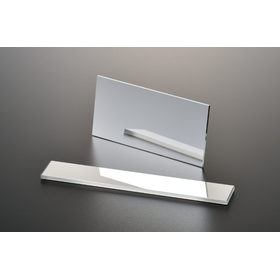
Added 'A Comprehensive Comparison of Metal Mirrors in 5 Minutes!' to the technology trend keywords.
Among optical components, metal mirrors possess characteristics such as "broadband and stable reflection performance," "minimal variation in properties with respect to incident angle," and "excellent durability," making them a crucial factor that influences the reliability of devices. They can cover not only visible light but also infrared (IR) and even ultraviolet (UV) regions, leading to their widespread adoption from fundamental research to industrial applications. In this article, we will thoroughly compare the types of representative metal mirrors and their features, clearly organizing selection points based on applications and purposes. We aim to provide helpful information for those wondering, "Which metal is best suited for my device?" 1. The mechanism of metal mirrors and representative coating materials 2. Evaluation criteria for major metal mirrors 3. Aluminum mirrors (Al) 4. Silver mirrors (Ag) 5. Gold mirrors (Au) 6. Aluminum enhanced mirrors (Al Enhanced Mirror) 7. Recommended metal mirrors by application (selection guide based on technical background) 8. The added value that Adachi New Industry can provide (technology + proposal capability)


MEMS Specialized Technology Foundry APM
- Sensors
- Other semiconductors
- Sensors

ict Corporation Insertion Type Ultrasonic Flow Meter ULSONA DT
- Flow Control
- Flow Meter
- Sensors

ICT Corporation High Precision Temperature Measurement Function Clamp-On Ultrasonic Flow Meter CalorienaR2
- Flow Control
- Water Hydraulic Equipment
- Sensors