
List of Sensors products
- classification:Sensors
481~540 item / All 1188 items


For those who have isolators. Achieving high chemical resistance and workability. Low cost and short delivery times are also possible for glove box and isolator gloves.


- Work gloves
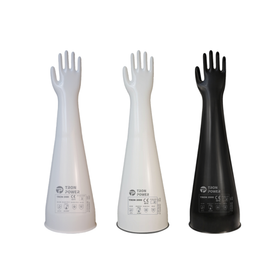
Notice of participation in 'INTERPHEX Week Tokyo' from May 20 (Wednesday) to May 22 (Friday), 2026.
Ito Corporation will be exhibiting at "INTERPHEX Week Tokyo" held at Makuhari Messe. This exhibition is the largest in Japan, showcasing a wide range of products and services related to the research and manufacturing of pharmaceuticals, cosmetics, and regenerative medicine from 25 countries and regions around the world. Pharmaceutical and cosmetic manufacturers, as well as regenerative medicine companies, will be attending from all over the globe. We will be showcasing "Gloves for Glove Boxes/Isolators" manufactured by Tron Power. We look forward to your visit.


No coding required with the dedicated setup tool! Easily install on equipment for a smart IoT transformation!
- Sensors


It is an optical filter that transmits light of a specific wavelength while reflecting light of other wavelengths. It transmits visible light of a specific wavelength and reflects its complementary co...
- Other optical parts
- Distance measuring device
- Sensors
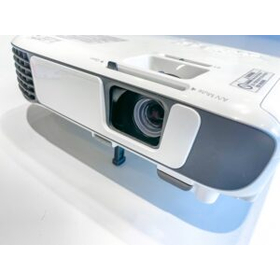
I have added 'Understanding Optical Filters Used in Projectors in 5 Minutes!' to the technical trend keywords.
At the 2025 Osaka-Kansai Expo, cutting-edge technology and cultural expression were beautifully integrated, with projector technology fully utilized to stimulate the senses of visitors. Immersive video presentations and interactive exhibition experiences, both inside and outside the pavilions, were made possible through projection with high brightness, high resolution, and wide color gamut. It may be a bit late to say this, but from the perspective of "Could projectors hold the key to future visual expression?", I have summarized the optical components used in projectors in a way that can be understood in five minutes. Please feel free to read on. 【1】Changes in the projector market 【2】Comparison of LCD, DLP, and LCOS 【3】General optical structure of projectors 【4】Types and specifications of optical filters for projectors 【5】Future trends in projectors and the position of Japanese thin-film manufacturers Conclusion - Nevertheless, Adachi New Industry is committed to domestic production For more details, please visit our company website.


To understand the flooding situation in the area. Utilizing existing poles to contribute to the low-cost construction of disaster reduction mechanisms.
- Sensors


Maintains accurate measurements with the automatic calibration feature of CO2! Wireless CO2 sensor adopting photoacoustic NDIR method in accordance with the guidelines of the Ministry of Economy, Trad...
- Sensors
- Other environmental equipment
- Other environmental analysis equipment


The sensing unit is flexible, making it suitable for a variety of applications! Model with built-in preamplifier.
- Sensors


Improvement in speed and efficiency achieved through system implementation.
- Sensors
- Other embedded systems (software and hardware)
- Other contract services


Visualize indoor carbon dioxide levels at one-second intervals! A CO2 sensor that clearly indicates when to ventilate.
- Other measurement, recording and measuring instruments
- Sensors
- Sensors


Introducing the foundational technology for obtaining small, high-speed, and highly sensitive ball SAW sensors.
- Sensors

Introduction to portable gas chromatographs for gas analysis anytime, anywhere.
- Sensors

Accidentally discovered the generation of ultrasonic waves and their circulation! An explanation about ball SAW.
- Sensors

It is an optical filter that selectively transmits light below a specific wavelength and blocks light with longer wavelengths.
- Other optical parts
- Color camera
- Sensors

Added 'Kansai Expo x Optical Thin Films Episode: 8' to the technology trend keywords.
The Kansai Expo is being held as an international event where cutting-edge technologies, services, and cultural expressions from around the world gather under the grand theme of "Designing a Future Society Where Life Shines" (as of the article dated September 29, 2025). From AI-driven autonomous robots and next-generation mobility to immersive video experiences, space exploration technologies, and future medical and healthcare innovations, a wide range of innovative technologies are being showcased right before the eyes of visitors, providing a valuable opportunity to experience the vision of society's future up close. In our series, we have focused on optical thin films and fine pattern processing (metallization) technologies, which function as the unsung heroes behind these cutting-edge technologies, introducing them over seven installments. Optical thin films enable precise light control, such as reflection, transmission, and wavelength selection, playing an essential role in various advanced devices like sensors, cameras, projectors, and space equipment. Meanwhile, fine pattern processing serves as a foundational technology that supports the high precision of electronic devices, biosensors, and next-generation displays by controlling structures at the nanometer level. For more details, please visit our company website.

It is a special anti-reflective coating (AR coat) that can have peaks at multiple wavelengths. It is a filter that can be optimally designed for various optical devices.
- Sensors
- Other optical parts
- lens
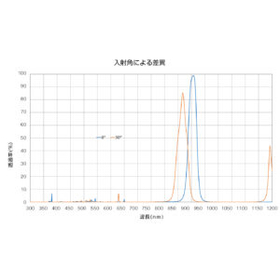
Thorough Explanation! Added 'Angle Dependence of Optical Thin Film Filters' to the Technical Trend Keywords.
Optical thin-film filters are important optical components designed to transmit and reflect light at specific wavelengths. Optical filters have the troublesome characteristic of "angle dependence," where the transmission and reflection properties change depending on the observation angle and the angle of incidence. This property can be both an advantage and a challenge depending on the usage conditions of the filter. In this article, we will explain in detail the reasons for the angle dependence of optical thin-film filters and its effects, as well as practical considerations and countermeasures. 1. Basics of optical thin-film filters and angle dependence 2. What is angle dependence? 3. Effects of angle dependence and application examples 4. Countermeasures and design considerations for angle dependence A message to designers - from a film manufacturing company For more details, please visit our website.

A two-component force gauge capable of measuring two-component forces.
- Other weight measuring instruments
- Sensors

Ultra-compact measurement of 6 minutes of force!
- Weight related measuring instruments
- Sensors

Multi-force sensor with built-in amplifier for 6-axis measurement.
- Weight related measuring instruments
- Sensors
- Other weight measuring instruments

Built-in amplifier. Custom-made compatible force gauge.
- Weight related measuring instruments
- Sensors
- Other weight measuring instruments

It is a super compact 6-axis force measurement multi-force sensor (force gauge).
- Weight related measuring instruments
- Sensors
- Other weight measuring instruments


Capacitive touch sensor without contact points or mechanical moving parts.
- Touch Panel
- Sensors
- Sensors


Structure suitable for measuring liquid pharmaceuticals and ultra-pure water! Examples of applications for measuring liquid pharmaceuticals and cleaning water.
- Sensors

High-sensitivity measurement from an ultra-low differential pressure range (10 Pa)! A sensor that achieves high pressure resistance across the entire range of 50 kPa.
- Sensors

We offer mirrors that combine reflective performance and cost-effectiveness. By depositing dielectric multilayers on the surface, we achieve excellent durability.
- mirror
- Plastic processing machines (cutting and rolling)
- Sensors
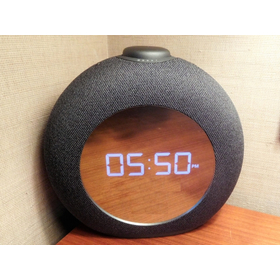
I have added 'Understanding Half Mirrors in 5 Minutes! A Thorough Explanation' to the technical trend keywords.
There are surprisingly many situations around us where half mirrors, which look like mirrors but actually allow light to pass through, are used. For example, they are essential optical components in smartphone facial recognition and car head-up displays. Half mirrors play a role in skillfully reflecting and transmitting light, delivering images and information more conveniently and precisely. This time, we have summarized the mechanism of half mirrors, their uses, and the future evolution of technology in an easy-to-understand manner that can be grasped in five minutes. 【1】What is a half mirror? 【2】Difference between half mirrors and magic mirrors 【3】Structure of half mirrors 【4】Applications of half mirrors 【5】Points to consider when selecting half mirrors 【6】Future prospects of half mirrors For more details, please visit our company website.

A bandpass filter that achieves sharp rise and high transmittance in the visible light range (660nm). It is ideal for red laser diodes and LED applications.
- Sensors
- Distance measuring device
- Image Processing Equipment
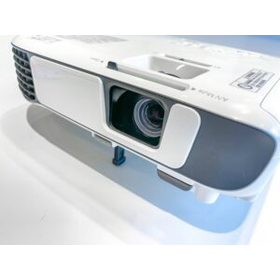
I have added 'A Comprehensive Explanation of UV-IR Cut Filters in 5 Minutes!' to the technical trend keywords.
The UV-IR cut filter is an optical thin-film filter that selectively removes unwanted light in the ultraviolet (UV) and infrared (IR) wavelength ranges, allowing only specific wavelength bands of light to be transmitted or reflected with high precision. This filter achieves wavelength selectivity by utilizing interference effects through the precise layering of multilayer dielectric films and metal films. Generally, it requires control of film thickness on the order of nanometers, exceeding several tens to over a hundred layers, and its optical properties are determined by multiple parameters such as film thickness accuracy, refractive index of the film material, smoothness of the film interfaces, and adhesion of the films. 1) What is a UV-IR cut filter? 2) Historical background of UV-IR filter manufacturing in Japan 3) Why has overseas manufacturing of UV-IR cut filters progressed? 4) If UV-IR cut filters were to be produced again in Japan... necessary points (hypothesis) 5) Technically important points when selecting UV-IR cut filters 6) Future prospects Conclusion - The efforts of Adachi New Industry Co., Ltd. to focus on domestic production in Japan For more details, please visit our company website.

We propose a half mirror with abundant achievements. It is a functional half mirror that can arbitrarily split light into reflected and transmitted rays.
- Other optical parts
- Distance measuring device
- Sensors
I have added 'A Comprehensive Explanation of UV-IR Cut Filters in 5 Minutes!' to the technical trend keywords.
The UV-IR cut filter is an optical thin-film filter that selectively removes unwanted light in the ultraviolet (UV) and infrared (IR) wavelength ranges, allowing only specific wavelength bands of light to be transmitted or reflected with high precision. This filter achieves wavelength selectivity by utilizing interference effects through the precise layering of multilayer dielectric films and metal films. Generally, it requires control of film thickness on the order of nanometers, exceeding several tens to over a hundred layers, and its optical properties are determined by multiple parameters such as film thickness accuracy, refractive index of the film material, smoothness of the film interfaces, and adhesion of the films. 1) What is a UV-IR cut filter? 2) Historical background of UV-IR filter manufacturing in Japan 3) Why has overseas manufacturing of UV-IR cut filters progressed? 4) If UV-IR cut filters were to be produced again in Japan... necessary points (hypothesis) 5) Technically important points when selecting UV-IR cut filters 6) Future prospects Conclusion - The efforts of Adachi New Industry Co., Ltd. to focus on domestic production in Japan For more details, please visit our company website.

It is a special anti-reflective coating (AR coat) that can have peaks at multiple wavelengths. It is a filter that can be optimally designed for various optical devices.
- Sensors
- Other optical parts
- lens

We will thoroughly explain anti-reflective film!
Anti-reflective coatings (AR coatings) are an essential technology for optical devices, displays, and glass products. Typically, surfaces like glass reflect light, which reduces visibility, but anti-reflective coatings minimize this reflection. This thin-film technology enhances light transmission and provides a clearer and more comfortable visual experience. Its effects are particularly notable in everyday products such as camera lenses and smartphone screens. Here, we will introduce the basic principles, types, and main applications of anti-reflective coatings. 1. What are anti-reflective coatings? 2. How do anti-reflective coatings work? 3. Types of anti-reflective coatings 4. Effects of anti-reflective coatings 5. Conclusion - Future prospects For more details, please check our company website.


There are several reasons why strain gauge load cells are considered suitable for weighing system sensors.
- Other measurement, recording and measuring instruments
- Sensors
- Sensors


Compatible with a variety of liquids such as water, hot water, oil, and chemical solutions!
- Sensors


To meet the diverse needs of our customers, we can accommodate short delivery times!
- Sensors

To broadly meet our customers' needs, we can accommodate short delivery times!
- Sensors

To meet the diverse needs of our customers, we can accommodate short delivery times!
- Sensors

To broadly meet customer needs, we can accommodate short delivery times!
- Sensors


For use in high-temperature environments such as boilers and fryers.
- Sensors

Freely set or change the water level you want to detect.
- Sensors


A unique gas chromatograph that achieves high-speed separation and high-sensitivity measurement!
- Sensors
- Sensors
- Analytical Equipment and Devices


Easily connect general-purpose temperature sensors (thermocouples and resistance temperature detectors) for wireless measurement.
- Temperature and humidity measuring instruments
- Sensors

Thin K-type thermocouple temperature sensor with a thickness of 0.13mm.
- Sensors
- Temperature and humidity measuring instruments
![[Example of Snowfall Sensor Use] Au...](https://image.mono.ipros.com/public/product/image/04f/2000975570/IPROS18186838369369157107.png?w=280&h=280)

Counting falling snowflakes using infrared transmission and reception! Introducing an energy-saving snowfall sensor.
- Sensors
![[Example of Snowfall Sensor Use] Co...](https://image.mono.ipros.com/public/product/image/827/2000975575/IPROS09339624605638037627.png?w=280&h=280)
Long-selling product! In ECO driving mode, the snow removal time is omitted after a certain period of output.
- Sensors

This is a bandpass filter that achieves a sharp rise and high transmittance in the infrared range (905nm). It is ideal for TOF sensors and LiDAR.
- Sensors
- Distance measuring device
- Image Processing Equipment
Thorough Explanation! Added 'Angle Dependence of Optical Thin Film Filters' to the Technical Trend Keywords.
Optical thin-film filters are important optical components designed to transmit and reflect light at specific wavelengths. Optical filters have the troublesome characteristic of "angle dependence," where the transmission and reflection properties change depending on the observation angle and the angle of incidence. This property can be both an advantage and a challenge depending on the usage conditions of the filter. In this article, we will explain in detail the reasons for the angle dependence of optical thin-film filters and its effects, as well as practical considerations and countermeasures. 1. Basics of optical thin-film filters and angle dependence 2. What is angle dependence? 3. Effects of angle dependence and application examples 4. Countermeasures and design considerations for angle dependence A message to designers - from a film manufacturing company For more details, please visit our website.

Standard stock items include anti-reflective films, bandpass filters (BPF filters), and infrared cut filters (IR cut filters), among others.
- mirror
- Distance measuring device
- Sensors
I have added 'Understanding Half Mirrors in 5 Minutes! A Thorough Explanation' to the technical trend keywords.
There are surprisingly many situations around us where half mirrors, which look like mirrors but actually allow light to pass through, are used. For example, they are essential optical components in smartphone facial recognition and car head-up displays. Half mirrors play a role in skillfully reflecting and transmitting light, delivering images and information more conveniently and precisely. This time, we have summarized the mechanism of half mirrors, their uses, and the future evolution of technology in an easy-to-understand manner that can be grasped in five minutes. 【1】What is a half mirror? 【2】Difference between half mirrors and magic mirrors 【3】Structure of half mirrors 【4】Applications of half mirrors 【5】Points to consider when selecting half mirrors 【6】Future prospects of half mirrors For more details, please visit our company website.


CE certification, RoHS, patent (No. 10-134996)
- Sensors

This is a mirror that reflects near-infrared light, which causes heat. It has a proven track record in projectors and lighting devices where temperature rise is a concern.
- mirror
- Sensors
- LED Module
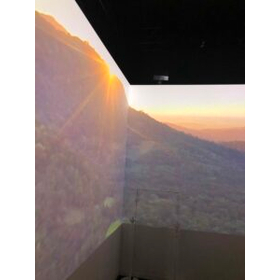
Added 'Kansai Expo x Optical Thin Films Episode: 2' to the technology trend keywords.
The 2025 Osaka-Kansai Expo will feature the theme "Designing a Future Society Where Life Shines," showcasing numerous cutting-edge visual productions and experiential exhibits. Central to creating immersive video experiences that strongly engage visitors is projector technology. Supporting this performance at its core are optical thin films (optical filters) applied to lenses and optical components. As brightness and resolution increase, the quality of optical thin films directly impacts the clarity, color reproduction, and durability of the images. The "amazingness" of the video technology at this Kansai Expo has evolved beyond merely providing visual information to becoming a means of reconstructing the space itself. In particular, in the field known as "immersive video," stimulating multiple senses such as sight, hearing, and touch allows viewers to be drawn into the narrative, blurring the boundaries between reality and the virtual experience. 【1】The Power of Video Supporting Immersive Experiences 【2】What is a Three-Sided Screen? - The Key to Video Production Supported by Projectors 【3】What are the Representative Pavilions Where You Can Actually See a Three-Sided Screen at the Expo? 【4】What Optical Thin Films are Necessary for Projectors to Achieve a Three-Sided Screen? 【5】What is the Future Where Three-Sided Screens and Projectors are Introduced into Homes?


The accuracy is Class 2! We will introduce products with a code of approximately 1.1m that are compatible with calibration.
- Sensors

Calibration support! Measurement range -30℃ to 600℃, SK-1260 optional sensor (K thermocouple)
- Sensors

Includes approximately 1.1m of code! Calibration support, accuracy is class 2, grip section is φ15×L50mm.
- Sensors

SK-1260 option sensor (thermistor)! Custom options such as sensor cable extension are available.
- Sensors

JCSS calibration! Measurement range is -30.0℃ to 199.9℃, product comes with a cable approximately 1.1m long.
- Sensors

Shape, material, etc. are φ3.0×L120mm (SUS304)! Customization such as sensor cable extension is available.
- Sensors

Custom options available, such as sensor cable extension! Comes with approximately 1.1m of cable (cold-resistant and oil-resistant).
- Sensors

Serial number display function, calibration date display function! Calibration support, auto power off.
- Sensors

The date when calibration was performed by our company is stored internally! It will be displayed when the power is turned on.
- Sensors

Can be washed thoroughly with running water or wiped with alcohol! (When connected to the sensor)
- Sensors

Simple operation with just the power button! Waterproof performance complies with JIS C 0920 IPX7.
- Sensors