
List of Physics and chemistry equipment products
- classification:Physics and chemistry equipment
946~990 item / All 15847 items


Reduce the workload from handling heavy objects! Here are five case studies that solved customer challenges! We are also accepting free consultations and tests tailored to your work!

- Other conveying machines


No more need to lift heavy one-gallon cans! Enjoy comfortable liquid transfer in the central kitchen.
- Other Pumps
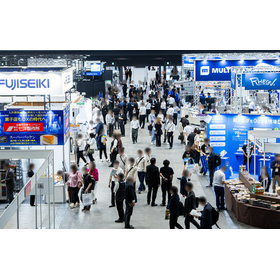
Decision to exhibit at the 1st Chubu Food Industry Creation Exhibition '26!
We will be exhibiting at the "1st Chubu Food Industry Creation Exhibition '26" to be held at Port Messe Nagoya from November 4 (Wednesday) to November 6 (Friday), 2026. As a new addition to our lineup, we will showcase the "Cordless Sanitary Handy Pump," which is a product we started selling in April last year, alongside our "Compact Sanitary Handy Pump Model MHS." - Cordless! Portable anywhere! Easy to use! Simple cleaning! It is compatible with standard 18L cans and BIB (Bag-in-Box) and features a structure that allows for easy disassembly and cleaning. We would like to invite you to visit us at this opportunity. - Venue: Port Messe Nagoya - Our exhibition booth: Hall 1 "C-66"


Two-stage variable grinding conditions are possible! The grinding head can be adjusted left and right by ±50mm!


- Other physicochemical equipment

Behold the fusion of 'Cyber' and 'T-Rex' - achieving high throughput through simultaneous polishing at each stage.
- Other physicochemical equipment

High torque! Low price! Cute logo! A dual machine with triple grinding capabilities!
- Other physicochemical equipment

Adopts an individual loading method! It is a sample polishing machine that allows grinding without losing parallelism.
- Other physicochemical equipment

Equipped with a safe W start button function! A powerful tabletop grinder with an overall load system.
- Other physicochemical equipment

A dual-wielding machine in the sample grinding world! An automatic grinder that can create auto-change recipes.

- Other physicochemical equipment

The 5-book type is equipped with an auto-change function! A device that can automatically drop and collect abrasives.
- Other physicochemical equipment

Adopting PLC control with high design flexibility! A polishing machine that achieves high throughput.
- Other physicochemical equipment
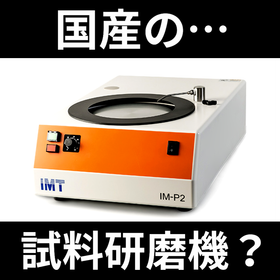
Powerful torque and reliable Japanese-made hand grinder. Automation is also possible with three types of attachable attachments!


- Other physicochemical equipment

Adopts individual loading method! This is a sample rotating machine for installing the grinding machine IM-P2.
- Other physicochemical equipment

Equipped with arm swing function! Roller-type sample rotation device for mounting the polishing machine IM-P2.
- Other physicochemical equipment

A sample polishing machine that allows setting grinding values for each of the three samples! Automatic polishing is also possible in time mode.
- Other physicochemical equipment

Water-soluble lubricant to be used in conjunction with diamond slurry.

- Other physicochemical equipment

The first filter catches large debris! Choose from three types of coolant circulation filtration systems.
- Other physicochemical equipment

Please use this to stand the sample up.


- Other physicochemical equipment
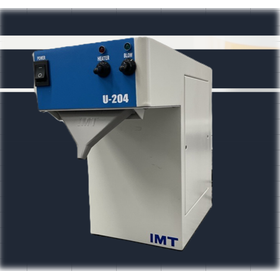
Astonishing Wind Pressure Monster
- Drying Equipment
- Other drying equipment

High-performance embedding machine that achieves time reduction and error-free resin embedding.
- Other physicochemical equipment

Integrated upper cover and ram! A low-cost model of a handy hydraulic jack with fewer breakdowns.

- Other physicochemical equipment

Remove moisture from the sample! A dryer that prevents oxidation and maintains the finished observation surface.
- Other physicochemical equipment

Sensor switch installation possible! High power, large airflow nozzle-type dryer.
- Other physicochemical equipment


Standard for a new dissolution testing apparatus
- Other physicochemical equipment


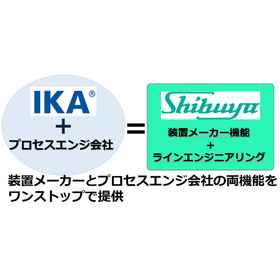
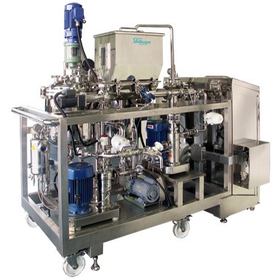
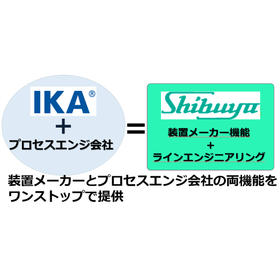
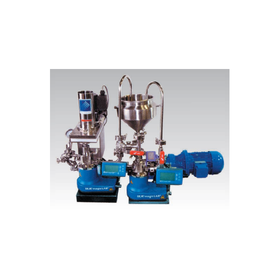
Thanks to our unique dispersion system, we can achieve the mixing and dispersion of fine powders in a short time without generating lumps! We can accommodate both continuous and batch processes.
- Emulsifier/Disperser
- Vacuum degassing machine
- Dispersion/emulsification equipment/homogenizer

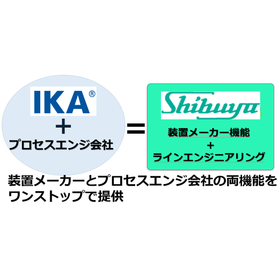
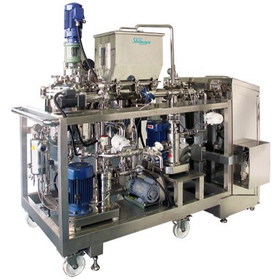
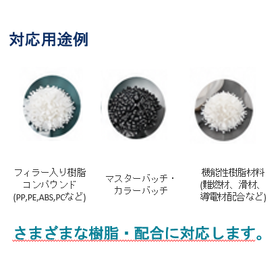
Dispersion is not determined by the equipment. It is determined by the process design of the resin dispersion system.
- Emulsifier/Disperser
- Vacuum degassing machine
- Dispersion/emulsification equipment/homogenizer
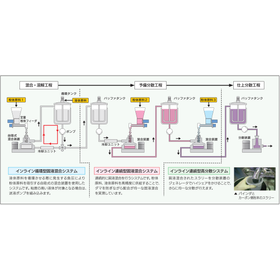
What is decentralized process design? Key points for stabilizing quality.
In dispersion engineering, stable quality cannot be achieved solely based on the performance of the equipment. What is important is the overall design of the process, taking into account material properties and process conditions. This is referred to as dispersion process design. Dispersion quality is determined not only by the strength of shear but also by multiple factors such as flow state, residence time, and method of input. If these conditions are not properly designed, localized agglomeration or variation can occur, making it difficult to maintain stable quality. For example, poor wetting during powder input or the occurrence of stagnant areas due to flow bias can lead to clumping or dispersion issues. Additionally, even if the shear energy is sufficient, if it does not act uniformly on all particles, differences in dispersion state will arise. Therefore, in dispersion processes, it is crucial to design "flow," "shear," and "processing time" as an integrated system. This allows for all particles to receive the same dispersion history, achieving uniform and highly reproducible dispersion quality. In particular, inline continuous processing has the advantage of maintaining consistent conditions within the flow, making it easier to ensure reproducibility in process design. Dispersion process design is a key concept for stabilizing quality and successfully scaling up.
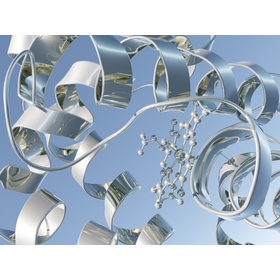
Resolve issues of not dissolving and clumping in advance. Test the dispersibility of the protein.
- Emulsifier/Disperser
- Vacuum degassing machine
- Dispersion/emulsification equipment/homogenizer
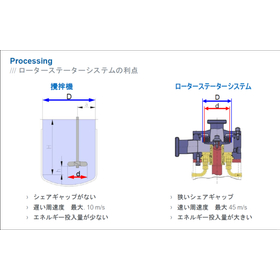
What are the reasons for changes in results from the lab to mass production? Causes and countermeasures for the deterioration of distributed quality during scale-up.
Despite obtaining good dispersion results in the lab, the challenge of unstable quality upon mass production occurs in many settings. The main cause of this is that the dispersion conditions are not replicated due to differences in scale. In lab equipment, the smaller size leads to higher energy density, making shear and flow more uniform, while in mass production equipment, the larger scale often results in insufficient dispersion energy at the same rotational speed and processing time. Additionally, differences in equipment structure and flow patterns can cause variations in the shear history and residence time experienced by particles, leading to differences in the dispersion state. Furthermore, simple scale-up does not ensure that critical parameters such as flow rate, residence time, and shear intensity match, making it difficult to reproduce the same results as in the lab. To address these challenges, it is essential to focus on process design based on dispersion energy density and flow conditions rather than merely increasing equipment size. By designing the system so that particles pass through the processing area under consistent conditions, it is possible to achieve reproducible dispersion quality even when the scale changes, as seen in inline continuous processing.
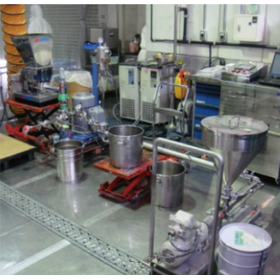
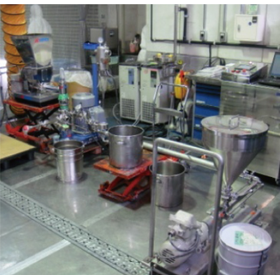
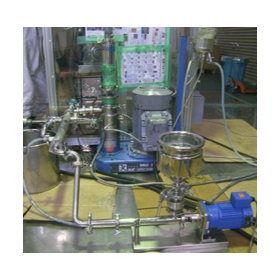
The strength is determined by the variance. Visualize quality variations through testing before mass production.
- Emulsifier/Disperser
- Vacuum degassing machine
- Dispersion/emulsification equipment/homogenizer
What are the reasons for changes in results from the lab to mass production? Causes and countermeasures for the deterioration of distributed quality during scale-up.
Despite obtaining good dispersion results in the lab, the challenge of unstable quality upon mass production occurs in many settings. The main cause of this is that the dispersion conditions are not replicated due to differences in scale. In lab equipment, the smaller size leads to higher energy density, making shear and flow more uniform, while in mass production equipment, the larger scale often results in insufficient dispersion energy at the same rotational speed and processing time. Additionally, differences in equipment structure and flow patterns can cause variations in the shear history and residence time experienced by particles, leading to differences in the dispersion state. Furthermore, simple scale-up does not ensure that critical parameters such as flow rate, residence time, and shear intensity match, making it difficult to reproduce the same results as in the lab. To address these challenges, it is essential to focus on process design based on dispersion energy density and flow conditions rather than merely increasing equipment size. By designing the system so that particles pass through the processing area under consistent conditions, it is possible to achieve reproducible dispersion quality even when the scale changes, as seen in inline continuous processing.
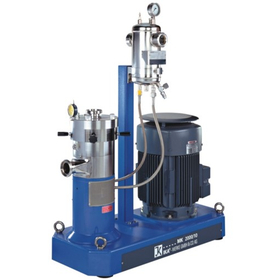
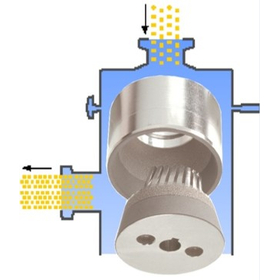
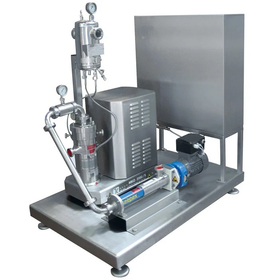
Contributes to improving dispersion efficiency and reproducibility in the pre-mixing process before bead milling.
- Emulsifier/Disperser
- Vacuum degassing machine
- Dispersion/emulsification equipment/homogenizer
What is decentralized process design? Key points for stabilizing quality.
In dispersion engineering, stable quality cannot be achieved solely based on the performance of the equipment. What is important is the overall design of the process, taking into account material properties and process conditions. This is referred to as dispersion process design. Dispersion quality is determined not only by the strength of shear but also by multiple factors such as flow state, residence time, and method of input. If these conditions are not properly designed, localized agglomeration or variation can occur, making it difficult to maintain stable quality. For example, poor wetting during powder input or the occurrence of stagnant areas due to flow bias can lead to clumping or dispersion issues. Additionally, even if the shear energy is sufficient, if it does not act uniformly on all particles, differences in dispersion state will arise. Therefore, in dispersion processes, it is crucial to design "flow," "shear," and "processing time" as an integrated system. This allows for all particles to receive the same dispersion history, achieving uniform and highly reproducible dispersion quality. In particular, inline continuous processing has the advantage of maintaining consistent conditions within the flow, making it easier to ensure reproducibility in process design. Dispersion process design is a key concept for stabilizing quality and successfully scaling up.
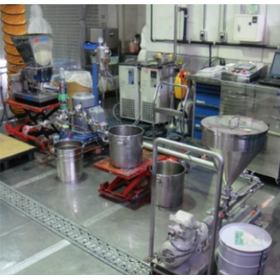
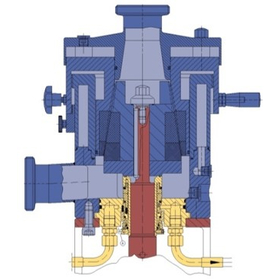
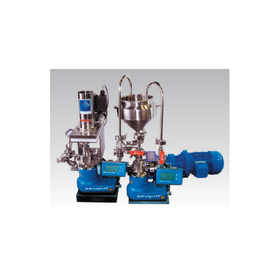
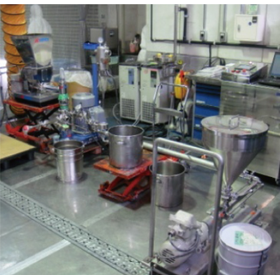
Quality changes with dispersion. Pre-validation of the reproducibility of resin materials through testing.
- Emulsifier/Disperser
- Vacuum degassing machine
- Dispersion/emulsification equipment/homogenizer
What are the reasons for changes in results from the lab to mass production? Causes and countermeasures for the deterioration of distributed quality during scale-up.
Despite obtaining good dispersion results in the lab, the challenge of unstable quality upon mass production occurs in many settings. The main cause of this is that the dispersion conditions are not replicated due to differences in scale. In lab equipment, the smaller size leads to higher energy density, making shear and flow more uniform, while in mass production equipment, the larger scale often results in insufficient dispersion energy at the same rotational speed and processing time. Additionally, differences in equipment structure and flow patterns can cause variations in the shear history and residence time experienced by particles, leading to differences in the dispersion state. Furthermore, simple scale-up does not ensure that critical parameters such as flow rate, residence time, and shear intensity match, making it difficult to reproduce the same results as in the lab. To address these challenges, it is essential to focus on process design based on dispersion energy density and flow conditions rather than merely increasing equipment size. By designing the system so that particles pass through the processing area under consistent conditions, it is possible to achieve reproducible dispersion quality even when the scale changes, as seen in inline continuous processing.
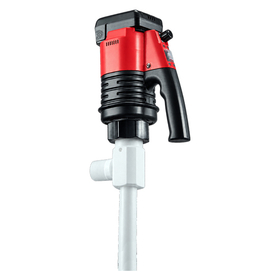

Easily transfer liquids cordlessly. A rechargeable pump that can be selected according to the material of the liquid contact part and the container.
- Stainless steel container
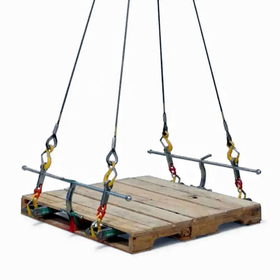
It can be securely lifted at the center of the pallet.
- Pure water production equipment
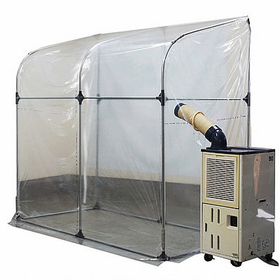
Efficiently utilizes the cool air from the spot cooler.
- Stainless steel container
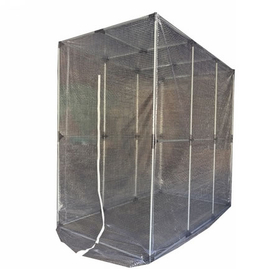
Protect workers from the heat.
- Stainless steel container
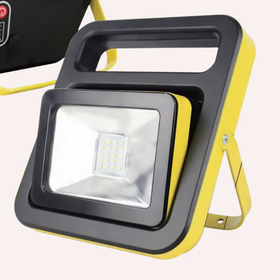
Illuminates the site, assists with work, ultra-lightweight. Slim folding work light.
- Stainless steel container
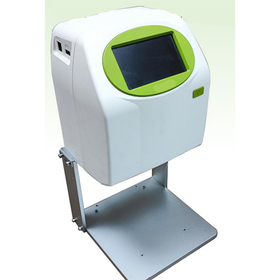
A printer that can easily print expiration dates and manufacturing numbers on canned and bottled goods.
- Stainless steel container


-80 ℃ ultra-low temperature freezer equipped with H-Drive non-Freon refrigeration system that has excellent insulation performance against peak fluctuations in internal temperature.


- Refrigerators and freezers


High output and high stability, dual-wavelength lighting, the ability to select the minimum necessary wavelengths from a rich wavelength library, easy to replace and expand, domestically produced and ...
- Other physicochemical equipment
- Optical microscope
- Other lighting equipment

Ideal for charging electric tool batteries: "Double-opening charging locker" that balances safety and efficiency on site.
- Stainless steel container
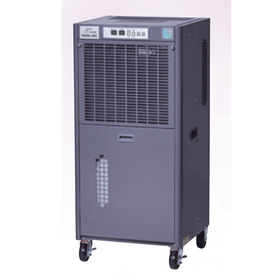
Non-Freon dehumidifier (with humidity control)
- Stainless steel container
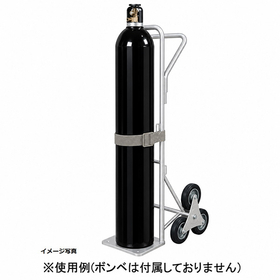
Gas cylinder six-wheel stair cart (for oxygen, acetylene, and carbon dioxide cylinders) silver color
- Stainless steel container
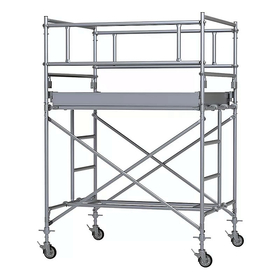
Maximum allowable weight 200kg. Can be connected using a stanchion. *Please use the main unit with 3 tiers or less.
- Stainless steel container
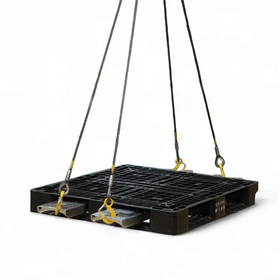
Achieves safety with a mounting width of 250mm on the left side.
- Stainless steel container
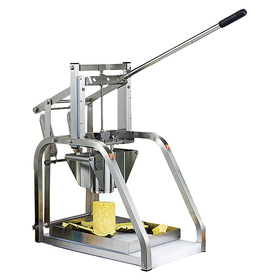
Peeling and coring in one cut! A pineapple peeler that can be chosen according to processing volume.
- Stainless steel container
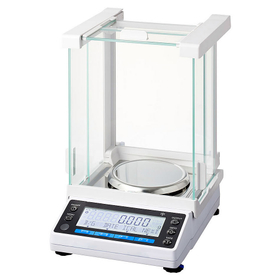
Unchanging stability, precisely measuring subtle changes. The ideal electronic balance for research, analysis, and quality inspection.
- Stainless steel container
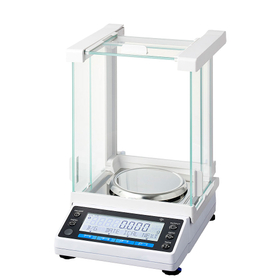
This is an electronic balance for trading certification with first and second class certification that measures fine changes with high precision.
- Stainless steel container

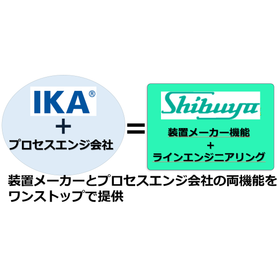
From October 29 (Tuesday) to 31 (Thursday), 2024! We will be exhibiting small ultrasonic dispersion devices and ultrasonic generators!


- Emulsifier/Disperser
- Powder Supply Device
- Dispersion/emulsification equipment/homogenizer
What is decentralized process design? Key points for stabilizing quality.
In dispersion engineering, stable quality cannot be achieved solely based on the performance of the equipment. What is important is the overall design of the process, taking into account material properties and process conditions. This is referred to as dispersion process design. Dispersion quality is determined not only by the strength of shear but also by multiple factors such as flow state, residence time, and method of input. If these conditions are not properly designed, localized agglomeration or variation can occur, making it difficult to maintain stable quality. For example, poor wetting during powder input or the occurrence of stagnant areas due to flow bias can lead to clumping or dispersion issues. Additionally, even if the shear energy is sufficient, if it does not act uniformly on all particles, differences in dispersion state will arise. Therefore, in dispersion processes, it is crucial to design "flow," "shear," and "processing time" as an integrated system. This allows for all particles to receive the same dispersion history, achieving uniform and highly reproducible dispersion quality. In particular, inline continuous processing has the advantage of maintaining consistent conditions within the flow, making it easier to ensure reproducibility in process design. Dispersion process design is a key concept for stabilizing quality and successfully scaling up.