
List of Physics and chemistry equipment products
- classification:Physics and chemistry equipment
91~135 item / All 15761 items


It won't break even after 1 million repetitions! A mat switch with reliable operation, high durability, and low price. Suitable for options in machine tools as well. Please consult us about delivery t...
- Sensors


We can accommodate high resistance over 10,000 ohms, with diameters ranging from approximately 30 mm to 8 inches, and we also offer thinning and chip processing arrangements!
- Other semiconductors
- Processing Contract
- Wafer
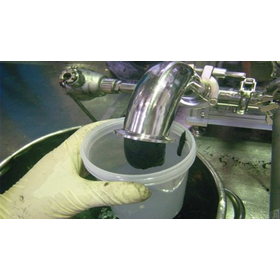

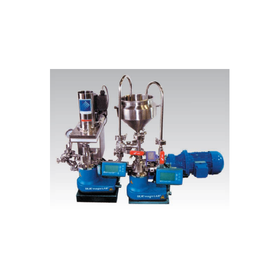
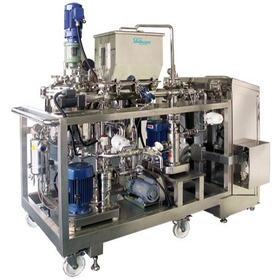
The negative electrode slurry's key is balancing viscosity and dispersion. Process design that can be reproduced up to mass production.
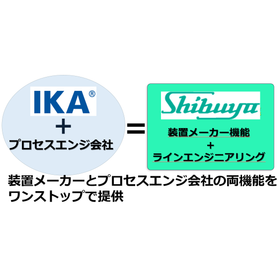
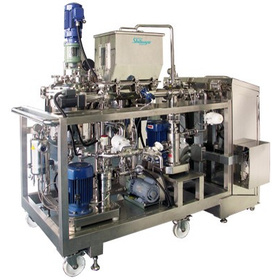
- Emulsifier/Disperser
- Vacuum degassing machine
- Dispersion/emulsification equipment/homogenizer
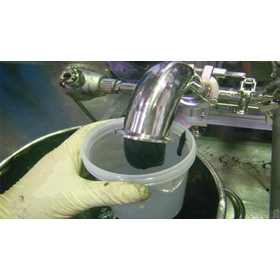
CNT dispersion is determined by the process. Control of aggregation stabilizes conductivity.
- Emulsifier/Disperser
- Vacuum degassing machine
- Dispersion/emulsification equipment/homogenizer
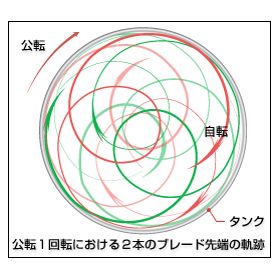
What are the reasons for the inability to disperse high solid content slurries? Causes of poor dispersion and design points for solutions.
In the dispersion process of high solid content slurries, problems such as "too high viscosity to mix" and "unable to break down agglomerates" occur. The main cause of these issues is the increased frequency of particle contact, which strengthens the cohesive forces. As the solid content concentration increases, the distance between particles decreases, leading to interference between particles that reduces fluidity and prevents sufficient dispersion energy from being transmitted. Additionally, the crowding of particles restricts flow and makes shear localized, resulting in the persistence of undispersed areas and agglomerates. Furthermore, in a high solid content state, the increase in viscosity also leads to poor circulation and stagnation, causing variability in the dispersion state within the process. Particularly in batch processing, mixing inconsistencies and differences in processing history directly translate into quality differences, making it difficult to ensure reproducibility. To achieve stable dispersion under high solid content conditions, it is important not only to increase shear force but also to consider dispersion design that takes into account inter-particle interactions, as well as process design that simultaneously controls flow and shear. By establishing a mechanism like inline continuous processing, where particles pass through the processing area under constant conditions, uniform and highly reproducible dispersion can be achieved even at high solid contents.
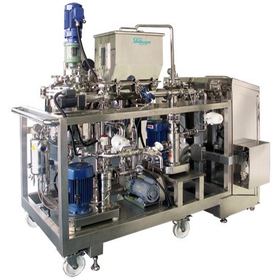
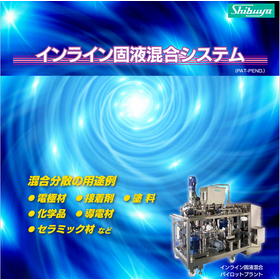
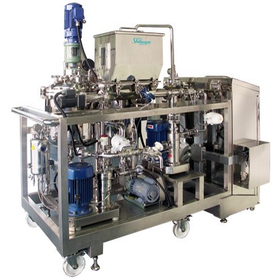
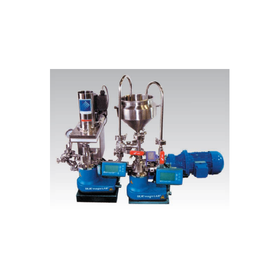
Inline continuous process that stabilizes CNT dispersion without disrupting its state.
- Emulsifier/Disperser
- Vacuum degassing machine
- Dispersion/emulsification equipment/homogenizer
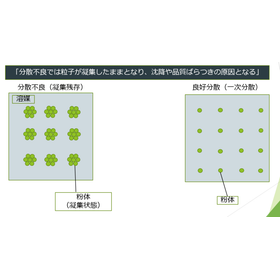
What are the causes of dispersion troubles? An explanation of the reasons for aggregation, sedimentation, and variation, as well as design points to reconsider in the dispersion process.
In dispersion engineering, issues such as unresolved agglomeration, sedimentation, and unstable particle size distribution occur frequently at many sites. These problems are caused not only by the performance of the equipment but also by inconsistencies in particle characteristics, dispersion conditions, and process design. For example, when there is insufficient dispersion energy, particles do not break down to primary particles, and agglomeration remains. Additionally, if the shear conditions or flow state are not appropriate, uniform dispersion cannot be achieved, leading to sedimentation and variations in quality. Particularly in high-viscosity systems or high solid content slurries, even slight differences in conditions can significantly impact the results. Furthermore, in batch processing, variations in mixing uniformity and residence time make it difficult to ensure reproducibility. To resolve these dispersion issues, it is important to optimize the entire process, including particle characteristics, dispersion energy, and flow design, rather than simply changing the equipment. By maintaining consistent conditions, as in inline continuous processing, stable dispersion quality and reproducibility can be achieved.

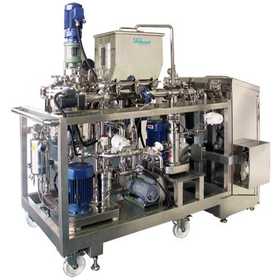
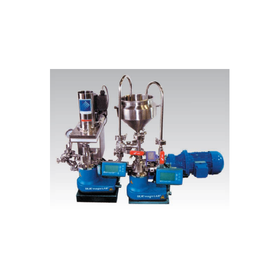
Thanks to our unique dispersion system, we can achieve the mixing and dispersion of fine powders in a short time without generating clumps! We can accommodate both continuous and batch processes.
- Emulsifier/Disperser
- Vacuum degassing machine
- Dispersion/emulsification equipment/homogenizer
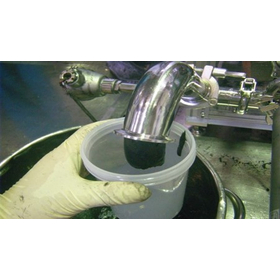
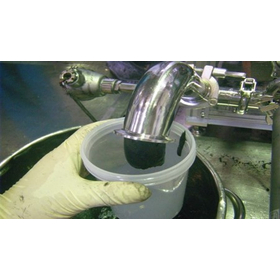
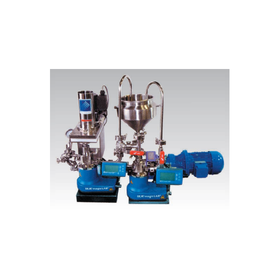
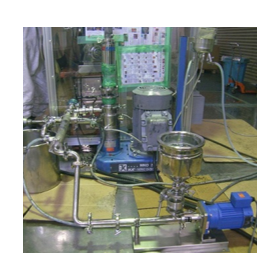
Verify before failing in mass production. Confirm the reproducibility of slurry dispersion in advance.
- Emulsifier/Disperser
- Vacuum degassing machine
- Dispersion/emulsification equipment/homogenizer
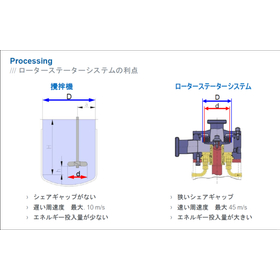
What are the reasons for changes in results from the lab to mass production? Causes and countermeasures for the deterioration of distributed quality during scale-up.
Despite obtaining good dispersion results in the lab, the challenge of unstable quality upon mass production occurs in many settings. The main cause of this is that the dispersion conditions are not replicated due to differences in scale. In lab equipment, the smaller size leads to higher energy density, making shear and flow more uniform, while in mass production equipment, the larger scale often results in insufficient dispersion energy at the same rotational speed and processing time. Additionally, differences in equipment structure and flow patterns can cause variations in the shear history and residence time experienced by particles, leading to differences in the dispersion state. Furthermore, simple scale-up does not ensure that critical parameters such as flow rate, residence time, and shear intensity match, making it difficult to reproduce the same results as in the lab. To address these challenges, it is essential to focus on process design based on dispersion energy density and flow conditions rather than merely increasing equipment size. By designing the system so that particles pass through the processing area under consistent conditions, it is possible to achieve reproducible dispersion quality even when the scale changes, as seen in inline continuous processing.
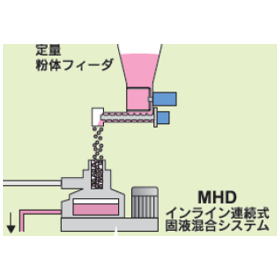
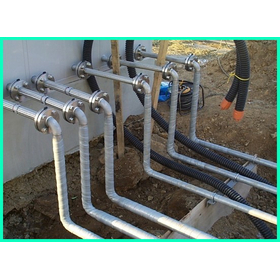
From powder supply to dispersion, defoaming, and transfer. A dispersion machine line compatible with high-viscosity slurries has been established.
- Emulsifier/Disperser
- Powder Supply Device
- Dispersion/emulsification equipment/homogenizer
What are the reasons for changes in results from the lab to mass production? Causes and countermeasures for the deterioration of distributed quality during scale-up.
Despite obtaining good dispersion results in the lab, the challenge of unstable quality upon mass production occurs in many settings. The main cause of this is that the dispersion conditions are not replicated due to differences in scale. In lab equipment, the smaller size leads to higher energy density, making shear and flow more uniform, while in mass production equipment, the larger scale often results in insufficient dispersion energy at the same rotational speed and processing time. Additionally, differences in equipment structure and flow patterns can cause variations in the shear history and residence time experienced by particles, leading to differences in the dispersion state. Furthermore, simple scale-up does not ensure that critical parameters such as flow rate, residence time, and shear intensity match, making it difficult to reproduce the same results as in the lab. To address these challenges, it is essential to focus on process design based on dispersion energy density and flow conditions rather than merely increasing equipment size. By designing the system so that particles pass through the processing area under consistent conditions, it is possible to achieve reproducible dispersion quality even when the scale changes, as seen in inline continuous processing.
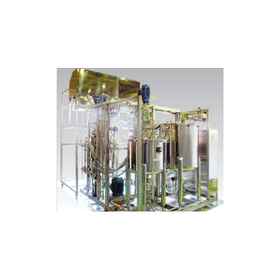
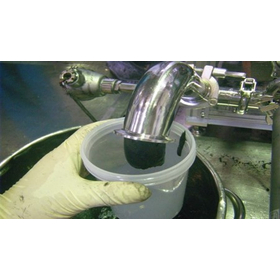
Inline dispersion system for continuous processing and stable dispersion of high-viscosity slurries.
- Emulsifier/Disperser
- Powder Supply Device
- Dispersion/emulsification equipment/homogenizer
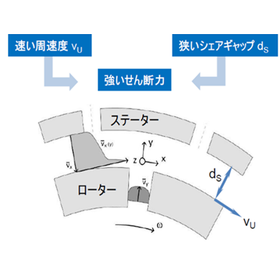
What is the relationship between viscosity and dispersion efficiency? The reason why dispersion becomes difficult under high viscosity conditions.
In dispersion processes, viscosity is an important factor that significantly affects dispersion efficiency. Generally, as viscosity increases, fluidity decreases, making it more difficult for dispersion energy to be transmitted to the particles. When viscosity is low, liquids flow easily, and shear energy is widely transmitted throughout the system, making it relatively easy to break apart particle agglomerates. On the other hand, as viscosity increases, flow becomes localized, and shear tends to be concentrated near the equipment. As a result, there is a mixture of particles that receive sufficient energy and those that do not, leading to variability in the dispersion state. Additionally, under high viscosity conditions, the movement of particles is also restricted, making collisions and breakdowns between agglomerates less likely. Consequently, even if the mixture appears homogeneous, there may be undispersed regions remaining internally. To enhance dispersion efficiency, it is crucial to implement appropriate shear conditions and flow designs according to viscosity. Particularly in inline continuous processing, it is possible to provide uniform shear to the particles within the flow, allowing for efficient transmission of dispersion energy even under high viscosity conditions. In dispersion processes, optimizing flow, shear, and processing time while considering the effects of viscosity is key to achieving stable dispersion quality.
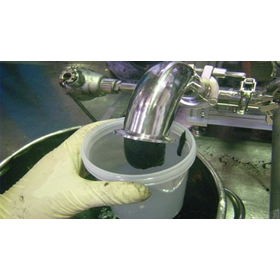
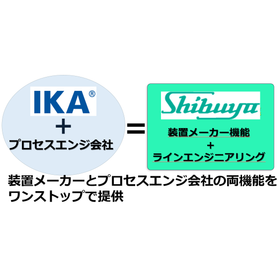
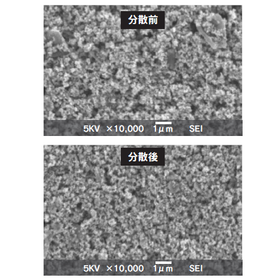
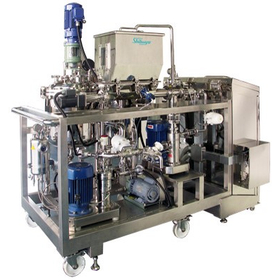
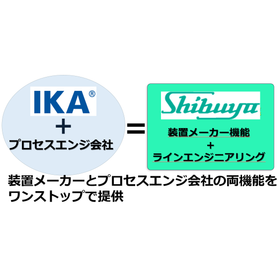
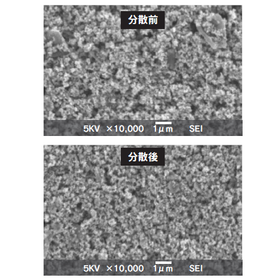
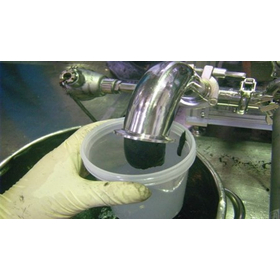
Supports high-viscosity dispersion of positive and negative electrode slurries. Assists in quality stabilization and mass production scale-up through continuous processing.
- Emulsifier/Disperser
- Powder Supply Device
- Dispersion/emulsification equipment/homogenizer
What is the relationship between viscosity and dispersion efficiency? The reason why dispersion becomes difficult under high viscosity conditions.
In dispersion processes, viscosity is an important factor that significantly affects dispersion efficiency. Generally, as viscosity increases, fluidity decreases, making it more difficult for dispersion energy to be transmitted to the particles. When viscosity is low, liquids flow easily, and shear energy is widely transmitted throughout the system, making it relatively easy to break apart particle agglomerates. On the other hand, as viscosity increases, flow becomes localized, and shear tends to be concentrated near the equipment. As a result, there is a mixture of particles that receive sufficient energy and those that do not, leading to variability in the dispersion state. Additionally, under high viscosity conditions, the movement of particles is also restricted, making collisions and breakdowns between agglomerates less likely. Consequently, even if the mixture appears homogeneous, there may be undispersed regions remaining internally. To enhance dispersion efficiency, it is crucial to implement appropriate shear conditions and flow designs according to viscosity. Particularly in inline continuous processing, it is possible to provide uniform shear to the particles within the flow, allowing for efficient transmission of dispersion energy even under high viscosity conditions. In dispersion processes, optimizing flow, shear, and processing time while considering the effects of viscosity is key to achieving stable dispersion quality.

We will explain the manufacturing process that guarantees contamination-free, high-quality pipette tips in compliance with ISO standards!
- pipette
- pipette
- Pipettes and Droppers
![[Information] The Role of Pipette T...](https://image.mono.ipros.com/public/product/image/2049051/IPROS15535774591461724411.png?w=280&h=280)
The importance of selecting the right tips for obtaining good pipetting results and verifying that performance varies depending on the tips!
- pipette
- pipette
- Pipettes and Droppers


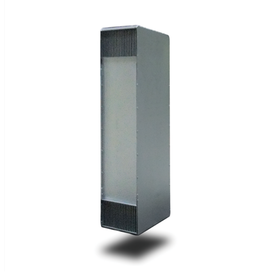
Takubo-style exhaust heat recovery hot air drying system


- Other painting machines
- Drying Equipment

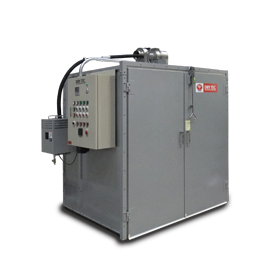
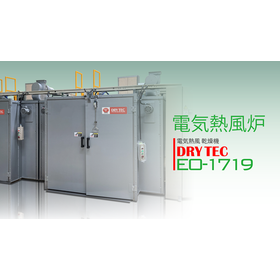
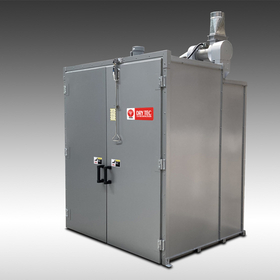
Dryer Dry Tech Price Information Public Site Now Available
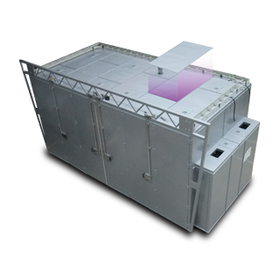
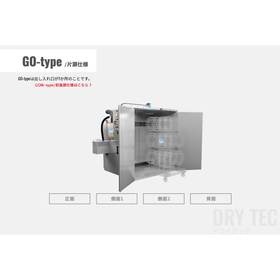
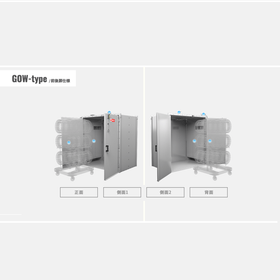
We have launched a price information website for the painting-specific dryer, Drytech. The site features product information and sizes focused on standard models of Drytech, both front and single-door types, as well as custom products and options, including performance and price information. We have disclosed price information to facilitate a quicker process from consideration and decision-making to implementation. Please make use of it.
The superiority of Drytech.



- Other painting machines
- Drying Equipment
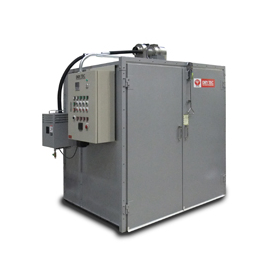
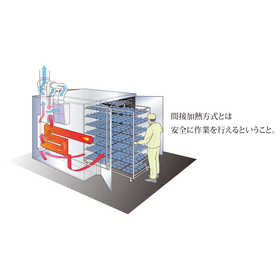
Heat recovery type, low running cost, paint drying oven.

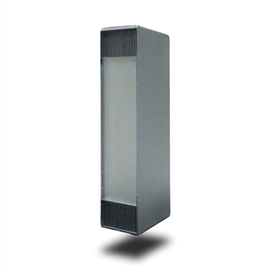
- Other painting machines
- Drying Equipment
- Annealing furnace
Dryer Dry Tech Price Information Public Site Now Available
We have launched a price information website for the painting-specific dryer, Drytech. The site features product information and sizes focused on standard models of Drytech, both front and single-door types, as well as custom products and options, including performance and price information. We have disclosed price information to facilitate a quicker process from consideration and decision-making to implementation. Please make use of it.
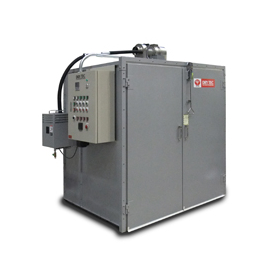
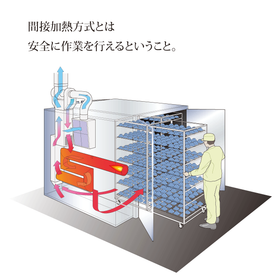
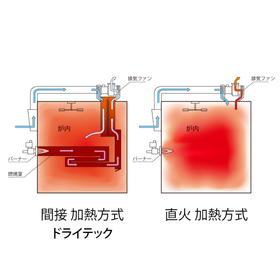
Heat recovery type, low running cost, hot air dryer for painting.
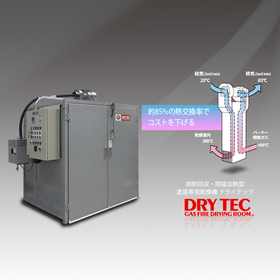
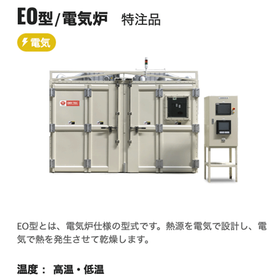
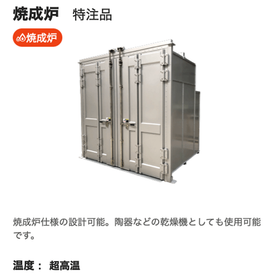
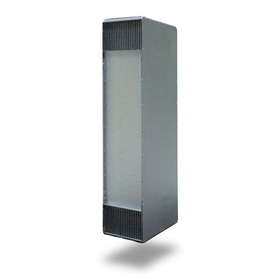
- Other painting machines
- Drying Equipment
- Annealing furnace


Generates up to 670,000 ppm of HHO gas at a rate of 700 to 3,000 cc per minute, allowing for efficient inhalation even in a short time.
- Gas Generator

Genuine medical-grade water that you can "continue to use" with peace of mind.
- Pure water production equipment
- Water treatment equipment

Generating a hydrogen gas mixture at a rate of 4L per minute! Real-time display of inhalation concentration.
- Gas Generator

Clean your body from the inside with hydrogen! Generating 150ml of 99.9% hydrogen gas every minute.
- Gas Generator
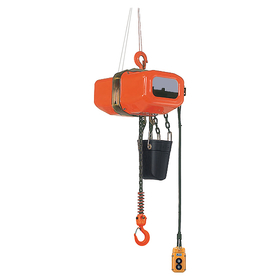

It is an electric chain block (suspension type) that can be used with a single-phase 100V power supply.
- Stainless steel container
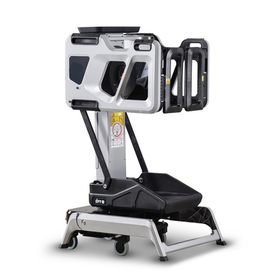
A stylish design that feels at home even in the hall or lobby.
- Stainless steel container
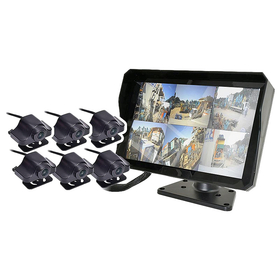
Centralized monitoring of blind spots around with 6 cameras!
- Stainless steel container
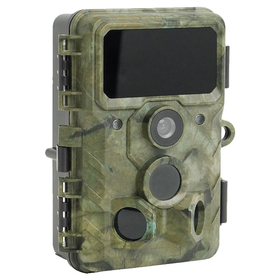
No installation required, battery-operated, suitable for any location, all-weather trail security camera.
- Stainless steel container
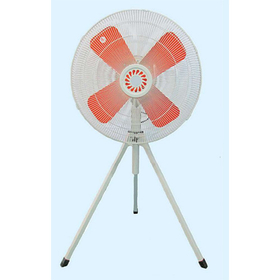
Industrial fan (60cm, stand type, single-phase 100V, open motor) ● High airflow model with a blade diameter of 60cm ● Equipped with thermal protector
- Stainless steel container
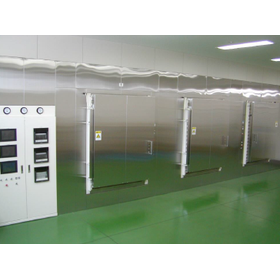

Supported by ISO-certified factory! Sterilization processing for medical devices Class I to IV available.
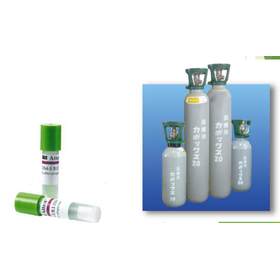
- Sterilizer
- Other contract services

Low-temperature sterilization with high penetration power! It has a wide range of applications and offers high cost performance.
- Sterilizer
- Other contract services
- Cosmetic containers and packaging


Ideal for reagent application! Easy tube replacement! No air source needed, from small to large flow rates!
- dispenser
- Dispenser
- Automatic Dispensing Device
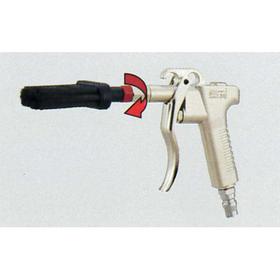
In areas where conventional air blowing is not possible.
- Stainless steel container
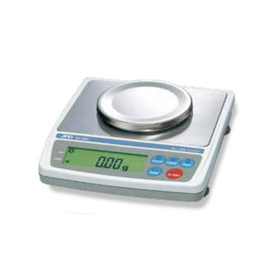
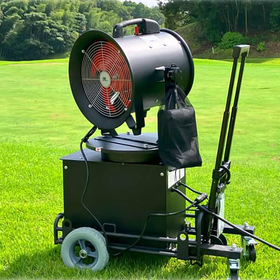
Are you struggling with preventing turf diseases? A 'fan that circulates air' to protect the grass from air stagnation around the green.
- Stainless steel container
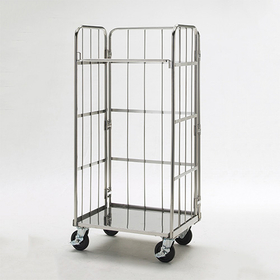
Made of high-strength stainless steel, resistant to rust, clean, and hygienic.
- Stainless steel container
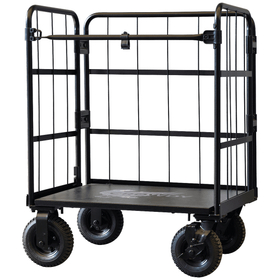
The M2559DG-CLD1047G series is a basket cart featuring a compact design for easy handling and a calm black color.
- Stainless steel container
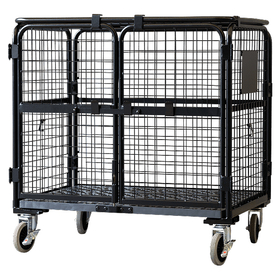
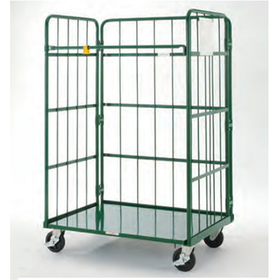
A cart with a folding door that is easy to maneuver due to its low height and securely protects the cargo.
- Stainless steel container
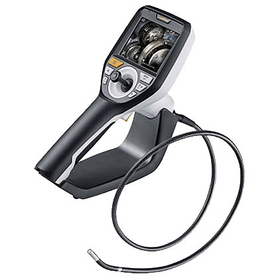
Camera cable with a diameter of 6mm and lengths of 1m/2m.
- Stainless steel container
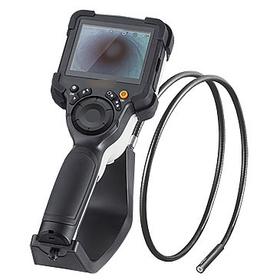
■Camera with a diameter of 7.9mm, length of 1.5m, and IP68 waterproof + oil-resistant performance.
- Stainless steel container