We have compiled a list of manufacturers, distributors, product information, reference prices, and rankings for Cleaning agents.
ipros is IPROS GMS IPROS One of the largest technical database sites in Japan that collects information on.

Cleaning agents Product List and Ranking from 393 Manufacturers, Suppliers and Companies | IPROS GMS

Last Updated: Aggregation Period:May 06, 2026~Jun 02, 2026
This ranking is based on the number of page views on our site.

Cleaning agents Manufacturer, Suppliers and Company Rankings

Last Updated: Aggregation Period:May 06, 2026~Jun 02, 2026
This ranking is based on the number of page views on our site.

  1. イノセンス Aichi//Trading company/Wholesale
  2. ゼストロンジャパン Kanagawa//Chemical
  3. 中部 Aichi//Trading company/Wholesale
  4. 4 NCH Japan(日本エヌ・シー・エイチ株式会社) Tokyo//Other manufacturing
  5. 5 三和油化工業 Aichi//Chemical

Cleaning agents Product ranking

Last Updated: Aggregation Period:May 06, 2026~Jun 02, 2026
This ranking is based on the number of page views on our site.

  1. PFAS-free cleaning agent 'VB1000' in anticipation of REACH regulations. イノセンス
  2. Water-based cleaning agent 'VB1000' as an alternative to fluorine-based cleaning agents. イノセンス
  3. Environmentally friendly cleaning agent "Ireiza Clean" as an alternative to thinner and acetone. 中部
  4. 4 Water-soluble degreasing cleaner "ND-165" NCH Japan(日本エヌ・シー・エイチ株式会社)
  5. 5 Chemical Business Product "Cleaning Agent Comprehensive Catalog" 三和油化工業

Cleaning agents Product List

211~240 item / All 1507 items

Displayed results

Water-based flux cleaner for printed circuit boards VIGON N 640

A product suitable for use in immersion cleaning! It can reduce the number of rinses.

"VIGON N 640" is a specially designed neutral cleaning agent for the removal of flux from printed circuit boards. It is suitable for use in batch spray cleaning machines. It offers excellent cleaning performance against advanced cream solder and fluxes that are generally difficult to remove. Additionally, it has excellent material compatibility with highly sensitizing metals such as copper and nickel. 【Features】 ■ Suitable for use in batch spray cleaning machines ■ Excellent operability, maintaining a constant concentration between the tank and chamber ■ Effective against difficult-to-remove cream solder ■ Can be easily rinsed with ion-exchanged water ■ High material compatibility due to its neutral nature *For more details, please refer to the PDF document or feel free to contact us.

  • Cleaning agents
  • Cleaning agents

Added to bookmarks

Bookmarks list

Bookmark has been removed

Bookmarks list

You can't add any more bookmarks

By registering as a member, you can increase the number of bookmarks you can save and organize them with labels.

Free membership registration

Water-soluble neutral flux cleaner VIGON N 680

For spray cleaning processes! It has excellent material compatibility with highly sensitizing metals such as copper and aluminum.

"VIGON N 680" is a neutral cleaning agent specially designed for water-based spray cleaning (inline and batch). It effectively removes various flux residues from electronic circuit boards and can penetrate and clean even low stand-off components very well. Additionally, it has excellent material compatibility with metals that are highly sensitizing, such as copper. Please feel free to contact us if you have any inquiries. 【Features】 ■ Particularly excellent for cleaning under low stand-off components ■ High rinsability provides a wide range of applications ■ Superior material compatibility with highly sensitizing metals like copper and aluminum ■ Sufficient effectiveness even at low concentrations depending on the process ■ Can be sent to wastewater treatment without neutralization *For more details, please refer to the PDF document or feel free to contact us.

  • Cleaning agents
  • Cleaning agents

Added to bookmarks

Bookmarks list

Bookmark has been removed

Bookmarks list

You can't add any more bookmarks

By registering as a member, you can increase the number of bookmarks you can save and organize them with labels.

Free membership registration

Power semiconductor and printed circuit board water-based cleaning agent VIGON PE190A

No explosion-proof equipment is required as it does not have a flash point! Usable with various types of spray devices.

"VIGON PE 190A" is a water-based alkaline cleaner specifically designed for spray equipment. Based on MPC technology, it reliably removes flux residues from lead frames, discrete components, power modules, power LEDs, printed circuit boards, and especially from low stand components from below. It also demonstrates excellent effectiveness on severely oxidized or heavily soiled copper surfaces, ensuring superior material compatibility in subsequent processes such as wire bonding, adhesive bonding, and molding. 【Features】 ■ Reliably removes flux residues ■ Prepares copper surfaces in a clean state, activating them for bonding connections ■ Maintains an activated copper surface for an extended period without re-oxidation ■ Particularly excellent material compatibility with dies, without damaging passivation ■ Excellent rinsing properties, does not foam *For more details, please refer to the PDF document or feel free to contact us.

  • Cleaning agents
  • Cleaning agents

Added to bookmarks

Bookmarks list

Bookmark has been removed

Bookmarks list

You can't add any more bookmarks

By registering as a member, you can increase the number of bookmarks you can save and organize them with labels.

Free membership registration

Cleaning agent for power semiconductors and printed circuit boards / VIGON PE 194A

Weakly alkaline flux cleaner, excellent rinsing properties, does not foam, suitable for spray and immersion equipment!

"VIGON PE 194A" is a water-based weak alkaline cleaning agent specially designed for spray and immersion equipment. It has excellent material compatibility with highly sensitizing metals, especially with die materials, and can remove copper oxide films in a short time. Based on MPC technology, it reliably removes flux residues from power semiconductors, lead frames, discrete components, power LEDs, and printed circuit boards. 【Features】 - Effectively removes flux residues from power semiconductors and printed circuit boards - Weakly alkaline, with excellent material compatibility, especially for die and highly sensitizing metals - Prepares copper surfaces in a clean state, activating them for bonding connections - Does not have a flash point, eliminating the need for explosion-proof equipment - Usable with various types of spray equipment *For more details, please refer to the PDF document or feel free to contact us.

  • Cleaning agents
  • Cleaning agents

Added to bookmarks

Bookmarks list

Bookmark has been removed

Bookmarks list

You can't add any more bookmarks

By registering as a member, you can increase the number of bookmarks you can save and organize them with labels.

Free membership registration

Water-based cleaning agent VIGON SC210 for SMT adhesives and metal masks

The VOC value is significantly below 20%! It can be used without explosion-proof equipment as there is no flash point.

The "VIGON SC 210" is a water-based cleaning agent specifically designed for cleaning SMT adhesives and metal masks. Based on MPC technology, it can reliably remove cream solder and SMT adhesives in a single process even at a low temperature of 18°C. Depending on the type of flux, it can also be used to clean misprinted circuit boards. Furthermore, it can remove adhesives from fixtures (especially dispenser nozzles) and is designed for spray cleaning and ultrasonic cleaning applications. 【Features】 - Stable and excellent cleaning performance in the temperature range of 18-40°C - Contains no surfactants, leaving no residue on circuit boards or inside equipment - Excellent material compatibility - Non-foaming, low odor, with no organic residue left in the rinsing process - Can also be used to remove adhesives from fixtures and dispenser nozzles *For more details, please refer to the PDF document or feel free to contact us.

  • Cleaning agents
  • Cleaning agents

Added to bookmarks

Bookmarks list

Bookmark has been removed

Bookmarks list

You can't add any more bookmarks

By registering as a member, you can increase the number of bookmarks you can save and organize them with labels.

Free membership registration

Water-based flux cleaning agent for semiconductors HYDRON SE 230A

Low surface tension is a characteristic! It provides good cleaning results even in narrow spaces.

"HYDRON SE 230A" is a one-phase type water-based cleaning agent for immersion processes. It reliably removes flux residues generated during die attach from various semiconductors such as lead frames, discrete components, power modules, power LEDs, flip chips, and CMOS. Additionally, it excels in removing oxide films from copper substrates in post-processes such as wire bonding and molding. 【Features】 ■ Activates copper substrates without staining and maintains the activated surface for a certain period ■ Excellent material compatibility with highly sensitive materials ■ Superior flux removal after wafer bump formation ■ Easy process management due to its one-phase structure, demonstrating excellent performance in immersion processes ■ Good rinsing properties with ion-exchanged water, leaving no residues *For more details, please refer to the PDF document or feel free to contact us.

  • Cleaning agents
  • Cleaning agents

Added to bookmarks

Bookmarks list

Bookmark has been removed

Bookmarks list

You can't add any more bookmarks

By registering as a member, you can increase the number of bookmarks you can save and organize them with labels.

Free membership registration

What is a water-based cleaning agent? An explanation of the types of cleaning agents and the characteristics of water-based cleaning agents.

An explanation focusing on the percentage of water content in aqueous cleaning agents!

Cleaning agents can be broadly classified into "solvent-based," "semi-aqueous," and "aqueous." At Zestron, we define "aqueous cleaning agents" as those where water is the primary component (with a water content of 50% or more). Even if they are referred to as aqueous cleaning agents domestically, there are specifications where organic components are the primary component, and even in cases referred to as semi-aqueous, many of the components may consist of solvent ingredients. While definitions and expressions vary, when discussing aqueous cleaning agents, we would like you to focus on the percentage of water content in the cleaning agent and understand its characteristics. *For more detailed information, please refer to the related links. For further details, please check the PDF materials or feel free to contact us.*

  • Technical and Reference Books
  • Cleaning agents

Added to bookmarks

Bookmarks list

Bookmark has been removed

Bookmarks list

You can't add any more bookmarks

By registering as a member, you can increase the number of bookmarks you can save and organize them with labels.

Free membership registration

Ion residue analysis: From invisible residues to defects?

How to check for the presence of invisible ion residues! Introducing cleaning know-how.

We are performing flux cleaning, and although no residues are visible after cleaning, reliability assessments show localized migration and corrosion of metal parts. The likely cause of this defect is the presence of invisible residues (ionic residues). If left unaddressed, various issues may arise, and in the worst case, it could lead to a fire. On this page, we will introduce how to check for the presence of invisible ionic residues. *For detailed information, please refer to the related links. For more information, please consult the PDF materials or feel free to contact us.*

  • Technical and Reference Books
  • Cleaning agents

Added to bookmarks

Bookmarks list

Bookmark has been removed

Bookmarks list

You can't add any more bookmarks

By registering as a member, you can increase the number of bookmarks you can save and organize them with labels.

Free membership registration

Why is cleaning necessary for sintering bonding? [Cleaning issues in sintering bonding]

Explaining why cleaning is necessary for sintering bonding! Introducing cleaning know-how.

The joining technology of silver sintering (silver sinter) has been attracting attention in recent years. With the increase in electrical capacity and the utilization of new materials, there is a need for "new joining technologies" that can withstand higher temperatures, higher voltages, and larger currents. The silver sintering process can form a high-density bonding layer through pressing and sintering, resulting in high bonding strength. *For more details, you can view the related links. Please refer to the PDF materials or feel free to contact us for more information.*

  • シンター接合における洗浄課題2.JPG
  • シンター接合における洗浄課題3.JPG
  • シンター接合における洗浄課題4.JPG
  • Technical and Reference Books
  • Cleaning agents

Added to bookmarks

Bookmarks list

Bookmark has been removed

Bookmarks list

You can't add any more bookmarks

By registering as a member, you can increase the number of bookmarks you can save and organize them with labels.

Free membership registration

Points to confirm for metal mask cleaning: How to choose cleaning agents and cleaning methods.

It is possible to carry out cleaning with consideration for the environment! Introducing cleaning know-how.

This page provides an explanation of the key points to consider in metal mask cleaning. By selecting the appropriate cleaning agents and methods, it is possible to improve cleaning efficiency and work productivity, as well as reduce running costs, ensure worker safety, and implement environmentally considerate cleaning practices. Please check again. *For more details, you can view them through the related links. For further information, please refer to the PDF materials or feel free to contact us.

  • メタルマスク洗浄においての確認ポイント2.JPG
  • メタルマスク洗浄においての確認ポイント3.JPG
  • Technical and Reference Books
  • Cleaning agents

Added to bookmarks

Bookmarks list

Bookmark has been removed

Bookmarks list

You can't add any more bookmarks

By registering as a member, you can increase the number of bookmarks you can save and organize them with labels.

Free membership registration

The necessity of cleaning in 5G: Why is flux cleaning necessary?

A detailed explanation of why flux residue must be cleaned!

Last time, we introduced solutions to the technical challenges associated with 5G. We recommended using a spray method and water-based cleaning agents, but a question arose: is cleaning really necessary if coating is applied? Taking the above into consideration, I will explain why it is necessary to clean flux residues. *For more details, you can view the related links. Please refer to the PDF materials or feel free to contact us for more information.*

  • Technical and Reference Books
  • Cleaning agents

Added to bookmarks

Bookmarks list

Bookmark has been removed

Bookmarks list

You can't add any more bookmarks

By registering as a member, you can increase the number of bookmarks you can save and organize them with labels.

Free membership registration

Verification of cleaning properties of solder paste for fine bonding in joint research with Nippon Superior Co., Ltd.

A fundamental transformation is required for cleaning methods and cleaning agents! Introducing cleaning know-how.

Advanced electronic devices, such as 5G-compatible communication equipment and control units for electric vehicles, are becoming smaller and thinner. Consequently, the development of solder paste for fine bonding is becoming increasingly active. These electronic devices require long-term high reliability, and there is a growing trend for the need for flux cleaning. Due to high-density mounting and the diversification of components, there is an increase in electronic devices with low stand-off. *For more details, please refer to the related links. *The PDF document is a technical resource that explains the cleaning technology required for sintering bonding.

  • 微細接合向けはんだペースト洗浄性検証2.JPG
  • 微細接合向けはんだペースト洗浄性検証3.JPG
  • Technical and Reference Books
  • Cleaning agents

Added to bookmarks

Bookmarks list

Bookmark has been removed

Bookmarks list

You can't add any more bookmarks

By registering as a member, you can increase the number of bookmarks you can save and organize them with labels.

Free membership registration

Zero defects and half the cleaning time [Improvement case]

About the flux cleaning of high-performance control boards! Introducing cleaning know-how.

In the flux cleaning of high-performance control boards, we adopted an organic solvent-based cleaning agent combined with a jet flow method. While this method was able to clean the exposed surfaces of the boards, it could not completely clean the underside of components with a standoff of less than 20μm, resulting in defects where the required performance was not achieved. This page introduces the method that solved this issue. *For more details, please refer to the related links. *The PDF document is a technical material that explains cleaning technology for advanced electronic components.

  • Cleaning agents
  • Cleaning agents

Added to bookmarks

Bookmarks list

Bookmark has been removed

Bookmarks list

You can't add any more bookmarks

By registering as a member, you can increase the number of bookmarks you can save and organize them with labels.

Free membership registration

Why is it necessary to clean no-clean solder?

The necessity of cleaning no-clean solder! Introducing project improvement examples.

No-clean solder is a type of solder used in the assembly of electronic components, characterized by the absence of a need for a cleaning process. No-clean solder is primarily composed of low-activity flux, which stabilizes the flux residue even after the product is assembled, eliminating the need for cleaning. This no-clean solder possesses excellent bonding, insulation properties, and resistance to environmental factors. *For detailed case information, please refer to the related links. For more information, please check the PDF materials or feel free to contact us.*

  • 無洗浄はんだを使用しているのに、なぜ洗浄する必要性があるのか2.JPG
  • 無洗浄はんだを使用しているのに、なぜ洗浄する必要性があるのか3.JPG
  • 無洗浄はんだを使用しているのに、なぜ洗浄する必要性があるのか4.JPG
  • 無洗浄はんだを使用しているのに、なぜ洗浄する必要性があるのか5.JPG
  • 無洗浄はんだを使用しているのに、なぜ洗浄する必要性があるのか6.JPG
  • 無洗浄はんだを使用しているのに、なぜ洗浄する必要性があるのか7.JPG
  • 無洗浄はんだを使用しているのに、なぜ洗浄する必要性があるのか8.JPG
  • Cleaning agents
  • Cleaning agents

Added to bookmarks

Bookmarks list

Bookmark has been removed

Bookmarks list

You can't add any more bookmarks

By registering as a member, you can increase the number of bookmarks you can save and organize them with labels.

Free membership registration

Cleaning Test [Consistent support from cleaning to cleanliness analysis]

After the test is completed, a technical report detailing recommended processes and other information will be submitted!

We would like to introduce the "Cleaning Test" conducted by Zestron Japan Co., Ltd. From our technical center, you can choose a device that meets your requirements from our inline and batch-type spray, jet, and ultrasonic equipment, and try cleaning workpieces under conditions equivalent to those in a production environment using spray or immersion processes (ultrasonic or jet). Our engineers will propose suitable cleaning equipment, and while conducting the cleaning test, we will analyze the cleanliness at our analysis center. 【Test Flow (Partial)】 ■1. Hearing ■2. Cleaning Test ■3. Cleanliness Analysis ■4. Report Submission *The PDF document is a company brochure.

  • 2.PNG
  • 3.PNG
  • 4.PNG
  • Other cleaning machines
  • Printed Circuit Board
  • Cleaning agents

Added to bookmarks

Bookmarks list

Bookmark has been removed

Bookmarks list

You can't add any more bookmarks

By registering as a member, you can increase the number of bookmarks you can save and organize them with labels.

Free membership registration

Compliance with regulations and safety measures for cleaning agents! A step-by-step explanation of purchasing, using, and storing.

Introducing regulations related to cleaning agents, taking into account efforts overseas!

In recent years, from the perspective of environmental conservation and human protection, countries have been strengthening regulations regarding the handling of chemical substances, and there is a global trend towards initiatives related to the SDGs (Sustainable Development Goals). In Japan, the Industrial Safety and Health Act will be revised in April 2024, strengthening the handling of chemical substances. To reduce health risks for workers and environmental burdens, some companies are moving to avoid procuring materials that have a significant environmental impact, and cleaning agents are no exception. Taking into account initiatives overseas, we will introduce regulations related to cleaning agents. *For detailed information, please refer to the related links. For further inquiries, feel free to contact us.*

  • Cleaning agents
  • Cleaning agents

Added to bookmarks

Bookmarks list

Bookmark has been removed

Bookmarks list

You can't add any more bookmarks

By registering as a member, you can increase the number of bookmarks you can save and organize them with labels.

Free membership registration

Ion Residues on Electronic Substrates and Their Analytical Methods [Free Download]

Examples of the analysis of the cleaning properties of surfactants are also included! We will also introduce ions and flux.

This document explains the analysis of ionic residues on electronic substrates that our company, as a cleaning agent manufacturer, has been working on. It includes explanations about ions and flux, as well as discussions on ion contamination measurement, ion chromatography, and scanning electron microscopy with energy dispersive X-ray spectroscopy. Additionally, it features case studies on the cleaning efficacy of surfactants. We encourage you to download it and read through it. 【Contents】 ■ Introduction ■ What are ionic residues? ■ Analysis of ionic residues remaining on electronic substrates ■ Case study - Cleaning efficacy of surfactants - ■ Conclusion *For more details, please refer to the PDF document or feel free to contact us.

  • Printed Circuit Board
  • Cleaning agents

Added to bookmarks

Bookmarks list

Bookmark has been removed

Bookmarks list

You can't add any more bookmarks

By registering as a member, you can increase the number of bookmarks you can save and organize them with labels.

Free membership registration

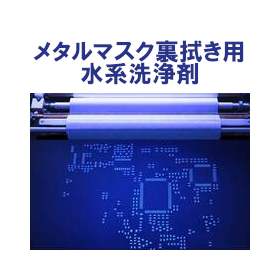
Metal mask cleaning agent "ZESTRON SW" *Can be used without vacuum drying.

Due to its wide applicability, it reliably removes cream solder from the back of the metal mask!

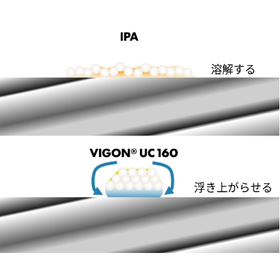
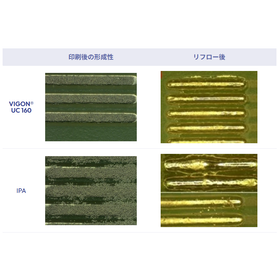
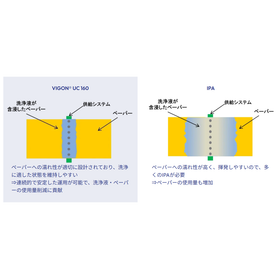
"ZESTRON SW" is a solvent-based cleaning agent with a high flash point, developed in collaboration with major SMT printer manufacturers, and can be used without vacuum drying. It excels in the reproducibility of cleaning results and improves the reliability of the printing process as it leaves no residue after drying. Unlike isopropanol (IPA, flash point: 12°C), this product (flash point: 67°C) significantly enhances safety during the operation of metal mask printers. 【Features】 ■ Dries quickly on the metal mask after wiping with a dry non-woven cloth, leaving no residue ■ Leads to good printing stability and a reduction in solder balls ■ Reduces the frequency of cleaning cycles ■ Biodegradable ■ Approved for use in SMT printers by major manufacturers worldwide *For more details, please refer to the PDF document or feel free to contact us.

  • Cleaning agents
  • Cleaning agents

Added to bookmarks

Bookmarks list

Bookmark has been removed

Bookmarks list

You can't add any more bookmarks

By registering as a member, you can increase the number of bookmarks you can save and organize them with labels.

Free membership registration

Three Key Points of Technological Evolution in Electronics Implementation and Cleaning

Trends in flux cleaning due to miniaturization! Introducing technical points in fine bonding products.

Electronics assembly refers to the technology of mounting electronic components onto a substrate. Specifically, it involves the process of joining components such as semiconductors, resistors, and capacitors to a printed circuit board to form an electrical circuit. The sizes of these components tend to become smaller in response to the demands for higher performance and space-saving in products, and accordingly, fine joining technologies are also evolving. This has a significant impact on the cleaning processes as well. We will explain the evolution of joining technologies and cleaning in fine joining. *For detailed content of the article, you can view it through the related links. For more information, please download the PDF or feel free to contact us.*

  • Printed Circuit Board
  • Cleaning agents

Added to bookmarks

Bookmarks list

Bookmark has been removed

Bookmarks list

You can't add any more bookmarks

By registering as a member, you can increase the number of bookmarks you can save and organize them with labels.

Free membership registration

Cleaning technology required for sintered joint devices [Technical Document]

Introduction to the specific sintering cleaning process! Discussion of the differences from flux cleaning, etc.

This document explains the cleaning techniques required for sintered joining devices. It discusses the background for the need for cleaning in sintered joining devices and the differences from flux cleaning, as well as introducing specific cleaning processes. It also includes information on the selection of cleaning agents and methods, as well as cleanliness analysis after cleaning. We encourage you to read it. 【Contents】 ■ Introduction ■ The formation of contamination and the effects of residues in sintered joining devices ■ Selection of cleaning agents and methods ■ Cleanliness analysis after cleaning ■ Cleaning case studies ■ Conclusion *For more details, please download the PDF or feel free to contact us.

  • Cleaning agents
  • Cleaning agents

Added to bookmarks

Bookmarks list

Bookmark has been removed

Bookmarks list

You can't add any more bookmarks

By registering as a member, you can increase the number of bookmarks you can save and organize them with labels.

Free membership registration

SDGs in Electronic Device Cleaners [Free Technical Document Download]

Balancing cleanliness and safety! A must-read for reviewing electronic device cleaning agents.

This document explains the requirements for electronic devices to achieve the SDGs and how cleaning of electronic devices should be approached from the perspective of the SDGs. It is recommended for those who are concerned about wanting to achieve "cleaning that balances low-risk performance and cleaning performance" or wanting to know "the cleaning technologies required for electronic devices." We have included content on "Cleaning of electronic devices and the SDGs" and "The need for low-risk cleaning agents for electronic devices," so please take a moment to read it. 【Contents (partial)】 ■ Introduction ■ Cleaning of electronic devices and the SDGs ■ The need for low-risk cleaning agents for electronic devices ■ Cleaning performance required for electronic device cleaning agents ■ "Chemical analysis" to ensure more reliable cleaning *For more details, please refer to the PDF document or feel free to contact us.

  • Cleaning agents
  • Cleaning agents

Added to bookmarks

Bookmarks list

Bookmark has been removed

Bookmarks list

You can't add any more bookmarks

By registering as a member, you can increase the number of bookmarks you can save and organize them with labels.

Free membership registration

What is an SDS (Safety Data Sheet)?

Explanation of essential knowledge for evaluating, purchasing, and storing flux cleaning agents!

An SDS (Safety Data Sheet) is a document that contains important information regarding the handling of chemical substances, relevant regulations, disposal and transportation methods, as well as hazards and toxicity. The applicable regulations for flux cleaning agents, whether they have a flash point, precautions for use, the necessity of protective equipment, and disposal methods are detailed over more than 10 pages. In this article, we will explain important points that we particularly want you to pay attention to, as well as frequently asked questions. *For more detailed information, please refer to the related links. Feel free to contact us for further inquiries.*

  • Technical and Reference Books
  • Cleaning agents

Added to bookmarks

Bookmarks list

Bookmark has been removed

Bookmarks list

You can't add any more bookmarks

By registering as a member, you can increase the number of bookmarks you can save and organize them with labels.

Free membership registration

Explaining the future of evolving printed circuit boards (PCBs) and the increasing importance of cleaning technologies.

We will provide a detailed introduction to the history and development of printed circuit boards (PCBs), as well as their main types!

"Printed Circuit Board (PCB)" can be said to be the heart of electronic devices; it serves as a foundation for mounting electronic components and electrically connecting them. The fine wiring patterns formed on this board serve as pathways for electronic signals, and electronic components are fixed and connected by solder. From smartphones to automobiles, home appliances, and medical devices, it has become an indispensable part of various technologies in modern society. In this article, we will introduce the main types of printed circuit boards (PCBs), the future prospects visible from the development of the boards, and the cleaning technologies that are required. *For more detailed information, please refer to the related links. For further details, please check the PDF materials or feel free to contact us.*

  • Printed Circuit Board
  • Cleaning agents

Added to bookmarks

Bookmarks list

Bookmark has been removed

Bookmarks list

You can't add any more bookmarks

By registering as a member, you can increase the number of bookmarks you can save and organize them with labels.

Free membership registration

360° Virtual Tour

Overwhelming technical and analytical capabilities of the cleaning agent manufacturer that supports high reliability, providing thorough support from cause analysis to optimization.

We are conducting a "360° Virtual Tour" where you can see the site of our cleaning process development, which brings together our achievements and know-how. We will introduce our Technical Center, which "creates" appropriate cleaning processes, and our Analysis Center, which performs "visualization" down to fine residues. After filling out the form available at the related link, we will send you a limited link for viewing. 【Features】 ■ Technical Center - We offer a wide range of cleaning equipment (spray, ultrasonic, immersion, batch, inline, etc.), and our team of specialized engineers will suggest the appropriate combination of equipment and cleaning solutions through cleaning tests. *For more details, please download the PDF or feel free to contact us.

  • 08282025_133642.jpg
  • 分析センターpic.jpg
  • Other cleaning equipment
  • Ultrasonic cleaner
  • Cleaning agents

Added to bookmarks

Bookmarks list

Bookmark has been removed

Bookmarks list

You can't add any more bookmarks

By registering as a member, you can increase the number of bookmarks you can save and organize them with labels.

Free membership registration

Flux cleaner for ultra-high-density mounting VIGON A 301

Achieving high performance with cleaning ability × safety × suitability for multiple processes! VIGON A 301

VIGON A 301 is a weakly alkaline aqueous cleaning agent for circuit boards and electronic components. (MPC) It can particularly remove flux residues from high-reliability, high-temperature solder pastes developed in recent years. It excels in cleaning under low stand-off components and has very good rinsability. It can be used in batch or inline spray cleaning equipment, as well as in immersion systems. Features of VIGON A 301: ■ Supports ultra-high-density mounting and extremely low stand-off ■ Compatible with various cleaning methods ■ Removes metallic salts that remain without a trace ■ No flash point, can be cleaned under low VOC conditions * Complies with the planned new standard values in China (VOC: below 100g/L)

  • Chemicals
  • Printed Circuit Board
  • Cleaning agents

Added to bookmarks

Bookmarks list

Bookmark has been removed

Bookmarks list

You can't add any more bookmarks

By registering as a member, you can increase the number of bookmarks you can save and organize them with labels.

Free membership registration

What is leakage current? Understanding the causes and countermeasures to eliminate defects in electronic devices.

We will also introduce a case that evaluated the impact of water-soluble flux residues on insulation resistance!

In electronic circuits, the current that flows through unintended paths as envisioned by the designer is called leakage current. This invisible current can significantly impact the reliability, performance, and lifespan of products, making it a critical issue in electronic device development. In today's world, where the miniaturization and densification of semiconductors are accelerating, the sources of leakage current vary widely, stemming from physical limitations within the device or minor issues during the manufacturing process. This article will explain the fundamentals of leakage current, its causes, specific risks at the electronic substrate and assembly levels, countermeasures in the design and manufacturing processes, and methods for addressing it through cleaning and cleanliness evaluation. *For more detailed information, please refer to the related links. Feel free to contact us for further inquiries.*

  • 1a.png
  • 1b.png
  • 1c.png
  • 1d.png
  • Other electronic parts
  • Cleaning agents

Added to bookmarks

Bookmarks list

Bookmark has been removed

Bookmarks list

You can't add any more bookmarks

By registering as a member, you can increase the number of bookmarks you can save and organize them with labels.

Free membership registration

Causes and Countermeasures of Substrate Corrosion | Explanation from Mechanism of Occurrence to Analysis Methods

Explaining everything from mechanisms and preventive measures to methods for identifying causes in the event that corrosion occurs!

The circuit board, which can be considered the heart of electronic devices, significantly influences the overall quality of the product due to its reliability. However, corrosion of the circuit board directly leads to issues such as circuit shorts and disconnections, which can decrease the reliability of electronic devices. In this article, we will explain how corrosion of the circuit board occurs, its mechanisms, preventive measures, and methods for identifying the causes in case corrosion does occur. *For detailed content of the column, please refer to the related links. For more information, feel free to contact us.*

  • 基板の腐食の原因と対策|発生メカニズムから分析手法まで解説2.jpg
  • 基板の腐食の原因と対策|発生メカニズムから分析手法まで解説3.jpg
  • Printed Circuit Board
  • Cleaning agents

Added to bookmarks

Bookmarks list

Bookmark has been removed

Bookmarks list

You can't add any more bookmarks

By registering as a member, you can increase the number of bookmarks you can save and organize them with labels.

Free membership registration

Quick-drying metal cleaner Rekisite LO

Metal degreasing cleaner that considers safety for people and the environment. Easy work with cleaning power and quick drying.

It demonstrates excellent degreasing power for cleaning various oil stains caused by oils such as hydraulic oil, lubricating oil, and grease, starting with the degreasing of processed parts and jigs, as well as the cleaning of molds. Adhesive substances like sheets that are difficult to remove can also be cleanly removed without damaging equipment or products, thanks to its excellent penetration. Additionally, it does not contain freon, chlorine-based solvents, or organic solvents as defined by the Industrial Safety and Health Act, and it is not subject to the PRTR Law.

  • Cleaning agents
  • Cleaning agents
  • Cleaning agents

Added to bookmarks

Bookmarks list

Bookmark has been removed

Bookmarks list

You can't add any more bookmarks

By registering as a member, you can increase the number of bookmarks you can save and organize them with labels.

Free membership registration

Oil system cleaning agent "System Purge"

A cleaning agent that can reduce equipment downtime, energy consumption, and parts replacement costs.

"System purge" incorporates accumulated dirt within the system into the used oil and flushes it out. As a result, various parts of the system become cleaner, wear decreases, oil temperature drops, leading to a reduction in equipment troubles and an extension of oil life. Additionally, it can be operated simply by adding it to the oil before replacement, without the usual hassle of flushing. Moreover, the amount of oil to be disposed of hardly increases.

  • SYSTEM_PURGE.png
  • Other consumables
  • Cleaning agents

Added to bookmarks

Bookmarks list

Bookmark has been removed

Bookmarks list

You can't add any more bookmarks

By registering as a member, you can increase the number of bookmarks you can save and organize them with labels.

Free membership registration

Industrial disinfecting cleaning agent "Everbright EC"

Environmentally friendly and considerate of work! A detergent that achieves phosphorus-free formulation.

"Everbright EC" is an industrial disinfecting cleaner that can powerfully wash away grease stains while simultaneously disinfecting. It is effective not only against food poisoning bacteria but also against spoilage bacteria, and it suppresses the growth of mold. It exhibits high disinfecting effectiveness against bacteria that cause unpleasant odors. Additionally, it is colorless and does not have the irritating smell associated with hypochlorite. 【Features】 ○ Disinfecting Power: It has a broad range of disinfecting capabilities, demonstrating excellent effectiveness against both gram-positive and gram-negative bacteria. ○ Cleaning Power: Even with organic stains remaining, it softens and removes dirt while appropriately exhibiting disinfecting effects. By adjusting the dilution concentration, it can be used for both cleaning and disinfecting cleaning. ○ Safety for Work and Environment: When diluted, it is decomposed by activated sludge. For more details, please contact us or download the catalog.

Added to bookmarks

Bookmarks list

Bookmark has been removed

Bookmarks list

You can't add any more bookmarks

By registering as a member, you can increase the number of bookmarks you can save and organize them with labels.

Free membership registration