We have compiled a list of manufacturers, distributors, product information, reference prices, and rankings for Coating.
ipros is IPROS GMS IPROS One of the largest technical database sites in Japan that collects information on.

Coating Product List and Ranking from 571 Manufacturers, Suppliers and Companies | IPROS GMS

Last Updated: Aggregation Period:Mar 18, 2026~Apr 14, 2026
This ranking is based on the number of page views on our site.

Coating Manufacturer, Suppliers and Company Rankings

Last Updated: Aggregation Period:Mar 18, 2026~Apr 14, 2026
This ranking is based on the number of page views on our site.

  1. 吉田SKT Aichi//Manufacturing and processing contract
  2. 日本コーティング工業 本社、大阪営業所、東京営業所、関西工場、東京工場 Hyogo//Manufacturing and processing contract
  3. 日建塗装工業 Tokyo//Manufacturing and processing contract
  4. 4 トーカロ Hyogo//Manufacturing and processing contract
  5. 5 フロロコート Saitama//others

Coating Product ranking

Last Updated: Aggregation Period:Mar 18, 2026~Apr 14, 2026
This ranking is based on the number of page views on our site.

  1. Understanding Thermal Spray Technology! Comprehensive Catalog of Ceramic & Metal Coatings 日本コーティング工業 本社、大阪営業所、東京営業所、関西工場、東京工場
  2. Advantages and disadvantages of re-coating a non-stick frying pan. 吉田SKT
  3. Causes of Teflon coating peeling and how to address them. 吉田SKT
  4. 4 BALINIT ALCRONA EVO - Born to evolve. Made to last. Oerlikon Japan Co., Ltd.
  5. 4 Water-repellent, non-stick, anti-adhesion coating "tt-kote series" トーカロ

Coating Product List

1891~1920 item / All 2635 items

Displayed results

Visible deodorization and antibacterial coating processing.

Dot-shaped deodorizing and antibacterial coating processing. It's immediately obvious whether the agent is present or not. Ideal for interiors, clothing, and more.

Our unique technology, the "Dot Coating Service," will contribute to enhancing the appeal of your products. "Dot Coating" allows for the application of deodorants and antibacterial agents in dot form, making it immediately clear whether the agents are present on the fabric. Additionally, it can be processed without compromising the texture and flexibility of the fabric. By changing the combinations of attachment patterns, we can develop processing tailored to your intended use and requests. Please feel free to contact us about any concerns, desired features, or even questions you might hesitate to ask.

  • Processing Contract
  • Coating Agent
  • Coating

Added to bookmarks

Bookmarks list

Bookmark has been removed

Bookmarks list

You can't add any more bookmarks

By registering as a member, you can increase the number of bookmarks you can save and organize them with labels.

Free membership registration

Fixation of functional particles exposed on the surface.

Coating method to maximize the potential of functional particles.

Please feel free to contact us at i-kaihatsu@nittobogrp.com. "Double Dot Coating" is a processing method that allows functional particles to adhere to the substrate while being exposed on the surface. This method enables the functional particles to demonstrate their performance more effectively than when mixed with binders and other materials. We welcome proposals for collaboration from companies that possess functional particles, as well as those considering enhancing the functionality of existing materials.

  • Coating Agent
  • Coating

Added to bookmarks

Bookmarks list

Bookmark has been removed

Bookmarks list

You can't add any more bookmarks

By registering as a member, you can increase the number of bookmarks you can save and organize them with labels.

Free membership registration

"Dot Coating Service" that utilizes materials and creates new functions.

It has unique features that other coating processes do not have, allowing for the extraction of various possibilities such as material performance, quality, and even process improvements.

Please feel free to contact us at i-kaihatsu@nittobogrp.com. "Dot Coating" is a technology that coats functional agents in dot form on various materials. It has the following technical features and will support your company's problem-solving. Technical Features: - Can fix particles in an exposed state on the surface. - Can coat on coarse fabrics. - Can provide high-performance materials. - Can form two layers of dots. - Can coat hot melt and thermoplastic resins in dot form on the substrate. Expected Problems to be Solved: - Want to effectively utilize the functions of additives such as particles and powders. - Want to increase the productivity of the lamination process. - Want to reduce the amount of adhesive used. - Want to bond and laminate without compromising the properties of the substrate (such as sound absorption, stretchability, breathability, flexibility, etc.). - Want to bond different materials. - Want high-performance materials or to impart high functionality (such as windproof, thermal insulation, reinforcement, ultra-thin fabrics, etc.). - Want to expand the application of our own materials (functional powders, high-performance textiles, non-woven fabrics, resins, etc.).

  • Processing Contract
  • Coating Agent
  • Coating

Added to bookmarks

Bookmarks list

Bookmark has been removed

Bookmarks list

You can't add any more bookmarks

By registering as a member, you can increase the number of bookmarks you can save and organize them with labels.

Free membership registration

Multi-functional Dot Coating D-ALIGN - For Fiber Development and Industrial Material Development

Infinite possibilities realized through coating - Supporting the resolution of functionalization challenges - A processing method suitable for reuse planning.

D-ALIGN is a post-processing technology that coats functional agents in dot form. By coating in dot shapes, it offers the following benefits: 1) It enables functionalization of thin, coarse fabrics and substrates that are difficult to treat with functionalization. 2) It allows for easier performance manifestation by adhering many functional agents to the surface of the substrate. 3) It enables management of the amount of functional agent adhered, ensuring stable product supply. 4) It is an environmentally considerate process that minimizes chemical waste after processing by using an appropriate amount of solution. 5) It maintains the characteristics of the substrate (such as stretchability and breathability) even after processing. 6) It has effects that prevent fraying and suppress fuzzing of the substrate, contributing to improved work efficiency. This processing technology is suitable for materials under consideration for differentiation and those that are stagnant, leading to the birth of new materials through D-ALIGN processing. It is a recommended processing method for those considering material development.

  • Coating Agent
  • Coating

Added to bookmarks

Bookmarks list

Bookmark has been removed

Bookmarks list

You can't add any more bookmarks

By registering as a member, you can increase the number of bookmarks you can save and organize them with labels.

Free membership registration

Kurashiki Bowling Machinery Co., Ltd.

A technology development company specializing in surface treatment (thermal spraying) and precision machining.

We utilize thermal spraying coating technology to develop and manufacture various functional coated parts with properties such as heat resistance, wear resistance, corrosion resistance, impact resistance, and non-stick characteristics.

Added to bookmarks

Bookmarks list

Bookmark has been removed

Bookmarks list

You can't add any more bookmarks

By registering as a member, you can increase the number of bookmarks you can save and organize them with labels.

Free membership registration

Floro Coat Co., Ltd. Okayama Division

A surface treatment manufacturer primarily focused on fluororesin coatings.

Non-stick! Slippery! Repellent! Unaffected! We will help improve work efficiency and factory operations by imparting the characteristics of fluororesin to various substrates through coating.

Added to bookmarks

Bookmarks list

Bookmark has been removed

Bookmarks list

You can't add any more bookmarks

By registering as a member, you can increase the number of bookmarks you can save and organize them with labels.

Free membership registration

CVD-TiC coating

Leave the surface treatment to us, whether it's a large-shaped object or a small palm-sized mold!

Our company conducts CVD-TiC to generate a silver-colored TiC (titanium carbide) on the surface layer of a base material heated to around 1000°C. The metal surface layer coated with a ceramic film achieves a hardness of approximately HV3200, exhibiting excellent wear resistance, heat resistance, peel resistance, and adhesion strength, which can significantly extend the service life of molds and similar applications. Additionally, we offer heat treatments such as vacuum hardening, vacuum annealing, and solid solution heat treatment, as well as mirror finishing and pre-treatment. 【Features】 ■ Color: Silver ■ Hardness Hv: 3200–3500 ■ Film Thickness: 6–8μm ■ Characteristics: High hardness, low friction ■ Applications: Sheet metal press molds, wear-resistant jigs, etc. *For more details, please download the PDF or feel free to contact us.

Added to bookmarks

Bookmarks list

Bookmark has been removed

Bookmarks list

You can't add any more bookmarks

By registering as a member, you can increase the number of bookmarks you can save and organize them with labels.

Free membership registration

About "surface finishing" that coats cardboard boxes with a sense of luxury and calmness.

Explaining surface treatments such as painting and laminating that create a sense of luxury!

A: I want the surface to have a matte finish. B: We have a variety of options like matte varnish, matte vinyl, and matte PP (laughs). A: I want to use it as a tray, but will scratches and scuffs be noticeable? B: Depending on the abrasion resistance, any of them can get scratched, but the strongest is probably matte PP. A: But that's expensive, right? B: Yes, it's the most expensive among these. A: - B: Considering quality and price, would matte vinyl be reasonable? A: But doesn’t it easily show fingerprints? Let’s imagine there was a conversation like this. It seems quite plausible, right? (laughs) In such cases, I recommend "Half Matte." What this is… by mixing a hardener into vinyl solvent, it becomes resistant to scratches and less prone to fingerprints. However, it does slightly lose its matte feel and may sink a bit. As you can see, there are various types of surface finishes, each with different levels of effectiveness. Therefore, this time, I would like to introduce these surface finishes that can significantly enhance the luxurious feel of paper boxes when used appropriately. *For detailed content of the article, you can view it through the related links.*

  • 10-2.png
  • Food boxes, packaging materials, and cushioning materials
  • Coating

Added to bookmarks

Bookmarks list

Bookmark has been removed

Bookmarks list

You can't add any more bookmarks

By registering as a member, you can increase the number of bookmarks you can save and organize them with labels.

Free membership registration

Permeation-resistant PFA fluororesin lining 'MY Lining(R)'

It is a PFA lining that improves resistance to permeation and blistering, capable of thick film processing up to MAX 2000μm.

"MY Lining®" is a corrosion-resistant lining that significantly improves permeation resistance compared to standard PFA. - It offers a lifespan that is expected to be several dozen times longer than conventional products (compared to our coatings). - It is suitable for environments that could not be used before or places where the previous lifespan was unsatisfactory. - Lining can be applied to complex shapes such as eye plates and stirrers. 【Features】 ■ Dramatic improvement in permeation resistance performance (compared to our products) ■ Thick film processing is possible (MAX 2000μm) ■ Strong adhesion (vacuum resistance) ■ Seamless integrated processing ■ Lining can be applied to complex shapes such as eye plates and stirrers *For more details, please refer to the PDF document or feel free to contact us.

  • image_15.png
  • image_17.png
  • image_18.png
  • Surface treatment contract service
  • Coating

Added to bookmarks

Bookmarks list

Bookmark has been removed

Bookmarks list

You can't add any more bookmarks

By registering as a member, you can increase the number of bookmarks you can save and organize them with labels.

Free membership registration

Comparison table of the properties of fluoropolymer (Teflon) coatings | Download materials

You can view the properties of fluoropolymer (Teflon) in a PDF property list. Please make use of it for comparison and consideration.

Types of Representative Fluororesin Coatings ■ PTFE (Polytetrafluoroethylene) ■ PFA (Perfluoroalkoxyalkane Polymer) ■ FEP (Perfluorinated Ethylene Propylene Copolymer) ■ ETFE (Ethylene-Tetrafluoroethylene Copolymer) ◎ High-temperature modified type ◎ Low-temperature modified type = Comparison Table Items = ■ Maximum Operating Temperature ■ Processing Sintering Temperature ■ Tensile Strength ■ Insulation Resistance ■ Volume Resistivity ■ Surface Resistivity ■ Water Absorption Rate ■ Wear Resistance ■ Static Friction Coefficient ■ Hardness ■ Contact Angle For detailed physical properties, please download the physical properties list PDF or contact us.

  • 2021-06-02 (10).png
  • 2021-06-02 edit.png
  • 2021-04-29 (2).png
  • 0081EAedit.png
  • Surface treatment contract service
  • Coating

Added to bookmarks

Bookmarks list

Bookmark has been removed

Bookmarks list

You can't add any more bookmarks

By registering as a member, you can increase the number of bookmarks you can save and organize them with labels.

Free membership registration

[Automotive Industry Case Study] Surface Treatment to Prevent Adhesion on Conveying Rolls for Pre-Cured Rubber

The effect of preventing sticking lasts a long time! It has become possible to reduce costs and work time.

Here is an example of surface treatment in the vulcanization process of rubber extrusion molding. In the manufacturing process of weather strips, extruded rubber was transported on rolls while being heated and dried in a furnace. Due to changes in the formulation of the rubber material for environmental measures and durability, it became necessary to process the rubber at higher temperatures than before, resulting in the rubber becoming sticky immediately after entering the furnace. When a common fluororesin coating was applied to the transport rolls, it was confirmed that the rubber stuck like a suction cup. By adopting our "Super TP Coating," we significantly reduced the sticking of the rubber and achieved a relatively soft contact surface. [Key Points] - Purpose of surface treatment: Quality and operational stability, reduction of work loss, compliance with safety and environmental requirements - Required functions: Non-stick and release properties, long lifespan - Treatment adopted: Super TP Coating *For more details, please refer to the PDF document or feel free to contact us.

  • Processing Contract
  • Coating

Added to bookmarks

Bookmarks list

Bookmark has been removed

Bookmarks list

You can't add any more bookmarks

By registering as a member, you can increase the number of bookmarks you can save and organize them with labels.

Free membership registration

[Semiconductor Industry Case Study] Adhesion Fixture Resist Liquid Adhesion Prevention 'Nano Process'

A circuit board that challenges "thinness." Achieving both strict quality maintenance and production efficiency! We will introduce examples of coating to prevent resist liquid adhesion to suction transport jigs.

Here is an example of surface treatment for device components that apply resist liquid to precision substrates. ■Consultation In the process of applying resist liquid to a film-like thin substrate, there was a consultation regarding the resist liquid adhering to the suction fixture during the application process to the precision substrate. ■Concern In the process of applying resist liquid to a film-like thin substrate, a problem arose where the resist liquid adhered to the suction fixture, causing the resist liquid from the fixture to stick to the substrate being transported next. The adhesion of resist liquid to the substrate leads to product defects, necessitating an increase in the cleaning frequency of the transport fixture, which in turn hindered productivity. ■Request To solve the problem, we initially tried prototyping with Teflon™ coating, but the slight surface irregularities of the coating transferred as patterns onto the thin substrate, resulting in product defects. A surface treatment that balances precision and prevents the adhesion of resist liquid was necessary for problem resolution. 【Issues to be resolved】 - Adhesion of resist liquid - Cleaning time - Variability in coating thickness ■Adopted Coating 'NanoProcess® TC-10' *For detailed solutions, please download the PDF or contact us.

  • Surface treatment contract service
  • Coating

Added to bookmarks

Bookmarks list

Bookmark has been removed

Bookmarks list

You can't add any more bookmarks

By registering as a member, you can increase the number of bookmarks you can save and organize them with labels.

Free membership registration

[Presentation of Materials] Contributing to the reduction of product defects and improvement of productivity! Utilization methods for surface treatment.

By adopting surface treatment for production lines and equipment parts, we can improve the production site and move closer to enhancing productivity.

■ We respond to improvement requests in the production field with surface treatment. ● Stabilization of quality and operation ● Reduction of material costs ● Reduction of work loss ● Speeding up ● Compliance with safety and environmental measures ● Realization of development needs For example, to stabilize quality and operation, we clarify the necessary functions, such as seeking "non-stick properties" to minimize material adhesion to equipment. The functions required on-site are not singular but are interrelated in a complex manner. To maximize the desired effects, it is essential to arrive at optimally customized surface treatments through broad technical considerations. ■ Yoshida SKT translates the desired functions into necessary functions through surface treatment. ● Non-stick properties ● Slipperiness ● Chemical resistance ● Heat resistance / Cold resistance ● Water and oil repellency ● Hydrophilicity ● Wear resistance ● Electrical properties ● Static electricity prevention ● Dimensional stability ● Coating surface roughness adjustment Yoshida SKT proposes optimal surface treatments based on a wide range of coating materials and unique technologies. In cases where the desired effects are not achieved with fluororesin coatings (Teflon coatings), we investigate the causes and derive treatments with the appropriate functions added.

  • Surface treatment contract service
  • Coating

Added to bookmarks

Bookmarks list

Bookmark has been removed

Bookmarks list

You can't add any more bookmarks

By registering as a member, you can increase the number of bookmarks you can save and organize them with labels.

Free membership registration

[Surface Treatment Example] Preventing Oil Sludge Adhesion with Ultra-Thin Fluorine Coating

Achieve high water and oil repellency and non-stick properties with an ultra-thin film! Fluorine coating with a thickness of less than 100 nanometers, 'Nano Process TC-10S' *Case studies and product materials available.

Ultra-thin film fluorine coating 'Nano Process TC-10S' Prevents oil sludge adhesion on engine parts! ■Challenges - Oil sludge was adhering to automotive engine parts, hindering sliding and significantly reducing engine performance and lifespan. - To prevent sludge adhesion, high oil-repellent properties and heat resistance of 200°C were necessary for use inside the engine. - Conventional Teflon coatings, which excel in heat resistance, have a thick film that cannot meet the stringent dimensional accuracy required to improve engine combustion efficiency. ■Solutions - TC-10S has excellent water and oil repellency and can be processed to a thickness of less than 1μm. - It sufficiently accommodates the tolerances of engine parts without affecting engine function. - It maintains oil-repellent properties even in environments exceeding 200°C. ■Features of TC-10S Due to minimal dimensional changes and the ability to maintain optical properties, it enables processing in areas where fluorine resin coatings have been difficult, such as 'precision parts' and 'fields requiring high dimensional and surface accuracy.' *For case studies and detailed surface treatment information, please refer to the PDF document or feel free to contact us.

  • エンジン部品.png
  • Other Auto Parts
  • Coating

Added to bookmarks

Bookmarks list

Bookmark has been removed

Bookmarks list

You can't add any more bookmarks

By registering as a member, you can increase the number of bookmarks you can save and organize them with labels.

Free membership registration

Fluororesin Coating "Key Points for Introduction" *Materials Provided

What are the key points when processing fluororesin coatings (Teflon coatings) for production equipment? An explanation of three important checkpoints!

When considering the introduction of fluoropolymer coatings, do you have any of the following concerns? - I’m not sure where to start… - I’m not very familiar with fluoropolymer coatings in the first place… For those who want to know more about the introduction of fluoropolymer coatings, we have prepared a "Guide to Introduction." [Overview of the Document] 1. The purpose of introducing coatings 2. The materials to be coated 3. The usage environment and conditions for the coatings In fact, by introducing fluoropolymer coatings into production equipment, we have received various feedback such as: - "The adhesion of paint to jigs has decreased." - "Cleaning time has been reduced." - "The number of defective products has decreased, and productivity has improved." For more details, please download the PDF or visit our company website.

  • Surface treatment contract service
  • Coating

Added to bookmarks

Bookmarks list

Bookmark has been removed

Bookmarks list

You can't add any more bookmarks

By registering as a member, you can increase the number of bookmarks you can save and organize them with labels.

Free membership registration

Surface treatment technology Ultra-durable fluorine-based organic coating 'Bicoat'

Amazing durability that surpasses fluoropolymer coatings! Surface treatment suitable for applications with mechanical loads. *Product and case materials available.

Super Durable Fluoropolymer-based Organic Coating System 'Bicoat(R)' "Surface treatment of inorganic materials with hardness and wear resistance, such as metals and ceramics" + "Surface treatment of organic materials with release and slip properties, such as fluorine and silicone" With our unique surface treatment technology, we have achieved an ideal durability of "sliding + release + wear resistance" in our coating system. It withstands harsh usage areas such as injection molds, providing reliable release and sliding properties. Additionally, due to its excellent dimensional accuracy, it is suitable for areas requiring micron-level precision. 【Features】 ■ Incredible durability ■ High hardness and scratch resistance ■ Excellent wear resistance ■ Outstanding non-stick and release properties ■ Safe for use in molds requiring micron-level dimensional accuracy *For more details, please refer to the PDF document or feel free to contact us.

  • TYS-03K_edited.jpg
  • NYF-11-S 1_edited.jpg
  • 2021-05-22 (4)_edited.jpg
  • IMG_8528_edited_edited.jpg
  • Other surface treatment equipment
  • Coating

Added to bookmarks

Bookmarks list

Bookmark has been removed

Bookmarks list

You can't add any more bookmarks

By registering as a member, you can increase the number of bookmarks you can save and organize them with labels.

Free membership registration

Surface treatment technology: "Non-stick and release properties created by unique convex surface treatment."

Our unique surface treatment technology enables the prevention of sticking for particularly sticky materials such as molten plastic, labels, adhesive tape, and raw rubber!

We have prepared a series that exhibits excellent non-stick and release properties, particularly against sticky materials such as adhesives, molten resins, and adhesive tapes. ■ Series Composition - Super TP/TP Series (all fluoropolymer) - Super CTT Series (surface treatment + siloxane) - Super Alloy Coating ■ Super TP/TP Series The entire surface treatment is composed of fluoropolymer, making it usable in silicone-free environments. Additionally, there is no siloxane contamination. ■ Super CTT Series Thanks to a special convex surface treatment and silicone rubber, it demonstrates outstanding non-stick properties. When using, consideration must be given to the potential transfer of silicone to the counterpart material. ■ Super Alloy Coating This release coating allows for surface adjustment using a special alloy that balances flexibility and high hardness. There are both fluorine-based and silicone-based series, and surface treatment with HV600 can be applied to resins and sponge rubber as well. *For more details, please click on "PDF Download" or feel free to contact us.

  • s-IMG_9503_edited_edited.jpg
  • アロイ ロール_edited_edited2.jpg
  • 2021-05-15 (2).png
  • IMG_9472_edited2.jpg
  • Surface treatment contract service
  • Coating

Added to bookmarks

Bookmarks list

Bookmark has been removed

Bookmarks list

You can't add any more bookmarks

By registering as a member, you can increase the number of bookmarks you can save and organize them with labels.

Free membership registration

Surface treatment technology: "Surface treatment with excellent sliding, lubrication, and gliding properties."

Fluororesin with excellent flexibility and solid lubrication properties. Bicoat, which excels in both sliding properties and wear resistance. We will introduce surface treatments suitable for your application.

By improving the sliding properties (lubrication) through surface treatment technology, it enables smoother operation of equipment and allows for moving objects with less force, thus achieving labor-saving benefits. 【Selected Surface Treatments】 ■ Sliding, Low Friction, Solid Lubrication - Teflon Fluororesin Coating ■ Lubrication, Wear Resistance, High Hardness - Bi-Coat(R) ■ Sliding Properties Control through Contact Area (Fluororesin-based) - Super TP - Super TP Hemispherical Graphic *For more details, please refer to the PDF document or feel free to contact us.

  • Processing Contract
  • Coating

Added to bookmarks

Bookmarks list

Bookmark has been removed

Bookmarks list

You can't add any more bookmarks

By registering as a member, you can increase the number of bookmarks you can save and organize them with labels.

Free membership registration

[Case Study on Molding Process] Reducing the Use of Release Agents in Molding Dies - Sample Provided

Significantly reduces the sticking of molded materials to the mold surface! Reduces the amount of release agent used, improving the production environment.

We would like to introduce a case where issues arising from the use of release agents in molding with materials that tend to stick were improved through surface treatment. ■ What we wanted to achieve in the molding process - A large amount of release agent was used because the molded rubber material stuck to the mold and could not be removed. We wanted to address the impact of release agent spraying on human health and the deterioration of the environment! ■ Background for selecting surface treatment - Since mass-produced items require several hours for a single molding, we wanted to reduce the effort of reprocessing surface treatments due to the large number of molds. - We wanted to avoid contamination of products due to wear or peeling of the surface treatment. - We also wanted to maintain the dimensional accuracy of the molds. ■ Effects achieved through surface treatment - We adopted a surface treatment that maintains dimensional accuracy and is resistant to peeling and wear. - By using it in conjunction with release agents, we successfully extended the lifespan of the surface treatment and reduced the amount of release agent used. ■ Currently, we are offering a trial set and a collection of case studies for improvements in the molding process! The case study collection can be viewed by downloading the PDF. You can apply for the sample book through the related links.

  • Surface treatment contract service
  • Coating

Added to bookmarks

Bookmarks list

Bookmark has been removed

Bookmarks list

You can't add any more bookmarks

By registering as a member, you can increase the number of bookmarks you can save and organize them with labels.

Free membership registration

Free booklet distribution: Improve manufacturing with surface treatment technology!

Surface treatment technologies necessary for improving productivity. We will introduce examples of improvements through surface treatments utilizing non-stick and release properties. We will also explain the mechanisms of adhesion!

We are currently offering a free technical leaflet titled "Tips for Utilizing Surface Treatment - Preservation Edition," which clearly summarizes surface treatments that solve "sticking troubles" on production lines, from our company that specializes in a wide range of surface treatments, including functional coatings! The leaflet thoroughly explains countermeasures for issues such as "materials sticking to jigs," "poor release properties of materials," and "release tapes sticking or wrapping around," including case studies from manufacturers. [Overview of the Leaflet (Partial)] ■ Sticking troubles occurring on-site ■ Key points for surface treatment (How to choose the optimal release method) ■ Mechanism of sticking ■ Mechanism of silicone release ■ Case studies (Resolving sticking to molds during decorative sheet transfer, etc.) *For more details, please view the leaflet from the "Download" section!

  • Other surface treatment equipment
  • Coating

Added to bookmarks

Bookmarks list

Bookmark has been removed

Bookmarks list

You can't add any more bookmarks

By registering as a member, you can increase the number of bookmarks you can save and organize them with labels.

Free membership registration

Information on the use of fluororesin coatings and surface treatments.

A platform for information on fluoropolymer, coatings, and surface treatment! Providing information to help solve challenges in production equipment!

Introducing "Coating MAGAZINE," an information media on surface treatment and coating by surface treatment manufacturer Yoshida SKT. The magazine features numerous articles, including explanations of the properties of coating materials such as "Teflon fluororesin," general knowledge about surface treatments like plating, anodizing, and blackening, and explanations of "CFRP molding methods." We provide information that helps overcome the challenges faced by production equipment engineers. Please take a look. 【List of Articles (Excerpt)】 ■ Introduction to Teflon Coating for Beginners ■ What is the Suitable Substrate Design for Teflon Fluororesin Coating? ■ Types of PFA Lining ■ The Difference Between "Silicone" and "Silicon" ■ Types and Characteristics of Plating ■ Explanation of the Corrosion Resistance of Teflon Fluororesin Coating…etc ■ What is Fluororesin? – Summary of Types, Characteristics, and Applications – *For more details, please check the blog from the related link or feel free to contact us.

  • Surface treatment contract service
  • Coating

Added to bookmarks

Bookmarks list

Bookmark has been removed

Bookmarks list

You can't add any more bookmarks

By registering as a member, you can increase the number of bookmarks you can save and organize them with labels.

Free membership registration

[Electronics Industry Improvement Case] Enabling Continuous Cutting of Adhesive Packages!

Achieve continuous cutting of adhesive-backed packages with thin film coating! The sharpness of the blades remains intact with the excellent non-adhesive properties of the thin film coating.

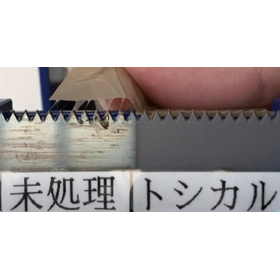
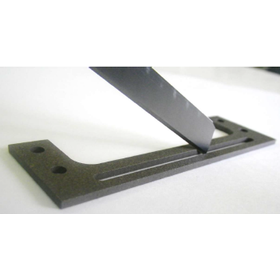
This is an introduction to a coating case for cutting tools used to dispose of packages with adhesive. ■ Background of Surface Treatment Consideration In the device that extracts products from packages, a mechanism was needed to automatically cut adhesive packages into smaller pieces for disposal. ■ What We Wanted to Achieve The device operates unmanned, and human intervention is only required when the dust box is full of finely cut packages. Therefore, it was necessary to prevent the adhesive from adhering to the cutting blade and to operate without maintenance. ■ Conditions for Choosing Treatment Initially, tests were conducted using fluororesin coating, which is effective in preventing adhesive adhesion. However, due to the film thickness of about 30μm, the sharpness of the cutting tool was reduced. As a solution, we polished the coating only on the cutting edge and performed retesting, but this resulted in the cutting edge being uncoated, leading to adhesive adhesion. Continuous cutting of packages became impossible. ■ Adopted Coating 'MRS Coating' 【Free Samples Available】  ▼ We are currently offering free samples of improvement cases for the cutting process and trial sets! ▼

  • 550x550期間限定なし.jpg
  • IMG_1881_edited.jpg
  • Other packaging machines
  • Coating

Added to bookmarks

Bookmarks list

Bookmark has been removed

Bookmarks list

You can't add any more bookmarks

By registering as a member, you can increase the number of bookmarks you can save and organize them with labels.

Free membership registration

Fluororesin Coating: "Case Study of Coating Technology Specialized in Thermal Welding"

CHC technology has successfully improved durability in high-temperature environments compared to conventional fluoropolymer coatings (PTFE coatings)!

CHC (Ceramic Hard Coat) is a new type of fluoropolymer coating that achieves both non-stick properties equivalent to standard fluoropolymer coatings and high film hardness at elevated temperatures. ■ Examples of Surface Treatment Applications - A case where high-temperature release and long-term durability were achieved in the thermal welding process of filter cases. - A case where the release effect from processing on thermal welding plates lasted three times longer than PTFE coatings. - A case that resolved the "peeling" and "blistering" issues of fluoropolymer coatings on resin welding plates. - A case that eliminated adhesive adhesion and peeling at high temperatures, which could not be resolved with PTFE coatings. *You can download a PDF summarizing detailed case studies and product information. For more details, please contact us.

  • FireShot Capture 492 - 【新開発】表面処理CHC(セラミックハードコート)のご紹介 - コーティングマガジン - 吉田SKT - www.y-skt.co.jp.png
  • Resin mold
  • Coating

Added to bookmarks

Bookmarks list

Bookmark has been removed

Bookmarks list

You can't add any more bookmarks

By registering as a member, you can increase the number of bookmarks you can save and organize them with labels.

Free membership registration

Fluororesin coating "Measures against film peeling and foreign matter contamination"

A composite coating that excels in "release properties and sliding properties" of fluororesin and "hardness and wear resistance" of inorganic materials. Measures against foreign substances for fluororesin coatings.

When applying coatings to molds and various packaging machines, there are applications where complaints arise due to film peeling and foreign matter contamination. For example, molds subjected to strong pressure, chutes and guides that are constantly in contact with products, and "heat sealers" where metal parts touch each other are some of these cases. ■ Hardness Comparison 【Fluororesin Coating】 - Pencil Hardness: F to H (PTFE) 【Bicoat】 - HV 700-900 (NNYK-01) "Bicoat" is a coating system that achieves the ideal functions of "release properties and sliding properties" combined with "high hardness and wear resistance" by integrating surface treatment technologies for inorganic and organic materials. 【Features of Bicoat】 ◆ Not only does it provide reliable release and sliding properties, but it also has high hardness and excellent dimensional accuracy. ◆ It is suitable for coating areas where micron-level dimensional accuracy is required. *For more details, please refer to the PDF document or feel free to contact us.

  • s-シーラー.jpg
  • NYF-11-S 1_edited.jpg
  • NYK-01 (4)_edited.jpg
  • IMG_0957edit_edited.jpg
  • Other surface treatment equipment
  • Coating

Added to bookmarks

Bookmarks list

Bookmark has been removed

Bookmarks list

You can't add any more bookmarks

By registering as a member, you can increase the number of bookmarks you can save and organize them with labels.

Free membership registration

Fluororesin coating "Low friction properties of PTFE coating"

We will introduce the low friction properties of PTFE coating within fluoropolymer coatings.

■Features of PTFE Coating PTFE has the characteristic of having extremely low resistance due to friction compared to other resins. By processing PTFE coating, the static friction coefficient of the substrate surface can be reduced, allowing two objects in contact to be moved with a small force. ■Low Friction of PTFE Coating - Due to the strong atomic bonds within PTFE molecules, the intermolecular forces of the contacting material with PTFE molecules are reduced. - Friction (sliding) causes PTFE molecules to adhere slightly to the contacting material, resulting in sliding between PTFE molecules. - The surface of PTFE molecules has a smooth structure with few irregularities. - The orientation of PTFE molecules makes it easier to alleviate friction resistance. It is believed that the molecular structure influences the low friction coefficient of PTFE coating. *For more details on fluoropolymer coatings, including PTFE coatings, please download the catalog or contact us.*

  • Other Auto Parts
  • Coating

Added to bookmarks

Bookmarks list

Bookmark has been removed

Bookmarks list

You can't add any more bookmarks

By registering as a member, you can increase the number of bookmarks you can save and organize them with labels.

Free membership registration

Examples of surface treatments that enable improved productivity in secondary battery production.

Eliminating production troubles of secondary batteries (storage batteries) through surface treatment! Introduction of cases that enabled cost reduction and productivity improvement.

Rechargeable batteries that can be charged and discharged have become an indispensable part of our lives due to the proliferation of EVs and smartphones. In the production sites of rechargeable batteries, improving productivity and reducing costs have become significant challenges. We would like to introduce a surface treatment that enables increased productivity in the production of rechargeable batteries. [Case Details] - Solved the "peeling" and "blistering" issues of fluorine coating on resin product welding plates. - The release effect from processing thermal fusion plates lasts three times longer than PTFE coating. *For more details, please refer to the leaflet that summarizes the product information and case studies.

  • FireShot Capture 492 - 【新開発】表面処理CHC(セラミックハードコート)のご紹介 - コーティングマガジン - 吉田SKT - www.y-skt.co.jp.png
  • Resin mold
  • Coating

Added to bookmarks

Bookmarks list

Bookmark has been removed

Bookmarks list

You can't add any more bookmarks

By registering as a member, you can increase the number of bookmarks you can save and organize them with labels.

Free membership registration

Examples of surface treatments to improve stringing issues during plastic hot melt bonding.

We will introduce surface treatments that can prevent stringing of hot melt adhesive boards and maintain release effects, along with examples of their application.

When welding plastic, the plastic to be joined is melted using a heat welding plate to perform the welding. To achieve stable welding of plastic products, measures against stringing on the heat welding plate are essential. The CHC (Ceramic Hard Coat) technology can achieve both "non-stick properties" and "coating hardness at high temperatures" equivalent to conventional fluoropolymer coatings. The "release effect sustainability" of the heat welding plate helps improve the heat welding process. [Leaflet Adoption Case Content] - Achieving high-temperature release and long lifespan in the heat welding process of filter cases - Solving the "peeling" and "blistering" issues of fluoropolymer coatings on resin welding plates - The release effect from processing the heat fusion plate lasts three times longer than PTFE coatings *For more details, please refer to the leaflet that summarizes the product information and case studies.

  • FireShot Capture 492 - 【新開発】表面処理CHC(セラミックハードコート)のご紹介 - コーティングマガジン - 吉田SKT - www.y-skt.co.jp.png
  • Resin mold
  • Coating

Added to bookmarks

Bookmarks list

Bookmark has been removed

Bookmarks list

You can't add any more bookmarks

By registering as a member, you can increase the number of bookmarks you can save and organize them with labels.

Free membership registration

Fluororesin Coating: "What are Electrical Properties?"

Fluororesin is a high-performance insulating material that not only has high insulation properties (high resistivity) but also possesses an extremely low dielectric loss tangent tanδ.

I will explain in detail the electrical properties of fluororesin. ■□■□■□■□■□■□■□■□■□■□■□■□■□■□■□■□■□■□ INDEX What are the electrical properties of resin? What is the flow of electricity? Differences between conductors and insulators and fluororesin What are the electrical properties of fluororesin (PTFE) due to its molecular structure?  Electrical properties of fluororesin (1) Insulation  Electrical properties of fluororesin (2) Dielectric constant and relative permittivity  Electrical properties of fluororesin (3) Dielectric loss tangent Fluororesin and charging Antistatic properties of fluororesin ■□■□■□■□■□■□■□■□■□■□■□■□■□■□■□■□■□■□ *For more details, please visit the official website via the link below or feel free to contact us.

  • Processing Contract
  • Coating

Added to bookmarks

Bookmarks list

Bookmark has been removed

Bookmarks list

You can't add any more bookmarks

By registering as a member, you can increase the number of bookmarks you can save and organize them with labels.

Free membership registration

Fluororesin Coating: "What are Heat Resistance and Cold Resistance?"

The representative characteristics of fluororesin coating, specifically Teflon coating, are "heat resistance and cold resistance." This will be explained in detail.

■Reasons why fluoropolymer (PTFE) excels in heat and cold resistance The molecular structure of PTFE consists of carbon-carbon (C-C) bonds surrounded completely by fluorine atoms (F). The breaking of C-C bonds or C-F bonds at high temperatures is one aspect of "PTFE degradation." The C-C bonds are less likely to break because they are protected by the fluorine atoms (F). The bond strength of C-F bonds within PTFE molecules is significantly greater than that of bonds between other atoms. Additionally, the high bond energy of C-F bonds is another reason for its excellent heat and cold resistance. ■Applications utilizing the heat and cold resistance of fluoropolymers In the case of fluoropolymer coatings, for example, baking molds utilize the non-stick properties provided by the coating to prevent baked goods from sticking to the mold. Furthermore, since it also possesses heat resistance, it can be safely used in applications such as baking in an oven. Additionally, in household irons, the heat plate is coated with fluoropolymer to take advantage of its smoothness and heat-resistant properties. For more details, please click the link or contact us.

  • Resin mold
  • Coating

Added to bookmarks

Bookmarks list

Bookmark has been removed

Bookmarks list

You can't add any more bookmarks

By registering as a member, you can increase the number of bookmarks you can save and organize them with labels.

Free membership registration

Surface treatment technology has improved the lifespan of heating plates for aluminum vapor-deposited films by more than twice.

Solving the heat durability of fluororesin coatings with our unique coating technology! Product materials are currently available.

We would like to introduce a case of non-stick coating for aluminum vapor-deposited film sealing machines. ■Problem You were troubled by the issue of resin that overflowed from the film sticking to the sealer during thermal sealing. ■Background Initially, you were using a PTFE fluoropolymer coating, but the sealer surface was knurled, causing the coating to wear off and adhesion to occur within about two months. This resulted in production losses due to the need to stop the machine and replace the sealer. ■Adopted Treatment FSR Coating (using CHC technology) ■Effect of Surface Treatment The 'HR-1372AP' was adopted, which exhibits non-stick properties equivalent to fluoropolymer coatings at high temperatures above 200°C, and has high thermal hardness, resolving the wear issue. You can now use it for more than twice the previous duration. *For more details on the surface treatment, please refer to the materials or feel free to contact us.

  • FireShot Capture 492 - 【新開発】表面処理CHC(セラミックハードコート)のご紹介 - コーティングマガジン - 吉田SKT - www.y-skt.co.jp.png
  • Resin mold
  • Coating

Added to bookmarks

Bookmarks list

Bookmark has been removed

Bookmarks list

You can't add any more bookmarks

By registering as a member, you can increase the number of bookmarks you can save and organize them with labels.

Free membership registration