We have compiled a list of manufacturers, distributors, product information, reference prices, and rankings for Surveillance system.
ipros is IPROS GMS ・ IPROS One of the largest technical database sites in Japan that collects information on.

Surveillance system Product List and Ranking from 425 Manufacturers, Suppliers and Companies | IPROS GMS

Last Updated: Aggregation Period:Sep 30, 2026~Oct 27, 2026
This ranking is based on the number of page views on our site.

Surveillance system Manufacturer, Suppliers and Company Rankings

Last Updated: Aggregation Period:Sep 30, 2026~Oct 27, 2026
This ranking is based on the number of page views on our site.

  1. 因幡電機産業 産機カンパニー Osaka//Trading company/Wholesale
  2. グリッドリンク IoTプラットフォーム事業部 Tokyo//IT/Telecommunications
  3. アメロイド Kanagawa//Industrial Machinery
  4. 4 HexaCORE Co., Ltd. (formerly Chuo Seisakusho Co., Ltd.) Head Office and Factory Miyagi//Industrial Electrical Equipment
  5. 5 MI Tokyo//IT/Telecommunications

Surveillance system Product ranking

Last Updated: Aggregation Period:Sep 30, 2026~Oct 27, 2026
This ranking is based on the number of page views on our site.

  1. Automatic recording of video before and after an error occurs on site: "Choco Stop Watcher II" 因幡電機産業 産機カンパニー
  2. Remote monitoring of various factory equipment metrics in real time! *Consultations are currently being accepted. アメロイド
  3. Is your factory's digital transformation only ending with "visualization"? MI
  4. 4 Remote monitoring system 'C2-Connect' for equipment such as pumps. HEISHIN Ltd. Tokyo Branch
  5. 5 [Silent, No Emissions] Battery-Powered Transport Monorail (with Regenerative Function) 松永通信 北条支店

Surveillance system Product List

871~900 item / All 951 items

Displayed results

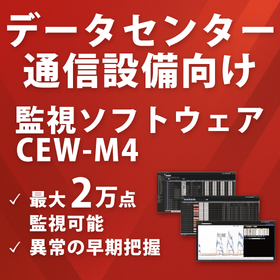
Total support for the introduction and construction of remote monitoring for data centers *Materials available.

One-stop support from providing in-house software and sensors to installation work.

In the data center industry, under the Energy Conservation Law's benchmark system, data center operators that meet certain requirements are required to report their PUE regularly, with a target level of PUE below 1.4 set for the fiscal year 2030. In response to this trend, the establishment of a monitoring system utilizing PUE visualization, power monitoring, and alarm notifications has become an essential effort to balance energy conservation promotion and stable operations. On the other hand, implementing a remote monitoring system in a data center requires a wide range of processes, including on-site surveys, proposals, sensor installation work, server and software configuration, and operational checks, which can often be a significant burden for those in charge of implementation. Hexacore Inc. provides a one-stop solution for this entire series of processes, significantly reducing the effort and adjustment load during implementation, and supporting a smooth and reliable startup.

Added to bookmarks

Bookmarks list

Bookmark has been removed

Bookmarks list

You can't add any more bookmarks

By registering as a member, you can increase the number of bookmarks you can save and organize them with labels.

Free membership registration

Support for the introduction of remote monitoring to assist in the management of network-related equipment.

One-stop service from providing in-house software and sensors to installation work.

This service is an implementation support service that continuously monitors data center and communication equipment information, assisting in the establishment of a management system that includes PUE visualization and alarm notifications. It provides comprehensive support from investigation to construction and settings, making it easier to promote visualization and operational organization. 【Challenges】 - Fragmented understanding of equipment status and power data - Desire to establish a monitoring system that includes abnormal notifications - Aim to advance centralized management across multiple locations and sites 【Usage Scenarios】 - Monitoring and visualizing the status of data center equipment - Centralized management of monitoring information from multiple sites - Continuous understanding of PUE-related information for energy-saving operations 【Benefits】 - Helps advance the understanding of equipment status and reduce reliance on specific individuals for operations - Supports the establishment of a rapid response system utilizing alarm notifications - Contributes to the organization and efficiency of maintenance operations through visualization If you wish to advance the visualization of equipment monitoring and the establishment of a management system, please check the materials or feel free to contact us.

Added to bookmarks

Bookmarks list

Bookmark has been removed

Bookmarks list

You can't add any more bookmarks

By registering as a member, you can increase the number of bookmarks you can save and organize them with labels.

Free membership registration

Support for the introduction of remote monitoring that can be utilized for visualizing operations.

One-stop support from providing in-house software and sensors to installation work.

This service is a remote monitoring implementation support service that assists with power monitoring and PUE visualization in data centers and communication facilities. It covers everything from on-site surveys to sensor installation, configuration, and operational verification, and can be utilized to establish a monitoring system for power supply equipment, including UPS. 【Challenges】 - Remote power monitoring - Establishing a monitoring system for equipment along with PUE understanding - Wanting to entrust everything, including installation work, to a single manufacturer 【Utilization Scenarios】 - Establishing a monitoring system for UPS and related power supply equipment - Understanding power data with an eye on energy-saving operations - Launching a remote monitoring infrastructure for data centers that includes power monitoring 【Benefits】 - Expansion of remote monitoring scope - Supporting stable operations through continuous understanding of power data - Contributing to the reduction of implementation burden through comprehensive support from on-site response to configuration If you want to advance the visualization of equipment monitoring and the establishment of a management system, please check the materials or feel free to contact us.

Added to bookmarks

Bookmarks list

Bookmark has been removed

Bookmarks list

You can't add any more bookmarks

By registering as a member, you can increase the number of bookmarks you can save and organize them with labels.

Free membership registration

Support for the introduction of remote monitoring to accommodate network relocation and expansion.

One-stop support from providing in-house software and sensors to installation work.

This service provides comprehensive support for the introduction of remote monitoring systems for energy and other applications, regardless of whether it is a new installation, existing setup, or upgrade. It covers everything from on-site surveys to construction, configuration, and operational verification, making it useful for expanding or reorganizing monitoring infrastructure in line with network relocations or expansions. 【Challenges】 - Reevaluation of monitoring infrastructure due to expansions or upgrades - Desire to proceed with construction and configuration as a single process (preferably handled by the manufacturer) - Want to reduce coordination with multiple vendors 【Usage Scenarios】 - Adding monitoring targets due to rack expansions - Reconfiguring monitoring in line with the relocation of existing equipment - Wanting to introduce monitoring and notification functions at the time of upgrades 【Benefits】 - Helps organize arrangements during additional installations or upgrades - Facilitates the simultaneous expansion of monitoring scope and continued operations - Makes it easier to reduce the adjustment burden until launch If you want to improve your monitoring environment alongside relocations or expansions, please check the materials or feel free to contact us.

Added to bookmarks

Bookmarks list

Bookmark has been removed

Bookmarks list

You can't add any more bookmarks

By registering as a member, you can increase the number of bookmarks you can save and organize them with labels.

Free membership registration

【通信設備室】空調設定、属人化していませんか?

AI空調制御で判断差を抑え、設備管理の標準化を支援

通信設備室やサーバールームの保守では、温度と空調の状態を継続的に把握し、設備環境に応じて運用することが重要です。「Smart Facility Manager」は、取得した温度データを分析し、AIによる空調の自動制御を通じて、温度管理と空調運用の効率化を支援します。通信ネットワークそのものではなく、設備室の温度・空調環境を対象とするサービスです。 詳細は資料をダウンロードしてご確認ください。

  • Cooling system
  • Server monitoring and network management tools
  • Server Cooler
  • Surveillance system

Added to bookmarks

Bookmarks list

Bookmark has been removed

Bookmarks list

You can't add any more bookmarks

By registering as a member, you can increase the number of bookmarks you can save and organize them with labels.

Free membership registration

Isn't the load on that rack uneven?

Visualizing the current for each circuit. For comparing loads between racks and checking before and after equipment expansion.

Is there any bias in the load for each rack or circuit? By using the PAL-Plus 60A, you can measure the AC current of branch circuits. By comparing the collected data, you can confirm the differences in load for each rack and changes over time. It can also be utilized for comparisons before and after server expansions or configuration changes. You can gather foundational data for considering equipment operations. 【Usage Scenarios】 - Load comparison between racks and circuits - Current verification before and after server expansion - Load verification of rack PDUs and distribution boards - Identification of circuits with concentrated loads - Data collection for equipment operation 【Benefits of Implementation】 - Numerical confirmation of load for each circuit - Obtaining clues to identify load imbalances - Comparison of current before and after equipment changes - Data collection for considering power capacity - Supporting daily equipment management with data Please check the product catalog for measurement methods and detailed specifications.

  • Ammeter
  • UPS/Uninterruptible Power Supply
  • Server Rack
  • Surveillance system

Added to bookmarks

Bookmarks list

Bookmark has been removed

Bookmarks list

You can't add any more bookmarks

By registering as a member, you can increase the number of bookmarks you can save and organize them with labels.

Free membership registration

Remote confirmation of the battery status for data centers before heading to the site.

Are you manually transcribing and aggregating the inspection results after measuring a large number of UPS batteries on-site? We can streamline record organization and maintenance report creation.

The data center is equipped with numerous UPS batteries, and their inspection requires a lot of effort and time. By implementing this system, you can check the current values and measurement history of the internal resistance, voltage, and temperature of the UPS batteries, as well as alarm information, from a web browser before visiting the site. Furthermore, it supports comparison of target equipment through comparison graphs and CSV output of measurement logs, thereby assisting in the streamlining of inspection tasks from information gathering before inspections to recording and reporting after inspections. 【Challenges】 - The condition of the equipment and the items to be checked are unknown until arriving on-site. - Transcribing and aggregating measurement results takes time, and it is difficult to standardize the recording method. - Searching for and comparing past measurement values and alarm histories is labor-intensive. 【Benefits of Implementation / What Can Be Solved】 - Confirm current values, history, and alarms before the visit, and organize the inspection targets and contents to be checked. - Use comparison graphs to check differences from previous values and other equipment, thus streamlining inspection preparation. - Output measurement logs as CSV, simplifying the creation of inspection records, maintenance reports, and regular reports. By handling information before and after inspections in the same monitoring environment, it becomes easier for personnel to check past conditions even if the responsible person changes, leading to continuous maintenance management.

  • UPS/Uninterruptible Power Supply
  • Other server related
  • Server monitoring and network management tools
  • Surveillance system

Added to bookmarks

Bookmarks list

Bookmark has been removed

Bookmarks list

You can't add any more bookmarks

By registering as a member, you can increase the number of bookmarks you can save and organize them with labels.

Free membership registration

Even with a limited number of personnel, you can collectively check UPS battery information from multiple locations.

Consolidate the current values, measurement history, comparison graphs, and alarms from each location on the screen. This facilitates situation confirmation and smooth handovers between responsible parties, streamlining record-keeping and reporting.

When managing UPS equipment across multiple locations with a limited number of personnel, a significant amount of time is required for site visits, battery measurements, recording inspection results, and preparing regular reports. Furthermore, if measurement values and past inspection histories are scattered across individual files for each person in charge, it becomes cumbersome to confirm the situation before visits and to hand over responsibilities during personnel changes. This system collects the internal resistance, voltage, and temperature of UPS batteries and displays the current values, measurement history, comparison graphs, and alarms in a centralized manner via a web browser. Personnel can check the status of the equipment before visiting the site, and past histories and CSV data can be shared among stakeholders. 【Benefits and Solutions】 - Check measurement values, histories, and alarms before visits, streamlining preparation and organization of inspection targets. - Manage location-specific information on a common screen, enhancing information sharing and handover between personnel. - Utilize CSV output for inspection records and regular reports, reducing the burden of transcription, aggregation, and report creation. Since personnel can refer to the same screen and history, it allows for a management approach that is less dependent on individual memory or separate files. It supports a seamless flow from pre-visit confirmation to post-inspection recording and reporting, facilitating the establishment of a continuous equipment management system by a limited number of personnel.

  • UPS/Uninterruptible Power Supply
  • Server monitoring and network management tools
  • Power Monitoring Equipment
  • Surveillance system

Added to bookmarks

Bookmarks list

Bookmark has been removed

Bookmarks list

You can't add any more bookmarks

By registering as a member, you can increase the number of bookmarks you can save and organize them with labels.

Free membership registration

Doesn't the inspection of the UPS batteries in the data center take a long time?

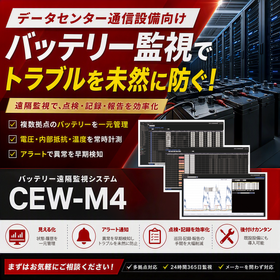
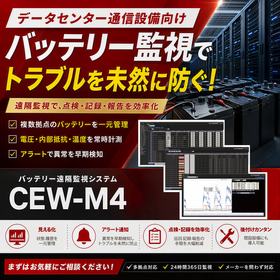
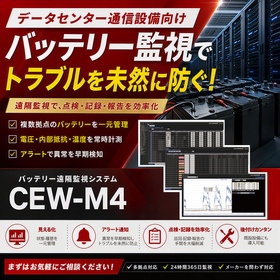
Collect and store internal resistance, voltage, and temperature to CEW-M4, and centrally check current values, history, and comparison graphs via a web browser.

During the inspection of UPS batteries in data centers, measurement results are sometimes manually entered into paper inspection sheets or spreadsheet files, creating inspection records and maintenance reports. This method of operation not only takes time for transcribing and aggregating measurement results but also makes it cumbersome to search past data and compare between batteries and equipment. Additionally, if the recording methods differ by location or personnel, it can become difficult to share information and manage it continuously. This system collects and accumulates the internal resistance, voltage, and temperature of UPS batteries into the monitoring software "CEW-M4," clearly displaying current values, measurement history, comparison graphs, and alarm history in a web browser. By managing the entire flow from data collection to history confirmation, comparison, and data output in one system, it streamlines daily checks and recording/aggregation tasks. Measurement logs and statistical data can be output in CSV format, which can also be utilized for inspection records and maintenance reports. **[Implementation Effects and Solutions]** - Centralized accumulation of measurement values and history, streamlining recording, searching, and aggregation tasks. - Clear confirmation of changes in past values and between batteries and equipment through comparison graphs. - Utilizing CSV output for inspection records, maintenance reports, and regular reports to enhance reporting efficiency.

  • UPS/Uninterruptible Power Supply
  • Server monitoring and network management tools
  • Power Monitoring Equipment
  • Surveillance system

Added to bookmarks

Bookmarks list

Bookmark has been removed

Bookmarks list

You can't add any more bookmarks

By registering as a member, you can increase the number of bookmarks you can save and organize them with labels.

Free membership registration

Support the review of operations by checking the measurement history during non-operational hours.

Check the history of non-operating scheduled hours such as nights, holidays, and break times for a specified period. You can compare it with production schedules and stop records to review the operational status.

Even if there are plans to stop equipment during nighttime, holidays, and break times, it is difficult to reflect on the extent to which operational rules are being implemented if the actual measurement history cannot be confirmed by equipment. "CEW-M4" manages the measurement data collected from connected devices as time-series graphs and histories. The monitoring software "CEW-M4" aggregates the data from connected devices onto a web interface, allowing for list display, comparison, aggregation, history, CSV export, and alarm management. [Challenges] - I want to see the history of non-operating scheduled hours by equipment. - I want to compare scheduled stops with actual measurement values. - I want to narrow down the time periods that need review. [Effects of Implementation] - Confirm non-operating scheduled hours for specified periods. - Compare scheduled stops with actual histories. - Organize time periods for operational review. You can check detailed functions and screen examples in the downloadable materials. For more information, please download the materials or feel free to contact us.

  • Power Monitoring Equipment
  • Other processing machines
  • Other machine tools
  • Surveillance system

Added to bookmarks

Bookmarks list

Bookmark has been removed

Bookmarks list

You can't add any more bookmarks

By registering as a member, you can increase the number of bookmarks you can save and organize them with labels.

Free membership registration

Compare the methods for verifying measurement data and select the appropriate configuration.

Compare the use of existing PLCs, small-scale cloud solutions, and centralized management through monitoring software. You can choose a configuration that matches the scale of implementation, verification locations, and required functions.

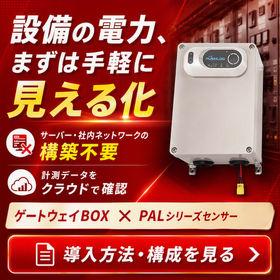
When acquiring data with the PAL series, you need to decide not only on the sensors but also on where to collect the data, who will check it, and on which screen it will be displayed. A configuration using existing Modbus-compatible PLCs is suitable when you want to add measurement values to current displays or local environments. The PAL series allows you to combine existing PLCs, gateway boxes, and CEW-M4, enabling you to choose a data management configuration that fits the scale of implementation and method of verification. 【Challenges】 - I want to decide where to check the measurement data. - I want to compare the differences between existing PLCs and the cloud. - I want to choose a management method that fits the scale of implementation. 【Benefits of Implementation】 - Compare PLCs, cloud, and monitoring software. - Choose based on the verification location and scale of implementation. - Consider configurations that utilize existing equipment. You can check detailed specifications and connection configurations in the downloadable materials. For more details, please download the materials or feel free to contact us.

  • Other machine tools
  • Other processing machines
  • Other semiconductor manufacturing equipment
  • Surveillance system

Added to bookmarks

Bookmarks list

Bookmark has been removed

Bookmarks list

You can't add any more bookmarks

By registering as a member, you can increase the number of bookmarks you can save and organize them with labels.

Free membership registration

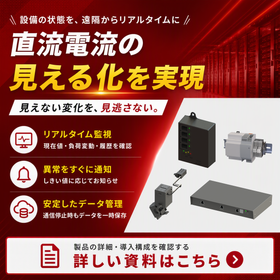
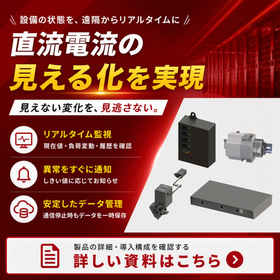
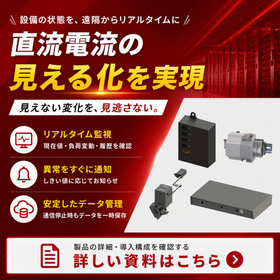
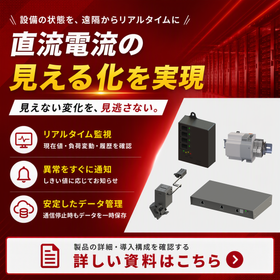
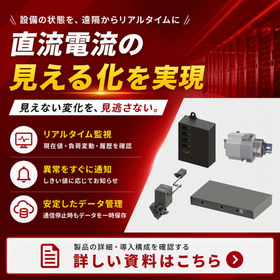
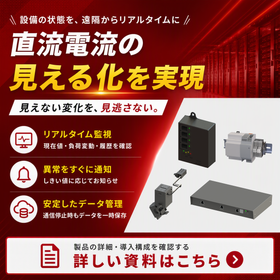
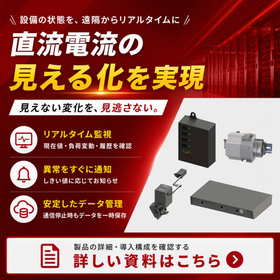
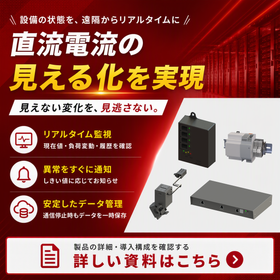
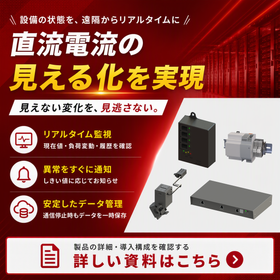
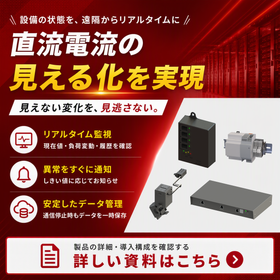
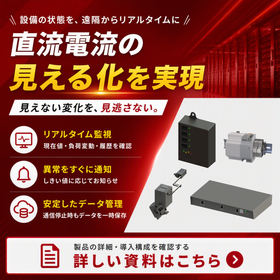
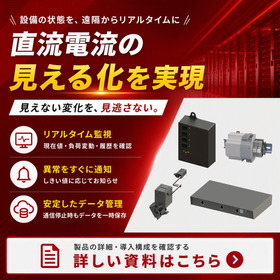
Constant measurement of direct current | Early detection of equipment anomalies at substations and power plants

Supports early detection of abnormal signs in substations and power plants. Measures direct current for each circuit, which can be utilized for remote monitoring and historical verification.

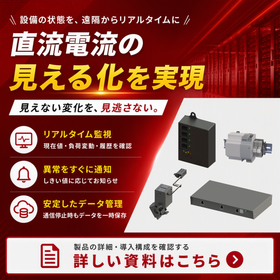
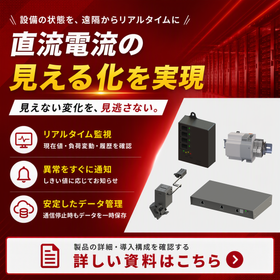
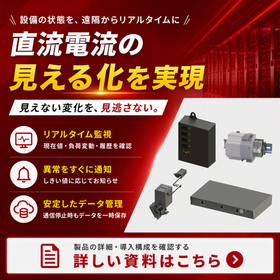
In monitoring direct current, it is important to select appropriate ratings for the target circuit and to have a configuration that can manage a large number of measurement points without difficulty. In substations and power plants, particularly, the increase in the number of circuits complicates the verification process. The "iDC-SVS4" continuously measures direct current with sensors that support 30A, 50A, 100A, 250A, and 500A, and sends the measurement data to a monitoring server. Current values, load fluctuations, and past histories can be checked remotely, and in combination with monitoring software, it can also respond to notifications based on set thresholds. It supports initial installation in our distribution boards and assists in reducing on-site work through load testing and equipment settings before shipment. Usage scenarios: - Monitoring direct current in substations and power plants - Checking current values and histories of direct current power supply circuits for control and operation - Notifications based on set thresholds and checking histories before and after notifications Expected effects from implementation: - Understanding current changes over time outside of patrols - Early detection of current changes that differ from normal conditions - Organizing inspection targets and verification content in advance to streamline equipment management We will propose configurations based on monitoring targets, the number of circuits, cable diameters, and installation environments.

  • Ammeter
  • Data Logger
  • Power Monitoring Equipment
  • Surveillance system

Added to bookmarks

Bookmarks list

Bookmark has been removed

Bookmarks list

You can't add any more bookmarks

By registering as a member, you can increase the number of bookmarks you can save and organize them with labels.

Free membership registration

Time-series measurement of direct current | Comparison of load fluctuations with historical data during normal conditions

Compare load fluctuations with historical data during normal times. Continuous measurement of direct current allows for remote confirmation of current values, load fluctuations, and history.

In equipment using DC power supplies, changes in current during inspection intervals and data loss during communication outages can complicate the understanding of the system's condition. Without residual values during normal operation, it is also difficult to compare changes. The "iDC-SVS4" is a sensor that continuously measures DC current with options for 30A, 50A, 100A, 250A, and 500A, and sends measurement data to a monitoring server. Current values, load fluctuations, and past history can be checked remotely, and in combination with monitoring software, it can also respond to notifications based on set thresholds. It supports initial installation in our distribution boards and helps reduce on-site work through load testing and equipment configuration before shipment. Usage scenarios: - Monitoring DC current in equipment using DC power supplies - Checking current values and history of DC distribution boards and load equipment circuits - Confirming inspection targets and notification status before on-site visits Expected benefits from implementation: - Comparing current trends before and after changes in time periods and operations - Consolidating measurement information from multiple circuits for review - Organizing inspection targets and confirmation details in advance to streamline equipment management We will propose configurations based on monitoring targets, number of circuits, cable diameter, and installation environment.

  • Ammeter
  • Data Logger
  • Power Monitoring Equipment
  • Surveillance system

Added to bookmarks

Bookmarks list

Bookmark has been removed

Bookmarks list

You can't add any more bookmarks

By registering as a member, you can increase the number of bookmarks you can save and organize them with labels.

Free membership registration

Continuous measurement of direct current | Confirming load fluctuations that are not visible through routine inspections.

To check load fluctuations that cannot be seen with regular inspections, we continuously monitor the equipment circuit with a DC current sensor that supports 30A to 500A.

To streamline the inspection of equipment using DC power supplies, it is effective to identify equipment with changes from current history and prioritize them, rather than checking all circuits at the same frequency. The "iDC-SVS4" continuously measures DC current with sensors that support 30A, 50A, 100A, 250A, and 500A, and sends the measurement data to a monitoring server. Current values, load fluctuations, and past history can be checked remotely, and in combination with monitoring software, it can also respond to notifications based on set thresholds. A single relay device can accommodate up to 1,024 points, allowing the monitoring range to expand from important circuits to numerous circuits. Usage scenarios: - Monitoring DC current for equipment using DC power supplies - Checking current values and history of DC distribution boards and load circuits - Confirming inspection targets and notification status before on-site visits Expected benefits from implementation: - Understanding current changes over time outside of patrols - Consolidating measurement information from multiple circuits for review - Organizing inspection targets and confirmation details in advance to streamline equipment management We will propose configurations based on monitoring targets, number of circuits, cable diameter, and installation environment.

  • Ammeter
  • Data Logger
  • Power Monitoring Equipment
  • Surveillance system

Added to bookmarks

Bookmarks list

Bookmark has been removed

Bookmarks list

You can't add any more bookmarks

By registering as a member, you can increase the number of bookmarks you can save and organize them with labels.

Free membership registration

Continuously measure direct current | Notify by email of current changes outside the set range.

Notify via email of current changes outside the set range. You can check the changes in direct current over time, which can be difficult to notice only during patrols.

When introducing DC current monitoring for equipment using a DC power supply, it is necessary to check the current range, cable diameter, number of circuits, panel space, and communication path, and to select a configuration suitable for the DC distribution board and load equipment circuits. The "iDC-SVS4" is a sensor that continuously measures DC current with support for 30A, 50A, 100A, 250A, and 500A, and sends the measurement data to a monitoring server. It allows remote confirmation of current values, load fluctuations, and past history, and in combination with monitoring software, it can also respond to notifications based on set thresholds. It supports initial installation in our distribution boards and assists in reducing on-site work through load testing and equipment settings before shipment. Usage scenarios: - Monitoring DC current for equipment using a DC power supply - Checking current values and history of DC distribution boards and load equipment circuits - Notifications based on set thresholds and checking history before and after notifications Expected benefits from implementation: - Understanding current changes over time outside of patrols - Early detection of current changes that differ from normal conditions - Organizing inspection targets and confirmation contents in advance to streamline equipment management We will propose configurations based on monitoring targets, number of circuits, cable diameter, and installation environment.

  • Ammeter
  • Data Logger
  • Instrumentation and Control Systems
  • Surveillance system

Added to bookmarks

Bookmarks list

Bookmark has been removed

Bookmarks list

You can't add any more bookmarks

By registering as a member, you can increase the number of bookmarks you can save and organize them with labels.

Free membership registration

DC current history measurement | Compare and confirm current values and load fluctuations over periods.

Compare and confirm current values and load fluctuations over different periods. Continuous measurement of direct current allows for remote monitoring of current values, load fluctuations, and history.

In facilities using DC power supplies, measuring and recording the circuits of DC distribution boards and load equipment on-site takes time, making it difficult to grasp changes that occur between inspections. The "iDC-SVS4" continuously measures DC current with sensors that support 30A, 50A, 100A, 250A, and 500A, and sends the measurement data to a monitoring server. Current values, load fluctuations, and past history can be checked remotely, and in combination with monitoring software, it can also respond to notifications based on set thresholds. In the event of communication failure, data is temporarily stored in a relay device and sent after communication resumes to prevent loss of history. Usage scenarios: - Monitoring DC current in facilities using DC power supplies - Checking current values and history of DC distribution boards and load equipment circuits - Confirming inspection targets and notification status before on-site visits Expected effects from implementation: - Comparing current trends before and after changes in time periods and operations - Consolidating measurement information from multiple circuits for review - Organizing inspection targets and confirmation details in advance to streamline equipment management We will propose configurations based on monitoring targets, number of circuits, cable diameter, and installation environment.

  • Ammeter
  • Data Logger
  • Power Monitoring Equipment
  • Surveillance system

Added to bookmarks

Bookmarks list

Bookmark has been removed

Bookmarks list

You can't add any more bookmarks

By registering as a member, you can increase the number of bookmarks you can save and organize them with labels.

Free membership registration

Continuous measurement of direct current | Temporarily save and manage measurement data even during communication interruptions.

Even during communication interruptions, measurement data is temporarily stored to assist in management. Direct current for each circuit can be measured and utilized for remote monitoring and history verification.

When equipment using DC power is distributed across multiple locations, the methods of verification and record formats differ at each site, which requires time to grasp the overall status. The challenge is to consolidate numerous DC circuits into a common monitoring environment. The "iDC-SVS4" continuously measures DC current using sensors compatible with 30A, 50A, 100A, 250A, and 500A, and sends the measurement data to a monitoring server. Current values, load fluctuations, and historical data can be checked remotely, and in combination with monitoring software, it can also respond to notifications based on set thresholds. It supports initial installation in our distribution boards and assists in reducing on-site work through load testing and equipment configuration before shipment. Usage Scenarios: - Monitoring DC current for equipment using DC power - Checking current values and history of DC distribution boards and load equipment circuits - Continuous measurement during network construction or server maintenance Expected Benefits from Implementation: - Understanding current changes over time outside of patrols - Sending saved data after communication resumes to minimize history gaps - Organizing inspection targets and verification content in advance to streamline equipment management We will propose configurations based on monitoring targets, number of circuits, cable diameter, and installation environment.

  • Ammeter
  • Data Logger
  • Remote Control
  • Surveillance system

Added to bookmarks

Bookmarks list

Bookmark has been removed

Bookmarks list

You can't add any more bookmarks

By registering as a member, you can increase the number of bookmarks you can save and organize them with labels.

Free membership registration

Additional measurement of direct current | Retrofitting remote monitoring capabilities to existing equipment

Retrofitting remote monitoring capabilities to existing equipment. Changes in direct current can be monitored over time, which may be difficult to discern during routine inspections.

When introducing DC current monitoring to equipment using a DC power supply, it is necessary to check the current range, cable diameter, number of circuits, panel space, and communication routes, and to select a configuration suitable for the DC distribution board and load equipment circuits. The "iDC-SVS4" is a sensor that continuously measures DC current with support for 30A, 50A, 100A, 250A, and 500A, and sends measurement data to a monitoring server. It allows remote checking of current values, load fluctuations, and past history, and in combination with monitoring software, it can also respond to notifications based on set thresholds. A single relay device can accommodate up to 1,024 points, expanding the monitoring range from important circuits to multiple circuits. Usage Scenarios: - Monitoring DC current for equipment using a DC power supply - Checking current values and history of DC distribution boards and load equipment circuits - Confirming inspection targets and notification status before on-site visits Expected Benefits from Implementation: - Understanding current changes over time outside of patrols - Consolidating measurement information from multiple circuits for review - Organizing inspection targets and confirmation details in advance to streamline equipment management We will propose configurations based on monitoring targets, number of circuits, cable diameter, and installation environment.

  • Ammeter
  • Power Monitoring Equipment
  • Remote Control
  • Surveillance system

Added to bookmarks

Bookmarks list

Bookmark has been removed

Bookmarks list

You can't add any more bookmarks

By registering as a member, you can increase the number of bookmarks you can save and organize them with labels.

Free membership registration

Continuous measurement of direct current | Organizing equipment and circuits to be inspected based on current changes.

Utilize the organization of equipment and circuits to be inspected based on current changes. The current values, history, and threshold notifications of the DC circuit can be checked from the monitoring center.

In the maintenance of equipment using DC power supplies, not only the temporary values during inspections but also the time-series data of DC current accumulated during normal operation serve as fundamental information for assessing changes. The "iDC-SVS4" continuously measures DC current with sensors that support 30A, 50A, 100A, 250A, and 500A, and sends the measurement data to a monitoring server. Current values, load fluctuations, and past history can be checked remotely, and in combination with monitoring software, it can also respond to notifications based on set thresholds. In the event of communication failure, the relay device temporarily stores data and sends it after communication resumes, helping to prevent history loss. Usage scenarios: - Monitoring DC current of equipment using DC power supplies - Checking current values and history of DC distribution boards and load equipment circuits - Confirming inspection targets and notification status before on-site visits Expected effects from implementation: - Understanding current changes over time outside of patrols - Consolidating measurement information from multiple circuits for review - Organizing inspection targets and confirmation details in advance to streamline equipment management We will propose configurations based on monitoring targets, number of circuits, cable diameter, and installation environment. Applicability varies depending on current range, cable diameter, and installation/communication environment.

  • Ammeter
  • Data Logger
  • Power Monitoring Equipment
  • Surveillance system

Added to bookmarks

Bookmarks list

Bookmark has been removed

Bookmarks list

You can't add any more bookmarks

By registering as a member, you can increase the number of bookmarks you can save and organize them with labels.

Free membership registration

Remote measurement of direct current | Visualization of the operational status of urban infrastructure facilities

Visualizing the operational status of urban infrastructure facilities. Continuous measurement of direct current allows for remote monitoring of current values, load fluctuations, and history.

In urban infrastructure such as railways, roads, and water supply and sewage systems, it takes time to measure and record the DC circuits of monitoring, communication, and control equipment on-site, making it difficult to grasp changes that occur between patrols. The "iDC-SVS4" continuously measures DC current with sensors compatible with 30A, 50A, 100A, 250A, and 500A, and sends the measurement data to a monitoring server. It allows remote confirmation of current values, load fluctuations, and past history, and in combination with monitoring software, it also supports notifications based on set thresholds. It is compatible with initial installation in our distribution boards and helps reduce on-site work through load testing and equipment settings before shipment. Usage scenarios: - Monitoring DC current in urban infrastructure such as railways, roads, and water supply and sewage systems - Checking current values and history of DC circuits for monitoring, communication, and control equipment - Confirming inspection targets and notification status before on-site visits Expected effects from implementation: - Grasping current changes in a time series outside of patrols - Summarizing measurement information from multiple circuits for review - Organizing inspection targets and confirmation details in advance to streamline equipment management We will propose configurations based on monitoring targets, number of circuits, cable diameter, and installation environment.

  • Ammeter
  • Power Monitoring Equipment
  • Remote Control
  • Surveillance system

Added to bookmarks

Bookmarks list

Bookmark has been removed

Bookmarks list

You can't add any more bookmarks

By registering as a member, you can increase the number of bookmarks you can save and organize them with labels.

Free membership registration

Continuous measurement of direct current | Remote monitoring of emergency power supply in public facilities on a daily basis.

Support for remote monitoring of emergency power sources in public facilities on a daily basis. It measures direct current for each circuit, which can be used for remote monitoring and historical verification.

When government buildings, public facilities, and remote public equipment are distributed across multiple locations, the methods of verification and recording formats differ at each site, making it time-consuming to grasp the overall status. The challenge is to consolidate numerous DC circuits into a common monitoring environment. The "iDC-SVS4" is a sensor that continuously measures DC current with options for 30A, 50A, 100A, 250A, and 500A, and sends the measurement data to a monitoring server. It allows for remote confirmation of current values, load fluctuations, and historical data, and, in combination with monitoring software, can respond to notifications based on set thresholds. A single relay device can accommodate up to 1,024 points, expanding the monitoring range from critical circuits to numerous circuits. Usage Scenarios: - Monitoring DC current in government buildings, public facilities, and remote public equipment - Checking current values and history of DC load circuits for emergency and backup power - Confirming inspection targets and notification status before on-site visits Expected Benefits from Implementation: - Understanding current changes over time outside of patrols - Consolidating measurement information from multiple circuits for review - Utilizing historical data during normal times as reference information for inspections and BCP verification We will propose configurations based on the monitoring targets, number of circuits, cable diameter, and installation environment.

  • Ammeter
  • Data Logger
  • Remote Control
  • Surveillance system

Added to bookmarks

Bookmarks list

Bookmark has been removed

Bookmarks list

You can't add any more bookmarks

By registering as a member, you can increase the number of bookmarks you can save and organize them with labels.

Free membership registration

Continuous measurement of direct current | Remote confirmation of power status for tunnel equipment

Remote monitoring of the power status of tunnel equipment. Continuous measurement of direct current allows for remote verification of current values, load fluctuations, and history.

In the communication systems for roads and tunnels, emergency phones, and information display equipment, it takes time to measure and record the direct current power supply circuits of monitoring and communication devices on-site, making it difficult to grasp changes that occur between patrols. The "iDC-SVS4" continuously measures direct current with sensors that support 30A, 50A, 100A, 250A, and 500A, and sends the measurement data to a monitoring server. Current values, load fluctuations, and past histories can be checked remotely, and in combination with monitoring software, it can also respond to notifications based on set thresholds. A single relay device can accommodate up to 1,024 points, allowing the monitoring range to be expanded from important circuits to numerous circuits. Usage scenarios: - Monitoring direct current for communication systems, emergency phones, and information display equipment in roads and tunnels - Checking current values and history of direct current power supply circuits for monitoring and communication devices - Confirming inspection targets and notification statuses before on-site visits Expected benefits from implementation: - Grasping current changes over time outside of patrols - Summarizing measurement information from multiple circuits for review - Organizing inspection targets and confirmation details in advance to streamline equipment management We will propose configurations based on monitoring targets, number of circuits, cable diameter, and installation environment.

  • Ammeter
  • Data Logger
  • Remote Control
  • Surveillance system

Added to bookmarks

Bookmarks list

Bookmark has been removed

Bookmarks list

You can't add any more bookmarks

By registering as a member, you can increase the number of bookmarks you can save and organize them with labels.

Free membership registration

Remote measurement of direct current | Check the current values and operational status of distant public facilities.

To check the current values and operational status of remote public facilities. It continuously monitors the equipment circuit with a DC current sensor that supports 30A to 500A.

Are you able to continuously monitor the direct current of government buildings, public facilities, and remote public equipment, not just during inspections? Relying solely on instantaneous measurements may overlook changes due to time of day or load conditions. The "iDC-SVS4" is a sensor that supports 30A, 50A, 100A, 250A, and 500A, allowing for continuous measurement of direct current and sending measurement data to a monitoring server. You can remotely check current values, load fluctuations, and past history, and in combination with monitoring software, it can also provide notifications based on set thresholds. In the event of communication failure, data is temporarily stored in a relay device and sent after communication resumes to help prevent loss of history. Usage scenarios: - Monitoring direct current in government buildings, public facilities, and remote public equipment - Checking current values and history of direct load circuits for emergency and backup power supplies - Verifying inspection targets and notification status before on-site visits Expected benefits from implementation: - Understanding current changes over time outside of patrols - Consolidating measurement information from multiple circuits - Organizing inspection targets and verification content in advance to streamline facility management We will propose configurations based on monitoring targets, number of circuits, cable diameter, and installation environment.

  • Ammeter
  • Power Monitoring Equipment
  • Remote Control
  • Surveillance system

Added to bookmarks

Bookmarks list

Bookmark has been removed

Bookmarks list

You can't add any more bookmarks

By registering as a member, you can increase the number of bookmarks you can save and organize them with labels.

Free membership registration

Remote measurement of direct current | Daily check of emergency power supply for wireless relay stations

Support for daily checks of the emergency power supply for wireless relay stations. Measure the direct current for each circuit, which can be used for remote monitoring and historical verification.

When wireless relay stations in mountainous areas are distributed across multiple locations, the methods of verification and recording formats differ from site to site, making it time-consuming to grasp the overall status. The challenge is to consolidate numerous DC circuits into a common monitoring environment. The "iDC-SVS4" is a sensor that continuously measures DC current with support for 30A, 50A, 100A, 250A, and 500A, and sends the measurement data to a monitoring server. It allows remote confirmation of current values, load fluctuations, and past history, and in combination with monitoring software, it can respond to notifications based on set thresholds. In the event of communication failure, the relay device temporarily stores the data and sends it after communication resumes to prevent loss of history. Usage Scenarios: - Monitoring DC current at wireless relay stations in mountainous areas - Checking current values and history of DC circuits from emergency power supplies to communication equipment - Confirming inspection targets and notification status before on-site visits Expected Benefits from Implementation: - Understanding current changes over time outside of patrols - Consolidating measurement information from multiple circuits for review - Utilizing normal operation history as reference information for inspections and BCP verification We will propose configurations based on the monitoring targets, number of circuits, cable diameter, and installation environment.

  • Ammeter
  • Power Monitoring Equipment
  • Remote Control
  • Surveillance system

Added to bookmarks

Bookmarks list

Bookmark has been removed

Bookmarks list

You can't add any more bookmarks

By registering as a member, you can increase the number of bookmarks you can save and organize them with labels.

Free membership registration

Continuous measurement of direct current | Early detection of power changes in disaster prevention communication equipment

Utilize early detection of power changes in disaster prevention communication equipment. The current values, history, and threshold notifications of the DC circuit can be checked from the monitoring base.

Before implementation, it is necessary to visit disaster prevention wireless base stations and wireless relay stations to measure current and manually record the results. After implementation, direct current for each circuit can be checked remotely, and the history can be treated as common data. The "iDC-SVS4" is a sensor that continuously measures direct current with support for 30A, 50A, 100A, 250A, and 500A, and sends the measurement data to a monitoring server. Current values, load fluctuations, and past history can be checked remotely, and in combination with monitoring software, it can also respond to notifications based on set thresholds. It supports initial installation in our distribution boards and assists in reducing on-site work through load testing and equipment settings before shipment. Usage scenarios: - Monitoring direct current at disaster prevention wireless base stations and wireless relay stations - Checking current values and history of direct circuits supplying power to communication equipment - Notifications based on set thresholds and checking history before and after notifications Expected effects from implementation: - Understanding current changes over time outside of patrols - Early detection of current changes that differ from normal conditions - Utilizing normal history as reference information for inspections and BCP verification We will propose configurations based on monitoring targets, number of circuits, cable diameter, and installation environment.

  • Ammeter
  • Data Logger
  • Power Monitoring Equipment
  • Surveillance system

Added to bookmarks

Bookmarks list

Bookmark has been removed

Bookmarks list

You can't add any more bookmarks

By registering as a member, you can increase the number of bookmarks you can save and organize them with labels.

Free membership registration

Remote measurement of direct current | Regular monitoring of emergency power supplies to prepare for disasters

Regular monitoring of emergency power sources prepared for disasters. Continuous measurement of direct current allows for remote confirmation of current values, load fluctuations, and history.

At disaster prevention bases and important facilities, changes in current during inspection intervals and data loss during communication outages can complicate the understanding of conditions. If there are no remaining values from normal times, it becomes difficult to compare changes. The "iDC-SVS4" is a sensor that continuously measures direct current with support for 30A, 50A, 100A, 250A, and 500A, and sends the measurement data to a monitoring server. Current values, load fluctuations, and past histories can be checked remotely, and in combination with monitoring software, it can also respond to notifications based on set thresholds. A single relay device can accommodate up to 1,024 points, allowing the monitoring range to be expanded from important circuits to multiple circuits. Usage scenarios: - Monitoring direct current at disaster prevention bases and important facilities - Checking current values and histories of direct circuits from emergency power supplies to load equipment - Confirming inspection targets and notification statuses before on-site visits Expected effects from implementation: - Understanding current changes over time outside of patrols - Consolidating measurement information from multiple circuits for review - Utilizing normal time histories as reference information for inspections and BCP verification We will propose configurations based on monitoring targets, number of circuits, cable diameter, and installation environment.

  • Ammeter
  • Data Logger
  • Power Monitoring Equipment
  • Surveillance system

Added to bookmarks

Bookmarks list

Bookmark has been removed

Bookmarks list

You can't add any more bookmarks

By registering as a member, you can increase the number of bookmarks you can save and organize them with labels.

Free membership registration

Automated monitoring system to compensate for labor shortages *Transforming equipment into PLC for labor saving!

For factory automation and remote operation! Achieve increased productivity and preventive maintenance through centralized monitoring. Early response to failures and troubles is possible with remote monitoring!

Our company provides a "Lucky Bag Type Plant Automatic Monitoring System" aimed at improving productivity in quarries and recycling plants. In addition to achieving automation, centralized monitoring, and remote maintenance, it is also possible to accumulate data obtained from various sensors and utilize it for preventive maintenance. We can offer flexible proposals that align with our customers' budgets and the steps of factory automation, such as automating only part of the existing equipment while keeping the rest intact. 【Features】 ■ Eliminate waste in operations and enhance overall factory efficiency ■ Properly control raw material supply to contribute to productivity improvement ■ Reduce labor costs through effective utilization of manpower ■ Agile and speedy response capabilities *For more details, please refer to the materials. Feel free to contact us with any inquiries.

  • Other security and surveillance systems
  • Surveillance system

Added to bookmarks

Bookmarks list

Bookmark has been removed

Bookmarks list

You can't add any more bookmarks

By registering as a member, you can increase the number of bookmarks you can save and organize them with labels.

Free membership registration

[Machine Maintenance IoT] Machine Vibration Monitoring System

We will monitor the performance parameters (vibration) of industrial machinery and enhance maintenance operations.

This is a platform for industrial machinery that realizes visualization of the site and smart maintenance. It automatically monitors the key performance parameter of vibration in real-time and detects anomalies, thereby reducing unplanned downtime. 【Main Features】 1. Real-time Remote Monitoring Vibration data from the machinery is collected using dedicated sensors and sent to the cloud. Administrators can check the status anytime and anywhere using smart devices or PCs. 2. Anomaly Detection and Alert Notification Automatically detects abnormal vibrations that exceed set thresholds. In the event of a problem, immediate notifications are sent to support rapid response. 3. Historical Data Accumulation and Analysis Vibration data is safely stored as historical records. Long-term analysis allows for understanding degradation trends and planning optimal maintenance strategies. 【Benefits】 ● Prevention of sudden machinery failures and production stoppages ● Cost reduction through planned maintenance activities ● Efficient equipment management based on degradation predictions ● 24-hour monitoring system for peace of mind, even at remote locations or during nighttime ● Improved production line operating rates and stabilized quality ▶ For more details, please download the PDF ◀

Added to bookmarks

Bookmarks list

Bookmark has been removed

Bookmarks list

You can't add any more bookmarks

By registering as a member, you can increase the number of bookmarks you can save and organize them with labels.

Free membership registration

Wastewater (Water Quality and Water Level) Monitoring System for Manufacturing Industry

Streamlining drainage management at factories and construction sites, optimizing process management.

In manufacturing process management, wastewater management is an important element. In particular, fluctuations in water quality and water levels at factories and construction sites can impact the production process. For example, exceeding wastewater standards can lead to operational shutdowns or fines. Additionally, abnormalities in wastewater facilities may result in decreased production efficiency or environmental pollution. Our wastewater (water quality and water level) monitoring system has been developed to address these challenges. [Usage Scenarios] - Monitoring water quality and water levels of factory wastewater - Wastewater management in manufacturing processes - Wastewater management at construction sites [Benefits of Implementation] - Risk management through visualization of wastewater conditions - Rapid response in case of abnormalities - Cost reduction through optimization of wastewater facilities

  • Water quality testing
  • pH meter
  • Water quality improvement
  • Surveillance system

Added to bookmarks

Bookmarks list

Bookmark has been removed

Bookmarks list

You can't add any more bookmarks

By registering as a member, you can increase the number of bookmarks you can save and organize them with labels.

Free membership registration

Industrial wastewater treatment monitoring system for steelmaking

Autonomously control water quality, water level, and flow rate to reduce wastewater treatment costs.

In the steel industry, cost reduction in wastewater treatment is an important issue. Inadequate water quality management can lead to decreased treatment efficiency and violations of regulations, potentially incurring additional costs. Our industrial wastewater treatment monitoring system automatically measures water quality, water level, and flow rate, and autonomously controls optimal valve opening and chemical dosing, contributing to the efficiency and cost reduction of wastewater treatment. [Usage Scenarios] - Wastewater treatment tanks in steel manufacturing plants - Reduction of labor costs through automation of water quality management - Reduction of chemical costs through optimization of dosing amounts [Effects of Implementation] - Optimization of the wastewater treatment process - Stabilization of water quality management - Reduction of running costs

  • Water quality testing
  • valve
  • Water quality improvement
  • Surveillance system

Added to bookmarks

Bookmarks list

Bookmark has been removed

Bookmarks list

You can't add any more bookmarks

By registering as a member, you can increase the number of bookmarks you can save and organize them with labels.

Free membership registration