
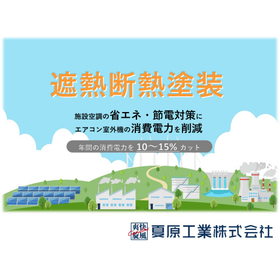
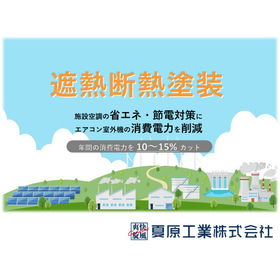
Heat-insulating and heat-reflective paint for commercial facilities - Reducing power CO2 emissions by 10-15%.
The air conditioning power consumption of commercial facilities will reduce CO2 emissions by approximately 10 to 15%!
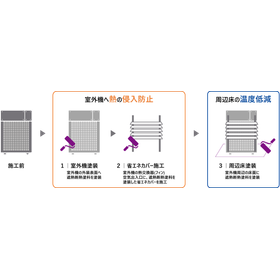
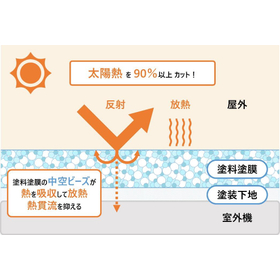
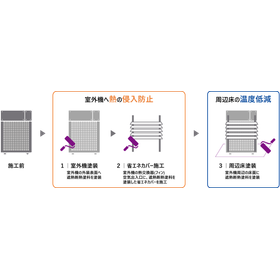
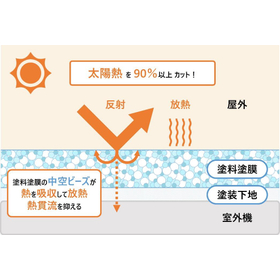
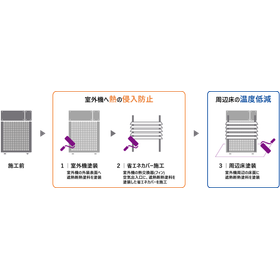
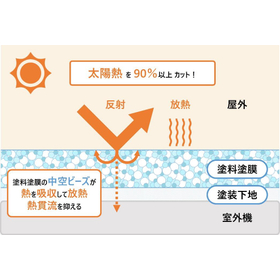
In commercial facilities, the operating hours of air conditioning systems tend to be long throughout the year due to the large number of customers. This leads to increased electricity consumption and the associated rise in CO2 emissions becoming a challenge. In particular, outdoor units installed on sunny rooftops or facing south are susceptible to temperature increases, which can lead to a decrease in air conditioning efficiency. Our "Heat-Reflective Insulation Coating" addresses these challenges simply by being applied to existing air conditioning systems, contributing to energy savings. During cooling, the heat-reflective effect suppresses the temperature rise of the outdoor unit and improves the heat exchange rate. During heating, the insulation effect reduces the frequency of defrost operation, which is when the air conditioning consumes the most electricity. These effects are expected to reduce annual electricity consumption and CO2 emissions by 10 to 15%. [Usage Scenarios] - Commercial facilities with long operating hours - Cases where outdoor units are installed facing south or on rooftops - Air conditioning units with high electricity consumption (such as those with a cooling and heating capacity of 28 kW or more) [Benefits of Implementation] - Reduction in annual electricity consumption of air conditioning systems - Reduction in CO2 emissions - Decrease in running costs
- Company:夏原工業
- Price:100,000 yen-500,000 yen
![[For IT] Heat-insulating and heat-shielding paint - Reducing power CO2 by 10-15%](https://image.mono.ipros.com/public/product/image/2063521/IPROS6734872191584993082.jpg?w=280&h=280)





![[Case Studies of Various Paint Introductions] Motorcycle Manufacturer (Part 2)](https://image.mono.ipros.com/public/product/image/4f3/2000744455/IPROS84357362792097093081.png?w=280&h=280)


![[Research Material] Global Market for Antifouling Paints for Boats](https://image.mono.ipros.com/public/product/image/aaa/2001467198/IPROS21751838600637672513.jpeg?w=280&h=280)

![[Market Report] Global Market for Antibacterial Powder Coatings](https://image.mono.ipros.com/public/product/image/511/2001000807/IPROS03748863772184863448.jpeg?w=280&h=280)


