We have compiled a list of manufacturers, distributors, product information, reference prices, and rankings for Electron microscope.
ipros is IPROS GMS IPROS One of the largest technical database sites in Japan that collects information on.

Electron microscope Product List and Ranking from 37 Manufacturers, Suppliers and Companies | IPROS GMS

Last Updated: Aggregation Period:Feb 04, 2026~Mar 03, 2026
This ranking is based on the number of page views on our site.

Electron microscope Manufacturer, Suppliers and Company Rankings

Last Updated: Aggregation Period:Feb 04, 2026~Mar 03, 2026
This ranking is based on the number of page views on our site.

  1. アズサイエンス 松本本社 Nagano//Trading company/Wholesale
  2. 一般財団法人材料科学技術振興財団 MST Tokyo//Testing, Analysis and Measurement
  3. ロンビック Mie//Resin/Plastic
  4. 4 アイテス Shiga//Electronic Components and Semiconductors
  5. 5 関西電力送配電 技術試験センター Hyogo//Electricity, Gas and Water Industry

Electron microscope Product ranking

Last Updated: Aggregation Period:Feb 04, 2026~Mar 03, 2026
This ranking is based on the number of page views on our site.

  1. In various fields such as the semiconductor industry, polymer material development and research, and quality control! アズサイエンス 松本本社
  2. [Introduction of Testing Equipment] Multi-Angle Lens VHX-D510 関西電力送配電 技術試験センター
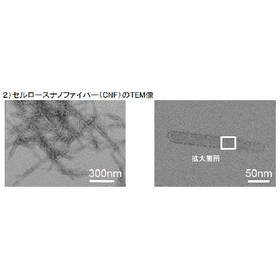
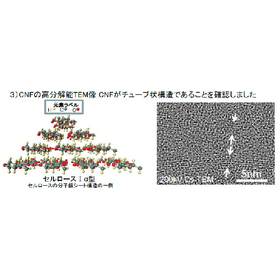
  3. Observation of Cellulose Nanofibers (CNF) - Examples of SEM and TEM Observations ロンビック
  4. 4 JEM-1400Flash Electron Microscope アズサイエンス 松本本社
  5. 5 JEM-ARM200F NEOARM Atomic Resolution Analytical Electron Microscope アズサイエンス 松本本社

Electron microscope Product List

31~60 item / All 155 items

Displayed results

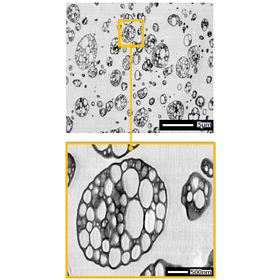
[Analysis Case] Observation of Emulsions in Cryo FIB-SEM Processed Food

Observe the dispersion state of moisture and oil while maintaining the structure.

Emulsions are dispersion systems in which water-soluble and fat-soluble components are mixed without separation due to the action of emulsifiers, and various emulsion technologies are widely used in processed foods. Mayonnaise is a representative processed food of the O/W type (oil-in-water emulsion). As a result of evaluation using cryo FIB-SEM observation, we were able to visualize the distribution of water, oil, emulsifiers, and other components. By conducting magnified observations, we can evaluate the fine structure, which is expected to be applied to sensory evaluations such as the smoothness and flavor of food.

  • Contract Analysis
  • Electron microscope

Added to bookmarks

Bookmarks list

Bookmark has been removed

Bookmarks list

You can't add any more bookmarks

By registering as a member, you can increase the number of bookmarks you can save and organize them with labels.

Free membership registration

[Analysis Case] Structural Evaluation of Magnetic Head MTJ Section

High-resolution TEM observation using Cs-corrected TEM

By using a Cs-corrected TEM device that compensates for spherical aberration, it is possible to observe the cross-sectional structure of devices with high resolution. In this case, we present data from high-resolution (HR)-TEM observations of the MTJ: magnetic tunnel junction part, extracted from a commercially available hard disk. Thus, it is possible to clearly observe the structure even in multilayer structures of ultra-thin metal films.

  • Contract Analysis
  • Electron microscope

Added to bookmarks

Bookmarks list

Bookmark has been removed

Bookmarks list

You can't add any more bookmarks

By registering as a member, you can increase the number of bookmarks you can save and organize them with labels.

Free membership registration

[Analysis Case] Atomic Level Structural Analysis of CIGS Thin-Film Solar Cells

Atomic-level resolution EDX analysis using Cs-corrected STEM.

By using a Cs-corrected TEM device that compensates for spherical aberration, it is possible to observe the cross-sectional structure of devices with high resolution. This case presents data from high-resolution (HR)-STEM observation and EDX elemental distribution analysis of the light-absorbing layer of CIGS thin-film solar cells. In CIGS, which has a polycrystalline structure composed of four elements, atomic resolution EDX analysis was performed, visually revealing the distribution of atoms.

  • Contract Analysis
  • Electron microscope

Added to bookmarks

Bookmarks list

Bookmark has been removed

Bookmarks list

You can't add any more bookmarks

By registering as a member, you can increase the number of bookmarks you can save and organize them with labels.

Free membership registration

[Analysis Case] Observation of Fine Structures under Ultra-Low Acceleration Voltage Conditions using SEM

Evaluation of separator structure by ultra-low acceleration SEM observation.

As exemplified by the separators used in lithium-ion secondary batteries, the microstructure of materials, such as porosity and shape, significantly influences the characteristics and functions of products. When materials have a low softening point, such as resins or polypropylene (PP), they may be damaged by electron beam irradiation during observation, leading to changes in their original structure. We will present a case where ultra-low acceleration SEM observation at an acceleration voltage of 0.1 kV was used to suppress alteration and evaluate the surface morphology of the sample in detail.

  • Contract Analysis
  • Electron microscope

Added to bookmarks

Bookmarks list

Bookmark has been removed

Bookmarks list

You can't add any more bookmarks

By registering as a member, you can increase the number of bookmarks you can save and organize them with labels.

Free membership registration

[Analysis Case] Evaluation of Particle Size and Composition of Catalyst Materials using TEM and EDX

Evaluation of catalyst particles using STEM-EDX.

The electrodes of fuel cells are supported by Pt particles or Pt alloy (such as PtRu) particles as catalysts on carbon. Due to the fine structure of these catalyst particles, which are on the order of a few nanometers, SEM and TEM analyses are used for morphological observation and compositional analysis. In addition to evaluations in the initial state, degradation after current application has been reported, including modulation of alloy composition, leaching of Ru, and an increase in the diameter of catalyst particles; HAADF observation and high-resolution EDX analysis are very effective for these evaluations. Furthermore, multi-field observation and analysis enable the assessment of particle size and compositional distribution.

  • Contract Analysis
  • Electron microscope

Added to bookmarks

Bookmarks list

Bookmark has been removed

Bookmarks list

You can't add any more bookmarks

By registering as a member, you can increase the number of bookmarks you can save and organize them with labels.

Free membership registration

[Analysis Case] Atomic Column Observation of Strontium Titanate SrTiO3

High-resolution STEM observation using Cs-corrected STEM

ABF-STEM images (scanning transmission annular dark field images) allow for the direct observation of atomic positions of light elements. Simultaneous acquisition with HAADF-STEM images enables more detailed structural analysis. In this case, we present an example of observing atomic columns of strontium titanate (SrTiO3). By combining EDX elemental distribution analysis, we can visually clarify the distribution of atoms. Measurement methods: TEM・EDX Product fields: LSI・Memory Analysis purposes: Shape evaluation・Structural evaluation For more details, please download the materials or contact us.

  • Contract Analysis
  • Electron microscope

Added to bookmarks

Bookmarks list

Bookmark has been removed

Bookmarks list

You can't add any more bookmarks

By registering as a member, you can increase the number of bookmarks you can save and organize them with labels.

Free membership registration

[Analysis Case] Polarity Evaluation of GaN by ABF-STEM Observation

Atomic-level observation is possible with the Cs collector-equipped STEM.

GaN, which is being utilized as a power device and optical device, has a hexagonal wurtzite structure and exhibits crystallographic asymmetry (Ga polarity and N polarity) in the c-axis direction. The growth processes of epitaxial films differ between Ga polarity and N polarity, and the surface physical properties and chemical reactivity of the crystal also vary. In this document, the polarity of GaN was evaluated through annular bright field (ABF)-STEM observation. As a result, the positions of the Ga sites and N sites were identified, allowing for a visual clarification of the characteristics of Ga polarity and N polarity. Measurement method: TEM Product fields: Power devices, optical devices Analysis objectives: Shape evaluation, structural evaluation, thickness evaluation For more details, please download the document or contact us.

  • Contract Analysis
  • Electron microscope

Added to bookmarks

Bookmarks list

Bookmark has been removed

Bookmarks list

You can't add any more bookmarks

By registering as a member, you can increase the number of bookmarks you can save and organize them with labels.

Free membership registration

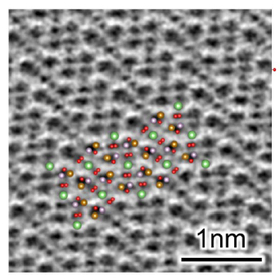
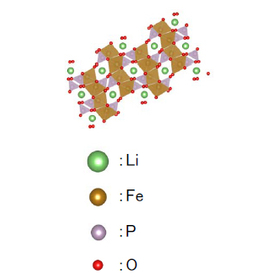
[Analysis Case] Atomic Resolution Analysis of Lithium-Ion Secondary Battery Cathode Materials

Atmosphere control + atomic-level observation under cooling

In MST, atomic-level TEM analysis is possible under atmosphere control (and cooling). This document presents a case where LiCoO2 particles, extracted from a lithium-ion secondary battery without exposure to the atmosphere, were processed using FIB and analyzed with TEM under atmosphere control and cooling. STEM observation and EDX analysis were conducted while cooling to -174°C, allowing for a visual confirmation of the atomic arrangement. This method can be applied to materials with low thermal stability and crystalline materials that undergo changes in the atmosphere for high-resolution analysis.

  • サンプル概要.png
  • Contract Analysis
  • Electron microscope

Added to bookmarks

Bookmarks list

Bookmark has been removed

Bookmarks list

You can't add any more bookmarks

By registering as a member, you can increase the number of bookmarks you can save and organize them with labels.

Free membership registration

[Analysis Case] Comparison of Secondary Electron Images of Cu Surface Using SEM and SIM

It is effective to differentiate between the two methods depending on the surface structure of interest.

Scanning Electron Microscopy (SEM) and Scanning Ion Microscopy (SIM) are both techniques used to evaluate the structure near the surface of a sample by obtaining secondary electron images. Differences in the primary probes lead to variations in contrast and spatial resolution, making it effective to choose between the two methods depending on the surface structure of interest. This document summarizes the comparison of the two methods and presents an example of measurements observing a Cu surface.

  • Contract Analysis
  • Memory
  • Electron microscope

Added to bookmarks

Bookmarks list

Bookmark has been removed

Bookmarks list

You can't add any more bookmarks

By registering as a member, you can increase the number of bookmarks you can save and organize them with labels.

Free membership registration

[Analysis Case] Investigation of Voids Inside Bonded Wafers Using C-SAM

We will evaluate the internal structure of the device in a comprehensive manner.

MST offers a range of technologies suitable for evaluating the internal structures of electronic devices, and we propose analytical methods tailored to the observation field and objectives. This document presents case studies investigating specific areas of devices using X-ray CT and FIB-SEM. First, we observed the internal structure of the entire sample using X-ray CT to explore specific areas. Next, we used FIB-SEM to examine the detailed structures of the specific features identified on the vias.

  • Contract Analysis
  • Other electronic parts
  • Electron microscope

Added to bookmarks

Bookmarks list

Bookmark has been removed

Bookmarks list

You can't add any more bookmarks

By registering as a member, you can increase the number of bookmarks you can save and organize them with labels.

Free membership registration

"Basics of TEM" "Applications and Case Studies of TEM" *A gift for all interested participants.

Basic knowledge and analysis examples of TEM (Transmission Electron Microscopy) used in a wide range of research and development fields such as polymers and semiconductors.

TEM (Transmission Electron Microscopy) is a method that involves irradiating a thin sample with electrons, imaging the electrons that have passed through or scattered from the sample, and observing it at high magnification. At MST, we are offering "Basics of TEM," which includes fundamental knowledge such as the characteristics of TEM and sample preparation methods, and "Applications and Examples of TEM," which features representative analysis cases and examples of combined analysis with other methods! This material is presented in an easy-to-understand manner using photographs and diagrams. [Contents (partial)] <Basics of TEM>  ■What can be understood with TEM and STEM ■Characteristics of TEM and STEM  ■Sample preparation methods ■Factors affecting contrast  ■Differentiation between TEM and STEM ■Ultra-high resolution HAADF observation <Applications and Examples of TEM>  ■Analysis examples   ・TEM analysis under controlled atmosphere and cooling   ・Evaluation of contact electrodes in SiC power MOSFETs   ・Structural evaluation of fine transistors *If you would like a booklet, please check the box for "Request for catalog" in the "Contact Us" section to apply. (The downloadable PDF material consists of the first few pages.)

  • Other microscopes
  • Electron microscope

Added to bookmarks

Bookmarks list

Bookmark has been removed

Bookmarks list

You can't add any more bookmarks

By registering as a member, you can increase the number of bookmarks you can save and organize them with labels.

Free membership registration

[Analysis Case] 3D Observation of Cosmetics Using X-ray CT and Cryo-SEM

It is possible to confirm the shape of emulsified particles and inorganic powders! Visualizing the film of liquid foundation from macro to micro levels.

We would like to introduce a case study of 3D observation of cosmetics using X-ray CT and cryo-SEM, analyzed by the foundation. Liquid foundation applied to a plastic substrate was observed using X-ray CT and cryo-SEM, visualizing the dispersion state within the sample. X-ray CT allows for the confirmation of macroscopic morphology in a non-destructive and non-contact manner, while cryo-SEM enables the observation of even more microscopic structures. 【Features】 ■ The internal structure of the liquid foundation film can be evaluated through macroscopic morphological observation. ■ Detailed structural observation using an electron microscope allows for the confirmation of the shapes of emulsified particles and inorganic powders. *For more details, please refer to the PDF document or feel free to contact us.

  • Contract Analysis
  • Electron microscope

Added to bookmarks

Bookmarks list

Bookmark has been removed

Bookmarks list

You can't add any more bookmarks

By registering as a member, you can increase the number of bookmarks you can save and organize them with labels.

Free membership registration

[Analysis Case] Structural Evaluation of Positive Electrode Active Material in Secondary Batteries

Evaluation of particle size and crystal orientation of living materials, atomic-level observation is possible.

Lithium-ion secondary batteries undergo changes in the composition and crystal structure of the electrode active materials due to ion extraction and insertion during charging and discharging. As a structural evaluation of the positive electrode active material Li(NiCoMn)O2 (NCM), we assessed the particle size and orientation of primary particles using EBSD. Furthermore, we conducted high-resolution STEM observations on the primary particles whose orientations were confirmed, showcasing the atomic positions of light elements (Li, O) in ABF-STEM images and the atomic positions of transition metals (Ni, Co, Mn) in HAADF-STEM images. Measurement methods: SEM, EBSD, TEM Product field: Secondary batteries Analysis purpose: Shape evaluation, structural evaluation, product investigation For more details, please download the materials or contact us.

  • 正極の断面SEM像.png
  • 二次粒子の断面SEM像(拡大).png
  • EBSD拡大図.png
  • 粒径ヒストグラム.png
  • ABF-STEM像.png
  • HAADF-STEM像.png
  • 結晶構造モデル.png
  • C0605_サムネ.png
  • Charger
  • Contract measurement
  • Electron microscope

Added to bookmarks

Bookmarks list

Bookmark has been removed

Bookmarks list

You can't add any more bookmarks

By registering as a member, you can increase the number of bookmarks you can save and organize them with labels.

Free membership registration

[Analysis Case] Cell Cycle Assessment from Bacterial Images

By using deep learning and data analysis, we can evaluate sample characteristics by utilizing large amounts of data.

We observed a sample mixed with three types of lactic acid bacteria using SEM, and extracted the bacteria by type using deep learning from the obtained images. Furthermore, we conducted data analysis to determine the presence ratio on the cell cycle based on the shape of the lactic acid bacteria. Measurement methods: SEM, computational science, AI, data analysis Product fields: Biotechnology, pharmaceuticals, daily necessities, cosmetics, food Analysis purpose: Shape evaluation, product investigation For more details, please download the materials or contact us.

  • C0689_2.png
  • Contract Analysis
  • Contract measurement
  • Electron microscope

Added to bookmarks

Bookmarks list

Bookmark has been removed

Bookmarks list

You can't add any more bookmarks

By registering as a member, you can increase the number of bookmarks you can save and organize them with labels.

Free membership registration

[Analysis Case] Evaluation of Ion Implantation Damage Layer in Gallium Oxide Ga2O3

Confirming the differences due to variations in annealing conditions after ion implantation.

Gallium oxide (Ga2O3) has a wider bandgap than SiC and GaN, and possesses excellent physical properties, making it a focus of attention as a material for power devices that can be expected to be high-efficiency and low-cost. Controlling impurity concentration and crystallinity, which influence the characteristics of the devices, is crucial for their development. This document presents the results of observations of the damage layer and changes in surface roughness caused by disturbances in the crystal structure due to ion implantation, under various annealing conditions. Measurement methods: TEM, AFM Product fields: Oxide semiconductors, power devices Analysis objectives: Shape evaluation, structural evaluation For more details, please download the document or contact us.

  • img_C0718_1.jpg
  • Contract Analysis
  • Contract measurement
  • Electron microscope

Added to bookmarks

Bookmarks list

Bookmark has been removed

Bookmarks list

You can't add any more bookmarks

By registering as a member, you can increase the number of bookmarks you can save and organize them with labels.

Free membership registration

Identification of resistance anomalies due to absorption current

You can identify high resistance and open areas in the wiring from the absorption current image.

- Possible to identify high resistance abnormal areas - The current flowing through the wiring is weak (pA) - Measurement is possible even with a surface protective film present - Measurement is possible even with multilayered wiring - Measurement is possible under conditions almost identical to SEM observation

  • Contract Analysis
  • Contract measurement
  • Electron microscope

Added to bookmarks

Bookmarks list

Bookmark has been removed

Bookmarks list

You can't add any more bookmarks

By registering as a member, you can increase the number of bookmarks you can save and organize them with labels.

Free membership registration

[Analysis Case] STEM, EBSD Image Simulation for Polycrystalline Structure Analysis

Evaluation of crystal forms using simulations.

High-resolution HAADF-STEM images reflect the atomic arrangement of crystals, and by simulating STEM images corresponding to various crystal orientations, they help in accurately understanding the relative orientations between crystal grains and the observed images in polycrystalline materials. This document presents a case where STEM images were simulated from the crystal orientation information obtained by the EBSD method for the crystal grains in a polycrystalline neodymium magnet, and compares them with actual high-resolution HAADF-STEM images.

  • c0557-2.jpg
  • c0557-3.jpg
  • c0557-4.jpg
  • Contract Analysis
  • Contract measurement
  • Electron microscope

Added to bookmarks

Bookmarks list

Bookmark has been removed

Bookmarks list

You can't add any more bookmarks

By registering as a member, you can increase the number of bookmarks you can save and organize them with labels.

Free membership registration

[Analysis Case] TEM Analysis under Atmosphere Control and Cooling (B0156)

Observation with a high-resolution SEM equipped with FIB without atmospheric exposure (controlled atmosphere)!

Our organization has established a system that suppresses atmospheric exposure through atmosphere control, and further cools the samples for processing, observation, and analysis. We can produce TEM thin samples while maintaining the original structure of the specimen, allowing for observation and analysis. Even with unstable materials, we can perform thinning processing while cooling, and by maintaining a vacuum during the transfer between processing and observation devices, we enable cross-sectional TEM/SEM observation that minimizes atmospheric exposure and thermal alteration. 【Measurement and Processing Methods】 ■ [(S)TEM] Scanning Transmission Electron Microscopy ■ Processing under atmosphere control ■ Cryo-processing *For more details, please download the PDF or feel free to contact us.

  • Contract Analysis
  • Electron microscope

Added to bookmarks

Bookmarks list

Bookmark has been removed

Bookmarks list

You can't add any more bookmarks

By registering as a member, you can increase the number of bookmarks you can save and organize them with labels.

Free membership registration

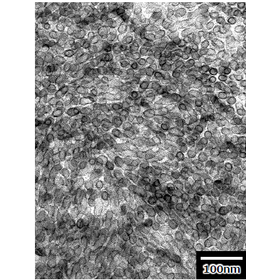
[Analysis Case] (S)TEM Observation by Negative Staining

Examples of morphological observation of liposomes, CNF, microparticles, proteins, etc.!

Our organization offers (S)TEM observation using negative staining. Organic functional materials, such as fine particles and fibrous substances, are primarily composed of light elements like C (carbon), H (hydrogen), O (oxygen), and N (nitrogen), which do not provide sufficient contrast for morphological observation in (S)TEM. Therefore, by applying staining to these materials, we can enhance the contrast and enable observation. In this instance, we will introduce a case where negative staining was performed using phosphotungstic acid (H3[P(W3O10)4]·nH2O, abbreviated as PTA). 【Measurement Method / Processing Method】 ■ [(S)TEM] Scanning Transmission Electron Microscopy ■ Others *For more details, please download the PDF or feel free to contact us.

  • 10a.png
  • 10b.png
  • Contract Analysis
  • Electron microscope

Added to bookmarks

Bookmarks list

Bookmark has been removed

Bookmarks list

You can't add any more bookmarks

By registering as a member, you can increase the number of bookmarks you can save and organize them with labels.

Free membership registration

Case Study Collection 1 on Cross-Section Observation and Structural Analysis using TEM/SEM/EBSD

We will introduce many examples of cross-sectional observation and structural analysis using TEM, FE-SEM, EBSD, etc., for metal microstructure observation and phase analysis!

This case study collection introduces examples related to "cross-sectional observation and structural analysis." It includes numerous analytical cases covering the objectives, methods, and results of "metallic structure observation of wire (spring material)," "phase analysis of duplex stainless steel," and "evaluation of semiconductor insulating films using STEM-EDS." Additionally, it presents observations, phase analyses, insulating film analyses, and measurements, among other topics. We encourage you to read it. [Contents] ■ Metallic structure observation of wire (spring material) ■ Phase analysis of duplex stainless steel ■ Evaluation of semiconductor insulating films using STEM-EDS ■ EBSD measurement of samarium cobalt magnets ■ Analysis of connector terminal contact defects using STEM ■ Cross-sectional observation of biological samples (Morpho butterfly scales) *For more details, please refer to the PDF document or feel free to contact us.

  • Other analyses
  • Contract Analysis
  • Contract Analysis
  • Electron microscope

Added to bookmarks

Bookmarks list

Bookmark has been removed

Bookmarks list

You can't add any more bookmarks

By registering as a member, you can increase the number of bookmarks you can save and organize them with labels.

Free membership registration

FE-SEM (with EDS/EBSD observation)

A finely focused electron beam is irradiated onto the sample! An electron microscope that can also analyze crystal orientation and crystal structure!

The "FE-SEM (Field Emission Scanning Electron Microscope)" is a device that irradiates and scans a finely focused electron beam onto a sample, allowing for clearer magnified images compared to general-purpose SEMs. Additionally, by utilizing a finely focused strong electron beam and employing the Electron Back-Scatter Diffraction (EBSD) method, it is possible to analyze crystal orientation and crystal structure. 【Applicable Targets】 ■ General metal materials ■ Ceramics ■ Fibers (requires deposition treatment) *For more details, please refer to the catalog or feel free to contact us.

  • Analytical Equipment and Devices
  • Electron microscope
  • Electron microscope

Added to bookmarks

Bookmarks list

Bookmark has been removed

Bookmarks list

You can't add any more bookmarks

By registering as a member, you can increase the number of bookmarks you can save and organize them with labels.

Free membership registration

Technical Information Magazine 202305-02 In-situ Heating TEM

Using in-situ heating TEM, we introduce a case study that visualizes structural changes in materials at the nanometer level during thermal processing of semiconductor devices, contributing to process development.

The technical information magazine The TRC News provides the latest information on analytical techniques that are useful for research and development, solving production troubles, and quality control. **Abstract** In the development and manufacturing of semiconductor devices, understanding the structural changes of materials during thermal processing is extremely important. By using heating in-situ TEM, it is possible to visualize the thermal behavior of materials during heat treatment at the nanometer level, gaining new insights into structural changes that can aid in process development such as film quality control. This paper introduces case studies using heating in-situ TEM to analyze (1) the crystallization growth mechanism of amorphous silicon films in conjunction with crystal structure analysis, (2) the thermal behavior of metal stacked films in conjunction with elemental analysis, and (3) the observation of the crystallization growth process of thin film ruthenium films in a planar configuration. **Table of Contents** 1. Introduction 2. Overview and Features of Heating In-Situ TEM 3. Case Studies of Heating In-Situ TEM Analysis 4. Conclusion

  • Contract Analysis
  • Contract measurement
  • Technical and Reference Books
  • Electron microscope

Added to bookmarks

Bookmarks list

Bookmark has been removed

Bookmarks list

You can't add any more bookmarks

By registering as a member, you can increase the number of bookmarks you can save and organize them with labels.

Free membership registration

Examples of observing plastics and resin materials using TEM and SEM.

Introducing observations of CNF in PE and the higher-order structure of cell walls in PE foams, along with photos!

On our company website, we introduce examples of resin material observation using transmission electron microscopy (TEM) and scanning electron microscopy (SEM). In the TEM observation examples, we include observations of CNF in PE, the higher-order structure of cell walls in PE foams, and the lamellar structure near the surface of HDPE. Additionally, in the SEM observation examples, we present comparisons before and after weather resistance tests of ABS resin, as well as cross-sectional structural analysis of automotive bumper materials. Please take a look. [Content Included (Partial)] ■ TEM Observation Examples - Observation of CNF in PE - Higher-order structure of cell walls in PE foams - Observation of lamellar structure near the surface of HDPE - Morphology observation examples of HIPS/ABS systems - Morphology observation in PC/ABS system materials *For more details, please refer to the related links or feel free to contact us.

  • Contract Analysis
  • Electron microscope

Added to bookmarks

Bookmarks list

Bookmark has been removed

Bookmarks list

You can't add any more bookmarks

By registering as a member, you can increase the number of bookmarks you can save and organize them with labels.

Free membership registration

Observation of PE/CNF (Cellulose Nanofiber) using TEM

We are introducing examples of observing the dispersion state of CNF (cellulose nanofiber) in PE.

On our company website, we introduce "Observation of CNF composite materials using Transmission Electron Microscopy (TEM)." By utilizing the techniques developed through the observation of polymer crystal structures and the morphology of polymer alloys, including the production of ultra-thin sections with staining, we have made it possible to observe CNF (cellulose nanofiber) incorporated into resins. We also include photographs of the dispersion state of CNF in PE and enlarged images. Please take a look. [Published Photos] ■Observation of CNF dispersion state in PE - PE/CNF dispersion state observation - PE/CNF enlarged photos *For more details, please refer to the related links or feel free to contact us.

  • Contract Analysis
  • Electron microscope

Added to bookmarks

Bookmarks list

Bookmark has been removed

Bookmarks list

You can't add any more bookmarks

By registering as a member, you can increase the number of bookmarks you can save and organize them with labels.

Free membership registration

Morphological observation of foamed resin materials using TEM.

You can observe the crystal structure within the cell walls of the foam!

We conduct "observation of foams using Transmission Electron Microscopy (TEM)" as a form of morphological observation. By applying and enhancing the technology for producing ultra-thin sections, which we have developed through the observation of crystalline structures in polymers and the morphology of polymer alloys, it is possible to observe the crystalline structure within the cell walls of foams. Additionally, we have observation results for resins and composite materials other than PE, and by combining staining techniques, we can observe the dispersion state of the cell walls in polymer alloys. 【Features】 ■ Observation results available for resins and composite materials other than PE ■ The dispersion state of the cell walls in polymer alloys can be observed by combining staining techniques ■ Observation possible for soft material foams *For more details, please refer to the related links or feel free to contact us.

  • Contract Analysis
  • Electron microscope

Added to bookmarks

Bookmarks list

Bookmark has been removed

Bookmarks list

You can't add any more bookmarks

By registering as a member, you can increase the number of bookmarks you can save and organize them with labels.

Free membership registration

Observation of the fine structure of styrene-based elastomers using transmission electron microscopy.

If you are interested in TEM observation of the fine structure of block copolymers or graft copolymers, please feel free to consult with us.

Our company conducts fine structure observation of styrene-based elastomers using Transmission Electron Microscopy (TEM). We observe the fine structure (microphase separation structure) in styrene-based thermoplastic elastomers such as Styrene-Ethylene/Butylene-Styrene block copolymers (SEBS) using TEM. Additionally, the dispersion state of styrene-based elastomers within composite materials can also be observed using our electron staining technology in TEM. 【Features】 ■ The dispersion state of styrene-based elastomers within composite materials can be observed using electron staining technology in TEM. *For more details, please download the PDF or feel free to contact us.

  • Contract Analysis
  • Electron microscope

Added to bookmarks

Bookmarks list

Bookmark has been removed

Bookmarks list

You can't add any more bookmarks

By registering as a member, you can increase the number of bookmarks you can save and organize them with labels.

Free membership registration

Observation of fine dispersed rubber in styrene-based resin using transmission electron microscopy.

Observation of the salami structure of micro-dispersed rubber domains (butadiene rubber)! The differences in structure are clearly distinguishable.

Our company conducts observations of micro-dispersed rubber in styrene-based resins (HIPS, ABS) using transmission electron microscopy (TEM). We observe the salami structure of micro-dispersed rubber domains (butadiene rubber) in high-impact polystyrene (HIPS) and acrylonitrile-butadiene-styrene (ABS) resins. The differences in the salami structures of both are clearly distinguishable. Please feel free to contact us if you have any inquiries. [Overview] ■ Observation of the salami structure of micro-dispersed rubber domains (butadiene rubber) ■ Clear distinction of the differences in salami structures *For more details, please download the PDF or feel free to contact us.

  • Contract Analysis
  • Electron microscope

Added to bookmarks

Bookmarks list

Bookmark has been removed

Bookmarks list

You can't add any more bookmarks

By registering as a member, you can increase the number of bookmarks you can save and organize them with labels.

Free membership registration

[Analysis Case] Observation of the Dispersion State of Fillers in Automotive Resins

Quantitative evaluation of fillers blended into resin is possible! Here is an example of understanding the dispersion state per volume of filler.

In the fields of automobiles and aircraft, lightweight organic/inorganic composite materials with strength and rigidity are widely used. The size and dispersion state of inorganic fillers contained in organic/inorganic composite materials significantly affect mechanical properties, making it necessary to understand the distribution and orientation of inorganic fillers. This document presents a case study where fillers within a resin were evaluated in three dimensions using FIB-SEM. [Case Summary] ■ Analysis Sample - Automotive resin containing inorganic fillers ■ Analysis Results - It was found that the resin contains approximately 10Vol% of fillers. *For more details, please refer to the PDF document or feel free to contact us.

Added to bookmarks

Bookmarks list

Bookmark has been removed

Bookmarks list

You can't add any more bookmarks

By registering as a member, you can increase the number of bookmarks you can save and organize them with labels.

Free membership registration

Introduction to the Equipment of the Technology Development Office

We own microscopes and electron microscopes! We provide consistently stable quality plating using various analytical devices.

In our Technology Development Department, we analyze and manage the plating solutions from three factories using various analytical devices. By understanding the consumption of chemicals due to plating operations and controlling the supply amounts, we strive to consistently provide stable quality plating. Additionally, in 2015, we introduced a scanning electron microscope to conduct surface analysis and evaluation of plating films. By observing at the micron level, we clarify issues that are not noticeable to the naked eye, and we research plating conditions that match the surface state to our customers' needs. 【Equipment Owned (Partial)】 ■ Microscope ■ Electron Microscope, manufactured by JEOL: "SM-6010PLUS/LA" ■ Polishing Machine, manufactured by Sankeikaku: Automatic Polishing Machine "HA-FSA-83" ■ Cutting Machine, manufactured by Sankeikaku: Cutting Machine Alt Cut "CK260-90" ■ Manufactured by Shimadzu: Spectrophotometer "UVmini-1240" ■ Manufactured by Matsuzawa: Digital Microhardness Tester "SMT-3" *For more details, please refer to the PDF document or feel free to contact us.

  • Plating Equipment
  • Contract manufacturing
  • Electron microscope

Added to bookmarks

Bookmarks list

Bookmark has been removed

Bookmarks list

You can't add any more bookmarks

By registering as a member, you can increase the number of bookmarks you can save and organize them with labels.

Free membership registration

[Case Study] Incident of "Black Foreign Substance" Dispersing from Unit Cooler

Black foreign substances scattered from the unit cooler! Introduction of a case where the trouble was successfully resolved.

We received a request to investigate the "black foreign substances" being dispersed from the unit cooler in the factory. 【Case】 ■Issue - We would like you to investigate the "black foreign substances" being dispersed from the unit cooler. ■Solution - Elemental analysis using "Scanning Electron Microscopy - Energy Dispersive X-ray (SEM-EDX)" - Analysis of organic materials using "Fourier Transform Infrared Spectroscopy" and comparison of the surface and cross-section of the foreign substances.

  • Contract measurement
  • Contract Inspection
  • Contract Analysis
  • Electron microscope

Added to bookmarks

Bookmarks list

Bookmark has been removed

Bookmarks list

You can't add any more bookmarks

By registering as a member, you can increase the number of bookmarks you can save and organize them with labels.

Free membership registration