We have compiled a list of manufacturers, distributors, product information, reference prices, and rankings for Fluorine resin coating.
ipros is IPROS GMS IPROS One of the largest technical database sites in Japan that collects information on.

Fluorine resin coating Product List and Ranking from 78 Manufacturers, Suppliers and Companies | IPROS GMS

Last Updated: Aggregation Period:Jul 29, 2026~Aug 25, 2026
This ranking is based on the number of page views on our site.

Fluorine resin coating Manufacturer, Suppliers and Company Rankings

Last Updated: Aggregation Period:Jul 29, 2026~Aug 25, 2026
This ranking is based on the number of page views on our site.

  1. 吉田SKT Aichi//Manufacturing and processing contract
  2. NIPPON FUSSO CO.,LTD. Osaka//Electronic Components and Semiconductors
  3. フロロコート Saitama//others
  4. 4 null/null
  5. 5 日建塗装工業 Tokyo//Manufacturing and processing contract

Fluorine resin coating Product ranking

Last Updated: Aggregation Period:Jul 29, 2026~Aug 25, 2026
This ranking is based on the number of page views on our site.

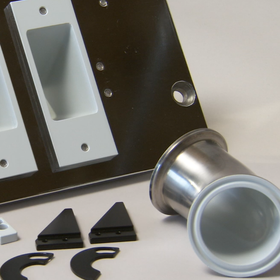
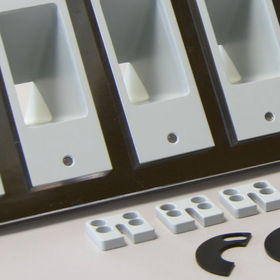
  1. Fluororesin coating and lining for quartz. NIPPON FUSSO CO.,LTD.
  2. [Developed Product] Discharge and Static Electricity Countermeasures! Medium Resistance Fluororesin Coating NIPPON FUSSO CO.,LTD.
  3. ADLON coating フロロコート
  4. 4 Advantages and disadvantages of re-coating a non-stick frying pan. 吉田SKT
  5. 5 Causes of Teflon coating peeling and how to address them. 吉田SKT

Fluorine resin coating Product List

571~600 item / All 605 items

Displayed results

Seafron(R) LF+ - Low friction and low temperature processing product number as well.

Compatible with resin substrates at low-temperature processing numbers below 100℃. Excellent coating hardness and abrasion resistance.

"SafeLon(R) LF+" is a grade developed as a new option for applications that require not only static electricity prevention but also mechanical strength, which the conventional SafeLon(R) series could not adequately address. LF stands for "Low Friction," meaning it has a low coefficient of friction and excellent lubricity. It also excels in coating hardness and wear resistance, making it suitable for applications that require mechanical strength. Furthermore, while conventional fluoropolymer coatings typically require firing at around 400°C, there are product numbers that allow for low-temperature processing below 100°C, making it applicable not only to metals but also to resin substrates.

  • Surface treatment contract service
  • Fluorine resin coating

Added to bookmarks

Bookmarks list

Bookmark has been removed

Bookmarks list

You can't add any more bookmarks

By registering as a member, you can increase the number of bookmarks you can save and organize them with labels.

Free membership registration

【Technical Q&A】Compatible substrates for Saflon® - including resins -

Compatible with iron, stainless steel, aluminum, and copper alloys. With LF+, low-temperature processing is also possible for resin substrates.

The substrates compatible with "Safron(R)" include iron (ferrous materials), stainless steel (SUS), and aluminum. Additionally, some grades such as "Safron(R) LF+" are available in types that can be processed at low temperatures below 100°C, making them applicable to substrates with low heat resistance, such as resins. The applicability and pretreatment methods vary depending on the type and condition of the substrate, so please consult our technical sales representative for specific applicability.

  • Surface treatment contract service
  • Fluorine resin coating

Added to bookmarks

Bookmarks list

Bookmark has been removed

Bookmarks list

You can't add any more bookmarks

By registering as a member, you can increase the number of bookmarks you can save and organize them with labels.

Free membership registration

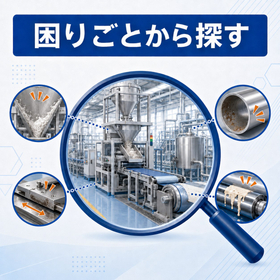
For those struggling with paint removal from painting jigs.

Reduce stripping and cleaning, and create a jig surface that is less prone to paint buildup.

■Do you have any of these concerns? - It takes time to remove or clean contaminants. - I want to reduce the use of release agents, oils, and solvents. ■General countermeasures and criteria for selecting surface treatments When paint accumulates on painting jigs, chemical stripping, incineration stripping, removal with tools, or jig replacement becomes necessary. For shapes that cannot be addressed with masking or disposable covers, and in processes where we want to reduce cleaning downtime, non-stick coatings that make it difficult for paint to adhere are candidates. We will check the type of paint, curing temperature, and impact on the jigs, and suggest candidates such as fluoropolymer-based coatings. ■You can consult us from the stage of your concerns - Even if the target object or usage conditions are not determined, please let us know your concerns. - Based on the information you provide, we will suggest candidates for surface treatments and points to confirm. - We will propose the provision of test pieces or prototypes depending on the situation. Please contact us first. - If you want to know the functions and features of surface treatments, please download and view the catalog.

  • Surface treatment contract service
  • Fluorine resin coating

Added to bookmarks

Bookmarks list

Bookmark has been removed

Bookmarks list

You can't add any more bookmarks

By registering as a member, you can increase the number of bookmarks you can save and organize them with labels.

Free membership registration

For those troubled by resin adhesion on extrusion dies.

Reduce the adhesion of high-temperature molten resin and eye mucus, and decrease cleaning stoppages.

■Do you have any of these concerns? - It takes time to remove contaminants and clean - I want to reduce the use of release agents, oils, and solvents ■General measures and criteria for selecting surface treatments For resin adhesion and eye contamination around the extrusion die, first consider adjusting temperature and residence time, die polishing, and regular cleaning. If high-temperature molten resin still adheres and contaminates the product, surface treatments with heat resistance and release properties become candidates. We will check the type of resin, temperature, cleaning methods, and dimensional accuracy, and suggest candidates such as FSR or heat-resistant, high-hardness types. ■You can consult us at any stage of your concerns - Even if you haven't decided on the target object or usage conditions, please let us know your concerns - Based on the information you provide, we will suggest candidates for surface treatments and points to confirm - We will propose the provision of test pieces or prototypes depending on the situation. Please contact us first - If you want to know about the functions and features of surface treatments, please download and view the catalog.

  • Surface treatment contract service
  • Fluorine resin coating

Added to bookmarks

Bookmarks list

Bookmark has been removed

Bookmarks list

You can't add any more bookmarks

By registering as a member, you can increase the number of bookmarks you can save and organize them with labels.

Free membership registration

For those troubled by cutter residue on packaging film.

Reduction of cutting defects and misalignment due to adhesive adhesion, and reduction of release agent application work.

■Do you have any of these concerns? - Stopping equipment for the removal or cleaning of contaminants - Wanting to reduce the use of release agents, tapes, covers, etc. ■General countermeasures and criteria for selecting surface treatments When adhesive packaging film adheres to the cutter blade, cleaning or replacing the blade, applying release agents, and adjusting cutting conditions are performed. If the effect of the release agent does not last, if the blade shape cannot be significantly changed, or if you want to reduce cleaning stoppages, thin non-adhesive coatings that can be processed at low temperatures become candidates. ■You can consult us from the stage of your concerns - Even if the target object or usage conditions are not determined, please let us know your concerns. - Based on the information you provide, we will suggest candidates for surface treatments and points to confirm. - We will propose the provision of test pieces or prototypes depending on the situation. Please contact us first. - If you want to know about the functions and features of surface treatments, please download and view the catalog.

  • Surface treatment contract service
  • Fluorine resin coating

Added to bookmarks

Bookmarks list

Bookmark has been removed

Bookmarks list

You can't add any more bookmarks

By registering as a member, you can increase the number of bookmarks you can save and organize them with labels.

Free membership registration

For those struggling with sticking in vacuum forming molds.

Improvement of sheet adhesion and air release issues from surface shape.

■Do you have any of these concerns? - Stopping equipment for the removal of contaminants or cleaning - Wanting to reduce the use of release agents ■General countermeasures and criteria for selecting surface treatments When sheets stick to vacuum forming molds, a review of mold temperature, cooling time, release angle, air holes, and release agents is conducted. If deformation during demolding or poor air release still occurs, surface shapes that minimize contact area and coatings that provide non-stick properties become candidates. ■You can consult us at any stage of your concerns - Even if the target object or usage conditions are not determined, please let us know your concerns. - Based on the information you provide, we will suggest candidates for surface treatments and points to confirm. - We will propose the provision of test pieces or prototypes depending on the situation. Please contact us first. - If you want to know about the functions and features of surface treatments, please download and view the catalog.

  • Surface treatment contract service
  • Fluorine resin coating

Added to bookmarks

Bookmarks list

Bookmark has been removed

Bookmarks list

You can't add any more bookmarks

By registering as a member, you can increase the number of bookmarks you can save and organize them with labels.

Free membership registration

Anti-corrosion and anti-rust coating

Extending the lifespan of the substrate and improving its durability is possible! It boasts high heat resistance among plastic resins and also has good chemical resistance.

Our "Anti-corrosion and Anti-rust Coating" solves problems such as "wanting to prevent rust and deterioration of metal substrates (work)" and "wanting to extend the lifespan of the substrate." Basically, treatment with a thick film is possible. A thick coating significantly increases the maintainability of the substrate, leading to an extension of its lifespan and improvement in durability. "Nylon (PA)" has been used by manufacturers of piping, factory equipment parts, and seawater tanks, while "Low-Density Polyethylene (LDPE)" has been utilized by manufacturers of piping for construction, outdoor products, and fire hydrant covers. [Features] ■ Treatment with a thick film is generally possible ■ A thick coating significantly increases the maintainability of the substrate ■ Leads to an extension of the substrate's lifespan and improvement in durability ■ Relatively easy to repeat (resin stripping and regeneration) coating ■ Material with excellent toughness and wear resistance *For more details, please refer to the PDF document or feel free to contact us.

  • Surface treatment contract service
  • Fluorine resin coating

Added to bookmarks

Bookmarks list

Bookmark has been removed

Bookmarks list

You can't add any more bookmarks

By registering as a member, you can increase the number of bookmarks you can save and organize them with labels.

Free membership registration

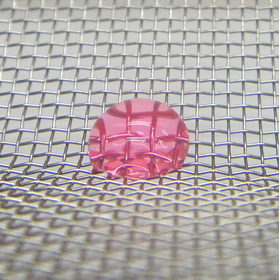
Add water and oil repellency with a fluororesin coating.

Water and oil repellency refers to the property of a substrate surface that repels water and oil. Water does not spread and wet the surface of the material, but instead forms into droplets, which is the state of water repellency.

When a water-repellent coating is applied to fibers, it is coated with a thin film and does not cover all the fabric's weave, which is an advantage in terms of breathability. However, when high pressure is applied to the water, it may seep through the fabric's weave to the backside. The difference between water-repellent and waterproof To briefly explain the difference between water-repellent and waterproof, water-repellent means repelling water as described above, while waterproof means not allowing water to pass through. In other words, a state where water does not pass through is "waterproof," and a state where water is repelled on the surface is "water-repellent." Advantages and disadvantages of water-repellent processing - Advantages The advantage of water-repellent processing is that it does not fill the gaps in the material, allowing for breathability. Therefore, it is often used in down jackets and coats when one wants to avoid getting wet from a small amount of rain without compromising comfort. - Disadvantages Since water-repellent processing is only superficial, as mentioned above, during heavy rain, water pressure may cause water to seep into the material's interior.

  • Surface treatment contract service
  • Fluorine resin coating

Added to bookmarks

Bookmarks list

Bookmark has been removed

Bookmarks list

You can't add any more bookmarks

By registering as a member, you can increase the number of bookmarks you can save and organize them with labels.

Free membership registration

Fluororesin Coating Course: What is Wear-Resistant Coating?

A clear explanation of the types of wear! Effective measures with the optimal coating!

In general, in fields centered around metals, the forms of wear are represented by the following four types: ● Adhesive wear ● Abrasive wear ● Corrosive wear ● Fatigue wear Additionally, secondary phenomena such as erosion, cavitation, and chipping are also noted. However, in the case of fluoropolymer coatings, this classification seems to be unsuitable, and based on various inquiries, it is considered to be represented by the following three types: ● Scratching wear ● Roughness wear ● Adhesive wear *For more details on wear-resistant coatings, please contact us or download the catalog for further information.*

  • Coating Agent
  • Surface treatment contract service
  • Fluorine resin coating

Added to bookmarks

Bookmarks list

Bookmark has been removed

Bookmarks list

You can't add any more bookmarks

By registering as a member, you can increase the number of bookmarks you can save and organize them with labels.

Free membership registration

Fluororesin Coating Course: What is Static Electricity Prevention?

Avoid troubles caused by static electricity charging on fluororesin surfaces!

The characteristics of fluoropolymer, such as corrosion resistance and non-stick properties, are widely used as solutions to various challenges in different plants and manufacturing facilities. On the other hand, problems caused by static electricity charging on the surface of fluoropolymer are also frequently encountered. For example, it is well understood that the volume resistivity of glass lining is around 10^12 Ωm, and precautions against static electricity hazards are taken; however, there have been cases where the fact that the volume resistivity of fluoropolymer exceeds 10^16 Ωm has not been adequately considered. *For more details on static electricity prevention, please contact us or download our catalog for more information.*

  • Coating Agent
  • Surface treatment contract service
  • Fluorine resin coating

Added to bookmarks

Bookmarks list

Bookmark has been removed

Bookmarks list

You can't add any more bookmarks

By registering as a member, you can increase the number of bookmarks you can save and organize them with labels.

Free membership registration

Fluororesin Coating Course: What is Non-Stick and Release Coating?

A clear explanation of non-stick grades of fluoropolymer by application!

FEP resin has the lowest critical surface tension among fluoropolymers (17.8 dyn/cm), making it difficult for liquids to wet the surface (i.e., it has high non-stick properties). Additionally, it has the lowest adhesion energy (42.0 dyn/cm), which means that even wetted liquids can easily detach (i.e., it has high release properties). For this reason, FEP resin is used in various fields, from molding molds for rubber and resin products like golf balls to molding shapes for solid propellant fuels in space shuttles and Ariane rockets, as well as in applications ranging from rolls to large paint mixing tanks. *For more details on non-stick and release coatings, please contact us or download our catalog for more information.*

  • Coating Agent
  • Surface treatment contract service
  • Fluorine resin coating

Added to bookmarks

Bookmarks list

Bookmark has been removed

Bookmarks list

You can't add any more bookmarks

By registering as a member, you can increase the number of bookmarks you can save and organize them with labels.

Free membership registration

Are you having trouble with surface coating peeling off?

We offer coatings that utilize the properties of fluororesin to meet our customers' needs!

Are you discarding products because the surface coating has worn off and the slip has decreased? At our company, if the base material is still intact, we can remove the previous coating and reapply a new one. Furthermore, we can offer three grades of Teflon coating tailored to your usage. [Types of Coatings] (Selectable based on application and required quality) - The familiar "Silver Coating" used for frying pans - "Thick Coating," which significantly increases the film thickness from the usual (30-50 microns) to a maximum of 2000 microns (2 mm) - "Special Coating," which allows for extending the lifespan by applying Teflon after thermal spraying metals or ceramics *For more details, please refer to the PDF document or feel free to contact us.

  • Processing Contract
  • Other metal materials

  • Heat exchanger
  • Fluorine resin coating

Added to bookmarks

Bookmarks list

Bookmark has been removed

Bookmarks list

You can't add any more bookmarks

By registering as a member, you can increase the number of bookmarks you can save and organize them with labels.

Free membership registration

Release prevention measures using ADLON coat for medical devices.

Measures against release in medical device manufacturing. Supporting precision molding.

In the medical device industry, the release from molds in precision parts manufacturing is a critical issue that affects both quality and production efficiency. Particularly for parts with fine shapes or complex structures, poor release can lead to product defects and increased manufacturing costs. ADLON coat enables molding without the use of release agents as a countermeasure against epoxy binder release, making post-processing easier. This contributes to improved quality and cost reduction in medical device manufacturing. 【Usage Scenarios】 - Molding of precision medical device parts - Application of epoxy binder to molds - When wanting to avoid contamination from release agents 【Effects of Implementation】 - Improved quality of post-processing due to the absence of release agents - Cost reduction through the reduction of molding defects - Enhanced quality of medical devices

  • Coating Agent
  • Fluorine resin coating

Added to bookmarks

Bookmarks list

Bookmark has been removed

Bookmarks list

You can't add any more bookmarks

By registering as a member, you can increase the number of bookmarks you can save and organize them with labels.

Free membership registration

Adhesion measures (release) for epoxy resin molding molds for medical devices.

Release measures for inclined magnetic field coils! No release agent needed.

In the manufacturing process of inclined magnetic field coils, the wire sections arranged are solidified with epoxy resin. Ensuring mold release properties during this process is crucial. Insufficient mold release can lead to molding defects and decreased productivity. Adron Coat enables molding without the use of release agents, addressing these challenges. 【Application Scenarios】 - Mold release during the manufacturing of inclined magnetic field coils - Mold release during the manufacturing of copper wire coils - Mold release during prepreg press molding 【Effects of Implementation】 - Reduction in the amount of release agent used - Easier re-bonding and painting due to the absence of release agent residue from not using a release agent - Increased productivity and reduced environmental pollution

  • Coating Agent
  • Fluorine resin coating

Added to bookmarks

Bookmarks list

Bookmark has been removed

Bookmarks list

You can't add any more bookmarks

By registering as a member, you can increase the number of bookmarks you can save and organize them with labels.

Free membership registration

Prevents sticking with ADLON coating for kitchen use!

Solve kitchen scorch marks and cleaning issues with ADLON coating!

In the kitchen industry, the sticking of cooking utensils and food materials leads to decreased work efficiency and increased cleaning efforts. Particularly with cooking utensils used at high temperatures, preventing sticking and improving cleanability are crucial. ADLON coating addresses these issues and enhances cooking efficiency. 【Usage Scenarios】 - Frying pans - Ovens - Baking sheets - Prevention of sticking in cooking utensils - Improved cleanability 【Benefits of Implementation】 - Reduces sticking and shortens cooking time - Makes cleaning easier and improves work efficiency - Reduces food waste - Extends the lifespan of cooking utensils

  • Coating Agent
  • Fluorine resin coating

Added to bookmarks

Bookmarks list

Bookmark has been removed

Bookmarks list

You can't add any more bookmarks

By registering as a member, you can increase the number of bookmarks you can save and organize them with labels.

Free membership registration

Extended flight time achieved by using Mg alloy for drones.

Achieving lightweight and durability for drones with Mg alloy and coating technology.

In the drone industry, the length of flight time is an important factor. The longer the flight time, the more extensive surveys and tasks can be performed, expanding business opportunities. However, the weight of the drone significantly affects flight time, creating a dilemma where increasing battery capacity leads to increased weight, resulting in shorter flight times. Magnesium alloys are lightweight yet possess high strength, contributing to weight reduction when used in drone bodies, which leads to extended flight times. Adroncoat addresses the challenges of corrosion, galvanic corrosion, and oxidation associated with magnesium alloys, making their adoption in drone bodies feasible. 【Use Cases】 - Long-duration aerial photography - Extensive surveying - Infrastructure inspection - Material transportation 【Benefits of Implementation】 - Extended flight time - Improved lifespan of the drone body - Reduced operational costs

  • Coating Agent
  • Fluorine resin coating

Added to bookmarks

Bookmarks list

Bookmark has been removed

Bookmarks list

You can't add any more bookmarks

By registering as a member, you can increase the number of bookmarks you can save and organize them with labels.

Free membership registration

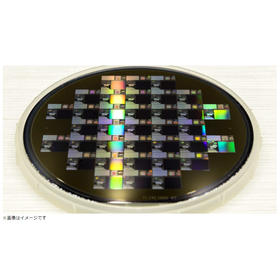
Improvement of release properties of fluorocoat for semiconductors.

For those struggling with release in semiconductor manufacturing. Supported by 70 years of experience and evaluation equipment.

In the semiconductor industry, the release properties of parts from molds and jigs are crucial for improving product quality and production efficiency. Particularly in fine processing and high-precision manufacturing processes, poor release can lead to product damage and reduced yield. FluoroCoat, with 70 years of experience and comprehensive evaluation facilities, supports aspects such as initial evaluations and post-use (after testing) evaluation comparisons (sample evaluations, actual machine evaluations), assisting in solving release property challenges. We also accommodate prototype requests starting from one piece, including processing consultations and coating selection. 【Application Scenarios】 - Molds in semiconductor manufacturing - Jigs - Other parts requiring release properties 【Benefits of Implementation】 - Improved release properties - Increased product yield - Enhanced production efficiency

  • Coating Agent
  • Surface treatment contract service
  • Fluorine resin coating

Added to bookmarks

Bookmarks list

Bookmark has been removed

Bookmarks list

You can't add any more bookmarks

By registering as a member, you can increase the number of bookmarks you can save and organize them with labels.

Free membership registration

ADLON Coating's Non-Adhesion Properties for the Food Industry

No oil needed for food to release! A video explanation of the release effect of ADLON coating!

In the food industry, the sticking and burning of ingredients is a major challenge that leads to decreased production efficiency and deterioration of product quality. This is especially important for foods that are cooked at high temperatures, such as baked goods and fried foods, where the quality of release properties is crucial. ADLON coating allows ingredients to release easily without the need for oil, contributing to reduced cooking times and improved cleanability. 【Usage Scenarios】 - Parts that come into contact with food, such as frying pans, baking sheets, and molds - Manufacturing processes for various foods, including baked goods, fried foods, and bread - When there is a need to prevent sticking and burning of ingredients 【Benefits of Implementation】 - Improved release properties of ingredients, leading to reduced cooking times - Enhanced cleanability, resulting in increased work efficiency - Improved product quality and better yield

  • ホットケーキ.jpg
  • Processing Contract
  • Fluorine resin coating

Added to bookmarks

Bookmarks list

Bookmark has been removed

Bookmarks list

You can't add any more bookmarks

By registering as a member, you can increase the number of bookmarks you can save and organize them with labels.

Free membership registration

Improved slip properties with ADLON coating for semiconductors.

Improved slip resistance with ADLON coating! Please check the video for the effects!

In the semiconductor manufacturing industry, a clean environment is essential, and the generation of fine particles due to friction between components is a significant factor that undermines product quality. Particularly in devices that require precise movements, the slip properties of components are crucial. By reducing friction, the generation of fine particles can be suppressed, contributing to improved product yield. ADLON coating addresses these challenges by enhancing slip properties, maintaining a clean environment, and supporting quality improvement in semiconductor manufacturing. 【Usage Scenarios】 - Sliding components of semiconductor manufacturing equipment - Transport mechanisms in clean rooms - Moving parts of precision machinery 【Benefits of Implementation】 - Suppression of fine particle generation - Improvement of product yield - Extension of equipment lifespan

  • Processing Contract
  • Fluorine resin coating

Added to bookmarks

Bookmarks list

Bookmark has been removed

Bookmarks list

You can't add any more bookmarks

By registering as a member, you can increase the number of bookmarks you can save and organize them with labels.

Free membership registration

Improved slip properties with ADLON(r) coating for industrial machinery.

Improved slip properties with ADLON coating! Check the effects in the video!

In the FA industry, the sliding properties of components significantly affect performance and durability. Poor sliding properties can lead to wear and unusual noises due to friction, as well as a decrease in the lifespan of the components. Additionally, wear is a major enemy in maintaining positioning accuracy. ADLON coating contributes to addressing these challenges by improving sliding properties. 【Application Scenes】 - Sliding screws - Engine components - Suspension parts - Door hinges - Seat rails 【Effects of Implementation】 - Reduction of friction resistance - Extended lifespan of components - Achievement of smooth operation - Suppression of unusual noises

  • Processing Contract
  • Fluorine resin coating

Added to bookmarks

Bookmarks list

Bookmark has been removed

Bookmarks list

You can't add any more bookmarks

By registering as a member, you can increase the number of bookmarks you can save and organize them with labels.

Free membership registration

Effects of Fluoropolymer Coating for Automobiles

Introducing the effects of fluoropolymer coating in a YouTube video!

In the automotive industry, excellent lubrication is required to reduce friction between parts and improve durability. This is particularly important for moving parts such as engines and transmissions, where it is crucial to prevent wear caused by friction and extend product lifespan. Inadequate lubrication can lead to premature deterioration of parts and a decline in performance. Our fluoropolymer coating addresses these challenges by reducing friction resistance and enhancing lubrication. Please check the video to see the effects. 【Usage Scenarios】 - Engine parts - Transmission parts - Sliding parts 【Benefits of Implementation】 - Reduction of friction resistance - Extended lifespan of parts - Reduction of maintenance costs

  • Other surface treatment equipment
  • Processing Contract
  • Fluorine resin coating

Added to bookmarks

Bookmarks list

Bookmark has been removed

Bookmarks list

You can't add any more bookmarks

By registering as a member, you can increase the number of bookmarks you can save and organize them with labels.

Free membership registration

Introducing the effects of fluoropolymer coating for kitchens in a video!

On the official YouTube channel, we introduce the effects of fluoropolymer coating in a video!

In the kitchen industry, there is a demand for reducing the burden of daily cleaning. In particular, grease and food residue can require significant time and effort to clean, which can decrease work efficiency. Fluoropolymer coatings help to suppress the adhesion of these stains and improve cleanability, contributing to hygiene management and efficiency in the kitchen. 【Usage Scenarios】 - Kitchen equipment (frying pans, pots, etc.) - Cooking surfaces - Food processing trays 【Benefits of Implementation】 - Stains are less likely to adhere and easier to remove - Reduced cleaning time - Maintenance of a hygienic environment

  • Other surface treatment equipment
  • Processing Contract
  • Fluorine resin coating

Added to bookmarks

Bookmarks list

Bookmark has been removed

Bookmarks list

You can't add any more bookmarks

By registering as a member, you can increase the number of bookmarks you can save and organize them with labels.

Free membership registration

Improvement of non-stick properties by Adron coating for pharmaceuticals.

Solving challenges in the pharmaceutical industry! Achieving non-stick properties and improving production efficiency.

In the pharmaceutical industry, adhesion and sticking during drug manufacturing are serious issues that can lead to decreased quality and reduced production efficiency. In particular, when powders or viscous substances adhere to manufacturing equipment, it can increase cleaning efforts and may necessitate halting the production line. Adron Coating addresses these challenges by providing excellent non-stick properties, contributing to improved production efficiency. 【Application Scenarios】 - Powder supply hoppers in pharmaceutical manufacturing - Inside mixers - Nozzles of filling machines - Guides of packaging machines 【Effects of Implementation】 - Reduced cleaning time due to decreased adhesion - Improved product yield - Stable operation of the production line - Reduced risk of foreign matter contamination

  • 画像サブ2-アドロン.png
  • 画像サブ3-アドロン.png
  • Coating Agent
  • Fluorine resin coating

Added to bookmarks

Bookmarks list

Bookmark has been removed

Bookmarks list

You can't add any more bookmarks

By registering as a member, you can increase the number of bookmarks you can save and organize them with labels.

Free membership registration

Improved Release Properties with Fluorocoat for the Food Industry

To those struggling with release properties in food manufacturing, we support your problem-solving.

In the food industry, excellent release properties are required to prevent food ingredients from sticking or burning, thereby maintaining product quality. This is particularly important for foods that are cooked at high temperatures, such as baked goods and fried items, where the quality of release properties significantly affects product yield and work efficiency. FluoroCoat leverages the characteristics of fluoropolymer to prevent ingredient adhesion and achieve smooth release. This contributes to improved food quality, enhanced cleanability, and increased work efficiency. 【Application Scenarios】 - Baking molds in food manufacturing - Fryers for fried foods - Films for food packaging 【Benefits of Implementation】 - Prevention of ingredient burning and adhesion - Improvement in product yield - Reduction in cleaning time - Increase in work efficiency

  • Coating Agent
  • Processing Contract
  • Fluorine resin coating

Added to bookmarks

Bookmarks list

Bookmark has been removed

Bookmarks list

You can't add any more bookmarks

By registering as a member, you can increase the number of bookmarks you can save and organize them with labels.

Free membership registration

Long-lasting components with Nano Coat-S for automobiles

Over 100 times wear resistance! Achieving longer lifespan for automotive parts.

In the automotive industry, the durability and reliability of parts are crucial. Particularly in sliding parts and areas where friction occurs, performance degradation due to wear is a challenge. An increase in the frequency of part replacements can lead to higher costs and a potential decrease in customer satisfaction. Nano Coat-S boasts more than 100 times the wear resistance of hard chrome plating, contributing to the longevity of parts. 【Application Scenarios】 - Engine parts - Transmission parts - Suspension parts 【Effects of Implementation】 - Reduction in part replacement frequency - Reduction in maintenance costs - Improvement in product reliability

  • Coating Agent
  • Fluorine resin coating

Added to bookmarks

Bookmarks list

Bookmark has been removed

Bookmarks list

You can't add any more bookmarks

By registering as a member, you can increase the number of bookmarks you can save and organize them with labels.

Free membership registration

Extension of component lifespan with Nano Coat-S for food processing applications.

Over 100 times wear resistance! Contributes to hygiene management and cost reduction in food processing!

In the food processing industry, it is important to maintain a hygienic environment and prevent foreign matter contamination. Particularly in parts that come into direct contact with food or in areas that require frequent cleaning, issues such as foreign matter generation due to wear and decreased cleanability arise. Nano Coat-S achieves a longer lifespan for components due to its excellent wear resistance, reducing the risk of foreign matter contamination. Additionally, its hard surface makes it resistant to wear, facilitating easier cleaning and contributing to more efficient hygiene management. 【Application Scenarios】 - Sliding parts of food filling machines - Conveying guides - Parts in the cleaning process 【Effects of Implementation】 - Reduction in the frequency of parts replacement - Decrease in the risk of foreign matter contamination - Strengthening of hygiene management through improved cleanability

  • Coating Agent
  • Fluorine resin coating

Added to bookmarks

Bookmarks list

Bookmark has been removed

Bookmarks list

You can't add any more bookmarks

By registering as a member, you can increase the number of bookmarks you can save and organize them with labels.

Free membership registration

ADLON Coating for Semiconductors | High Purity Environmentally Friendly

High-purity, environmentally friendly coating that maximizes the performance of fluoropolymer resins.

In the semiconductor industry, controlling contamination during the manufacturing process is extremely important. Surface treatment of materials is a key factor in maintaining a high-purity environment and improving product quality and yield. Adron coating leverages the excellent properties of fluororesin to provide a coating that is ideal for use in high-purity environments. Its non-stick properties prevent foreign substances from adhering and help maintain cleanliness. 【Application Scenarios】 - Semiconductor manufacturing equipment - High-purity reagent containers 【Benefits of Implementation】 - Reduced risk of contamination - Improved product quality - Enhanced yield

  • Processing Contract
  • Fluorine resin coating

Added to bookmarks

Bookmarks list

Bookmark has been removed

Bookmarks list

You can't add any more bookmarks

By registering as a member, you can increase the number of bookmarks you can save and organize them with labels.

Free membership registration

Adron coat for covered wire winding pulleys for robots

90% reduction in rubber re-winding costs! Supports the flexible movement of robots.

In the robotics industry, the durability and reliability of moving parts are crucial. In particular, pulleys that support the flexible movement of cables have a high replacement frequency due to wear and damage, which can lead to decreased operational rates. Pulleys with coated wires treated with Adron Coat improve wear resistance and contribute to the longevity of robots. 【Usage Scenarios】 - Cable guide for robotic arms - Cable protection for moving parts - Measures against cable wear 【Benefits of Implementation】 - Cost reduction (rubber lining replacement costs) - Improved operational rates of robots - Prevention of scratches on products

  • Coating Agent
  • Fluorine resin coating

Added to bookmarks

Bookmarks list

Bookmark has been removed

Bookmarks list

You can't add any more bookmarks

By registering as a member, you can increase the number of bookmarks you can save and organize them with labels.

Free membership registration

Fluororesin coating to solve the issue of impurities leaching from primer.

Fluororesin coating technology to improve cleanliness by re-evaluating the multi-layer structure.

In fluoropolymer coatings, the primer layer contributes to improved adhesion, but depending on the application, it can also become a risk factor for impurity leaching and foreign matter contamination. Particularly in fields that require clean environments or high purity, there is a need to reconsider this structure itself. Our HYPERCOAT adopts a structure that does not use a primer and addresses these challenges by directly forming a fluoropolymer coating through vacuum technology. It features practical adhesion while reducing concerns associated with conventional multilayer structures. This coating technology offers a new option for applications that require a balance between cleanliness and functionality. We also provide optimal specification proposals and prototype evaluations tailored to application conditions and desired performance, so please contact us for technical consultations and prototype verifications.

  • Surface treatment contract service
  • Fluorine resin coating

Added to bookmarks

Bookmarks list

Bookmark has been removed

Bookmarks list

You can't add any more bookmarks

By registering as a member, you can increase the number of bookmarks you can save and organize them with labels.

Free membership registration

A clear explanation of the differences between PTFE and PFA.

Differences in liquidity create variations in coating quality and reliability.

When considering fluoropolymer coatings, the differences between PTFE and PFA are important selection points. Both are resins that excel in non-stick properties, water repellency, oil repellency, slip properties, chemical resistance, and heat resistance, but PTFE tends to be difficult to flow when melted, making it prone to pinholes and voids in the coating. On the other hand, PFA has a low melt viscosity and excellent flowability, allowing it to fill gaps between particles and form a dense and smooth coating. This difference gives PFA an advantage in applications where corrosion resistance and insulation reliability are required. Additionally, it is easier to achieve thicker coatings, making it suitable for ensuring long-term durability in anti-corrosion applications. Selecting the optimal material according to the application and desired performance is crucial. We can also assist with inquiries regarding material selection and comparative evaluations, so please feel free to contact us for technical consultations and prototype testing.

  • DSC_5718.jpg
  • DSC_5698.jpg
  • Surface treatment contract service
  • Fluorine resin coating

Added to bookmarks

Bookmarks list

Bookmark has been removed

Bookmarks list

You can't add any more bookmarks

By registering as a member, you can increase the number of bookmarks you can save and organize them with labels.

Free membership registration