iPROS Manufacturing
  • Search for products by classification category

    • Electronic Components and Modules
      Electronic Components and Modules
      60430items
    • Machinery Parts
      Machinery Parts
      75312items
    • Manufacturing and processing machinery
      Manufacturing and processing machinery
      101285items
    • Scientific and Physics Equipment
      Scientific and Physics Equipment
      35866items
    • Materials
      Materials
      37370items
    • Measurement and Analysis
      Measurement and Analysis
      55141items
    • Image Processing
      Image Processing
      15243items
    • Control and Electrical Equipment
      Control and Electrical Equipment
      53790items
    • Tools, consumables, and supplies
      Tools, consumables, and supplies
      64970items
    • Design and production support
      Design and production support
      12520items
    • IT/Network
      IT/Network
      44508items
    • Office
      Office
      14008items
    • Business support services
      Business support services
      24917items
    • Seminars and Skill Development
      Seminars and Skill Development
      6465items
    • Pharmaceutical and food related
      Pharmaceutical and food related
      32316items
    • others
      74254items
  • Search for companies by industry

    • Manufacturing and processing contract
      7333
    • others
      4993
    • Industrial Machinery
      4416
    • Machine elements and parts
      3297
    • Other manufacturing
      2882
    • IT/Telecommunications
      2551
    • Trading company/Wholesale
      2512
    • Industrial Electrical Equipment
      2305
    • Building materials, supplies and fixtures
      1816
    • software
      1642
    • Electronic Components and Semiconductors
      1563
    • Resin/Plastic
      1496
    • Service Industry
      1455
    • Testing, Analysis and Measurement
      1125
    • Ferrous/Non-ferrous metals
      983
    • environment
      698
    • Chemical
      631
    • Automobiles and Transportation Equipment
      566
    • Printing Industry
      510
    • Information and Communications
      459
    • Consumer Electronics
      412
    • Energy
      327
    • Rubber products
      314
    • Food Machinery
      307
    • Optical Instruments
      277
    • robot
      274
    • fiber
      250
    • Paper and pulp
      227
    • Pharmaceuticals and Biotechnology
      168
    • Electricity, Gas and Water Industry
      166
    • Warehousing and transport related industries
      147
    • Glass and clay products
      140
    • Food and Beverage
      129
    • CAD/CAM
      123
    • retail
      108
    • Medical Devices
      103
    • Educational and Research Institutions
      102
    • Ceramics
      98
    • wood
      88
    • Transportation
      82
    • Petroleum and coal products
      63
    • Medical and Welfare
      62
    • Shipbuilding and heavy machinery
      51
    • Aviation & Aerospace
      47
    • Fisheries, Agriculture and Forestry
      41
    • equipment
      33
    • Public interest/special/independent administrative agency
      31
    • Research and development equipment and devices
      28
    • Materials
      26
    • self-employed
      24
    • Government
      23
    • Mining
      17
    • Finance, securities and insurance
      13
    • cosmetics
      13
    • Individual
      10
    • Restaurants and accommodations
      9
    • Police, Fire Department, Self-Defense Forces
      7
    • Laboratory Equipment and Consumables
      4
    • Raw materials for reagents and chemicals
      3
    • Contracted research
      3
  • Special Features
  • Ranking

    • Overall Products Ranking
    • Overall Company Ranking
Search for Products
  • Search for products by classification category

  • Electronic Components and Modules
  • Machinery Parts
  • Manufacturing and processing machinery
  • Scientific and Physics Equipment
  • Materials
  • Measurement and Analysis
  • Image Processing
  • Control and Electrical Equipment
  • Tools, consumables, and supplies
  • Design and production support
  • IT/Network
  • Office
  • Business support services
  • Seminars and Skill Development
  • Pharmaceutical and food related
  • others
Search for Companies
  • Search for companies by industry

  • Manufacturing and processing contract
  • others
  • Industrial Machinery
  • Machine elements and parts
  • Other manufacturing
  • IT/Telecommunications
  • Trading company/Wholesale
  • Industrial Electrical Equipment
  • Building materials, supplies and fixtures
  • software
  • Electronic Components and Semiconductors
  • Resin/Plastic
  • Service Industry
  • Testing, Analysis and Measurement
  • Ferrous/Non-ferrous metals
  • environment
  • Chemical
  • Automobiles and Transportation Equipment
  • Printing Industry
  • Information and Communications
  • Consumer Electronics
  • Energy
  • Rubber products
  • Food Machinery
  • Optical Instruments
  • robot
  • fiber
  • Paper and pulp
  • Pharmaceuticals and Biotechnology
  • Electricity, Gas and Water Industry
  • Warehousing and transport related industries
  • Glass and clay products
  • Food and Beverage
  • CAD/CAM
  • retail
  • Medical Devices
  • Educational and Research Institutions
  • Ceramics
  • wood
  • Transportation
  • Petroleum and coal products
  • Medical and Welfare
  • Shipbuilding and heavy machinery
  • Aviation & Aerospace
  • Fisheries, Agriculture and Forestry
  • equipment
  • Public interest/special/independent administrative agency
  • Research and development equipment and devices
  • Materials
  • self-employed
  • Government
  • Mining
  • Finance, securities and insurance
  • cosmetics
  • Individual
  • Restaurants and accommodations
  • Police, Fire Department, Self-Defense Forces
  • Laboratory Equipment and Consumables
  • Raw materials for reagents and chemicals
  • Contracted research
Special Features
Ranking
  • Overall Products Ranking
  • Overall Company Ranking
  • privacy policy
  • terms of service
  • About Us
  • Careers
  • Advertising
  1. Home
  2. IT/Telecommunications
  3. 日本コンピュータ開発 
  4. Product/Service List
IT/Telecommunications
  • Added to bookmarks

    Bookmarks list

    Bookmark has been removed

    Bookmarks list

    You can't add any more bookmarks

    By registering as a member, you can increase the number of bookmarks you can save and organize them with labels.

    Free membership registration

日本コンピュータ開発 

EstablishmentSeptember 27, 1984
capital5000Ten thousand
number of employees105
addressKanagawa/Ebina-shi/3rd Floor, Nikko Building, 2-4-8 Chuo
phone046-234-7066
  • Special site
  • Official site
last updated:Sep 24, 2025
日本コンピュータ開発 logo
  • Contact this company

    Inquiry Form
  • Company information
  • Products/Services(97)
  • catalog(19)
  • news(17)

日本コンピュータ開発  Product Lineup

  • category

1~28 item / All 28 items

Displayed results

Filter by category

Production Scheduler "Freely" Production Scheduler "Freely"
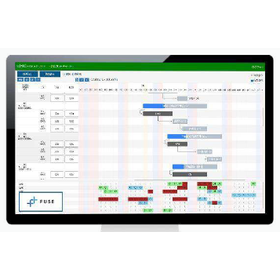
Semi-custom production management system 'FUSE' for small and medium-sized manufacturing industries. Semi-custom production management system 'FUSE' for small and medium-sized manufacturing industries.
RFID Utilization Platform 'FABRIGATE' RFID Utilization Platform 'FABRIGATE'
お役立ち情報 お役立ち情報
導入事例 導入事例
Semi-custom

Semi-custom production management system 'FUSE' for small and medium-sized manufacturing industries.

"Isn't the introduction of an all-in-one system time-consuming and costly?" You might think so. However, 'FUSE', which can be implemented with a semi-custom approach, can be introduced without incurring significant costs or time, much to the delight of our customers. Here, we would like to introduce 'FUSE', which our company handles.

[FUSE Implementation Case] Foundry Industry

Delivery delays reduced to 1/3! Achieve input of results using tablets and real-time progress tracking.

We would like to introduce a case study of the production management system "FUSE," which combines only the necessary features from 20 functionalities and has been implemented in the casting industry. There were challenges such as a lack of process management, resulting in habitual delays in delivery due to the inability to see work progress, and the specialized casting techniques becoming tacit knowledge, making technical succession difficult. After implementation, the use of a large touch panel for progress sharing reduced delivery delays by one-third, and it became possible to register achievements from the site, allowing for real-time progress confirmation. [Case Overview (Partial)] ■Challenges - Lack of process management, leading to habitual delivery delays - Specialized casting techniques becoming tacit knowledge, hindering technical succession ■Results - Delivery delays reduced by one-third - Achievement input realized using tablets with dust covers *For more details, please refer to the PDF materials or feel free to contact us.

Added to bookmarks

Bookmarks list

Bookmark has been removed

Bookmarks list

You can't add any more bookmarks

By registering as a member, you can increase the number of bookmarks you can save and organize them with labels.

Free membership registration

[FUSE Implementation Case] Metal Bending Processing Industry

Link to the work instruction! Introducing examples of managing and registering technical know-how such as work videos.

We would like to introduce a case study of implementing "FUSE," a system that allows you to select functions and build a system tailored to your company's operations, in the metal bending processing industry. There were challenges such as the technical know-how of skilled workers becoming tacit knowledge, making it difficult to pass on skills effectively. After implementation, it became possible to register and manage technical know-how, such as work videos, linked to work instructions, allowing anyone to easily reference the necessary information. 【Case Overview】 ■Challenges - The technical know-how of skilled workers has become tacit knowledge, making skill transfer difficult. - Sharing and utilizing technical know-how has not been successful. ■Results - Technical know-how, such as work videos, can be registered and managed, making it easy to reference necessary information. - By searching based on material and shape, technical know-how can be utilized. *For more details, please refer to the PDF document or feel free to contact us.

Added to bookmarks

Bookmarks list

Bookmark has been removed

Bookmarks list

You can't add any more bookmarks

By registering as a member, you can increase the number of bookmarks you can save and organize them with labels.

Free membership registration

Four Benefits and Key Points of Going Paperless with Drawings in the Manufacturing Industry

Say goodbye to piles of drawings! We will also introduce the implementation method and its precautions.

Are those in the manufacturing industry struggling with managing drawings and documents at the workplace? If you are storing them printed on shelves, it may take a lot of time to find the drawings you need. In recent years, managing drawings and documents digitally instead of on paper, known as "paperless," has become mainstream. Why is paperless management necessary in the manufacturing industry? In this article, we will introduce the advantages and disadvantages of managing drawings in a paperless manner. *For more detailed information, please refer to the related links. For further details, please check the PDF materials or feel free to contact us.*

Added to bookmarks

Bookmarks list

Bookmark has been removed

Bookmarks list

You can't add any more bookmarks

By registering as a member, you can increase the number of bookmarks you can save and organize them with labels.

Free membership registration

Things to Know About 'ISO 22400' - Towards the Implementation of IoT in Manufacturing

What is the standardization indicator for production management ISO 22400? We will also introduce the benefits of its implementation.

As IoT and DX in manufacturing progress, many people may have heard the term "ISO 22400" in articles and books but may not fully understand it. In this article, we will explain what ISO 22400 is, provide an overview, and introduce the benefits of its implementation. *You can view the detailed content of the article through the related links. For more information, please refer to the PDF materials or feel free to contact us.*

Added to bookmarks

Bookmarks list

Bookmark has been removed

Bookmarks list

You can't add any more bookmarks

By registering as a member, you can increase the number of bookmarks you can save and organize them with labels.

Free membership registration

What is the production management method "Kanban"? Introduction to its advantages and disadvantages.

What is the mechanism to prevent excess inventory? Introducing the advantages and disadvantages of implementation.

In the manufacturing industry, proper inventory management is very important. When stockouts occur, sales opportunities are lost, and conversely, if too much is produced, it leads to excess inventory. Therefore, it is necessary to manufacture products in a well-balanced manner. The automobile manufacturer "Toyota Motor Corporation" has grown into a global manufacturer by reducing unnecessary inventory and wasteful work through its invented production method known as the "Kanban system." In this article, we will provide a brief explanation of the "Kanban system," along with its advantages and disadvantages. *For detailed content of the article, please refer to the related links. For more information, please check the PDF materials or feel free to contact us.*

Added to bookmarks

Bookmarks list

Bookmark has been removed

Bookmarks list

You can't add any more bookmarks

By registering as a member, you can increase the number of bookmarks you can save and organize them with labels.

Free membership registration

Current status and challenges of technology transfer in the manufacturing industry, along with examples utilizing IT.

We will provide a detailed introduction to the current state and issues of technology transfer, as well as examples of solutions.

One of the major challenges in the manufacturing industry, where the shortage of skilled labor is becoming serious, is the "transfer of skills from experienced workers to younger employees." While many in the manufacturing sector recognize the importance of skill transfer, they may feel uncertain about "how to proceed" or "how other companies are advancing skill transfer." This article introduces the current state of skill transfer in the manufacturing industry, the issues surrounding it, and examples of solutions to these problems. Please use this as a reference for analyzing your company's current skill transfer situation, building corporate strategies, and implementing IT systems. *For more detailed information, please refer to the related links. For further inquiries, feel free to contact us or check the PDF materials.*

Added to bookmarks

Bookmarks list

Bookmark has been removed

Bookmarks list

You can't add any more bookmarks

By registering as a member, you can increase the number of bookmarks you can save and organize them with labels.

Free membership registration

Four representative features of drawing management software.

Introducing the advantages and disadvantages of centralized management through integration with CAD and the shift to a paperless environment!

In the manufacturing industry, it is common to print product drawings and manage them on "paper." By introducing drawing management software, you can digitize paper drawings and manage them in a paperless manner. This article introduces examples of the functions of drawing management software, the benefits of implementing such software in the manufacturing industry, and points to consider when introducing drawing management software. *For detailed content of the article, you can view it through the related links. For more information, please refer to the PDF materials or feel free to contact us.*

Added to bookmarks

Bookmarks list

Bookmark has been removed

Bookmarks list

You can't add any more bookmarks

By registering as a member, you can increase the number of bookmarks you can save and organize them with labels.

Free membership registration

The purpose and benefits of implementing production management systems in the manufacturing industry.

Introducing the purpose of implementation, what can be done with the production management system, and its benefits!

As the introduction of IoT is becoming active, especially in the manufacturing industry, many people may be considering the implementation of production management systems. On the other hand, there are likely many companies that are hesitant to take the plunge into implementation due to questions such as, "What is the purpose of introducing a production management system?" and "What will change if we implement a production management system?" Therefore, in this article, we will explain the objectives of implementing production management systems in the manufacturing industry, what can be achieved with these systems, and their benefits. *For detailed content of the article, you can view it through the related links. For more information, please refer to the PDF materials or feel free to contact us.*

Added to bookmarks

Bookmarks list

Bookmark has been removed

Bookmarks list

You can't add any more bookmarks

By registering as a member, you can increase the number of bookmarks you can save and organize them with labels.

Free membership registration

Labor productivity is 1.7 times higher! Current status and challenges of system implementation in small and medium-sized manufacturing industries.

For understanding your company's situation and reviewing system implementation! We will also introduce IT implementation case studies from small and medium-sized manufacturing businesses.

In recent years, the review of working hours due to work style reforms and the decrease in the labor population caused by low birth rates and an aging society have made improving corporate productivity a significant challenge for companies. In the manufacturing industry, there is an increasing number of companies aiming to enhance productivity by introducing IT and systems on-site. This article will explain the current state of system implementation in small and medium-sized manufacturing businesses and the challenges they face. We hope you gain insights into the implementation status and challenges faced by other companies, which can be useful for understanding your own situation and reconsidering system implementation. *For detailed content of the article, please refer to the related links. For more information, please check the PDF materials or feel free to contact us.*

Added to bookmarks

Bookmarks list

Bookmark has been removed

Bookmarks list

You can't add any more bookmarks

By registering as a member, you can increase the number of bookmarks you can save and organize them with labels.

Free membership registration

Differentiate from competitors! We will explain the benefits of implementing DX (Digital Transformation).

What is DX in the manufacturing industry? An explanation of how to approach, advance, and utilize it.

Are you familiar with the term "DX (Digital Transformation)"? In recent years, it has become increasingly common to see it in news articles, books, and internet articles related to the manufacturing industry. The definition is broad, but it originally refers to the idea that "the penetration of IT changes people's lives for the better in various aspects." Once it began to be applied as a business term, it has been used to mean "transforming business into something better by introducing and utilizing IT." In this article, we will explain how to approach, advance, and utilize DX in the manufacturing industry. *For detailed content of the article, you can view it through the related links. For more information, please refer to the PDF materials or feel free to contact us.*

Added to bookmarks

Bookmarks list

Bookmark has been removed

Bookmarks list

You can't add any more bookmarks

By registering as a member, you can increase the number of bookmarks you can save and organize them with labels.

Free membership registration

What is 3S? The effects and objectives of activities to create a comfortable, safe, and efficient workplace.

By being aware, it is possible to reduce the risk of accidents! Introducing the meaning and purpose of 3S.

Is your production site paying attention to safety? Various machines are used in manufacturing, and various accidents can occur. Even in manual work that does not involve machines, there is still a possibility of injury from things falling or tripping. In some cases, serious accidents such as cuts or fatalities can occur. While there are dangers in manufacturing environments, it is possible to reduce the risk of accidents by being mindful of the 3S. What does the "3S" stand for? This article will introduce the meaning and purpose of 3S. *For more detailed information, please refer to the related links. For further details, please check the PDF materials or feel free to contact us.*

Added to bookmarks

Bookmarks list

Bookmark has been removed

Bookmarks list

You can't add any more bookmarks

By registering as a member, you can increase the number of bookmarks you can save and organize them with labels.

Free membership registration

What are the "7 Wastes"? The elements of cost improvement in the manufacturing field "Kazafutetsudo"

Measures to address the recent issue of labor shortages! Introducing "Kazafutetsudo."

"Eliminating waste" is very important in the operation of a company. It not only leads to cost reduction but also allows for a review of job responsibilities, resulting in more efficient business operations. The same applies in manufacturing settings, where improving work efficiency can also address the recent issue of labor shortages. Toyota Motor Corporation, known for its automobiles, has its own production method aimed at eliminating such waste. What kind of production methods are behind Toyota's rise to a major corporation? I will introduce "Kanzafutetsudou." *For detailed content of the article, please refer to the related links. For more information, please check the PDF materials or feel free to contact us.*

Added to bookmarks

Bookmarks list

Bookmark has been removed

Bookmarks list

You can't add any more bookmarks

By registering as a member, you can increase the number of bookmarks you can save and organize them with labels.

Free membership registration

What is IoB? IT technology that brings manufacturing sites closer to a more comfortable working environment.

IT technology that can be expected to achieve efficient work! I will explain about "IoB".

Are you familiar with the term "IoB"? You may have heard of a similar term, IoT (Internet of Things). However, many of you might not be familiar with the term "IoB." "IoB" is an IT technology that was selected as one of the top nine strategic technology trends of 2021 by Gartner, a company that conducts research in the IT field. It is still an emerging technology with both advantages and disadvantages, but I will explain the technology "IoB," which is attracting attention. *For more detailed information, you can view the related links. For more details, please refer to the PDF materials or feel free to contact us.*

Added to bookmarks

Bookmarks list

Bookmark has been removed

Bookmarks list

You can't add any more bookmarks

By registering as a member, you can increase the number of bookmarks you can save and organize them with labels.

Free membership registration

What are the elements that support quality control in the manufacturing industry: "4M," "5M + 1E," and "6M"?

Elements to consider in quality management! Explanation of the meanings of the added "M" and "E" to the 4Ms.

Quality control of products and services is undoubtedly one of the most important tasks in companies, not just in the manufacturing industry. The term "4M" is likely familiar to those involved in manufacturing as it represents a collection of elements that contribute to quality management. However, in recent years, there has been an increasing emphasis on concepts such as "5M+1E" and "6M," which build upon the original 4M framework. Let’s understand the meanings of the additional "M" and "E" and incorporate them into our own quality management practices as elements to consider in the quality control of products and services. *For more detailed information, please refer to the related links. For further inquiries, feel free to contact us or check the PDF materials.*

Added to bookmarks

Bookmarks list

Bookmark has been removed

Bookmarks list

You can't add any more bookmarks

By registering as a member, you can increase the number of bookmarks you can save and organize them with labels.

Free membership registration

Three reasons why careless mistakes don't go away and the first step to eliminate them.

What is a "poka-mist"? An explanation of the factors that prevent it from disappearing and the first steps to take.

"Pokamisu," which refers to mistakes that occur unintentionally, such as careless errors or human errors, originates from the term "poka," which originally meant making an unexpected bad move in games like Go or Shogi. In the manufacturing industry, it refers to producing defective products, complaints, or losses. *For more details, you can view the related links. For further information, please refer to the PDF document or feel free to contact us.*

Added to bookmarks

Bookmarks list

Bookmark has been removed

Bookmarks list

You can't add any more bookmarks

By registering as a member, you can increase the number of bookmarks you can save and organize them with labels.

Free membership registration

What are the causes of careless mistakes and how to address them? Three steps to prevent careless mistakes.

A detailed explanation of the causes of careless mistakes and specific countermeasures!

In the manufacturing industry, there is a term commonly used called "poka-mistake." This article explains the causes of poka-mistakes and their countermeasures. Poka-mistakes occur when unexpected errors are made due to human error (human mistakes), such as careless mistakes. These unexpected poka-mistakes can be difficult to recognize and address due to their sudden nature and frequency. *For more detailed information, please refer to the related links. For further details, please check the PDF materials or feel free to contact us.*

Added to bookmarks

Bookmarks list

Bookmark has been removed

Bookmarks list

You can't add any more bookmarks

By registering as a member, you can increase the number of bookmarks you can save and organize them with labels.

Free membership registration

What is the Kanban method? Explanation of the disadvantages of the Kanban method.

An efficient production method for advancing the manufacturing process! A detailed explanation of the disadvantages.

The Kanban method is a production management technique first invented by Toyota Motor Corporation in Japan, and it is an important part of the Just-In-Time system. Specifically, in manufacturing, it involves communicating the amount of materials used up in a later process back to the earlier process to ensure production, thus preventing excess inventory from unnecessary production. Here, it is like an order form that specifies what product to produce, by when, and in what quantity when placing an order for a certain process, which is why this method is called the Kanban method. *For more detailed information, please refer to the related links. For further details, please check the PDF materials or feel free to contact us.*

Added to bookmarks

Bookmarks list

Bookmark has been removed

Bookmarks list

You can't add any more bookmarks

By registering as a member, you can increase the number of bookmarks you can save and organize them with labels.

Free membership registration

What is the Kanban method? Explanation of the benefits of the Kanban method.

Efficient inventory management, stabilization, reduction of waste, etc.! A detailed explanation of the benefits.

The "Kanban method" is a production management method originally invented by Toyota Motor Corporation in Japan. Originally, Toyota adopted the "Just-in-Time" production method, and when actually utilizing this method, they specified information on a directive called a "kanban" to order the necessary parts from the subsequent process to the previous process, in the required quantity and at the required timing. *For more detailed information, you can view the related links. For further details, please refer to the PDF materials or feel free to contact us.*

Added to bookmarks

Bookmarks list

Bookmark has been removed

Bookmarks list

You can't add any more bookmarks

By registering as a member, you can increase the number of bookmarks you can save and organize them with labels.

Free membership registration

Just In Time for efficiently advancing the production process in the manufacturing industry.

What is Just-in-Time? An explanation of the three principles, benefits, and effects.

JIT, or Just-In-Time, is one of the production methods in manufacturing. This production method was introduced by Kiichiro Toyoda of Toyota Motor Corporation and is based on the concept of supplying what is needed, when it is needed, and in the necessary amount. As a result, it has become a management method for production processes that prevents waste, and it is now recognized not only in Japan but also around the world as a groundbreaking idea. By meticulously managing products and time, and using a method called "pull production," parts required at a certain stage are delivered from the previous stage in the appropriate quantity at the right timing, which helps reduce inventory and aims to minimize production costs. *For more detailed information, please refer to the related links. For further details, please check the PDF materials or feel free to contact us.*

Added to bookmarks

Bookmarks list

Bookmark has been removed

Bookmarks list

You can't add any more bookmarks

By registering as a member, you can increase the number of bookmarks you can save and organize them with labels.

Free membership registration

What are the methods to reduce the defect rate in manufacturing?

Common challenges in the manufacturing industry! An explanation of the six causes of defective products and their countermeasures.

"Reducing the defect rate from the current situation" is a common challenge for those in the manufacturing industry, but many may be struggling with the fact that the defect rate is not decreasing as expected. This article introduces the causes of defects and methods to reduce the defect rate. *For detailed content of the article, please refer to the related link. For more information, please check the PDF document or feel free to contact us.*

Added to bookmarks

Bookmarks list

Bookmark has been removed

Bookmarks list

You can't add any more bookmarks

By registering as a member, you can increase the number of bookmarks you can save and organize them with labels.

Free membership registration

Three Ways Small and Medium-sized Manufacturing Businesses Can Create Their Own Production Management Systems

How to create your own production management system! Introducing the advantages and disadvantages.

A production management system is a system that makes production management tasks easy to understand and efficient. By visualizing the business content, it allows for instant grasp of inventory, processes, and more. However, when trying to implement it, there is the issue of cost. It is said that outsourcing can require hundreds of thousands to millions of yen for implementation, leading some companies to abandon the idea. Despite this, it is actually possible to create a production management system on your own. *For more detailed information, please refer to the related links. Feel free to contact us for more details.*

Added to bookmarks

Bookmarks list

Bookmark has been removed

Bookmarks list

You can't add any more bookmarks

By registering as a member, you can increase the number of bookmarks you can save and organize them with labels.

Free membership registration

What is a production management system?

An explanation of the main functions of IT systems necessary for the manufacturing industry and the benefits of their implementation!

In manufacturing, management is very important. It requires management in various areas, not only information management such as inventory and customers, but also management of work processes, quality, and risk. Additionally, there are detailed tasks such as cost calculation and material ordering, so it is by no means just a matter of "simply making and selling." A production management system is designed to automate these various management tasks. By summarizing it in an easy-to-understand and user-friendly manner, it can lead to increased efficiency and cost reduction in operations. What functions are included in a production management system? We will introduce the benefits of implementation and points to consider. *For detailed content of the article, please refer to the related links. For more information, feel free to contact us.*

Added to bookmarks

Bookmarks list

Bookmark has been removed

Bookmarks list

You can't add any more bookmarks

By registering as a member, you can increase the number of bookmarks you can save and organize them with labels.

Free membership registration

[Manufacturing Industry DX] How to Choose a Production Management System Without Failure and the Benefits of Implementation

Free checklist summarizing the key points for selecting the optimal production management system for your company! Implementing a production management system is key to promoting DX in the manufacturing industry.

In 2024, the performance of factories that have achieved digital transformation (DX) is on the rise. To promote DX in the manufacturing industry, the introduction of a production management system is key. To avoid failures in implementing a production management system, it is important to: - Identify current problems and challenges - Clarify the priorities of the issues to be resolved - Determine whether the system is suitable for your company's industry, size, and production style Organizing the purpose of the implementation and your company's needs is crucial in selecting the right system. Production management systems are often expensive, and choosing one solely based on its multifunctionality can lead to issues such as only being able to use a portion of its features, not achieving cost-effectiveness, increasing workload by aligning business processes with the system's standard specifications, or the staff being unable to utilize it effectively. Therefore, we have prepared a guide titled "37 Checkpoints for Choosing a Production Management System," which summarizes the key points for selecting the most suitable production management system for your company. By simply checking off items on the checklist, you can organize the necessary features. We encourage you to make use of it. Additionally, we also offer a semi-customizable production management system called FUSE, which can be tailored to fit your business and challenges, so please take a look.

Added to bookmarks

Bookmarks list

Bookmark has been removed

Bookmarks list

You can't add any more bookmarks

By registering as a member, you can increase the number of bookmarks you can save and organize them with labels.

Free membership registration

37 Checkpoints to Avoid Failing in Choosing a Production Management System

Free checklist summarizing key points for selecting the optimal production management system for your company!

In 2024, factories that have achieved digital transformation (DX) are seeing an increase in performance. Implementing a production management system is key to promoting DX in the manufacturing industry. However, even when a production management system is implemented, we often hear about failure cases such as: - Only a few functions are being utilized, resulting in no cost-effectiveness. - Aligning business processes with the system has increased unnecessary man-hours. - On-site employees are unable to effectively use the system. Since production management systems are often expensive, failing to achieve the intended benefits can lead to losses, and some companies may hesitate to proceed with implementation. Therefore, we have prepared "37 Checkpoints to Avoid Failing in Choosing a Production Management System" for companies considering the implementation of such systems. Please make use of this guide during your implementation process. If you have any questions or concerns, feel free to contact us for assistance.

Added to bookmarks

Bookmarks list

Bookmark has been removed

Bookmarks list

You can't add any more bookmarks

By registering as a member, you can increase the number of bookmarks you can save and organize them with labels.

Free membership registration

Seven Methods and Three Elements of Quality Control in Manufacturing

A comprehensive explanation of the 7 major methods and 3 elements of quality management. A practical guide for optimizing QCD on-site using the 7 QC tools, PDCA, and 5S!

This document is a helpful resource for quality control (QC) in the manufacturing industry. It breaks down quality management into three elements: "process management," "quality verification," and "quality improvement," explaining the specific initiatives and importance of each. Furthermore, it introduces the essential "7 QC tools" for quality improvement, as well as the "new 7 QC tools" for handling language data, along with seven major methods such as the PDCA cycle, 5S activities, 4M/5M management, IE, and TQC/TQM. It also explains how to select and combine methods according to the nature and objectives of the challenges, as well as organizational points for achieving continuous quality improvement. Quality management is a management foundation directly linked to a company's credibility and survival, contributing to cost reduction and adherence to delivery deadlines (optimization of QCD). In the latter part of the document, it presents case studies of the production management system FUSE for small and medium-sized manufacturers, demonstrating how it addresses on-site challenges such as centralized data management, elimination of dependency on individuals, and technology transfer, achieving a 100% continuous usage rate. We encourage on-site leaders and personnel to utilize this resource to realize high-quality manufacturing and sustainable corporate growth.

Added to bookmarks

Bookmarks list

Bookmark has been removed

Bookmarks list

You can't add any more bookmarks

By registering as a member, you can increase the number of bookmarks you can save and organize them with labels.

Free membership registration

Presentation of Basic Knowledge Materials: What is DX in Manufacturing that 'the Field Can Agree With'?

The reason DX is "not becoming established" is that the field feels that "the workload has increased." This document specifically introduces the first step for the field to implement DX effectively!

DX will not progress unless the field is convinced. No matter how advanced the system is, there may be cases where consensus from the field cannot be obtained due to reasons such as: - It has nothing to do with our field - It increases our workload - The disadvantages outweigh the advantages This document specifically introduces the first step of introducing DX that the field can take on its own. Please use this document as a reference to acquire the know-how for promoting DX that will convince the field! The key is to execute "steadily from achievable steps" rather than immediately modifying all systems. [Recommended for those who] - Feel limited by management relying on paper and Excel - Are struggling to implement DX because it is not accepted in the field - Are anxious about whether DX can be successfully implemented when considering its introduction [Contents (excerpt)] ■ Reasons why DX does not take root in the field ■ Three conditions for DX that the field can agree on ■ Common failures and points to avoid *For more details, please feel free to download the PDF from "Download Catalog."

Added to bookmarks

Bookmarks list

Bookmark has been removed

Bookmarks list

You can't add any more bookmarks

By registering as a member, you can increase the number of bookmarks you can save and organize them with labels.

Free membership registration

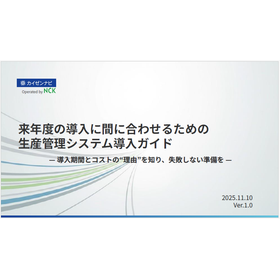
Production management system implementation guide to meet the introduction in the next fiscal year.

If you want to introduce a production management system next year, it's better to start thinking about it now! I can help you with that.

This document is a guide for the implementation of a production management system to meet the timeline for next year's introduction. We can help build a system that matches your business needs. We can assist you in organizing your goals and challenges together. This is recommended for managers (section heads) in the manufacturing department of the metal processing industry who are currently managing processes and providing on-site instructions using paper or Excel, leading to a reliance on individuals. They want to implement a system but are looking for information to alleviate their concerns about whether it will be accepted on-site. [Contents (excerpt)] ■ Introduction: Why is preparation necessary now? ■ Flow of production management system implementation ■ Why does it take time? ■ Why go to such lengths? (FUSE's design philosophy) ■ Common failure cases and their avoidance strategies *For more details, please download the PDF or feel free to contact us.

Added to bookmarks

Bookmarks list

Bookmark has been removed

Bookmarks list

You can't add any more bookmarks

By registering as a member, you can increase the number of bookmarks you can save and organize them with labels.

Free membership registration

Practical Guide to 6S Activities Supporting Quality Control in Manufacturing Sites

White paper for site leaders and improvement personnel in small and medium-sized manufacturing industries!

This document is a practical guide for 6S activities that support quality management in manufacturing sites. It provides a detailed explanation of the effects of 6S activities on QCD, the impact of 6S activities on corporate competitiveness, and more. Additionally, we also introduce the production management system FUSE, so please take a moment to read it. 【Contents (partial)】 ■ Why 6S activities are needed in manufacturing sites now ■ Basic understanding of 5S activities ■ Reasons why Toyota evolved 6S activities ■ The first element of 6S: Sort - Distinguishing between necessary and unnecessary items ■ The second element of 6S: Set in order - Achieving efficient arrangement ■ The third element of 6S: Shine - Inspection activities through cleaning *For more details, please download the PDF or feel free to contact us.

Added to bookmarks

Bookmarks list

Bookmark has been removed

Bookmarks list

You can't add any more bookmarks

By registering as a member, you can increase the number of bookmarks you can save and organize them with labels.

Free membership registration
Prev 1 Next
  • 金属・化学・窯業 食品・医薬品などの ほぐし・解砕 ふるい分けがこれ一台 解砕機構付き佐藤式振動ふるい機 つばさ デモ実施中!
    • Contact this company

      Inquiry Form

    Products

    • Search for Products

    Company

    • Search for Companies

    Special Features

    • Special Features

    Ranking

    • Overall Products Ranking
    • Overall Company Ranking

    support

    • site map
    IPROS
    • privacy policy Regarding external transmission of information
    • terms of service
    • About Us
    • Careers
    • Advertising
    COPYRIGHT © 2001-2026 IPROS CORPORATION ALL RIGHTS RESERVED.
    Please note that the English text on this page is automatically translated and may contain inaccuracies.