1~12 item / All 12 items
Displayed results

Added to bookmarks
Bookmarks listBookmark has been removed
Bookmarks listYou can't add any more bookmarks
By registering as a member, you can increase the number of bookmarks you can save and organize them with labels.
Free membership registration
Contact this company
Inquiry Form1~12 item / All 12 items
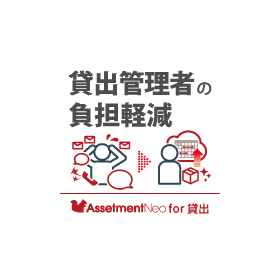
Are you overwhelmed by the daily exchanges among the staff responsible for loan operations? Assetment Neo for lending will solve various issues related to loan management. 【Frequent inquiries about inventory status from loan reservers】 You can visually grasp the availability of stock through a calendar display, and reservations can also be made from a smartphone. Even if there are multiple locations, real-time information can be viewed, eliminating the need to inquire about inventory status from the loan manager. 【Daily outbound instructions are challenging】 The need for manual checks of reservation details and transcription onto loan slips is eliminated. On the day of the loan, the outbound staff can print loan slips from the list of scheduled outbound items, package them, and ship to customers without waiting for instructions. 【Difficulties in reminding customers about unreturned items and requesting inventory checks】 Inconsistent responses to return requests for assets past their due date can lead to troubles with business partners. However, reminder emails with standardized text sent from the system are generally more acceptable. The same applies to the task of conducting inventory checks (requests for location confirmation) for loaned equipment. By standardizing external communications through the system, both loan reservers and loan managers can significantly reduce their workload.
Added to bookmarks
Bookmarks listBookmark has been removed
Bookmarks listYou can't add any more bookmarks
By registering as a member, you can increase the number of bookmarks you can save and organize them with labels.
Free membership registration
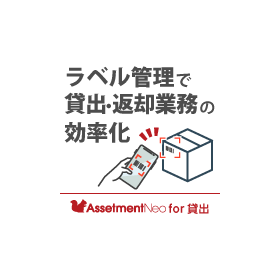
**Benefits of Using Labels for Lending and Returning** Assetment Neo for lending is a system that not only improves operational efficiency but also enables proper lending management. By affixing labels (such as barcodes, QR codes, or RFID) to each piece of lending equipment and managing them, accurate and easy lending and borrowing management can be achieved, significantly reducing operational time and preventing human errors. We can also suggest ways to use labels tailored to your needs. **Handling at the Time of Lending** Print lending slips for each destination from the list of items to be dispatched on the day, and scan the labels during packaging. Finally, load the items and ship them. There is no need to seek instructions from the lending manager at each step of the process. **Handling at the Time of Return** By scanning the labels of all returned equipment, you can keep track of any items that have not been returned. This also clarifies the contents of any confirmations or reminders to the lending parties. **RFID is Recommended for Lending Items Stored in Packaging** With barcodes, it is necessary to read each label individually, but with RFID, which can be read without contact, there is no need to unpack the boxes. Even if multiple boxes are stacked, they can be scanned together from the outside, significantly reducing the workload during lending (dispatch).
Added to bookmarks
Bookmarks listBookmark has been removed
Bookmarks listYou can't add any more bookmarks
By registering as a member, you can increase the number of bookmarks you can save and organize them with labels.
Free membership registration
Assetment Neo for lending is a lending management system that enables effective asset management leading to enhanced security. It offers features that reduce the operational burden for each business scenario, such as reservations, lending, and returns. 【Inventory Check & Lending Reservations】 You can check real-time reservation status and make lending reservations from either a browser or a smartphone app with a calendar display. Various forms such as lending slips and receipts can also be issued. 【Lending (Outbound)】 Register lending and shipping through label scanning. By attaching barcode labels to each piece of lending equipment and managing them with labels, you can conduct lending operations accurately and efficiently. 【Returns】 Returned assets are registered through label scanning. After checking their condition, they are stored on shelves or elsewhere. It is also possible to change the lending period and extend the expected return date. 【Management】 If assets are not returned after the lending deadline, a notification email is automatically sent to the lending staff or administrators. By systematizing interactions with external parties, the burden on not only the lending reservers but also the lending managers can be significantly reduced.
Added to bookmarks
Bookmarks listBookmark has been removed
Bookmarks listYou can't add any more bookmarks
By registering as a member, you can increase the number of bookmarks you can save and organize them with labels.
Free membership registration
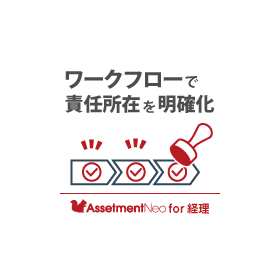
【Careless inventory by the operational department. Is it becoming the responsibility of accounting?】 - The operational department does not conduct proper physical inspections and reports everything as "assets present." - Even when inventory is requested from each department, the supervisor does not get involved and leaves it entirely to subordinates. - The operational department shifts the blame by saying "accounting's guidance is poor." A fixed asset management system alone cannot prevent deficiencies in the fixed asset ledger. It is necessary to have an inventory process that clearly defines the boundaries of responsibility between organizations. 【Conduct inventory completion reports through a workflow to clarify "responsibility"] If the inventory is concluded through exchanges among responsible parties, the concept of departmental responsibility weakens. By creating a workflow where the inventory personnel in the operational department complete their tasks, obtain supervisor approval, and then submit a request for approval from the supervisor to the accounting department, responsibility can be clarified. 【Raising awareness through inventory result reports to deter mistakes and fraud】 The inventory results from the operational department should not be the responsibility of accounting. The responsibility of the accounting department is to compile and accurately report the results of the physical inspections conducted by each department. With Assetment Neo for accounting, it is possible to aggregate inventory results by department, thereby reducing the burden on accounting with features not available from other companies.
Added to bookmarks
Bookmarks listBookmark has been removed
Bookmarks listYou can't add any more bookmarks
By registering as a member, you can increase the number of bookmarks you can save and organize them with labels.
Free membership registration
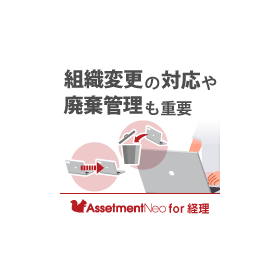
Not only inventory, but daily maintenance is also important. Once a year or a few times of inventory alone makes it difficult to grasp the latest asset status. To prevent mistakes and fraud, it is necessary to build and strengthen the management system. "Solving with a system that allows the field to update ledger information." Assetment Neo for Accounting is different from fixed asset management systems used only by the accounting department; it allows all employees to use it while maintaining security through detailed permission settings. - Assets registered under abolished departments cannot be accounted for depreciation expenses because the utilizing department is unknown. → By having the relevant parties in the field update information during organizational changes, it becomes possible to link more efficient and accurate ledger information to the fixed asset management system. - Problems such as personal use, diversion, and illegal dumping occur because assets that were unaccounted for during inventory were processed as "disposed." → It is important to prevent assets from being labeled as "disposed" when they cannot be found during inventory. Let's establish a corporate culture that does not allow the arbitrary disposal of company assets, thoroughly update information during disposal, and deter fraud. In this way, by having the field departments update information related to organizational changes and disposal, the management system can be strengthened.
Added to bookmarks
Bookmarks listBookmark has been removed
Bookmarks listYou can't add any more bookmarks
By registering as a member, you can increase the number of bookmarks you can save and organize them with labels.
Free membership registration
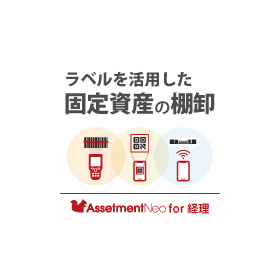
Is the inventory conducted by the field department accurate? - The field department reports everything as "assets present" without properly conducting the actual inspection. - During the actual inspection, they mistakenly check different assets. - It is difficult to compile and transcribe reports from each department. These issues will not be resolved as long as inventory continues to be done using Excel or visual checks. A system for accurate and efficient inventory management is necessary. Assurance of accuracy: Since it only involves reading labels, mistakes do not occur! In the case of inventory using Excel, human errors can arise, such as confusing different assets or checking the wrong line. In contrast, reading labels eliminates mistakes and can prevent false reporting, achieving accurate inventory. Reduction of management workload: The actual inspection process becomes easier, leading to increased efficiency! - Create inventory lists for multiple departments within the timeframe and monitor the progress of the actual inspection. - Compile reports after the actual inspection and transcribe them into the fixed asset management system. These tasks can be significantly improved by systematization. With Assetment Neo for Accounting, features like "Inventory Completion Application" and "Inventory Result Summary Table" can reduce the burden on the accounting department.
Added to bookmarks
Bookmarks listBookmark has been removed
Bookmarks listYou can't add any more bookmarks
By registering as a member, you can increase the number of bookmarks you can save and organize them with labels.
Free membership registration
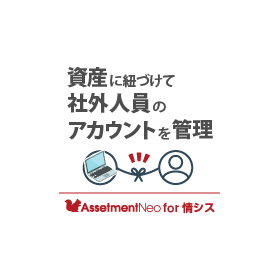
**"The Importance of Understanding 'External Personnel' in Account Management"** While the company's HR manages information for employees with employment contracts, such as full-time employees and part-time workers, it is challenging to perfectly grasp the contract periods and detailed information of external personnel (temporary staff, SES (outsourcing), subcontractors) contracted by various departments on-site. - **Full-time employees are managed via CSV import, while external personnel are tracked through workflows** When a temporary staff member joins, using the workflow function to have the on-site department submit an account application (request for email account issuance) to the IT department can reduce misunderstandings and discrepancies in recognition. Additionally, by capturing the contract period (i.e., account validity period) at the time of application, there is no need to submit a separate suspension request. Furthermore, if the on-site department must submit a renewal request via the workflow when extending the contract, the burden on the IT department will be further alleviated. - **Understanding the difference between actual license numbers (license inventory)** If the contract periods and license information for external personnel are registered, the current usage status can be understood at any time. Moreover, by regularly conducting a license inventory, discrepancies between the actual number of users can be checked, which helps deter unauthorized use.
Added to bookmarks
Bookmarks listBookmark has been removed
Bookmarks listYou can't add any more bookmarks
By registering as a member, you can increase the number of bookmarks you can save and organize them with labels.
Free membership registration
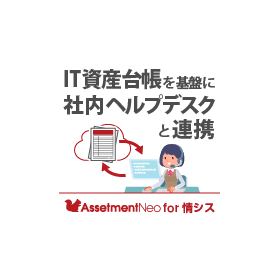
Is the IT department becoming the 'handyman' of the company? The information systems department receives various inquiries. When the methods of inquiry, such as email, chat, and verbal requests, are not standardized, managing these inquiries becomes difficult, increasing the burden on the IT department. - Transform inquiries (requests) into a database through workflow! By allowing applicants to register detailed information about their inquiries themselves, the burden on the IT department can be reduced, and misunderstandings or discrepancies in the inquiry content can be minimized. - Achieve task management for the IT department through workflow! By attaching work procedure documents to the workflow and keeping records, you can maintain a history of tasks and changes based on assets. The accumulated data serves as important information for trend analysis and insights to prevent recurring issues. [Asset Management + Workflow] The ability to accumulate data centered around assets is a unique and noteworthy feature. Not only can inquiries be aggregated and analyzed, but 'task management' for system changes can also be recorded against the same assets. This allows for the accumulation of precise change histories that go beyond mere response records, enhancing the overall quality of help desk operations.
Added to bookmarks
Bookmarks listBookmark has been removed
Bookmarks listYou can't add any more bookmarks
By registering as a member, you can increase the number of bookmarks you can save and organize them with labels.
Free membership registration
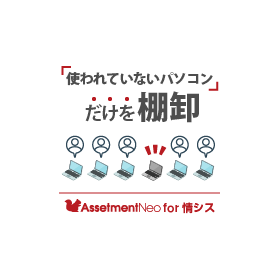
‘For now, in the cabinet’ is dangerous!" "Are 'unused computers' being properly returned to the IT department? Ideally, there should be rules for returns, allowing for the management and oversight of all company computers, but this can be difficult due to the effort involved. "Weak management awareness can lead to security issues." - Discarded without permission by the operational department - Not noticing loss/theft - Infection by viruses due to decreased security awareness from personal use Computers in the operational department's cabinets pose risks precisely because they are unused. Computers that are regularly used can be managed with IT asset management tools, but unused computers fall outside the scope of management, leading to a gradual decline in management awareness and, ultimately, careless handling. By linking with IT asset management tools and tracking only 'in-use computers,' the 'unused computers' with weak management awareness become apparent. Conducting an inventory specifically for 'unused computers' can significantly reduce the workload compared to conducting an inventory of all computers. With Assetment Neo for IT departments, this can be easily achieved.
Added to bookmarks
Bookmarks listBookmark has been removed
Bookmarks listYou can't add any more bookmarks
By registering as a member, you can increase the number of bookmarks you can save and organize them with labels.
Free membership registration
**Benefits of Inventory Using Labels** Using labels such as barcodes, QR codes, and RFID for inventory (physical verification) not only reduces the workload but also offers the following advantages: - **Efficiency** Excel ledgers are not organized by the location of items, which results in time spent searching for items on the list. With label-based inventory, you simply scan items in the order you find them, allowing for significant efficiency improvements. The workload can be reduced to about one-fifth. - **Improved Accuracy** With Excel ledgers, human errors can occur, such as checking items that do not actually exist or mistakenly checking the wrong line. In contrast, reading labels eliminates mistakes and allows for accurate inventory. - **Security Measures** By placing labels on assets, employees are made aware that "this is a company-managed item," which helps to deter inappropriate behaviors such as unauthorized disposal or personal use. Assetment Neo for IT management can maximize these benefits. We will propose the best asset management methods based on your current situation.
Added to bookmarks
Bookmarks listBookmark has been removed
Bookmarks listYou can't add any more bookmarks
By registering as a member, you can increase the number of bookmarks you can save and organize them with labels.
Free membership registration
Assetment Neo for accounting is a system specialized in the management of fixed asset items. By using it in conjunction with fixed asset management systems, it can leverage each system's strengths to achieve more accurate asset management. 【Accurate and Efficient Inventory Management with Labeling】 When conducting inventory using labels such as barcodes, QR codes, or RFID, human errors are minimized compared to visual inventory, ensuring the accuracy of on-site inventory. Additionally, systematization can significantly reduce the time required for management. 【Strengthening Management Systems through Organizational Changes and Disposal Management】 Conducting inventory only once a year or a few times a year makes it difficult to grasp the real-time status of assets. By having the on-site personnel update information during organizational changes or disposal, asset information can always be kept up to date, leading to a strengthened management system. 【Clarifying "Responsibility" through Workflow】 If inventory is concluded through exchanges among responsible parties, the concept of departmental responsibility tends to weaken. By implementing a workflow where post-inventory tasks are routed from "on-site inventory personnel → supervisor → accounting department," a sense of ownership as departmental leaders can emerge, clarifying the responsibility for inventory tasks.
Added to bookmarks
Bookmarks listBookmark has been removed
Bookmarks listYou can't add any more bookmarks
By registering as a member, you can increase the number of bookmarks you can save and organize them with labels.
Free membership registration
Assetment Neo for IT management is an asset management system that enables effective management of items leading to enhanced security. It offers highly versatile features, including management of IT equipment and computers under the jurisdiction of IT management. 【Improving the accuracy of IT asset ledger management through label attachment and regular inventory】 Using labels such as barcodes, QR codes, and RFID for inventory (physical verification) not only reduces the workload but also minimizes human errors and curbs the privatization and loss of assets. 【Managing maintenance contracts for IT equipment and software linked to assets】 By linking IT equipment with the cloud contracts used by that equipment, it visualizes who is using what. This is particularly effective during the exit of external personnel, which is difficult to track in HR systems, preventing the risk of unauthorized access to software due to forgotten account deletions. 【Centralizing asset management and internal work request applications and history through workflow】 Eliminating verbal requests and centralizing inquiries solely through workflow reduces the burden on IT management personnel. It allows for the accumulation of data linked to IT assets, including system change history, repair history, and any interactions that occurred.
Added to bookmarks
Bookmarks listBookmark has been removed
Bookmarks listYou can't add any more bookmarks
By registering as a member, you can increase the number of bookmarks you can save and organize them with labels.
Free membership registration