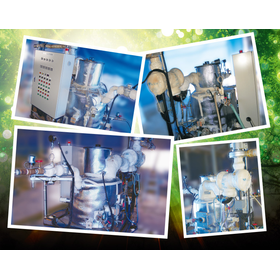
1~24 item / All 24 items
Displayed results

Filter by category
Added to bookmarks
Bookmarks listBookmark has been removed
Bookmarks listYou can't add any more bookmarks
By registering as a member, you can increase the number of bookmarks you can save and organize them with labels.
Free membership registrationContact this company
Inquiry Form1~24 item / All 24 items
Filter by category

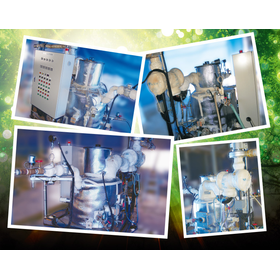
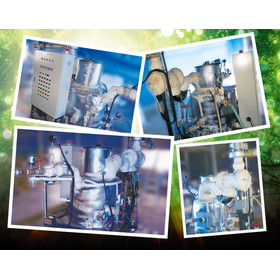
In the manufacturing of allergy-friendly foods, it is extremely important to ensure the safety of raw materials and to process them in a hygienic environment. In particular, preventing the contamination of allergenic ingredients and managing the hygiene of the food itself are essential elements in gaining consumer trust. Our "Compact Universal Dryer" simultaneously performs low-temperature drying at below 40°C and sterilization, allowing for the drying of ingredients without damaging their cellular structure, while preserving nutritional value and flavor, thus achieving hygienic food processing. This supports the production of foods that can be safely consumed by those with allergies. 【Usage Scenarios】 - Drying allergen-free ingredients - Hygienic drying of baby food and nursing care food - Manufacturing processed foods for individuals with specific allergies 【Benefits of Implementation】 - Maintains nutritional value and flavor without damaging the cellular structure of ingredients - Improved hygiene management through low-temperature sterilization - Reduction of food waste through long-term storage after drying - Can be quickly rehydrated to a raw state with hot water
Added to bookmarks
Bookmarks listBookmark has been removed
Bookmarks listYou can't add any more bookmarks
By registering as a member, you can increase the number of bookmarks you can save and organize them with labels.
Free membership registration
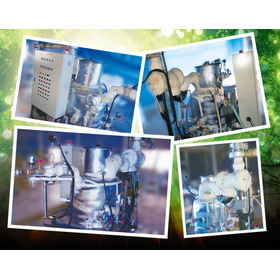
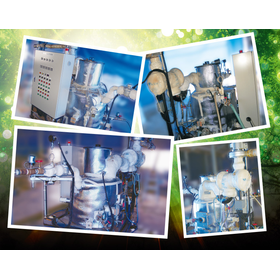
In the seasoning manufacturing industry, it is essential to maximize and concentrate the original flavors and aromas of the ingredients. High-temperature drying can sometimes compromise these important flavors and aromas. Kakunoya Manufacturing's "Compact Universal Dryer" dries food at low temperatures below 40°C while simultaneously sterilizing it, allowing for the production of dried foods without damaging the cellular structure of the ingredients, minimizing discoloration and loss of aroma, and retaining nutritional value. Additionally, moisture generated during the drying process can be reused, leading to efficient operation. 【Usage Scenarios】 - Drying and flavor concentration of spices - Drying and aroma preservation of herbs - Production of dried materials that enhance the flavors of fruits and vegetables - Manufacturing of seasoning raw materials through extract extraction 【Benefits of Implementation】 - Production of high-quality seasoning raw materials that retain the original flavors and aromas of the ingredients - Easier powder processing after drying, expanding product development possibilities - Improved inventory management through the production of dried materials that can be stored long-term - Reduction of running costs by achieving a low-cost drying process
Added to bookmarks
Bookmarks listBookmark has been removed
Bookmarks listYou can't add any more bookmarks
By registering as a member, you can increase the number of bookmarks you can save and organize them with labels.
Free membership registration
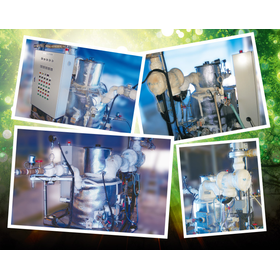
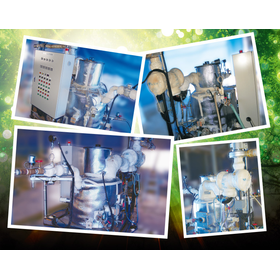
In the health food industry, it is essential to dry and sterilize functional ingredients without compromising the inherent nutritional value and flavor of the materials. Particularly, drying without damaging the cellular structure is crucial for maximizing the potential of the ingredients and leading to the development of high-quality products. Our "Compact Universal Dryer" simultaneously achieves low-temperature drying at 40°C and sterilization, while minimizing discoloration and flavor loss, thus preserving nutritional value. The moisture generated during the drying process can also be reused. 【Usage Scenarios】 - Drying agricultural products, seafood, and medicinal herbs rich in functional components - Facilitating powder processing after drying for applications in supplements and health drinks - Long-term storage and quality maintenance of materials 【Benefits of Implementation】 - Production of high-quality functional ingredients that retain the original nutritional value, aroma, and color of the materials - Easy restoration to the raw state after drying, accommodating diverse product development - Cost reduction through low-cost operation and energy-saving effects
Added to bookmarks
Bookmarks listBookmark has been removed
Bookmarks listYou can't add any more bookmarks
By registering as a member, you can increase the number of bookmarks you can save and organize them with labels.
Free membership registration
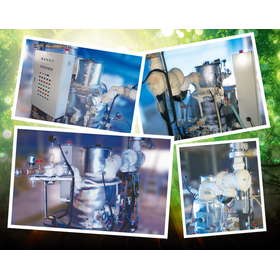
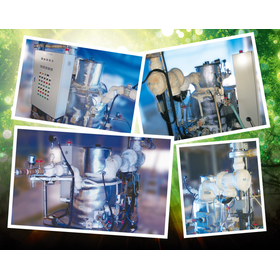
In the spice and herb industry, drying methods that maximize their delicate aromas are essential. In particular, high-temperature drying can cause the aromatic components to evaporate, potentially compromising quality. Our compact multifunctional dryer can dry at low temperatures below 40°C, preserving the original aroma, color, and nutritional components of spices and herbs. This enhances the added value of the products and contributes to increased customer satisfaction. 【Usage Scenarios】 - Drying spices and herbs - Powder processing after drying - Manufacturing products for long-term storage 【Benefits of Implementation】 - Improved product quality through aroma retention - Maintenance of nutritional value and color - Easier processing after drying
Added to bookmarks
Bookmarks listBookmark has been removed
Bookmarks listYou can't add any more bookmarks
By registering as a member, you can increase the number of bookmarks you can save and organize them with labels.
Free membership registration
In the vegetable and fruit processing industry, it is essential to dry products without compromising their nutritional value and flavor in order to maintain quality. Particularly when considering reuse after drying or long-term storage, it is important to preserve the original cellular structure of the materials and maintain their nutrients and aroma. Our "Compact Universal Dryer" simultaneously achieves low-temperature drying below 40°C and sterilization, addressing these challenges. 【Application Scenarios】 - Production of dried vegetables and fruits - Pre-treatment before freeze-drying - Processing of ingredients for long-term storage - Drying of raw materials for powder processing 【Benefits of Introduction】 - Maintenance of nutritional value, flavor, and color - Rapid restoration to a fresh state after drying (3-5 minutes) - Reduction of food waste through long-term storage - Low-cost production of dried foods
Added to bookmarks
Bookmarks listBookmark has been removed
Bookmarks listYou can't add any more bookmarks
By registering as a member, you can increase the number of bookmarks you can save and organize them with labels.
Free membership registration
In the seafood processing industry, it is essential to maintain the freshness of seafood and enable long-term storage. Particularly, processing without compromising flavor and nutritional value is crucial for maintaining product quality. High-temperature drying can potentially damage these elements. Kakuyano Manufacturing's "Compact Universal Dryer" achieves low-temperature drying and sterilization simultaneously at temperatures below 40°C, allowing for drying without destroying the cellular structure of seafood. This helps to minimize discoloration and flavor loss while preserving the nutritional value in dried food production. Additionally, moisture generated during the drying process can be reused, reducing running costs. [Usage Scenarios] - Drying processing of seafood - Production of processed products for long-term storage - Processing of products where flavor and nutritional value need to be preserved [Effects of Implementation] - Enables drying while maintaining the freshness and quality of seafood - Achieves long-term storage without compromising nutritional value or flavor - Energy-efficient, reducing running costs
Added to bookmarks
Bookmarks listBookmark has been removed
Bookmarks listYou can't add any more bookmarks
By registering as a member, you can increase the number of bookmarks you can save and organize them with labels.
Free membership registration
In the healthcare industry, the management of infection risks and the reduction of environmental impact are essential in the processing of medical waste, where safe and efficient methods are highly valued. In particular, the emissions of exhaust gases and CO2 associated with incineration are a concern for the environment. Our "Thermal Decomposition Master" adopts a pyrolysis method that does not produce smoke or carbon dioxide, achieving environmentally friendly and safe processing. 【Usage Scenarios】 - Processing of medical waste in hospitals, clinics, and research institutions - Safe decomposition of infectious waste - Reduction of waste volume 【Benefits of Implementation】 - Reduction of environmental impact through decreased exhaust and CO2 emissions - Quiet operation that minimizes impact on neighboring areas - Reduction of waste processing costs - Effective utilization of the byproduct, magnetic ash
Added to bookmarks
Bookmarks listBookmark has been removed
Bookmarks listYou can't add any more bookmarks
By registering as a member, you can increase the number of bookmarks you can save and organize them with labels.
Free membership registration
In the energy industry, effective utilization of waste and reduction of environmental impact are required. Particularly in fuel production, securing a stable heat source and managing exhaust gases are crucial. Improper handling can lead to violations of environmental regulations and impact local residents. Our "Thermal Decomposition Master" adopts a thermal decomposition method that does not produce smoke or carbon dioxide, contributing to the prevention of global warming. Additionally, it operates continuously for 24 hours at a low cost of less than 1000 yen per day for electricity, and it is also capable of generating warm air using the heat from the melting process. This contributes to resource recycling and energy conservation. 【Utilization Scenes】 - Recovery of thermal energy from waste - Securing heat sources in the fuel production process - Heating for agricultural greenhouses 【Effects of Introduction】 - Suppression of exhaust gas and carbon dioxide emissions - Continuous operation at low cost - Versatility through simultaneous generation of hot water and warm air
Added to bookmarks
Bookmarks listBookmark has been removed
Bookmarks listYou can't add any more bookmarks
By registering as a member, you can increase the number of bookmarks you can save and organize them with labels.
Free membership registration
In the automotive industry, there is a demand for reducing environmental impact and efficient waste management in the recycling and disposal of used parts. Particularly in the treatment of waste plastics, it is important to suppress the emission of harmful substances and consider the local environment. Our "Thermal Decomposition Master" adopts a thermal decomposition method that, unlike conventional incinerators, minimizes the generation of smoke and carbon dioxide, contributing to the prevention of global warming. Additionally, it operates continuously for 24 hours at a low cost of less than 1,000 yen per day for electricity, and it is also capable of generating warm air using the heat of melting. This enables the dual achievement of resource reuse and energy conservation, contributing to solving challenges in automotive parts recycling. [Usage Scenarios] - Treatment of waste plastics at automotive dismantling sites - Waste volume reduction at recycling plants - Treatment of by-products in the parts regeneration process [Effects of Implementation] - Compliance with environmental regulations - Consideration for the local environment - Reduction of processing costs - Effective utilization of resources
Added to bookmarks
Bookmarks listBookmark has been removed
Bookmarks listYou can't add any more bookmarks
By registering as a member, you can increase the number of bookmarks you can save and organize them with labels.
Free membership registration
In educational institutions, the disposal of used teaching materials can be a challenge. In particular, paper and plastic materials can generate smoke and carbon dioxide during incineration, raising concerns about their environmental impact. Additionally, the cost of disposal must also be considered. Our "Thermal Decomposition Expert" addresses these issues by employing a thermal decomposition method that processes teaching materials without producing smoke or carbon dioxide, thereby reducing environmental burden. Furthermore, it can operate continuously for 24 hours with electricity costs of less than 1000 yen per day, allowing for low-cost operation. 【Usage Scenarios】 - Disposal of teaching materials in schools, universities, and tutoring centers - Processing of paper and plastic teaching materials - Waste disposal with reduced environmental impact 【Benefits of Implementation】 - Reduction of environmental burden due to zero emissions of exhaust gases and carbon dioxide - Realization of low-cost waste disposal - Effective utilization of resources (by-products: collection of magnetic ash)
Added to bookmarks
Bookmarks listBookmark has been removed
Bookmarks listYou can't add any more bookmarks
By registering as a member, you can increase the number of bookmarks you can save and organize them with labels.
Free membership registration
The "Thermal Decomposition Master" offers a new solution to the waste disposal challenges faced by local governments. Unlike traditional incinerators and gasification furnaces, it adopts a thermal decomposition method that reduces the generation of smoke, which can be a nuisance to nearby residents, and carbon dioxide, a contributor to global warming. This enables a balance between reducing environmental impact and considering the local community. Additionally, even with continuous operation for 24 hours, the electricity cost remains below 1,000 yen per day, contributing to the reduction of operational costs. Furthermore, it can utilize the generated heat to produce warm air at around 40°C, which can be used for heating agricultural greenhouses, leading to resource reuse and energy conservation. 【Usage Scenarios】 - Disposal of general waste and industrial waste - Replacement or supplementation of incineration facilities - Effective use of local resources - Cost reduction through energy recovery 【Benefits of Implementation】 - Reduced environmental impact through suppression of exhaust gas and carbon dioxide emissions - Improved economic efficiency due to low running costs - Utilization in agricultural fields through warm air generation - Environmental consideration and contribution to the local community
Added to bookmarks
Bookmarks listBookmark has been removed
Bookmarks listYou can't add any more bookmarks
By registering as a member, you can increase the number of bookmarks you can save and organize them with labels.
Free membership registration
In the logistics industry, reducing packaging materials and waste disposal can be challenging. In particular, the handling of used packaging materials and plastic waste is considered important from the perspectives of cost and environmental impact. In response to these challenges, our "Thermal Decomposition Expert" contributes to the effective utilization of new resources and the reduction of environmental impact by thermally decomposing waste plastics and other waste. 【Usage Scenarios】 - Processing plastic packaging materials in warehouses - Reducing waste during transportation - Utilizing recycled resources 【Benefits of Implementation】 - Reduction in waste disposal costs - Decrease in environmental impact - Effective utilization of resources
Added to bookmarks
Bookmarks listBookmark has been removed
Bookmarks listYou can't add any more bookmarks
By registering as a member, you can increase the number of bookmarks you can save and organize them with labels.
Free membership registration
In the electronics industry, waste disposal during the product lifecycle can be a challenge. In particular, plastic waste such as casings requires appropriate disposal methods. With increasing emphasis on environmental considerations and compliance with regulations, there is a demand for efficient and low-environmental-impact disposal methods. Our product, "Thermal Decomposition Master," addresses these challenges by processing waste without generating smoke or carbon dioxide through thermal decomposition, while recovering thermal energy. 【Usage Scenarios】 - Disposal of plastic waste from electronic device casings - Utilization of recycled resources - Energy recovery within business premises 【Benefits of Implementation】 - Reduction of environmental impact (suppression of exhaust gas and carbon dioxide generation) - Low operational costs (less than 1000 yen per day for electricity with 24-hour operation) - Effective use of resources - Energy-saving effects from hot air generation (examples of use in agricultural greenhouses, etc.)
Added to bookmarks
Bookmarks listBookmark has been removed
Bookmarks listYou can't add any more bookmarks
By registering as a member, you can increase the number of bookmarks you can save and organize them with labels.
Free membership registration
In the paper industry, the processing of waste paper requires the reduction of waste and effective utilization of resources. In particular, consideration for the surrounding environment is essential, especially regarding exhaust emissions and noise during the processing. Additionally, controlling processing costs is also an important issue. Our company, "Thermal Decomposition Master," contributes to preventing global warming by adopting a thermal decomposition method that suppresses the generation of smoke and carbon dioxide. Furthermore, with continuous operation 24 hours a day, we achieve low electricity costs of less than 1,000 yen per day, supporting solutions to challenges from both environmental impact and cost perspectives in waste paper processing. 【Usage Scenarios】 - Processing of waste paper in paper mills - Promotion of waste reduction and resource recycling - Compliance with environmental regulations 【Effects of Implementation】 - Reduction of environmental impact through suppression of exhaust emissions and smoke - Low-cost waste processing - Contribution to a circular society through effective resource utilization
Added to bookmarks
Bookmarks listBookmark has been removed
Bookmarks listYou can't add any more bookmarks
By registering as a member, you can increase the number of bookmarks you can save and organize them with labels.
Free membership registration
In the textile industry, the processing and recycling of waste fabric can be challenging. There is a demand to effectively utilize these waste materials and reduce environmental impact. Additionally, reducing energy costs in the manufacturing process is also an important factor. Our pyrolysis device, "Pyrolysis Master," addresses these challenges by thermally decomposing waste fabric to generate thermal energy without producing smoke or carbon dioxide, contributing to resource reuse and energy conservation. 【Usage Scenarios】 - Processing of waste fabric from textile factories - Generation of recycled materials - Source of hot water and warm air 【Benefits of Implementation】 - Reduction of waste disposal costs - Decrease in environmental impact (reduction of CO2 emissions) - Reduction of energy costs (1/20 of fossil fuel boiler costs) - Effective utilization of by-products (magnetic ash)
Added to bookmarks
Bookmarks listBookmark has been removed
Bookmarks listYou can't add any more bookmarks
By registering as a member, you can increase the number of bookmarks you can save and organize them with labels.
Free membership registration
In agricultural settings, the disposal of waste such as used farming tools can be a challenge. In particular, plastic farming tools are difficult to incinerate, raising concerns about their environmental impact. Additionally, the costs and efforts associated with waste disposal cannot be overlooked. Our "Thermal Decomposition Master" addresses these issues by processing waste through thermal decomposition, which reduces the generation of smoke and carbon dioxide, thereby lowering environmental burdens. Furthermore, it can operate continuously for 24 hours at a low cost of less than 1000 yen per day for electricity. The hot air generated from the heat can also be utilized for heating agricultural greenhouses, contributing to resource recycling and energy conservation. 【Usage Scenarios】 - Disposal of used plastic farming tools - Disposal of waste from vinyl greenhouses - Other waste disposal generated in agricultural settings 【Benefits of Implementation】 - Reduction of environmental impact - Decrease in waste disposal costs - Energy-saving effects from greenhouse heating - Effective utilization of resources
Added to bookmarks
Bookmarks listBookmark has been removed
Bookmarks listYou can't add any more bookmarks
By registering as a member, you can increase the number of bookmarks you can save and organize them with labels.
Free membership registration
In the food industry, the disposal of used packaging materials can be a challenge. Particularly, with the demand for hygiene management and recycling, efficient and environmentally friendly disposal methods are emphasized. Our pyrolysis device, "Pyrolysis Master," differs from conventional incinerators by adopting a pyrolysis method that suppresses the generation of smoke and carbon dioxide, contributing to the prevention of global warming. Additionally, it can operate continuously for 24 hours at a low cost of less than 1,000 yen per day for electricity. Furthermore, it can generate warm air around 40°C using the heat generated, which can be utilized for heating agricultural greenhouses, thus contributing to resource reuse and energy conservation. 【Usage Scenarios】 - Disposal of waste plastic packaging in food factories - Effective utilization of recycling resources - Waste disposal within factory premises - Facility management using warm air 【Benefits of Implementation】 - Reduction of environmental impact (suppression of smoke and CO2 emissions) - Cost reduction for disposal - Effective utilization of resources and energy conservation - Contribution to the local community
Added to bookmarks
Bookmarks listBookmark has been removed
Bookmarks listYou can't add any more bookmarks
By registering as a member, you can increase the number of bookmarks you can save and organize them with labels.
Free membership registration
In the chemical industry, effective utilization of waste and reduction of environmental impact are important issues. Particularly when recycling waste materials such as plastic waste into raw materials, safe and efficient processing methods are required. Traditional gasification furnaces and melting furnaces may raise concerns about the generation of smoke and carbon dioxide. Our pyrolysis device, "Pyrolysis Master," adopts a pyrolysis method that generates thermal energy without producing smoke or carbon dioxide. This enables the repurposing of waste as a resource while contributing to the prevention of global warming. 【Utilization Scenarios】 - Raw material production from the pyrolysis of waste plastics - Waste treatment in chemical processes - Collection and utilization of by-products (magnetic ash) 【Effects of Implementation】 - Promotion of resource circulation from waste - Reduction of environmental impact - Securing new raw materials
Added to bookmarks
Bookmarks listBookmark has been removed
Bookmarks listYou can't add any more bookmarks
By registering as a member, you can increase the number of bookmarks you can save and organize them with labels.
Free membership registration
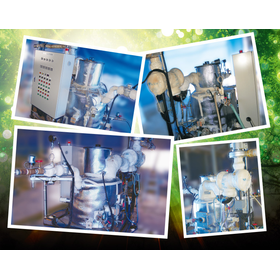
The thermal decomposition device "Thermal Decomposition Master" generates thermal energy through a thermal decomposition method, unlike typical "gasification furnaces" or "melting furnaces." It does not produce smoke that could disturb neighbors and does not emit carbon dioxide, contributing to the prevention of global warming! Additionally, with continuous operation for 24 hours, the electricity cost is less than 1,000 yen per day. It is also possible to generate warm air at around 40°C using the heat from melting. This means it can warm 1 to 2 agricultural greenhouses, contributing to resource recycling and energy conservation. 【Features】 ■ Thermal decomposition without burning fuel ■ Simultaneous generation of hot water and warm air ■ One-twentieth the fuel consumption of fossil fuel boilers ■ More than twice the durability of fossil fuel boilers ■ Carbon dioxide elimination effect ■ No government procedures, licenses, or qualified personnel required ■ Collection of byproduct magnetic ash ■ Utilization of recycled resources ☆☆ It complies with the Ministry of the Environment's regulations and is eligible for subsidies. A certification from the Japan Industrial Machinery Manufacturers Association can be issued. *For more details, please download the PDF or feel free to contact us.
Added to bookmarks
Bookmarks listBookmark has been removed
Bookmarks listYou can't add any more bookmarks
By registering as a member, you can increase the number of bookmarks you can save and organize them with labels.
Free membership registration
"Super Ryujin & Ryujin" is a large drying machine specifically designed for wood drying. It dries at low temperatures below 60°C, preventing discoloration, loss of fragrance, warping, and bending. Additionally, the heat source for "Super Ryujin" is electric plus boiler, while "Ryujin" uses only electricity, making the running costs extremely low. Both models operate fully automatically and allow for operation records and management. [Features] ■ No discoloration, loss of fragrance, internal cracking, warping, or bending ■ Shrinkage: 1/100 to 1.5/100 ■ Essential oil component retention rate: 99% (Super Ryujin) / 100% (Ryujin) ■ By-products can be collected: Collectable as an option (Super Ryujin) / Tree sap (Ryujin) ■ Patent No. 3906313: Vacuum drying machine and method for drying wood using it ■ Patent No. 3881643: Wood drying machine and method for drying using it *For more details, please refer to the PDF materials or feel free to contact us.
Added to bookmarks
Bookmarks listBookmark has been removed
Bookmarks listYou can't add any more bookmarks
By registering as a member, you can increase the number of bookmarks you can save and organize them with labels.
Free membership registration
Japanese agriculture is 99% small-scale, and large-scale operations require long periods of time, capital, and labor, which is currently impossible. To revitalize Japanese agriculture, it is necessary to develop technologies that enhance the added value of diverse, small-quantity production. The sixth industrialization system factory integrates four technologies: drying, powder processing, sieving, and vacuum packing, resulting in a compact facility with excellent productivity, convenience, and economic efficiency through a well-designed combination layout. This is a groundbreaking technological development for small-scale farmers. *For more details, please download the PDF or feel free to contact us.*
Added to bookmarks
Bookmarks listBookmark has been removed
Bookmarks listYou can't add any more bookmarks
By registering as a member, you can increase the number of bookmarks you can save and organize them with labels.
Free membership registration
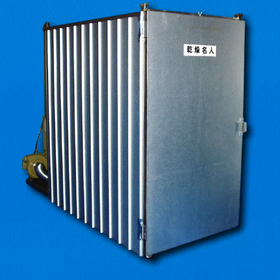
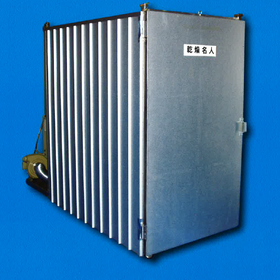
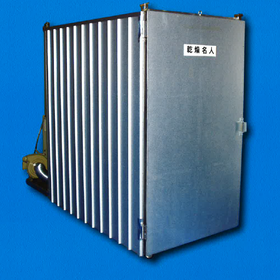
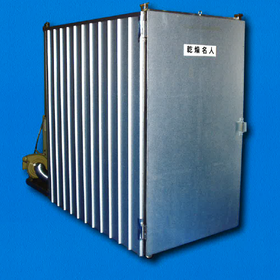
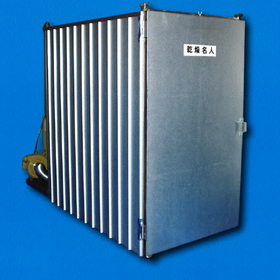
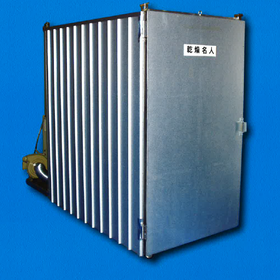
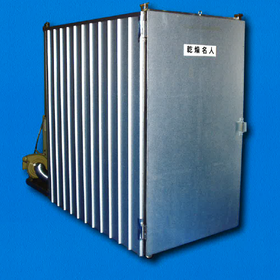
With conventional high-temperature drying, the nutritional value and flavor of food materials can be compromised. The "Compact Universal Dryer" from Kakunoya achieves sterilization while drying at a low temperature of 40°C. It also allows for the reuse of moisture generated during the drying process! The power consumption is very low, costing only 200 to 300 yen for 24 hours. It offers about ten times the energy-saving effect of conventional high-temperature dryers. ☆ Since it dries without damaging cell structures, it can be restored to a raw state in just three minutes when soaked in hot water. ☆ 【Features】 ■ Can dry all kinds of products. ■ Room temperature, sterilization drying. ■ Dries at room temperature of 10 to 38°C. ■ No discoloration, loss of aroma, or damage to nutrients. ■ Facilitates powder processing after drying. ■ Can mix multiple powdered products to create new products. ■ Can be restored to a raw state in 3 to 5 minutes when returned to hot water. ■ Allows for long-term storage. ■ Very low running costs. ■ Can extract by-products (extracts). * For more details, please download the PDF or feel free to contact us.
Added to bookmarks
Bookmarks listBookmark has been removed
Bookmarks listYou can't add any more bookmarks
By registering as a member, you can increase the number of bookmarks you can save and organize them with labels.
Free membership registration
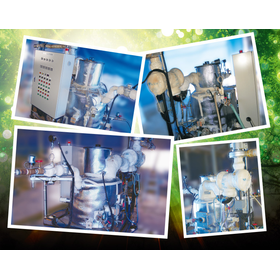
The thermal decomposition device "Thermal Decomposition Master" differs from typical "gasification furnaces" and "melting furnaces" as it generates thermal energy through thermal decomposition, thereby not producing smoke that could disturb the neighbors, and it also does not emit carbon dioxide, contributing to the prevention of global warming! Additionally, with continuous operation for 24 hours, the electricity cost is less than 1000 yen per day. It is also possible to generate warm air at around 40°C using the heat from melting. This means it can warm one or two agricultural greenhouses, contributing to resource recycling and energy conservation. 【Features】 ■ Thermal decomposition without burning fuel ■ Simultaneous generation of hot water and warm air ■ One-twentieth the fuel consumption of fossil fuel boilers ■ More than twice the durability of fossil fuel boilers ■ Carbon dioxide elimination effect ■ No government procedures, licenses, or qualified personnel required ■ Collection of byproduct magnetic ash ■ Utilization of recycled resources ☆☆ It complies with the Ministry of the Environment's regulations and is eligible for subsidies. A certification from the Japan Industrial Machinery Manufacturers Association can be issued. *For more details, please download the PDF or feel free to contact us.
Added to bookmarks
Bookmarks listBookmark has been removed
Bookmarks listYou can't add any more bookmarks
By registering as a member, you can increase the number of bookmarks you can save and organize them with labels.
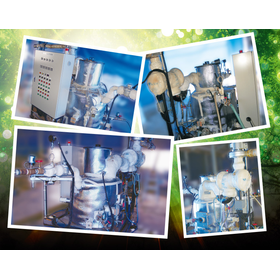
Free membership registrationThe "next-generation home boiler" uses organic waste and kitchen scraps as fuel, making it a cost-effective device that does not incur fuel expenses and is friendly to household budgets. It generates thermal energy through a pyrolysis method, which does not produce smoke that could disturb neighbors, and it also does not emit carbon dioxide, contributing to the prevention of global warming. Additionally, it can generate over 200 liters of hot water at 40°C and 240m³ of warm air at 40°C per hour, with an electricity cost of less than 10 yen per day. 【Features】 ■ Zero fuel costs ■ Zero smoke and carbon dioxide emissions ■ Running costs consist only of electricity expenses of less than 10 yen per day ■ By-products (magnetic ash and wood vinegar) become new products *For more details, please download the PDF or feel free to contact us.
Added to bookmarks
Bookmarks listBookmark has been removed
Bookmarks listYou can't add any more bookmarks
By registering as a member, you can increase the number of bookmarks you can save and organize them with labels.
Free membership registration