46~90 item / All 512 items
Displayed results
Filter by category

Added to bookmarks
Bookmarks listBookmark has been removed
Bookmarks listYou can't add any more bookmarks
By registering as a member, you can increase the number of bookmarks you can save and organize them with labels.
Free membership registration
Contact this company
Inquiry Form46~90 item / All 512 items
Filter by category

When it comes to gaskets with strong heat and chemical resistance, fluororubber (FKM) is the common knowledge in many fields. However, even fluororubber has environments that can be a 'pitfall' where it can 'degrade in a short period of time.' These are the lines of 'steam (water vapor)' and 'strong alkali.' In this article, we will explain the special grade 'IF-900-AF (Aflas/FEPM)' produced by Iruma River Rubber, which overcomes the weaknesses of conventional fluororubber and achieves long life in harsh steam and chemical lines. *For detailed content of the column, please refer to the related link. For more information, feel free to download the PDF or contact us.
Added to bookmarks
Bookmarks listBookmark has been removed
Bookmarks listYou can't add any more bookmarks
By registering as a member, you can increase the number of bookmarks you can save and organize them with labels.
Free membership registration
"Nylon (Polyamide)" is widely used as an engineering plastic with excellent wear resistance and heat resistance, ranging from automotive parts to everyday goods. However, are you accurately understanding and selecting the differences between the representative grades "Nylon 6 (PA6)" and "Nylon 66 (PA66)"? In this article, we will explain the two decisive differences (heat resistance, water absorption, impact strength) as well as "plant-based Nylon 11" and "low water absorption Nylon 12," which have recently attracted attention as 3D printer materials. *For detailed content of the column, you can view it through the related links. For more information, please download the PDF or feel free to contact us.
Added to bookmarks
Bookmarks listBookmark has been removed
Bookmarks listYou can't add any more bookmarks
By registering as a member, you can increase the number of bookmarks you can save and organize them with labels.
Free membership registration
In the world of industrial gaskets, "copper" is an essential material for handling "heat" and "electricity." However, there are two main grades of copper gaskets: "C1100 (tough pitch copper)" and "C1220 (phosphorus deoxidized copper)," and choosing the wrong one can lead to issues such as "cracking at the weld" or "not achieving the expected conductivity." In this article, Daiko Co., Ltd., a specialized manufacturer of industrial gaskets, explains the differences between these two copper grades and the importance of "annealing (softening treatment)" that dramatically enhances the sealing performance of copper gaskets. *For more detailed information, you can view the related links. For further inquiries, please feel free to download the PDF or contact us.*
Added to bookmarks
Bookmarks listBookmark has been removed
Bookmarks listYou can't add any more bookmarks
By registering as a member, you can increase the number of bookmarks you can save and organize them with labels.
Free membership registration
When selecting plastic materials, have you ever faced the challenge of wanting "transparency to see the contents, but being afraid of breaking with glass or acrylic"? A suitable answer is polycarbonate (PC). In this article, we will explain polycarbonate, which boasts top-class impact resistance among engineering plastics, including its incredible strength, advantages and disadvantages, and points to note during processing. *For detailed content of the column, please refer to the related links. For more information, please download the PDF or feel free to contact us.*
Added to bookmarks
Bookmarks listBookmark has been removed
Bookmarks listYou can't add any more bookmarks
By registering as a member, you can increase the number of bookmarks you can save and organize them with labels.
Free membership registration
In piping work, fittings that are always installed with future maintenance in mind are called "unions." Unlike regular fittings, which cannot be removed without cutting once connected, unions have the significant advantage of being "removable at any time." In this article, we will explain the mechanism of unions, the correct installation methods, and the importance of "packing" and "seal tape" in preventing leaks. *For detailed content of the column, you can view it through the related links. For more information, please download the PDF or feel free to contact us.*
Added to bookmarks
Bookmarks listBookmark has been removed
Bookmarks listYou can't add any more bookmarks
By registering as a member, you can increase the number of bookmarks you can save and organize them with labels.
Free membership registration
There are many types of plastic materials, but nothing surpasses "polyvinyl chloride (PVC)" in terms of cost-performance balance. From water pipes to industrial tanks and building materials. Why is PVC still chosen so consistently? Here, we will explain five technical features that are supported in design and construction. *For more detailed information, you can view the related links. For further details, please download the PDF or feel free to contact us.*
Added to bookmarks
Bookmarks listBookmark has been removed
Bookmarks listYou can't add any more bookmarks
By registering as a member, you can increase the number of bookmarks you can save and organize them with labels.
Free membership registration
In the design of industrial machinery and analytical instruments, selecting the right materials for "covers" and "windows" to ensure internal visibility is crucial. Glass poses a risk of breaking and is too heavy, while polycarbonate does not fit the budget. In such cases, "acrylic resin (PMMA)" becomes a balanced option. This time, we will introduce three technical features that make acrylic suitable for industrial equipment, as well as precision processing services provided by Daiko Co., Ltd. *For detailed content of the column, you can view it through the related links. For more information, please download the PDF or feel free to contact us.*
Added to bookmarks
Bookmarks listBookmark has been removed
Bookmarks listYou can't add any more bookmarks
By registering as a member, you can increase the number of bookmarks you can save and organize them with labels.
Free membership registration
"SUS304" is widely used in everything from household items to industrial equipment, to the extent that it is often referred to as "the quintessential stainless steel." From spoons and forks to building exteriors and piping in chemical plants, why is SUS304 continuously chosen? The reason is simply that "the balance of performance and cost is exceptionally good." In this article, we will explain the "three strengths" of SUS304 and the decisive differences between it and the higher-grade SUS316. *For detailed content of the column, please refer to the related link. For more information, feel free to download the PDF or contact us directly.*
Added to bookmarks
Bookmarks listBookmark has been removed
Bookmarks listYou can't add any more bookmarks
By registering as a member, you can increase the number of bookmarks you can save and organize them with labels.
Free membership registration
"The gasket removed during maintenance has no damage; can it be reused?" "I want to reuse a packing that has been used once to reduce costs." This is a common concern on site, but to put it simply, reusing gaskets is absolutely not allowed. Major manufacturers also stipulate that "gaskets are disposable (one-way) parts" as a principle. Why is it not permissible to reuse them even if they look clean? In addition to the physical mechanisms that can cause leaks due to reuse, we will also explain the risks of "asbestos" lurking in old equipment. *For detailed content of the column, you can view it through the related link. For more information, please download the PDF or feel free to contact us.*
Added to bookmarks
Bookmarks listBookmark has been removed
Bookmarks listYou can't add any more bookmarks
By registering as a member, you can increase the number of bookmarks you can save and organize them with labels.
Free membership registration
In the management of factory equipment and product traceability, there is currently a shift away from "seals" and "ink printing." This change is driven by the wave of digitalization (DX) and the need to adapt to harsh on-site environments. Taking into account the trends in the industrial sector and the challenges on the ground, we propose a new management method utilizing the advanced machine "Keyence MD-U1000C," introduced by Daiko Co., Ltd. *For more detailed information, please refer to the related links. For further details, you can download the PDF or feel free to contact us.*
Added to bookmarks
Bookmarks listBookmark has been removed
Bookmarks listYou can't add any more bookmarks
By registering as a member, you can increase the number of bookmarks you can save and organize them with labels.
Free membership registration
Oil leaked from the gaps in the machine, causing the line to stop." "The adjustment screw of the precision equipment became loose, resulting in unstable quality." When we delve into the causes of these serious troubles, we often find that they can be traced back to a single faulty "O-ring." O-rings are extremely important mechanical components that govern the "sealing (leak prevention)" and "operability (friction resistance)" of various machines, ranging from the aerospace industry to semiconductor manufacturing equipment, and even everyday gas appliances. Despite their simple circular shape, O-rings are designed based on advanced material chemistry and physical laws. Choosing the wrong material can lead to a loss of function in an instant, potentially putting the entire expensive equipment at risk. This article will explain the true importance of the O-ring as a component and the essential principles of "material selection" to protect machinery. *For more details on the column, please refer to the related links. For further information, feel free to download the PDF or contact us directly.

Added to bookmarks
Bookmarks listBookmark has been removed
Bookmarks listYou can't add any more bookmarks
By registering as a member, you can increase the number of bookmarks you can save and organize them with labels.
Free membership registration
In the fields of mechanical design and maintenance, the selection of "dimensional standards" for O-rings is unavoidable. We will systematically explain the meanings and applications of various symbols, including JIS standards (P, G, V), AS568, and ISO standards. If you have a physical item but don't know the standard, or if the standard is not listed on the drawing, please leave it to us at Daiko for your selection requests. *You can view the detailed content of the column through the related links. For more information, please download the PDF or feel free to contact us.
Added to bookmarks
Bookmarks listBookmark has been removed
Bookmarks listYou can't add any more bookmarks
By registering as a member, you can increase the number of bookmarks you can save and organize them with labels.
Free membership registration
"I want to reduce the particles (micro-particles) in the chemical solution to the absolute minimum." "I want to shorten the piping cleaning (flushing) time and speed up the startup." "Since we use harsh chemicals, we need high durability." In the fields of semiconductor and liquid crystal manufacturing, where nano-level precision processing is required, the specifications demanded for piping tubes are becoming increasingly stringent year by year. The "TOMBO No.9003-PFA-HG Naflon PFA-HG tube" from Nichias meets these advanced requirements that cannot be achieved with standard PFA tubes. Why is it called "HG (High Grade)?" Let's unravel its overwhelming specifications. *For detailed content of the column, please refer to the related link. For more information, please download the PDF or feel free to contact us.*
Added to bookmarks
Bookmarks listBookmark has been removed
Bookmarks listYou can't add any more bookmarks
By registering as a member, you can increase the number of bookmarks you can save and organize them with labels.
Free membership registration
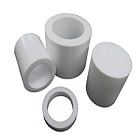
From semiconductor manufacturing equipment to chemical plants and electrical insulation applications. As a reliable piping material in harsh environments, "TOMBO No.9003 Naflon PTFE Tube" has been chosen for many years. In the new semiconductor processes, ultra-high-performance grades like "PFA-UG" have also emerged, but for general industrial applications, the "PTFE Tube" still offers the best balance of cost and performance. We will thoroughly explain its specifications and reasons for being chosen. *For detailed content of the column, you can view it through the related link. For more information, please download the PDF or feel free to contact us.*
Added to bookmarks
Bookmarks listBookmark has been removed
Bookmarks listYou can't add any more bookmarks
By registering as a member, you can increase the number of bookmarks you can save and organize them with labels.
Free membership registration
"I want to visually confirm whether liquid is flowing through the pipes." "Since there is a gap between the devices, I want to connect them with a single long tube." When selecting a fluoropolymer tube, the solution to these challenges is the "TOMBO No.9003-PFA Naflon PFA Tube." This high-performance tube possesses incredible chemical resistance and heat resistance equivalent to PTFE, while also featuring "translucency" and "continuous molding capability (long length)" that PTFE does not have. We will explain its capabilities and applications. *For detailed content of the column, you can view it through the related links. For more information, please download the PDF or feel free to contact us.*
Added to bookmarks
Bookmarks listBookmark has been removed
Bookmarks listYou can't add any more bookmarks
By registering as a member, you can increase the number of bookmarks you can save and organize them with labels.
Free membership registration
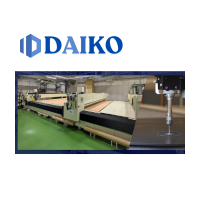
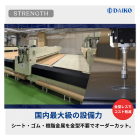
"The rubber melts due to heat." "The cross-section gets charred and hardens." "The material is too large to fit in the machine." In the processing of industrial gaskets and seals, the game-changing solution to these challenges is "water jet processing." However, while the technology itself is known, the extent to which it can handle materials of "what scale" and "how thick" varies greatly from one processing company to another. In this article, we will explain the "core" of the water jet technology and the "overwhelming equipment capabilities" of Daiko Co., Ltd. that maximize its potential. *For detailed content of the column, please refer to the related links. For more information, please download the PDF or feel free to contact us.*
Added to bookmarks
Bookmarks listBookmark has been removed
Bookmarks listYou can't add any more bookmarks
By registering as a member, you can increase the number of bookmarks you can save and organize them with labels.
Free membership registration
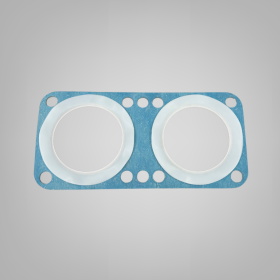
■Overview of Processing Example Dimensions: 50W × 80L (Thickness 3t) This example is a processing case of NBR rubber gaskets. The configuration consists of a plate shape with outer dimensions of 50W × 80L, featuring two 14φ holes in the center and four 9φ holes around the perimeter. For the small diameter hole drilling process, we adopted water jet processing because the accuracy of the hole diameter and the reproducibility of the hole position are directly linked to assembly accuracy. This method allows for cutting without thermal impact, thereby suppressing deformation of the rubber material and edge irregularities, ensuring stable dimensional accuracy. As a result, it prevents positional misalignment during bolt insertion and contributes to stable sealing performance at the equipment fixation points. ■Product Features (NBR Rubber) NBR (Nitrile Rubber) has excellent oil resistance and is an ideal synthetic rubber for seals in fuel oils and lubricants. It also exhibits high mechanical strength and wear resistance, making it widely used in O-rings, gaskets, hoses, and more. However, its weather resistance and ozone resistance are low, making it unsuitable for outdoor use, and it primarily excels in indoor hydraulic and pneumatic equipment.
Added to bookmarks
Bookmarks listBookmark has been removed
Bookmarks listYou can't add any more bookmarks
By registering as a member, you can increase the number of bookmarks you can save and organize them with labels.
Free membership registration
Overview of Processing Example Product Name: NBR Rubber Sheet with Slits Dimensions: t1 × 20W × 71L (φ4-2) This processing example involves the production of a rubber component with slits, used for parts in industrial equipment. In addition to the long shape, multiple holes and slit processing were specified, requiring positional adjustability and dimensional reproducibility during installation. The client is an industrial equipment manufacturer. To ensure freedom of shape and processing accuracy without using a die, water jet processing was adopted, achieving stable quality in production. Product Features (NBR Rubber) NBR (Nitrile Rubber) has excellent oil resistance, making it an ideal synthetic rubber for seals in fuel oils and lubricants. It also boasts high mechanical strength and wear resistance, widely used in O-rings, gaskets, hoses, and more. However, due to its low weather resistance and ozone resistance, it is not suitable for outdoor use and is primarily utilized in indoor hydraulic and pneumatic equipment.
Added to bookmarks
Bookmarks listBookmark has been removed
Bookmarks listYou can't add any more bookmarks
By registering as a member, you can increase the number of bookmarks you can save and organize them with labels.
Free membership registration
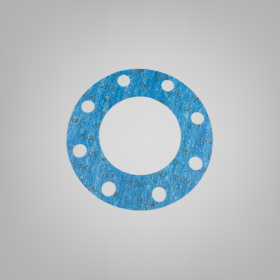
Dimensions: 81W × 96L (Plate thickness 3t) This case is an example of a manufactured plate gasket made of NBR rubber with C chamfering (C2) processing. It has a shape of 81W × 96L, with three φ10 holes and six φ5 holes arranged in the structure. Since hole position accuracy and processing reproducibility are important for multiple diameters of hole processing, water jet cutting was adopted. This method allows for processing without thermal impact, ensuring a uniform cutting surface while maintaining the material's elastic properties. Furthermore, the C chamfering processing helps to reduce interference during assembly, contributing to improved workability and stable sealing performance. ■ Product Features (NBR Rubber) NBR (Nitrile Rubber) has excellent oil resistance, making it an ideal synthetic rubber for seals in fuel oils and lubricants. It also has high mechanical strength and wear resistance, and is widely used in O-rings, gaskets, hoses, etc. However, its weather resistance and ozone resistance are low, making it unsuitable for outdoor use; it is mainly utilized in indoor hydraulic and pneumatic equipment.
Added to bookmarks
Bookmarks listBookmark has been removed
Bookmarks listYou can't add any more bookmarks
By registering as a member, you can increase the number of bookmarks you can save and organize them with labels.
Free membership registration
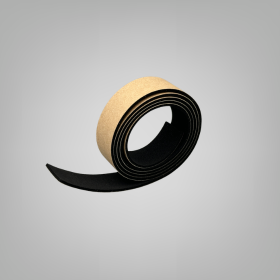
Processing Case Overview Product Name: Adhesive-Backed Irregular Gasket Dimensions: Outer Diameter φ30.6 × Inner Diameter φ21 (Thickness 2t, Mounting Hole φ3, PCD 48) This processing case involves the manufacturing of adhesive-backed irregular gaskets used for equipment. To ensure dimensional accuracy and shape reproducibility for the irregular shape and mounting holes, water jet processing has been adopted. Product Features (EPDM Rubber) EPDM (Ethylene Propylene Diene Monomer) rubber is extremely excellent in weather resistance and ozone resistance, making it a rubber that does not easily deteriorate even in outdoor environments exposed to ultraviolet rays and rain. It is resistant to water and chemicals, but it is weak against mineral oils and cannot be used with them. Leveraging its high durability, it is widely used in construction waterproof sheets, window frames, and plumbing gaskets, among others.
Added to bookmarks
Bookmarks listBookmark has been removed
Bookmarks listYou can't add any more bookmarks
By registering as a member, you can increase the number of bookmarks you can save and organize them with labels.
Free membership registration
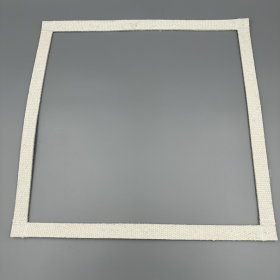
Overview of Processing Example Product Name: Frame-Shaped Seal Material Dimensions: 196W × 296L, Thickness 5t, φ12 Holes × 10 This example involves the production of seal material used around openings in industrial equipment. The frame shape and multi-point hole configuration required uniform compression and stable airtightness. By adopting water jet processing without using a die, shape accuracy and reproducibility are ensured. Product Features (EE-1010 (Eptsealer)) Seal material made from EPDM rubber, which has excellent weather resistance among foamed materials, using semi-continuous foaming. It has excellent water-tight and air-tight properties, and due to its flexible material, it can be compressed for use. It is also highly effective as soundproofing and deadening material in vehicles.
Added to bookmarks
Bookmarks listBookmark has been removed
Bookmarks listYou can't add any more bookmarks
By registering as a member, you can increase the number of bookmarks you can save and organize them with labels.
Free membership registration
Overview of Processing Example Product Name: Small Diameter Gasket Dimensions: Outer Diameter 64φ × Inner Diameter 43φ × Thickness 6t This example involves the production of a small diameter gasket used at the upper part of a guide tube. In addition to the small outer and inner diameter dimensions, mass production capability was required. As a product for the industrial equipment sector, stability of dimensions and reproducibility of processing are emphasized, assuming use in high-temperature environments. By adopting laser processing, which ensures precision without the use of molds, stable quality is maintained even during mass production. Product Features (D5800) Exhaust gases, combustion gases, hot air, etc., duct flanges, manhole gaskets. Biodegradable fiber cloth compliant with RCF regulations is used. There are processing methods such as sewing, and large diameter processing is possible. It is used for high-temperature duct seals.
Added to bookmarks
Bookmarks listBookmark has been removed
Bookmarks listYou can't add any more bookmarks
By registering as a member, you can increase the number of bookmarks you can save and organize them with labels.
Free membership registration
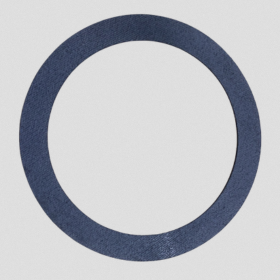
■Overview of Processing Example Dimensions: φ234 × φ165 P190 This case is a processing example of the D5800 graphite-filled gasket used in the flange part of electric furnace equipment. It features a ring shape with six φ14 mounting holes, requiring assembly precision. By adopting laser processing, dimensional reproducibility of the inner and outer diameters and hole pitch is ensured, contributing to stable construction on-site. ■Product Features (D5800) This gasket is made by applying natural rubber to glass cloth and molding it into a specified shape. It has excellent thermal insulation properties and is environmentally friendly as it is non-asbestos. Various processing methods, including sewing, are available, allowing for large diameter processing. It is used for high-temperature duct sealing.
Added to bookmarks
Bookmarks listBookmark has been removed
Bookmarks listYou can't add any more bookmarks
By registering as a member, you can increase the number of bookmarks you can save and organize them with labels.
Free membership registration
Overview of Processing Example Product Name: Flange Gasket for High-Temperature Ducts Dimensions: Equivalent to JIS 10K-80A (Thickness 4mm) This example involves the processing of a gasket for duct flanges used in high-temperature exhaust equipment. Dimensional accuracy and positional reproducibility during installation were required for the circular shape, which includes bolt holes. By adopting laser processing without molds for products related to piping and equipment, we enable shape modifications and small lot production while ensuring stable processing quality. Product Features (D5800RCF) Exhaust gases, combustion gases, hot air, etc., for duct flanges and manhole gaskets. Uses biocompatible, biodegradable fiber cloth that complies with RCF regulations. Various processing methods, including sewing, are available, allowing for large-diameter processing. Used for high-temperature duct seals.
Added to bookmarks
Bookmarks listBookmark has been removed
Bookmarks listYou can't add any more bookmarks
By registering as a member, you can increase the number of bookmarks you can save and organize them with labels.
Free membership registration
Processing Case Overview Product Name: Glass Cloth Gasket Dimensions: φ155 × φ90 (PCD130, 15φ-4) This case involves the processing of a circular gasket made from glass cloth material (3.2t with tape). In addition to outer and inner diameter processing, it includes bolt holes specified by PCD, and was manufactured for sealing applications in industrial equipment flanges. To maintain the unique layered structure of the fiber material, water jet processing, which allows for non-contact machining, was adopted, achieving both dimensional accuracy and reproducibility. Product Features (Glass Cloth) 〇D5400 This gasket is made by applying natural rubber to glass cloth and molding it into a specified shape. It has excellent thermal insulation properties and is environmentally friendly as it is non-asbestos. There are various processing methods, including sewing, allowing for large diameter processing. It is used for high-temperature duct sealing.
Added to bookmarks
Bookmarks listBookmark has been removed
Bookmarks listYou can't add any more bookmarks
By registering as a member, you can increase the number of bookmarks you can save and organize them with labels.
Free membership registration
■Overview of Processing Example Product Name: NBR Rubber Sheet with Slits Dimensions: t1 × 20W × 71L (φ4-2) This processing example involves the production of a rubber component with slits, used for parts in industrial equipment. In addition to the long shape, multiple holes and slit processing were specified, requiring positional adjustability and dimensional reproducibility during installation. The client is an industrial equipment manufacturer. To ensure freedom of shape and processing accuracy without using a die, water jet processing was adopted, achieving stable quality in production.
Added to bookmarks
Bookmarks listBookmark has been removed
Bookmarks listYou can't add any more bookmarks
By registering as a member, you can increase the number of bookmarks you can save and organize them with labels.
Free membership registration
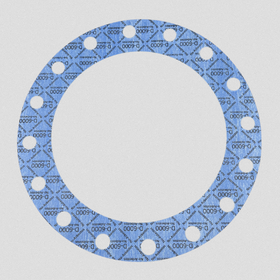
■Overview of Processing Example Product Name: Clutch Cover Gasket Dimensions: 1.5t × φ355 × φ322 (with P350 holes) This processing example involves the production of a gasket for a clutch cover using D6000 (1.5t). In addition to the outer and inner diameters, the inclusion of P350 bolt holes required simultaneous precision in hole positioning and shape. In this application, "compliance of the joint surface" and "ease of alignment during assembly" are crucial as they directly relate to oil sealing performance. Therefore, the drawing shape was converted into processing data, and the outer circumference, inner circumference, and hole drilling were all processed together using water jet cutting. By processing without affecting the material with heat, the reproducibility of the shape and the quality of the end face are stabilized. As a result, conditions that facilitate alignment during assembly and ensure stable finishing of the sealing surface have been secured. Furthermore, the adoption of D6000 contributes to both practicality and cost advantages for oil seal applications.
Added to bookmarks
Bookmarks listBookmark has been removed
Bookmarks listYou can't add any more bookmarks
By registering as a member, you can increase the number of bookmarks you can save and organize them with labels.
Free membership registration
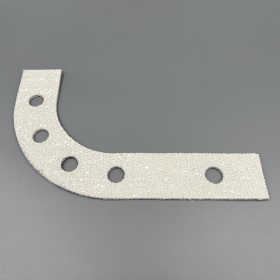
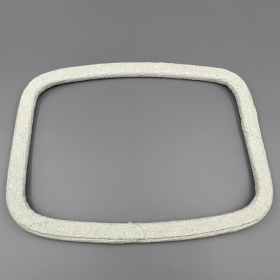
■Overview of Processing Example Product Name: Glass Cloth Gasket Dimensions: 4.8t × 140W × 180L Uneven Frame This example is a glass cloth gasket manufactured for flange parts of equipment. The design includes an uneven frame shape and specified inner and outer radii, with an emphasis on assembly compatibility and shape reproducibility. Water jet processing is used to minimize the processing difficulty inherent to fiber materials while achieving stable dimensional accuracy and finish.
Added to bookmarks
Bookmarks listBookmark has been removed
Bookmarks listYou can't add any more bookmarks
By registering as a member, you can increase the number of bookmarks you can save and organize them with labels.
Free membership registration
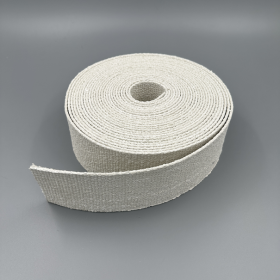
■Overview of Processing Example Dimensions: 150W × 712L (Thickness 2t) This example involves the production of a long gasket processed with tape using D5400 glass cloth material. It features a strip shape of 150W × 712L with six 14φ holes arranged to improve positioning during installation and enhance work efficiency. In long shapes, linear accuracy and hole pitch accuracy are crucial, so water jet processing was adopted. This method allows for processing without thermal impact, ensuring a uniform cutting surface without compromising material properties. The tape-equipped specification facilitates temporary fixing, contributing to improved workability on-site. ■Product Features (D5400) This gasket is made by applying natural rubber to glass cloth and molding it into a specified shape. It has excellent thermal insulation properties and is environmentally friendly as it is non-asbestos. Various processing methods, including sewing, are available, allowing for large diameter processing. It is used for high-temperature duct sealing.
Added to bookmarks
Bookmarks listBookmark has been removed
Bookmarks listYou can't add any more bookmarks
By registering as a member, you can increase the number of bookmarks you can save and organize them with labels.
Free membership registration
Processing Case Overview Product Name: Glass Cloth Gasket Dimensions: φ526 × φ450 (PCD496) This case is an example of processing a large-diameter glass cloth gasket used in electric furnace-related equipment. We adopted water jet processing without using a mold to meet specifications that require circumferential accuracy and hole position accuracy. While utilizing the material properties designed for use in high-temperature environments, we ensure stable dimensional reproducibility and assembly compatibility. Product Features (Glass Cloth) 〇D5400 This is a gasket made by applying natural rubber to glass cloth and molding it into a specified shape. It has excellent thermal insulation properties and is environmentally friendly as it is non-asbestos. There are processing methods such as sewing, allowing for large-diameter processing. It is also used in high-temperature duct sealing applications.
Added to bookmarks
Bookmarks listBookmark has been removed
Bookmarks listYou can't add any more bookmarks
By registering as a member, you can increase the number of bookmarks you can save and organize them with labels.
Free membership registration
Processing Case Overview Product Name: Ring Gasket (R5 U-shaped Cut) Dimensions: φ460×φ361 (t6.4) This processing case involves a large-diameter ring gasket used in wind power-related equipment. Due to its special shape, which includes R5 U-shaped notches and jigsaw cuts, water jet processing was adopted instead of mold processing. By using non-contact cutting, stable processing accuracy is ensured even for the thick D5400, leading to improved fit during assembly and enhanced workability. Product Features (D5400) This gasket is made by applying natural rubber to glass cloth and molding it into the specified shape. It has excellent thermal insulation properties and is environmentally friendly as it is non-asbestos. Various processing methods, including sewing, are available, allowing for large-diameter processing. It is used for high-temperature duct sealing.
Added to bookmarks
Bookmarks listBookmark has been removed
Bookmarks listYou can't add any more bookmarks
By registering as a member, you can increase the number of bookmarks you can save and organize them with labels.
Free membership registration
We would like to introduce a case where we manufactured a gasket for a screw pump gear case using the expansion graphite joint sheet "TOMBO No.1120" with a thickness of 0.5mm, based on the drawings received from the customer. The size is 220mm x 384mm, and the processing details include precisely creating 14 bolt holes with a diameter of 14mm and 2 main port holes with a diameter of 130mm. Using our plotter processing machine, we accurately cut the very thin and delicate material without damaging it, following the CAD data. 【Processing Features】 ■ No die required, can handle from one piece ■ Precise cutting of thin materials ■ Easy repeat orders with data storage *For more details, please download the PDF or feel free to contact us.
Added to bookmarks
Bookmarks listBookmark has been removed
Bookmarks listYou can't add any more bookmarks
By registering as a member, you can increase the number of bookmarks you can save and organize them with labels.
Free membership registration
As a measure against oil leaks in hydraulic equipment and transformers, we proudly present the "Three Sheet Packing (Viscous Body Impregnated Sheet Gasket)" that boasts immense trust. This special gasket manufactured by ThreeBond is a groundbreaking material that combines the "ease of handling of solid sheets" with the "sealability of liquid gaskets." In this article, Daiko Co., Ltd. will explain the mechanism of the Three Sheet, the differentiation of the four types according to surface pressure (H type, S type, T type, F type), and detailed selection criteria. *For more detailed content of the column, you can view it through the related links. For more information, please download the PDF or feel free to contact us.*
Added to bookmarks
Bookmarks listBookmark has been removed
Bookmarks listYou can't add any more bookmarks
By registering as a member, you can increase the number of bookmarks you can save and organize them with labels.
Free membership registration
When it comes to gaskets with the strongest class of heat resistance and chemical resistance, fluororubber (FKM) is the common knowledge in many workplaces. However, even fluororubber has environments that can be a 'critical point' where it can deteriorate in a short period. These are the lines of 'steam (water vapor)' and 'strong alkali.' In this article, we will explain the special grade 'IF-900-AF (Aflas/FEPM)' produced by Iruma River Rubber, which overcomes the weaknesses of conventional fluororubber and achieves long life in harsh steam and chemical lines. *For detailed content of the column, please refer to the related link. For more information, feel free to download the PDF or contact us.
Added to bookmarks
Bookmarks listBookmark has been removed
Bookmarks listYou can't add any more bookmarks
By registering as a member, you can increase the number of bookmarks you can save and organize them with labels.
Free membership registration
"Nylon (polyamide)" is widely used as an engineering plastic with excellent wear resistance and heat resistance, ranging from automotive parts to everyday goods. However, are you able to accurately understand and select the differences between the representative grades "Nylon 6 (PA6)" and "Nylon 66 (PA66)"? In this article, we will explain the two decisive differences (heat resistance, water absorption, impact strength) as well as "plant-based Nylon 11" and "low water-absorbing Nylon 12," which have recently gained attention as 3D printer materials. *For detailed content of the column, you can view it through the related links. For more information, please download the PDF or feel free to contact us.
Added to bookmarks
Bookmarks listBookmark has been removed
Bookmarks listYou can't add any more bookmarks
By registering as a member, you can increase the number of bookmarks you can save and organize them with labels.
Free membership registration
In the world of industrial gaskets, the essential material for handling "heat" and "electricity" is "copper." However, there are two main grades of copper gaskets: "C1100 (tough pitch copper)" and "C1220 (phosphorus deoxidized copper)," and choosing the wrong one can lead to issues such as "cracking at the weld" and "not achieving the expected conductivity." In this article, Daiko Co., Ltd., a specialized manufacturer of industrial gaskets, explains the differences between these two copper grades and the importance of "annealing (softening treatment)" that dramatically enhances the sealing performance of copper gaskets. *For more detailed information, please refer to the related links. For further inquiries, feel free to download the PDF or contact us.*
Added to bookmarks
Bookmarks listBookmark has been removed
Bookmarks listYou can't add any more bookmarks
By registering as a member, you can increase the number of bookmarks you can save and organize them with labels.
Free membership registration
When selecting plastic materials, have you ever faced the challenge of wanting "transparency to see the contents, but being afraid of breakage with glass or acrylic"? The optimal solution for this is polycarbonate (PC). In this article, we will explain polycarbonate, which boasts top-class impact resistance among engineering plastics, along with its incredible strength, advantages and disadvantages, and points to consider during processing. *For detailed content of the column, you can view it through the related links. For more information, please download the PDF or feel free to contact us.*
Added to bookmarks
Bookmarks listBookmark has been removed
Bookmarks listYou can't add any more bookmarks
By registering as a member, you can increase the number of bookmarks you can save and organize them with labels.
Free membership registration
In piping work, fittings that are always installed with future maintenance in mind are called "unions." Unlike regular fittings that "cannot be removed without cutting once connected," unions have the significant advantage of being "removable at any time." In this article, we will explain the mechanism of unions, the correct installation methods, and the importance of "gaskets" and "seal tape" in preventing leaks. *For detailed content of the column, please refer to the related links. For more information, feel free to download the PDF or contact us.
Added to bookmarks
Bookmarks listBookmark has been removed
Bookmarks listYou can't add any more bookmarks
By registering as a member, you can increase the number of bookmarks you can save and organize them with labels.
Free membership registration
There are many types of plastic materials, but nothing surpasses "polyvinyl chloride (PVC)" in terms of the balance between cost and performance. From water pipes to industrial tanks, and even construction materials. Why is PVC still chosen so consistently? We will explain five technical features that are supported in design and construction sites. *For more details on the column, you can view it through the related link. For more information, please download the PDF or feel free to contact us.*
Added to bookmarks
Bookmarks listBookmark has been removed
Bookmarks listYou can't add any more bookmarks
By registering as a member, you can increase the number of bookmarks you can save and organize them with labels.
Free membership registration
In the design of industrial machinery and analytical devices, selecting materials for "covers" and "windows" that ensure internal visibility is important. Glass poses a risk of breaking and is too heavy, while polycarbonate is not cost-effective. In such cases, "acrylic resin (PMMA)" becomes a balanced option. This time, we will introduce three technical features that make acrylic suitable for industrial equipment, as well as precision processing services provided by Daiko Co., Ltd. *For more details on the column, you can view it through the related links. For more information, please download the PDF or feel free to contact us.*
Added to bookmarks
Bookmarks listBookmark has been removed
Bookmarks listYou can't add any more bookmarks
By registering as a member, you can increase the number of bookmarks you can save and organize them with labels.
Free membership registration
SUS304 is so widely used, from everyday items to industrial equipment, that it is often referred to as "the representative of stainless steel." From household items like spoons and forks to building exteriors and piping in chemical plants, why is SUS304 continuously chosen? The reason is simply that "the balance between performance and cost is extremely good." In this article, we will explain the "three strengths" of SUS304 and the decisive differences between it and the higher-grade SUS316. *For more detailed information, please refer to the related links. You can download the PDF for more details or feel free to contact us.*
Added to bookmarks
Bookmarks listBookmark has been removed
Bookmarks listYou can't add any more bookmarks
By registering as a member, you can increase the number of bookmarks you can save and organize them with labels.
Free membership registration
"The gasket removed during maintenance is undamaged, so can't we reuse it?" "I want to reuse a packing that has been used once to reduce costs." This is a common concern on site, but to put it simply, reusing gaskets is absolutely not allowed. Major manufacturers also stipulate that "gaskets are disposable (one-way) parts" as a principle. Why is it not permissible to reuse them even if they look clean? In addition to the physical mechanisms that can cause leaks due to reuse, I will also explain the risks of "asbestos" lurking in old equipment. *For more details on the column, you can view it through the related link. For more information, please feel free to download the PDF or contact us.*
Added to bookmarks
Bookmarks listBookmark has been removed
Bookmarks listYou can't add any more bookmarks
By registering as a member, you can increase the number of bookmarks you can save and organize them with labels.
Free membership registration
In factory equipment management and product traceability, there is currently a shift away from "labels" and "ink printing." The background to this is the wave of digitalization (DX) and the need to respond to harsh on-site environments. Considering the trends in the industrial sector and the challenges on the ground, we propose a new management method utilizing the advanced device "Keyence MD-U1000C" introduced by Daiko Co., Ltd. *For more details on the column, you can view it through the related link. For more information, please download the PDF or feel free to contact us.*
Added to bookmarks
Bookmarks listBookmark has been removed
Bookmarks listYou can't add any more bookmarks
By registering as a member, you can increase the number of bookmarks you can save and organize them with labels.
Free membership registration
Oil leaked from the gaps in the machine, causing the line to stop." "The adjustment screw of the precision equipment became loose, leading to unstable quality." When we delve into the causes of these serious troubles, we often find that they can be traced back to a single faulty "O-ring." O-rings are extremely important mechanical components that govern the "sealing (leak prevention)" and "operability (sliding resistance)" of various machines, ranging from the aerospace industry to semiconductor manufacturing equipment and even everyday gas appliances. Despite their simple circular shape, O-rings are designed based on advanced material chemistry and physical laws. Choosing the wrong material can lead to a loss of function in an instant, potentially putting the entire expensive equipment at risk. This article will explain the true importance of the O-ring as a component and the essential rules for "material selection" to protect machinery. *For more details, please refer to the related links. You can download the PDF for more information or feel free to contact us.
Added to bookmarks
Bookmarks listBookmark has been removed
Bookmarks listYou can't add any more bookmarks
By registering as a member, you can increase the number of bookmarks you can save and organize them with labels.
Free membership registration
In the field of mechanical design and maintenance, the selection of "dimensional standards" for O-rings is unavoidable. We will systematically explain the meanings and applications of various symbols, including JIS standards (P, G, V), AS568, and ISO standards. *For detailed content of the column, you can view it through the related links. For more information, please download the PDF or feel free to contact us.
Added to bookmarks
Bookmarks listBookmark has been removed
Bookmarks listYou can't add any more bookmarks
By registering as a member, you can increase the number of bookmarks you can save and organize them with labels.
Free membership registration