1~45 item / All 57 items
Displayed results
Added to bookmarks
Bookmarks listBookmark has been removed
Bookmarks listYou can't add any more bookmarks
By registering as a member, you can increase the number of bookmarks you can save and organize them with labels.
Free membership registration
Contact this company
Inquiry Form1~45 item / All 57 items

We will thoroughly compare the seven major AI interview tools based on their pricing structures, free trials, and preferred hiring methods. This includes an explanation of the cost range for initial fees, monthly fees, and pay-as-you-go charges, as well as considerations for breakeven points, tips for small businesses to avoid mistakes in selection, and a pre-implementation checklist. For more details, please refer to the technical column in the related links.
Added to bookmarks
Bookmarks listBookmark has been removed
Bookmarks listYou can't add any more bookmarks
By registering as a member, you can increase the number of bookmarks you can save and organize them with labels.
Free membership registration
This is a case study on how the introduction of the AI interview service SUGUMEN transformed part-time hiring for a retail chain. We achieved a 70% reduction in interview workload and halved the hiring lead time. We will introduce know-how on utilizing AI to streamline mass hiring. For more details, please refer to the technical column in the related link.
Added to bookmarks
Bookmarks listBookmark has been removed
Bookmarks listYou can't add any more bookmarks
By registering as a member, you can increase the number of bookmarks you can save and organize them with labels.
Free membership registration
You can understand what a RAG chatbot is in five minutes. It explains the mechanism of RAG (Retrieval-Augmented Generation), the differences from standalone ChatGPT, how to create it using LangChain and vector databases, and the criteria for deciding between in-house development and outsourcing, all illustrated. It includes a real example of reducing internal help desk inquiries by 60%. For more details, please see the technical column in the related links.
Added to bookmarks
Bookmarks listBookmark has been removed
Bookmarks listYou can't add any more bookmarks
By registering as a member, you can increase the number of bookmarks you can save and organize them with labels.
Free membership registration
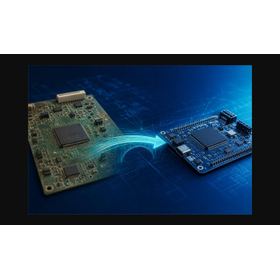
This article explains the disassembly procedure for the Renesas RL78 microcontroller based on actual devices. It is a practical case study of restoring a 15-year-old industrial device, which has no specifications or source code, from an ELF file to C language. It includes register analysis and the porting to the latest microcontrollers. For more details, please refer to the technical column in the related links.
Added to bookmarks
Bookmarks listBookmark has been removed
Bookmarks listYou can't add any more bookmarks
By registering as a member, you can increase the number of bookmarks you can save and organize them with labels.
Free membership registration
Converts Keras/TFLite/ONNX to C code for STM32 using STM32Cube.AI. It optimizes weight placement for SRAM, Flash, and external QSPI, and explains MPU/D-Cache settings and STM32N6 NPU based on primary sources AN5050/UM2526. For more details, please refer to the technical column in the related links.
Added to bookmarks
Bookmarks listBookmark has been removed
Bookmarks listYou can't add any more bookmarks
By registering as a member, you can increase the number of bookmarks you can save and organize them with labels.
Free membership registration
The key to mastering the built-in OPAMP/COMP/high-speed ADC of the STM32G4, "source resistance and sampling time," is explained using AN2834 and DS12288 as primary sources. It covers the decisive techniques for the OPAMP Voltage Follower and the pitfalls of errata. For more details, please refer to the technical column in the related links.
Added to bookmarks
Bookmarks listBookmark has been removed
Bookmarks listYou can't add any more bookmarks
By registering as a member, you can increase the number of bookmarks you can save and organize them with labels.
Free membership registration
We will systematize the rescue procedures for the common issues encountered with STM32, such as "ST-LINK not connecting" and "Target was not detected," into 14 steps using AN4989, UM2237, and UM1075 as primary sources. This covers everything from SWD recovery to counterfeit detection. For more details, please refer to the technical column in the related links.
Added to bookmarks
Bookmarks listBookmark has been removed
Bookmarks listYou can't add any more bookmarks
By registering as a member, you can increase the number of bookmarks you can save and organize them with labels.
Free membership registration
This is a comprehensive guide that systematically explains all seven modes of the STM32L4: Run/Sleep/Stop 0/1/2/Standby/Shutdown, based on the official application notes. It covers the usage of the HAL API, wake-up design, lifetime estimation with CR2032, and six common pitfalls encountered in practice. For more details, please refer to the technical column in the related links.
Added to bookmarks
Bookmarks listBookmark has been removed
Bookmarks listYou can't add any more bookmarks
By registering as a member, you can increase the number of bookmarks you can save and organize them with labels.
Free membership registration
This is an implementation guide for minimizing CPU load by combining STM32's DMA with UART/SPI/ADC. It covers CubeMX settings, Normal/Circular modes, double buffering, and variable-length reception with IDLE interrupts. For more details, please refer to the technical column in the related links.
Added to bookmarks
Bookmarks listBookmark has been removed
Bookmarks listYou can't add any more bookmarks
By registering as a member, you can increase the number of bookmarks you can save and organize them with labels.
Free membership registration
This guide is aimed at beginners of FreeRTOS, explaining the basics of RTOS development from enabling it in STM32CubeMX to using tasks, queues, semaphores, and mutexes. It includes numerous C sample codes based on CMSIS-OS v2. For more details, please refer to the technical column in the related links.
Added to bookmarks
Bookmarks listBookmark has been removed
Bookmarks listYou can't add any more bookmarks
By registering as a member, you can increase the number of bookmarks you can save and organize them with labels.
Free membership registration
We will explain the peripheral settings and implementation of the STM32 microcontroller. We will provide sample C code using the HAL library, as well as the distinctions between UART/I2C/SPI/CAN communication. Our company, which has engineers with over 20 years of embedded development experience, will provide the explanation. For more details, please refer to the technical column in the related links.
Added to bookmarks
Bookmarks listBookmark has been removed
Bookmarks listYou can't add any more bookmarks
By registering as a member, you can increase the number of bookmarks you can save and organize them with labels.
Free membership registration
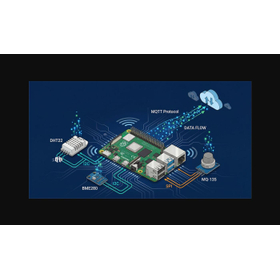
This article explains how to read I2C/SPI connected sensors (temperature and humidity, acceleration, CO2) with a Raspberry Pi and send the data to AWS IoT Core via MQTT, complete with implementation details. It covers everything from an introduction to IoT and embedded control to practical applications. For more information, please refer to the technical column in the related links.
Added to bookmarks
Bookmarks listBookmark has been removed
Bookmarks listYou can't add any more bookmarks
By registering as a member, you can increase the number of bookmarks you can save and organize them with labels.
Free membership registration
We will share a case study where we implemented a RAG chatbot in the internal help desk, reducing inquiry responses by 60%. We will explain the configuration using LangChain, vector DB, and GPT-4o, the secretive operation on-premises, estimated implementation costs, and a reliable approach based on real experiences. For more details, please refer to the technical column in the related links.
Added to bookmarks
Bookmarks listBookmark has been removed
Bookmarks listYou can't add any more bookmarks
By registering as a member, you can increase the number of bookmarks you can save and organize them with labels.
Free membership registration
This article explains the implementation know-how for running small vLMs such as Moondream2, SmolVLM, and Qwen2-VL on Raspberry Pi 4/5 in edge operation. It covers llama.cpp + GGUF quantization, resolution and token control, memory optimization, and deployment in real projects. We will build image × language AI with limited resources. For more details, please refer to the technical column in the related links.
Added to bookmarks
Bookmarks listBookmark has been removed
Bookmarks listYou can't add any more bookmarks
By registering as a member, you can increase the number of bookmarks you can save and organize them with labels.
Free membership registration
We will introduce an example that integrates gpt-image image generation, automated browser use, and Genspark CLI search/slides using OpenClaw's skill mechanism. We will also disclose the OpenAI-compatible API, in-house chatgpt-bridge, and k3s design. This will explain the know-how for building business automation with a multimodal AI agent. For more details, please refer to the technical column in the related links.
Added to bookmarks
Bookmarks listBookmark has been removed
Bookmarks listYou can't add any more bookmarks
By registering as a member, you can increase the number of bookmarks you can save and organize them with labels.
Free membership registration
This document explains how to automatically record work logs in an Obsidian Vault using the skill mechanism of OpenClaw and delegate Redmine ticket operations to AI. It includes practical operations from SKILL.md, AUTO zone synchronization, ticket creation, to status transitions. This is a real example that achieved a 70% reduction in daily recording time and a 90% reduction in ticket creation omissions over three months of operation. For more details, please refer to the technical column in the related links.
Added to bookmarks
Bookmarks listBookmark has been removed
Bookmarks listYou can't add any more bookmarks
By registering as a member, you can increase the number of bookmarks you can save and organize them with labels.
Free membership registration
This is a complete guide for those considering the internal use of OSS's AI agent platform OpenClaw, explaining the implementation steps based on real experiences. It covers everything from the quickest startup using Docker Compose, to a hybrid configuration of Codex Pro and local LLM, to production operation with Raspberry Pi 5 + k3s, including seven potential pitfalls. For more details, please refer to the technical column in the related links.
Added to bookmarks
Bookmarks listBookmark has been removed
Bookmarks listYou can't add any more bookmarks
By registering as a member, you can increase the number of bookmarks you can save and organize them with labels.
Free membership registration
Motor control is realized with TI C2000 (TMS320F28xx). This article explains the roles of C28x, CLA, ePWM, eQEP, PWM synchronized ADC, and CMPSS, as well as the control loop for driving BLDC/PMSM using FOC (Field-Oriented Control) with CCS+C2000Ware. TechnoSphere, a company specializing in embedded contract development, provides an overview of real-time control microcontrollers. For more details, please refer to the technical column in the related links.
Added to bookmarks
Bookmarks listBookmark has been removed
Bookmarks listYou can't add any more bookmarks
By registering as a member, you can increase the number of bookmarks you can save and organize them with labels.
Free membership registration
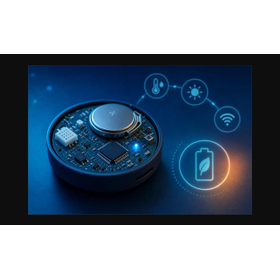
The TI MSP430 is a standard ultra-low power 16-bit microcontroller. We will explain the design of sensor devices that can operate for years on a single battery by implementing LPM0 to LPM4.5, FRAM, eUSCI, Timer_A, and ADC using CCS+DriverLib. This will be explained by engineers with over 20 years of embedded development experience at Technosphere. For more details, please refer to the technical column in the related links.
Added to bookmarks
Bookmarks listBookmark has been removed
Bookmarks listYou can't add any more bookmarks
By registering as a member, you can increase the number of bookmarks you can save and organize them with labels.
Free membership registration
This document explains the overview of the Renesas RX family (RX100/200/600/700) and how to implement SCI/RIIC/MTU/12bit ADC using FIT modules and Smart Configurator/e2 studio, with practical examples. It provides an introduction to the overall picture of the main 32-bit microcontrollers used in Japanese industrial equipment for beginners. For more details, please refer to the technical column in the related links.
Added to bookmarks
Bookmarks listBookmark has been removed
Bookmarks listYou can't add any more bookmarks
By registering as a member, you can increase the number of bookmarks you can save and organize them with labels.
Free membership registration
This document explains the procedure for implementing the UART (SAU), I2C (IICA), Timer (TAU), and 12-bit ADC of the Renesas RL78 using code generation in Smart Configurator. TechnoSphere, specializing in embedded contract development, will provide practical insights from the perspective of CS+/e2 studio/CC-RL and STOP/SNOOZE low power modes. For more details, please refer to the technical column in the related links.
Added to bookmarks
Bookmarks listBookmark has been removed
Bookmarks listYou can't add any more bookmarks
By registering as a member, you can increase the number of bookmarks you can save and organize them with labels.
Free membership registration
This article explains the measures taken for the discontinuation of production and support for classic 8-bit microcontrollers such as the 8051 (MCS-51) and Z80 series. It will share know-how on porting and reviving legacy code primarily written in assembly, dealing with special memory banks, and unique peripherals to STM32 and RL78. For more details, please refer to the technical column in the related links.
Added to bookmarks
Bookmarks listBookmark has been removed
Bookmarks listYou can't add any more bookmarks
By registering as a member, you can increase the number of bookmarks you can save and organize them with labels.
Free membership registration
The old Hitachi/Renesas H8/H8S/H8SX microcontrollers are progressing towards EOL (End of Life) and NRND (Not Recommended for New Designs). We will share practical know-how for migrating and revitalizing to RL78/RX, overcoming the challenges of determining "how many more years they can be used," the aging of the old HEW development environment, loss of source code, and peripheral differences, with real examples. For more details, please refer to the technical column in the related links.
Added to bookmarks
Bookmarks listBookmark has been removed
Bookmarks listYou can't add any more bookmarks
By registering as a member, you can increase the number of bookmarks you can save and organize them with labels.
Free membership registration
We will explain the end-of-life measures for Toshiba's old microcontrollers TLCS-870 (8bit) and TLCS-900 (16/32bit). We will share know-how on porting to TXZ (Cortex-M), STM32, and RL78, addressing issues such as code loss, dedicated assemblers, and peripheral differences. For more details, please refer to the technical column in the related links.
Added to bookmarks
Bookmarks listBookmark has been removed
Bookmarks listYou can't add any more bookmarks
By registering as a member, you can increase the number of bookmarks you can save and organize them with labels.
Free membership registration
This article explains the EOL/NRND measures for Renesas SH (SuperH) series microcontrollers SH-1/2/2A/3/4. It discusses the challenges of migration such as code loss, SHC, big-endian, SCIF/MTU2, and shares knowledge and experience regarding porting to RX and other platforms. For more details, please refer to the technical column in the related links.
Added to bookmarks
Bookmarks listBookmark has been removed
Bookmarks listYou can't add any more bookmarks
By registering as a member, you can increase the number of bookmarks you can save and organize them with labels.
Free membership registration
How to ensure quality and accountability in the era of generative AI writing code. We will publish the operation of TechnoSphere, which leaves all work as evidence (audit trace) using Redmine, Growi, Obsidian, and Claude Code, along with examples of tracking and fixing actual form issues. For more details, please see the technical column in the related links.
Added to bookmarks
Bookmarks listBookmark has been removed
Bookmarks listYou can't add any more bookmarks
By registering as a member, you can increase the number of bookmarks you can save and organize them with labels.
Free membership registration
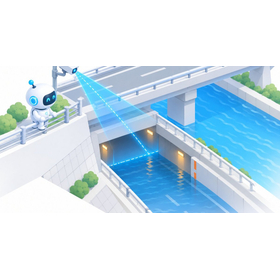
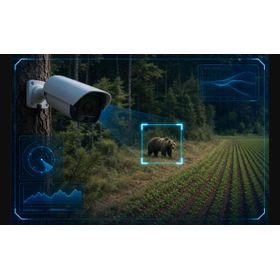
As bear sightings and human injuries become more serious, we offer the option of early detection using AI cameras. GENBA IQ analyzes existing security camera footage with edge AI to detect and notify in real-time about harmful animals such as bears, wild boars, and deer. This is for measures against wildlife in municipalities, agricultural land, school routes, and facilities. Proof of Concept in as little as two weeks. For more details, please see the technical column in the related links.
Added to bookmarks
Bookmarks listBookmark has been removed
Bookmarks listYou can't add any more bookmarks
By registering as a member, you can increase the number of bookmarks you can save and organize them with labels.
Free membership registration
From intuition and experience-based ordering to data-driven demand forecasting. How to create an AI system that predicts the "probability of selling" at the product level, including what data to use, what models to apply, and how to operate it. This article explains the key points of implementing and operating demand forecasting that combines sales performance, events, weather, and market attributes. For more details, please refer to the technical column in the related links.
Added to bookmarks
Bookmarks listBookmark has been removed
Bookmarks listYou can't add any more bookmarks
By registering as a member, you can increase the number of bookmarks you can save and organize them with labels.
Free membership registration
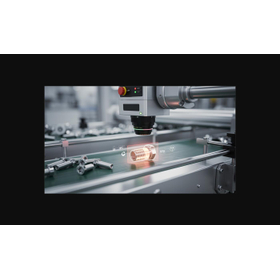
This is an introduction guide for automating visual inspection in manufacturing using AI (image recognition). It covers cost considerations and estimates, the process from PoC to full implementation, examples of inspections for scratches, dirt, missing items, and printing, as well as key points for utilizing existing cameras. Technosphere in Osaka explains this from a practical perspective. For more details, please refer to the technical column in the related links.
Added to bookmarks
Bookmarks listBookmark has been removed
Bookmarks listYou can't add any more bookmarks
By registering as a member, you can increase the number of bookmarks you can save and organize them with labels.
Free membership registration
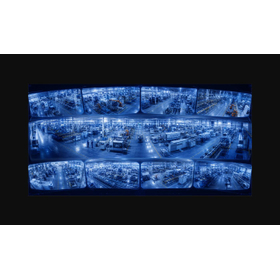
This article explains the technology that integrates multiple camera images with varying installation angles into a single horizontal, overhead image using perspective transformation (homography) and image stitching. Technospheric in Osaka introduces the concepts of camera calibration, alignment, and blending, as well as their applications in wide-area surveillance and on-site AI. For more details, please refer to the technical column in the related links.
Added to bookmarks
Bookmarks listBookmark has been removed
Bookmarks listYou can't add any more bookmarks
By registering as a member, you can increase the number of bookmarks you can save and organize them with labels.
Free membership registration
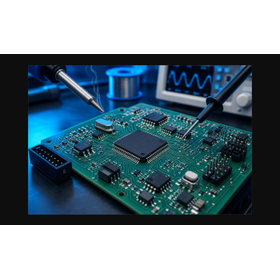
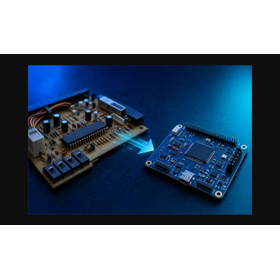
We will explain "Labor Safety AI," which detects intrusions into hazardous areas, lack of protective gear, and proximity to heavy machinery using AI cameras. Technospheric in Osaka will introduce the system aimed at preventing accidents in construction and manufacturing sites, the items that can be detected, how to implement it, and the utilization of the on-site AI "GENBA IQ." For more details, please refer to the technical column in the related links.
Added to bookmarks
Bookmarks listBookmark has been removed
Bookmarks listYou can't add any more bookmarks
By registering as a member, you can increase the number of bookmarks you can save and organize them with labels.
Free membership registration
We will explain the mechanism of detecting shoplifting and suspicious behavior using AI cameras. This includes the differences from traditional security cameras, the concept of behavior analysis, how to implement it, considerations for privacy, and the utilization of on-site AI "GENBA IQ," all presented from a practical perspective by Technosphere in Osaka. For more details, please refer to the technical column in the related links.
Added to bookmarks
Bookmarks listBookmark has been removed
Bookmarks listYou can't add any more bookmarks
By registering as a member, you can increase the number of bookmarks you can save and organize them with labels.
Free membership registration
This is the general table of contents organized by development phase for seven implementation guides on STM32 microcontroller development. It covers UART/I2C/SPI/CAN communication, DMA, FreeRTOS, low power design, analog measurement, ST-LINK troubleshooting, and TinyML. Technosphere, a company specializing in embedded contract development, provides practical explanations. For more details, please refer to the technical column in the related links.
Added to bookmarks
Bookmarks listBookmark has been removed
Bookmarks listYou can't add any more bookmarks
By registering as a member, you can increase the number of bookmarks you can save and organize them with labels.
Free membership registration
This is a practical guide to getting started with Zephyr RTOS on STM32 (Nucleo-F446RE). It explains the actual commands for setting up the west environment, the flow from LED blinking to threads to device trees, and Kconfig settings using prj.conf. TechnoSphere, with over 20 years of experience in embedded development, provides a comparison table with FreeRTOS, criteria for differentiation, and considerations for migrating existing assets. For more details, please refer to the technical column in the related links.
Added to bookmarks
Bookmarks listBookmark has been removed
Bookmarks listYou can't add any more bookmarks
By registering as a member, you can increase the number of bookmarks you can save and organize them with labels.
Free membership registration
This document organizes the subject determination, classification, and vulnerability reporting obligations starting from September 11, 2026, under the EU Cyber Resilience Act (CRA), and explains practical responses for embedded engineers regarding STM32's RDP, secure boot, TrustZone, and SBOM creation. Technosphere, which has engineers with over 20 years of experience in embedded development, will provide the explanation. For more details, please refer to the technical column in the related links.
Added to bookmarks
Bookmarks listBookmark has been removed
Bookmarks listYou can't add any more bookmarks
By registering as a member, you can increase the number of bookmarks you can save and organize them with labels.
Free membership registration
We will explain the STM32N6, the first microcontroller with an NPU from ST, from a practical perspective. This includes the architecture of the Neural-ART Accelerator (1GHz, up to 600 GOPS, approximately 3 TOPS/W), criteria for differentiating its use from Jetson/Raspberry Pi, how to choose evaluation boards, deployment procedures for ONNX models, memory constraints with 4.2MB SRAM and flashless configuration, and key points for mass production adoption. This will be explained by TechnoSphere, which has engineers with over 20 years of embedded development experience. For more details, please refer to the technical column in the related links.
Added to bookmarks
Bookmarks listBookmark has been removed
Bookmarks listYou can't add any more bookmarks
By registering as a member, you can increase the number of bookmarks you can save and organize them with labels.
Free membership registration
We will organize the basic knowledge of the H8 microcontrollers (H8/300H, H8S, H8SX) originating from Hitachi and their status as of 2026. Technosphere, which has engineers with over 20 years of embedded development experience, will explain the product status confirmation procedure on the Renesas official website, the availability of development environments such as HEW and E8a, the decision flow for "maintain or migrate," and considerations for migrating to RL78/RX/RA. For more details, please refer to the technical column in the related links.
Added to bookmarks
Bookmarks listBookmark has been removed
Bookmarks listYou can't add any more bookmarks
By registering as a member, you can increase the number of bookmarks you can save and organize them with labels.
Free membership registration
This is an introductory guide to Renesas' Arm Cortex-M series flagship "RA family." It covers the scope of each series (RA0/RA2/RA4/RA6/RA8), project creation using FSP (Flexible Software Package) and e2 studio, implementation of UART echo back, how to choose evaluation boards (EK/FPB), and comparisons with RX, RL78, and STM32. The explanation is provided by Technosphere, which has engineers with over 20 years of embedded development experience. For more details, please refer to the technical column in the related links.
Added to bookmarks
Bookmarks listBookmark has been removed
Bookmarks listYou can't add any more bookmarks
By registering as a member, you can increase the number of bookmarks you can save and organize them with labels.
Free membership registration
This article explains how to choose from Renesas' current microcontroller families: RL78, RX, and RA. It organizes a comparison table of bit width, CPU core, clock range, development environment (CS+/e2 studio), compiler, and long-term supply (PLP), and presents a selection flow for various applications such as battery operation, motor control, and new Arm designs from the perspective of embedded contract development. For more details, please refer to the technical column in the related links.
Added to bookmarks
Bookmarks listBookmark has been removed
Bookmarks listYou can't add any more bookmarks
By registering as a member, you can increase the number of bookmarks you can save and organize them with labels.
Free membership registration
This is a comprehensive table of contents that organizes eight implementation and migration guides for Renesas microcontrollers by family and purpose. It covers the selection and implementation of RL78/RX/RA, development with FSP and Smart Configurator, and maintenance and migration decisions for legacy assets such as H8 and SuperH. TechnoSphere, specializing in embedded contract development, provides practical explanations. For more details, please refer to the technical column in the related links.
Added to bookmarks
Bookmarks listBookmark has been removed
Bookmarks listYou can't add any more bookmarks
By registering as a member, you can increase the number of bookmarks you can save and organize them with labels.
Free membership registration
We will explain legacy migration in detail for each type of server. We will discuss whether NTP servers can be replaced by Amazon Time Sync, whether the role of console servers can be substituted by EC2 serial consoles, and the feasibility of rehosting UNIX servers such as Solaris and AIX. Technosphere, which has handled the migration of Solaris to OCI for government agencies, will organize this from a practical perspective. For more details, please refer to the technical column in the related links.
Added to bookmarks
Bookmarks listBookmark has been removed
Bookmarks listYou can't add any more bookmarks
By registering as a member, you can increase the number of bookmarks you can save and organize them with labels.
Free membership registration
From the definition of dead/alive monitoring, Technosphere, which develops its own server monitoring systems, will explain from a practical perspective the detection ranges and false detection patterns of ICMP Ping, TCP ports, HTTP(S), and agent-based monitoring, as well as notification design to prevent alert fatigue and the break-even point between OSS (Zabbix, Nagios, Prometheus) and SaaS (Mackerel, Datadog). For more details, please refer to the technical column in the related links.
Added to bookmarks
Bookmarks listBookmark has been removed
Bookmarks listYou can't add any more bookmarks
By registering as a member, you can increase the number of bookmarks you can save and organize them with labels.
Free membership registration
We will explain the design decisions behind the web systemization of the business history document (skill sheet) used in SES and personnel dispatch management in-house. This includes a choice-based and tag design to eliminate inconsistencies in notation, A4 printing that follows the original Excel format, reasons for lowering the implementation barrier with SQLite and Docker, and the authority design that restricts the viewing of unit prices to administrators only. The development company that implemented this will discuss it from a practical perspective. For more details, please refer to the technical column in the related links.
Added to bookmarks
Bookmarks listBookmark has been removed
Bookmarks listYou can't add any more bookmarks
By registering as a member, you can increase the number of bookmarks you can save and organize them with labels.
Free membership registration
How to implement "creating a procedure manual just by operating"? The development team will explain the architecture of our product FlowLens, which captures Windows screen operations in an event-driven manner, analyzes them with a Vision-compatible LLM, and automatically generates procedure manuals with screenshots. This includes a comparison of capture methods, privacy design, cost optimization of a two-stage LLM pipeline, and intermediate representation in JSON. For more details, please refer to the technical column in the related links.
Added to bookmarks
Bookmarks listBookmark has been removed
Bookmarks listYou can't add any more bookmarks
By registering as a member, you can increase the number of bookmarks you can save and organize them with labels.
Free membership registration
No server or installation required; a 3D drone game that runs solely in the browser will be implemented while explaining the process. This includes building scenes with Three.js, implementing virtual sticks for smartphones, AABB collision detection, texture creation using AI-generated images, and optimizing for mobile at 60fps. A playable demo is included. For more details, please refer to the technical column in the related links.
Added to bookmarks
Bookmarks listBookmark has been removed
Bookmarks listYou can't add any more bookmarks
By registering as a member, you can increase the number of bookmarks you can save and organize them with labels.
Free membership registration