iPROS Manufacturing
  • Search for products by classification category

    • Electronic Components and Modules
      Electronic Components and Modules
      59273items
    • Machinery Parts
      Machinery Parts
      74882items
    • Manufacturing and processing machinery
      Manufacturing and processing machinery
      99753items
    • Scientific and Physics Equipment
      Scientific and Physics Equipment
      34840items
    • Materials
      Materials
      37120items
    • Measurement and Analysis
      Measurement and Analysis
      54929items
    • Image Processing
      Image Processing
      15057items
    • Control and Electrical Equipment
      Control and Electrical Equipment
      53215items
    • Tools, consumables, and supplies
      Tools, consumables, and supplies
      64414items
    • Design and production support
      Design and production support
      12493items
    • IT/Network
      IT/Network
      43617items
    • Office
      Office
      13755items
    • Business support services
      Business support services
      33264items
    • Seminars and Skill Development
      Seminars and Skill Development
      6328items
    • Pharmaceutical and food related
      Pharmaceutical and food related
      30399items
    • others
      73746items
  • Search for companies by industry

    • Manufacturing and processing contract
      7337
    • others
      4994
    • Industrial Machinery
      4415
    • Machine elements and parts
      3283
    • Other manufacturing
      2890
    • IT/Telecommunications
      2552
    • Trading company/Wholesale
      2470
    • Industrial Electrical Equipment
      2298
    • Building materials, supplies and fixtures
      1811
    • software
      1635
    • Electronic Components and Semiconductors
      1569
    • Resin/Plastic
      1491
    • Service Industry
      1444
    • Testing, Analysis and Measurement
      1129
    • Ferrous/Non-ferrous metals
      983
    • environment
      699
    • Chemical
      629
    • Automobiles and Transportation Equipment
      564
    • Printing Industry
      508
    • Information and Communications
      455
    • Consumer Electronics
      416
    • Energy
      327
    • Rubber products
      313
    • Food Machinery
      307
    • Optical Instruments
      277
    • robot
      271
    • fiber
      250
    • Paper and pulp
      232
    • Electricity, Gas and Water Industry
      168
    • Pharmaceuticals and Biotechnology
      167
    • Warehousing and transport related industries
      145
    • Glass and clay products
      139
    • Food and Beverage
      129
    • CAD/CAM
      125
    • retail
      109
    • Educational and Research Institutions
      105
    • Medical Devices
      103
    • Ceramics
      98
    • wood
      88
    • Transportation
      84
    • Medical and Welfare
      63
    • Petroleum and coal products
      62
    • Shipbuilding and heavy machinery
      51
    • Aviation & Aerospace
      48
    • Fisheries, Agriculture and Forestry
      42
    • Public interest/special/independent administrative agency
      31
    • equipment
      31
    • self-employed
      24
    • Research and development equipment and devices
      24
    • Government
      23
    • Materials
      22
    • Mining
      17
    • Finance, securities and insurance
      13
    • cosmetics
      11
    • Individual
      10
    • Restaurants and accommodations
      9
    • Police, Fire Department, Self-Defense Forces
      7
    • Laboratory Equipment and Consumables
      4
    • Raw materials for reagents and chemicals
      3
    • Contracted research
      3
  • Special Features
  • Ranking

    • Overall Products Ranking
    • Overall Company Ranking
Search for Products
  • Search for products by classification category

  • Electronic Components and Modules
  • Machinery Parts
  • Manufacturing and processing machinery
  • Scientific and Physics Equipment
  • Materials
  • Measurement and Analysis
  • Image Processing
  • Control and Electrical Equipment
  • Tools, consumables, and supplies
  • Design and production support
  • IT/Network
  • Office
  • Business support services
  • Seminars and Skill Development
  • Pharmaceutical and food related
  • others
Search for Companies
  • Search for companies by industry

  • Manufacturing and processing contract
  • others
  • Industrial Machinery
  • Machine elements and parts
  • Other manufacturing
  • IT/Telecommunications
  • Trading company/Wholesale
  • Industrial Electrical Equipment
  • Building materials, supplies and fixtures
  • software
  • Electronic Components and Semiconductors
  • Resin/Plastic
  • Service Industry
  • Testing, Analysis and Measurement
  • Ferrous/Non-ferrous metals
  • environment
  • Chemical
  • Automobiles and Transportation Equipment
  • Printing Industry
  • Information and Communications
  • Consumer Electronics
  • Energy
  • Rubber products
  • Food Machinery
  • Optical Instruments
  • robot
  • fiber
  • Paper and pulp
  • Electricity, Gas and Water Industry
  • Pharmaceuticals and Biotechnology
  • Warehousing and transport related industries
  • Glass and clay products
  • Food and Beverage
  • CAD/CAM
  • retail
  • Educational and Research Institutions
  • Medical Devices
  • Ceramics
  • wood
  • Transportation
  • Medical and Welfare
  • Petroleum and coal products
  • Shipbuilding and heavy machinery
  • Aviation & Aerospace
  • Fisheries, Agriculture and Forestry
  • Public interest/special/independent administrative agency
  • equipment
  • self-employed
  • Research and development equipment and devices
  • Government
  • Materials
  • Mining
  • Finance, securities and insurance
  • cosmetics
  • Individual
  • Restaurants and accommodations
  • Police, Fire Department, Self-Defense Forces
  • Laboratory Equipment and Consumables
  • Raw materials for reagents and chemicals
  • Contracted research
Special Features
Ranking
  • Overall Products Ranking
  • Overall Company Ranking
  • privacy policy
  • terms of service
  • About Us
  • Careers
  • Advertising
  1. Home
  2. Other manufacturing
  3. サーモニックENG
  4. Product/Service List
Other manufacturing
  • Added to bookmarks

    Bookmarks list

    Bookmark has been removed

    Bookmarks list

    You can't add any more bookmarks

    By registering as a member, you can increase the number of bookmarks you can save and organize them with labels.

    Free membership registration

サーモニックENG

Establishment21th March 2025
capital300Ten thousand
addressChiba/Narashino-shi/8-31-16 Higashisharaku, Chiba
phone070-6596-0321
  • Special site
  • Official site
last updated:Dec 25, 2025
  • Contact this company

    Inquiry Form
  • Company information
  • Products/Services(51)
  • catalog(39)
  • news(0)

サーモニックENG Product Lineup

  • category

1~12 item / All 12 items

Displayed results

Filter by category
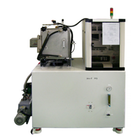
Compact Carbon furnace Compact Carbon furnace
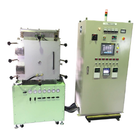
Metal furnace Metal furnace
Multi-atmosphere furnace Multi-atmosphere furnace
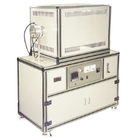
Tube furnace Tube furnace
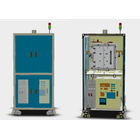
Compact chlorination furnace Compact chlorination furnace
Compact

Compact Carbon furnace

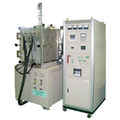
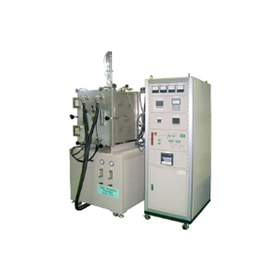
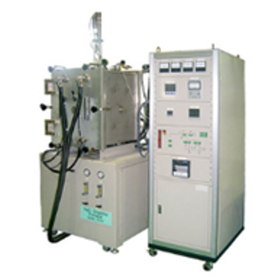
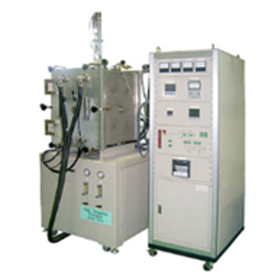
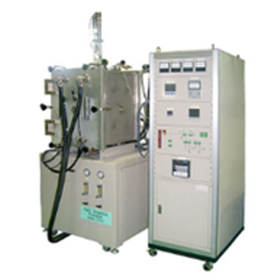
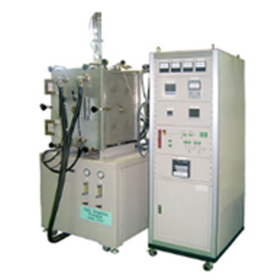
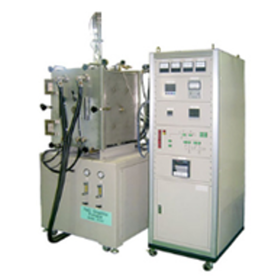
The compact carbon furnace features an all-graphite structure that maintains a low-oxygen atmosphere, enabling ultra-high-temperature processing at a continuous operating temperature of 2800°C and a maximum temperature of 3000°C. It is well suited for the high-degree graphitization of carbon materials and the sintering of ultra-high-melting-point materials.


Series Start: The Power of Small Carbon Furnaces

Explaining the capabilities of small carbon furnaces from a practical perspective! We will also introduce challenges and benefits.

"Although the temperature can be achieved, the targeted reaction site cannot be created." We will overcome that barrier with a small carbon furnace. In this series, we will explain the capabilities of a small carbon furnace that can reproducibly handle extremely low oxygen atmospheres (O2 ppm level) and ultra-high temperatures (2,000-3,000°C range) from a practical perspective. Do you face these challenges? ■ Heating can be done, but slight oxygen contamination causes variations in properties ■ Large furnaces have slow ramp-up times, making it difficult to establish conditions ■ Temperature unevenness and undercooking lead to instability in crystallinity and pore structure Benefits of miniaturization × extremely low O2 × ultra-high temperature ■ Reach target temperatures quickly → increases the number of trials per day ■ Ensures uniform heating even with small samples → improved reproducibility ■ Balances oxygen management and thermal history → achieves desired crystalline phases, conductivity, and microstructure In this series, we will sequentially introduce the development background, heating principles, application-specific know-how, safety design, specifications & expansions, mini case studies, and FAQs. *For more detailed information, please download the materials or feel free to contact us.

Added to bookmarks

Bookmarks list

Bookmark has been removed

Bookmarks list

You can't add any more bookmarks

By registering as a member, you can increase the number of bookmarks you can save and organize them with labels.

Free membership registration

Serialized Part 2: Background of the Development of Small Carbon Furnaces

Introducing the challenges in the research field, potential solutions, and concepts!

While the demand for dry reduction heat treatment is increasing, the following challenges are prominent on-site. ■ Challenges in Research Environments - Limitations on maximum achievable temperature (recipe design is constrained by material and structural upper limits in tubular furnaces) - Limitations on sample preparation volume (effective heating area is narrow, making it unsuitable for scale considerations) - Difficulty in maintaining extremely low oxygen levels (ppm to ppb range) (due to leaks, residual O2, and fine cracks from heat shock, etc.) ■ Directions for Solutions (Required Specifications) - Uniform heating in a short time: rapid temperature rise, high temperature uniformity, and good response - Flexible scaling: continuous support from small sample sizes to small-scale mass production - Atmosphere control: stabilization of extremely low oxygen levels with Ar/N2 (with small amounts of H2 as needed) and low residual O2 design ■ Concept Graphite heating element × high insulation structure × low leak design. A compact carbon furnace optimized for prototyping and condition setting, enabling faster and more reproducible dry reduction processes. *For more detailed information, please download the materials or feel free to contact us.

Added to bookmarks

Bookmarks list

Bookmark has been removed

Bookmarks list

You can't add any more bookmarks

By registering as a member, you can increase the number of bookmarks you can save and organize them with labels.

Free membership registration

Serial Part 3: The Principle of Small Carbon Furnaces

Why extreme low oxygen and 3000℃ levels are possible! Explaining the principles of a small carbon furnace.

The small carbon furnace is characterized by its ability to maintain an extremely low oxygen environment and ultra-high temperatures (around 3000°C). In this explanation, we will simply clarify "why this is possible" from a fundamental perspective. 1) Why does it become "extremely low oxygen"? ■ The furnace material itself is an "oxygen getter." The hot zone of the furnace is composed of carbon (graphite). Residual O2/CO2/H2O reacts with carbon and is reduced and fixed as CO/CO2, effectively lowering the oxygen activity. As a result, even materials that are sensitive to oxidation can be processed in a mild atmosphere. ■ Built-in vacuum system + replacement Before heating, the system is evacuated, and by repeatedly purging with inert gas (such as Ar/N2), the air inside the sample can be expelled in advance. This is effective for gas replacement in pores and powder gaps that cannot be reached by simple "ventilation." 2) Why is "3000°C" possible? ■ Heating element = high-temperature stability of graphite Graphite exhibits extremely high heat resistance under inert atmospheres and vacuum, allowing for efficient heating of the hot zone through resistance heating. *For more detailed information, please download the materials or feel free to contact us.

Added to bookmarks

Bookmarks list

Bookmark has been removed

Bookmarks list

You can't add any more bookmarks

By registering as a member, you can increase the number of bookmarks you can save and organize them with labels.

Free membership registration

Serialized Part 4: Main Uses of Small Carbon Furnaces

Synthesis and sintering of high-temperature materials, as well as high crystallization of carbon-based materials! Here are some main application examples.

In the previous session, we introduced the "principle" of the small carbon furnace. This time, we will discuss the actual applications and how it can be applied in research and development. ■ Main Application Examples 1. Synthesis and Sintering of High-Temperature Materials (up to 3000°C) Thanks to the extremely low oxygen environment unique to carbon furnaces, it is possible to sinter high melting point materials such as carbides and nitrides without oxidation. 2. High Crystallization of Carbon-Based Materials Suitable for the high crystallization of materials like graphite and carbon nanotubes. 3. High-Temperature Treatment and Reduction Reactions of Metal Materials Metal oxides can be reduced under low oxygen conditions, allowing for control of microstructure and phases. 4. Evaluation of High-Temperature Gas Reactions Interactions with reactive gases and material stability can be verified in various atmospheres such as N2, H2, and Ar. 5. Material Process Evaluation at Research and Development and Prototype Scale Used for R&D purposes to optimize conditions in a short time. In the future, we are considering applications for the development of new materials utilizing more precise control of oxygen partial pressure. Next time, we will provide a detailed introduction to the "specifications." *For more detailed information, please download the materials or feel free to contact us.

Added to bookmarks

Bookmarks list

Bookmark has been removed

Bookmarks list

You can't add any more bookmarks

By registering as a member, you can increase the number of bookmarks you can save and organize them with labels.

Free membership registration

Serialized Part 5: Main Uses of Small Carbon Furnaces

Introduction to device specifications and configuration! The device size can also accommodate larger machines.

In the previous session, we introduced the applications of a small carbon furnace. This time, we will present the actual specifications and configuration of the device. This device is designed as a compact type for research and development, allowing installation even in limited spaces. It supports heating in a vacuum and inert gas (Ar, N2) atmosphere, achieving a stable heating environment that suppresses oxidation. This specification serves as an example of the specs for a small research device. The device size can also accommodate larger models. 【Main Specifications】 ■ External dimensions: 1000W × 1000D × 2100H mm ■ Effective internal dimensions: 200W × 200D × 200H mm ■ Supported atmosphere: Inert gas (Ar, N2) and vacuum ■ Internal material: Graphite ■ Door structure: Front-opening type ■ Vacuum pump: Rotary pump ■ Recording and monitoring: Temperature, flow rate, pressure, etc. 【Safety Devices】 ■ Over-temperature prevention ■ Cooling water level detection, etc. *For more detailed information, please download the materials or feel free to contact us.

Added to bookmarks

Bookmarks list

Bookmark has been removed

Bookmarks list

You can't add any more bookmarks

By registering as a member, you can increase the number of bookmarks you can save and organize them with labels.

Free membership registration

Why low oxygen and ultra-high temperature can be achieved: Small-scale carbon furnace

Suppressing micro leaks through years of seal design, processing precision, and assembly procedures! Maintaining low O2 even during long operation.

We will introduce why our small carbon furnace can achieve low oxygen and ultra-high temperatures. The carbon furnace material reacts with residual oxygen, featuring a design and manufacturing know-how that ensures it does not "leak." It removes air from inside the powder using a vacuum pump and replacement method. With a high emissivity graphite heater, a uniform heating hot zone, and high insulation, it efficiently heats while avoiding local overheating, making it possible to stably reach temperatures up to 3000°C. 【Features of the Small Carbon Furnace】 ■ Capable of reaching temperatures up to 3000°C: Quickly achieves ultra-high temperatures through the radiant heat of the graphite heater. ■ Easy to sinter in low oxygen: The carbon inside the furnace reacts with residual O2. ■ Air inside the powder is also replaced: Reduces O2 between particles through repeated vacuum and inert gas cycles. ■ Suppresses temperature variation: Reduces differences in the center, edges, and thickness direction with a "uniform heating zone" that warms evenly. *For more detailed information, please download the materials or feel free to contact us.

Added to bookmarks

Bookmarks list

Bookmark has been removed

Bookmarks list

You can't add any more bookmarks

By registering as a member, you can increase the number of bookmarks you can save and organize them with labels.

Free membership registration

Small carbon furnace

Oxygen concentration can be reduced to the limit, preventing oxidation! By improving the crystallinity of carbon materials, lifespan and performance are significantly enhanced.

The "carbon furnace" is a super high-temperature heating furnace composed entirely of graphite (carbon) for the heater, insulation, and furnace walls. It is capable of heating in the high-temperature range of around 3000°C, which is difficult to achieve with conventional electric furnaces, while also keeping the oxygen concentration inside the furnace to an extremely low level. It is suitable for processes that require high crystallization of carbon materials and sintering of ultra-high melting point metals, where high temperature and low oxygen are essential. 【Features】 ■ Super high-temperature capability ■ Low oxygen atmosphere ■ Suitable for high crystallization treatment ■ Compatible with a wide range of materials *For more detailed information, please download the materials or feel free to contact us.

Added to bookmarks

Bookmarks list

Bookmark has been removed

Bookmarks list

You can't add any more bookmarks

By registering as a member, you can increase the number of bookmarks you can save and organize them with labels.

Free membership registration

Carbon furnace |Reproduced well with ultra-low oxygen × 3000°C class × vacuum replacement

From preprocessing to final firing in one machine. Suitable for research and small-scale production temperature recipes.

Our "Carbon Furnace" enables precise high-temperature phase transition, crystallization, and sintering through "ultra-low oxygen × 3000℃ class × vacuum replacement." It can be used in processes such as promoting phase transition and recrystallization, controlling grain growth (phase stabilization at high temperatures), densification sintering of ceramics and difficult-to-sinter materials, and energy control of surfaces and interfaces (surface stabilization under low oxygen conditions). It is suitable for developing temperature recipes from research to small-scale production. 【Reasons Why Our Carbon Furnace is Effective (Partial)】 ■ Creates ultra-low oxygen partial pressure - Vacuum pumping → Ar/N2 replacement (dilute H2 as needed*) to gradually lower the oxygen potential * H2 is operated within the safety design range of the equipment (e.g., below 4%) - The carbon material in the furnace absorbs residual O2 through getter action, suppressing side reactions ■ High-temperature stability at 3000℃ - Regular use up to 2800℃ / maximum up to 3000℃, with gradual temperature rise and hold for precise control of phase transition, crystallization, and sintering *For more detailed information, please download the materials or feel free to contact us.

Added to bookmarks

Bookmarks list

Bookmark has been removed

Bookmarks list

You can't add any more bookmarks

By registering as a member, you can increase the number of bookmarks you can save and organize them with labels.

Free membership registration

Firing of heat-resistant parts using a carbon furnace for aerospace applications.

Improving the quality and performance of heat-resistant components in extremely low oxygen environments.

In the aerospace industry, high levels of safety and reliability are required, making the quality of heat-resistant components crucial. To withstand high-temperature environments, precise temperature management during the firing process and environmental control to maximize material properties are essential. Carbon furnaces optimize the sintering, phase transitions, and energy control of surfaces and interfaces of heat-resistant components through ultra-low oxygen environments and high-temperature control at around 3000°C, enabling the production of high-quality products. 【Application Scenarios】 - Sintering of turbine blades for aerospace engines - Firing of rocket nozzle materials - Firing of heat-resistant coatings 【Effects of Implementation】 - Improved strength and durability of heat-resistant components - Enhanced performance through microstructure control of materials - Increased reproducibility of the manufacturing process

Added to bookmarks

Bookmarks list

Bookmark has been removed

Bookmarks list

You can't add any more bookmarks

By registering as a member, you can increase the number of bookmarks you can save and organize them with labels.

Free membership registration

Carbon Furnace for Research Institutions

Accelerating new material development in ultra-low oxygen environments.

In research institutions engaged in new material development, precise temperature management and atmosphere control are required to maximize the properties of materials. Particularly in processes such as high-temperature phase transitions, crystallization, and sintering, oxygen concentration significantly affects the quality of the materials. Processing under inappropriate conditions may lead to undesired properties or degradation of the materials. Our carbon furnace achieves "ultra-low oxygen × 3000℃ class × vacuum replacement," enabling highly reproducible high-temperature treatments. 【Application Scenarios】 - Fundamental research on new materials - Evaluation of material properties - Small-batch production of diverse varieties 【Benefits of Implementation】 - Production of high-quality materials - Reduction of research and development time - Adaptability to a variety of materials

Added to bookmarks

Bookmarks list

Bookmark has been removed

Bookmarks list

You can't add any more bookmarks

By registering as a member, you can increase the number of bookmarks you can save and organize them with labels.

Free membership registration

High densification using a carbon furnace for ceramics.

Achieving high density of ceramics in an extremely low oxygen environment with high-temperature heating.

In the ceramics industry, increasing density is a crucial challenge to enhance product strength and durability. Particularly for ceramics used in high-temperature environments, a dense microstructure is required. Inadequate sintering can lead to a decline in product performance and potential damage. Our carbon furnace promotes the sintering of ceramics and enables densification through "ultra-low oxygen × 3000°C class × vacuum replacement." 【Application Scenarios】 - Sintering of ceramics - Promotion of phase transition and recrystallization - Control of grain growth 【Effects of Implementation】 - Improved product strength through densification - Production of high-quality products through precise temperature control - Support from research and development to small-scale production

Added to bookmarks

Bookmarks list

Bookmark has been removed

Bookmarks list

You can't add any more bookmarks

By registering as a member, you can increase the number of bookmarks you can save and organize them with labels.

Free membership registration

Carbon furnace for powder metallurgy

Support for precision molding in extremely low oxygen environments.

In the powder metallurgy industry, especially in precision molding, the sintering process is crucial for maximizing the material's properties. The control of oxygen concentration and temperature during sintering significantly affects the product's strength and dimensional accuracy, potentially leading to defects and performance degradation. Our carbon furnace achieves a precise sintering process through an ultra-low oxygen environment and high-temperature control at around 3000°C. 【Application Scenarios】 - Sintering of parts requiring high precision shapes - Sintering of special alloys and ceramics - Research and development of new materials 【Benefits of Implementation】 - Generation of high-density and homogeneous sintered bodies - Improvement in product strength and durability - Increased yield

Added to bookmarks

Bookmarks list

Bookmark has been removed

Bookmarks list

You can't add any more bookmarks

By registering as a member, you can increase the number of bookmarks you can save and organize them with labels.

Free membership registration
Prev 1 Next
  • あなたの設計時間 CADに奪われていませんか? 制約から解放される新たな設計環境へ
  • 金属・化学・窯業・食品・医療品などのほぐし・解砕・ふるい分けがこれ一台 解砕機構付き佐藤式振動ふるい機 つばさ デモ実施中!
    • Contact this company

      Inquiry Form

    Products

    • Search for Products

    Company

    • Search for Companies

    Special Features

    • Special Features

    Ranking

    • Overall Products Ranking
    • Overall Company Ranking

    support

    • site map
    IPROS
    • privacy policy Regarding external transmission of information
    • terms of service
    • About Us
    • Careers
    • Advertising
    COPYRIGHT © 2001-2026 IPROS CORPORATION ALL RIGHTS RESERVED.
    Please note that the English text on this page is automatically translated and may contain inaccuracies.