- Publication year : 2026
46~52 item / All 52 items
Displayed results
Added to bookmarks
Bookmarks listBookmark has been removed
Bookmarks listYou can't add any more bookmarks
By registering as a member, you can increase the number of bookmarks you can save and organize them with labels.
Free membership registration
Contact this company
Inquiry FormBefore making an inquiry
Download Profile46~52 item / All 52 items

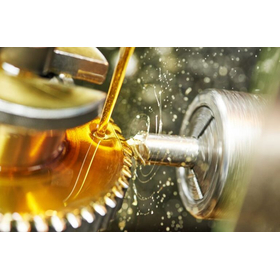
Momentive's "TIA235R" is a two-component addition-type liquid silicone rubber designed for heat dissipation and insulation sealing of electrical and electronic components. By mixing component (A) and component (B) in a 1:1 ratio and curing at room temperature or with heat, it hardens into a rubber-like material and adheres to various substrates. After curing, it exhibits excellent heat resistance, cold resistance, and weather resistance, demonstrating stable heat dissipation and electrical insulation properties over a wide temperature range.
Added to bookmarks
Bookmarks listBookmark has been removed
Bookmarks listYou can't add any more bookmarks
By registering as a member, you can increase the number of bookmarks you can save and organize them with labels.
Free membership registration
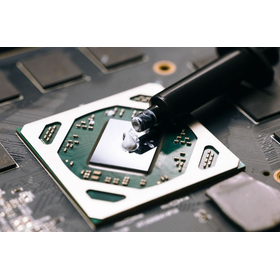
When considering heat-dissipating silicone, the first thing that often draws attention is the value of "thermal conductivity (W/m·K)." While thermal conductivity is indeed an important indicator, in actual implementation environments, there are not a few cases where "even if the thermal conductivity on the catalog is high, the temperature does not decrease in the actual device." The reason for this is that heat dissipation performance is determined not by the physical properties of a single material, but by a combination of multiple factors such as: - Contact conditions - Compression conditions - Coating thickness - Interface conditions - Aging changes Therefore, understanding that "high thermal conductivity does not equal the optimal solution" is the starting point for selecting heat-dissipating materials. For more details, please refer to our company, AD-Chemi.
Added to bookmarks
Bookmarks listBookmark has been removed
Bookmarks listYou can't add any more bookmarks
By registering as a member, you can increase the number of bookmarks you can save and organize them with labels.
Free membership registration
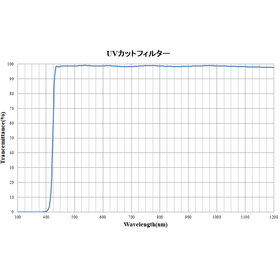
The UV-IR cut filter is an optical thin-film filter that selectively removes unwanted light in the ultraviolet (UV) and infrared (IR) wavelength ranges, allowing only specific wavelength bands of light to be transmitted or reflected with high precision. This filter achieves wavelength selectivity by utilizing interference effects through the precise layering of multilayer dielectric films and metal films. Generally, it requires control of film thickness on the order of nanometers, exceeding several tens to over a hundred layers, and its optical properties are determined by multiple parameters such as film thickness accuracy, refractive index of the film material, smoothness of the film interfaces, and adhesion of the films. 1) What is a UV-IR cut filter? 2) Historical background of UV-IR filter manufacturing in Japan 3) Why has overseas manufacturing of UV-IR cut filters progressed? 4) If UV-IR cut filters were to be produced again in Japan... necessary points (hypothesis) 5) Technically important points when selecting UV-IR cut filters 6) Future prospects Conclusion - The efforts of Adachi New Industry Co., Ltd. to focus on domestic production in Japan For more details, please visit our company website.
Added to bookmarks
Bookmarks listBookmark has been removed
Bookmarks listYou can't add any more bookmarks
By registering as a member, you can increase the number of bookmarks you can save and organize them with labels.
Free membership registration
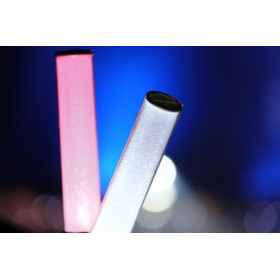
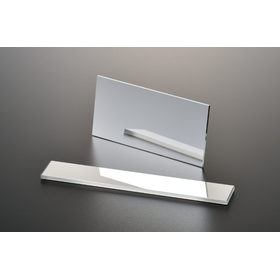
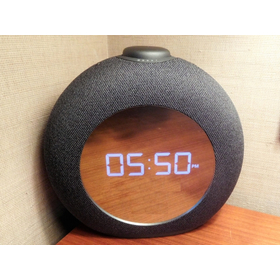
There are surprisingly many situations around us where half mirrors, which look like mirrors but actually allow light to pass through, are used. For example, they are essential optical components in smartphone facial recognition and car head-up displays. Half mirrors play a role in skillfully reflecting and transmitting light, delivering images and information more conveniently and precisely. This time, we have summarized the mechanism of half mirrors, their uses, and the future evolution of technology in an easy-to-understand manner that can be grasped in five minutes. 【1】What is a half mirror? 【2】Difference between half mirrors and magic mirrors 【3】Structure of half mirrors 【4】Applications of half mirrors 【5】Points to consider when selecting half mirrors 【6】Future prospects of half mirrors For more details, please visit our company website.
Added to bookmarks
Bookmarks listBookmark has been removed
Bookmarks listYou can't add any more bookmarks
By registering as a member, you can increase the number of bookmarks you can save and organize them with labels.
Free membership registration
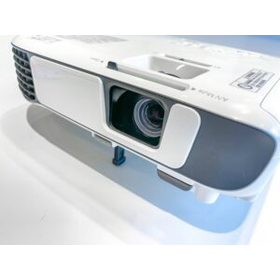
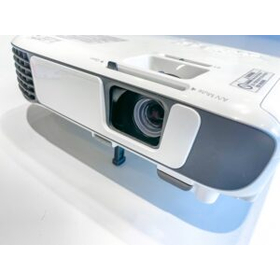
At the 2025 Osaka-Kansai Expo, cutting-edge technology and cultural expression were beautifully integrated, with projector technology fully utilized to stimulate the senses of visitors. Immersive video presentations and interactive exhibition experiences, both inside and outside the pavilions, were made possible through projection with high brightness, high resolution, and wide color gamut. It may be a bit late to say this, but from the perspective of "Could projectors hold the key to future visual expression?", I have summarized the optical components used in projectors in a way that can be understood in five minutes. Please feel free to read on. 【1】Changes in the projector market 【2】Comparison of LCD, DLP, and LCOS 【3】General optical structure of projectors 【4】Types and specifications of optical filters for projectors 【5】Future trends in projectors and the position of Japanese thin-film manufacturers Conclusion - Nevertheless, Adachi New Industry is committed to domestic production For more details, please visit our company website.
Added to bookmarks
Bookmarks listBookmark has been removed
Bookmarks listYou can't add any more bookmarks
By registering as a member, you can increase the number of bookmarks you can save and organize them with labels.
Free membership registration
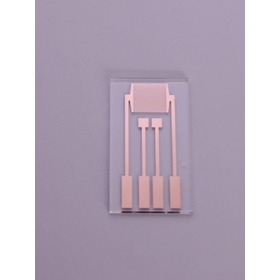
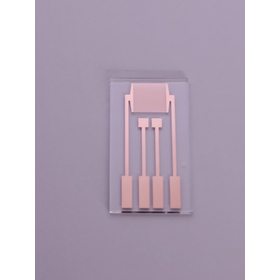
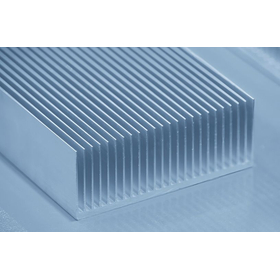
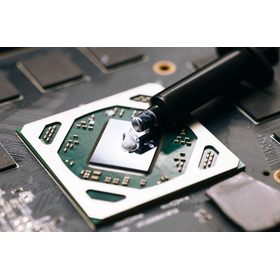
As the high integration, miniaturization, and high output of semiconductor devices rapidly advance, "thermal management" has become one of the most critical parameters that directly affects product reliability, lifespan, and safety, rather than being a secondary design issue. With the miniaturization of transistors, current density has been increasing year by year, and in the power device sector, the widespread adoption of SiC and GaN has led to higher allowable operating temperatures, while heat generation density (W/cm²) has certainly risen. As a result, issues such as increased junction temperature, the emergence of hotspots, and stress concentration due to temperature gradients have become more serious problems than ever before. For example: - Power modules in EVs and charging infrastructure - High-heat chips in AI accelerators and GPUs - High-density mounted boards in automotive ECUs - LED modules with increasing brightness - Industrial power supplies and inverters Despite being in different fields, they all share the commonality that we have entered an era where "thermal design determines the performance limits of products." This is not just about lowering temperatures... For more details, please refer to AD-Chemi.
Added to bookmarks
Bookmarks listBookmark has been removed
Bookmarks listYou can't add any more bookmarks
By registering as a member, you can increase the number of bookmarks you can save and organize them with labels.
Free membership registration
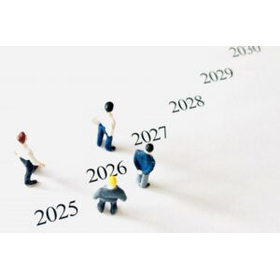
In 2026, the Year of the Horse—symbolizing "the fullness of yang energy." We hope this year brings abundant fortune to everyone. All of our employees will strive for further challenges and technical refinement. Following the symbols of the Year of the Horse—"leaping," "vitality," and "speed"—we aim to create manufacturing that paves the way for the future, based on technology and trust. In the field of optical thin films, intricate structures and precise designs create astonishing possibilities for manipulating light. Like this technology, we will leverage our accumulated experience and innovation to provide even greater value to our customers. In recent years, the importance of optical thin films has rapidly increased in next-generation mobility, healthcare, and space sectors. We aim to make 2026 a year of technological innovation that meets your expectations in these cutting-edge fields. We will continue to provide quality and service that live up to your trust, and we are committed to growing together with you as we carve out the future. As we start this new year, we kindly ask for your continued support and guidance. We appreciate your unwavering patronage this year as well. New Year, 8th Year of Reiwa Adachi New Industry Co., Ltd.
Added to bookmarks
Bookmarks listBookmark has been removed
Bookmarks listYou can't add any more bookmarks
By registering as a member, you can increase the number of bookmarks you can save and organize them with labels.
Free membership registration