iPROS Manufacturing
  • Search for products by classification category

    • Electronic Components and Modules
      Electronic Components and Modules
      60448items
    • Machinery Parts
      Machinery Parts
      75253items
    • Manufacturing and processing machinery
      Manufacturing and processing machinery
      101269items
    • Scientific and Physics Equipment
      Scientific and Physics Equipment
      35861items
    • Materials
      Materials
      37390items
    • Measurement and Analysis
      Measurement and Analysis
      55120items
    • Image Processing
      Image Processing
      15246items
    • Control and Electrical Equipment
      Control and Electrical Equipment
      53796items
    • Tools, consumables, and supplies
      Tools, consumables, and supplies
      65023items
    • Design and production support
      Design and production support
      12532items
    • IT/Network
      IT/Network
      44562items
    • Office
      Office
      14008items
    • Business support services
      Business support services
      24923items
    • Seminars and Skill Development
      Seminars and Skill Development
      6463items
    • Pharmaceutical and food related
      Pharmaceutical and food related
      32335items
    • others
      74258items
  • Search for companies by industry

    • Manufacturing and processing contract
      7333
    • others
      4991
    • Industrial Machinery
      4414
    • Machine elements and parts
      3298
    • Other manufacturing
      2882
    • IT/Telecommunications
      2552
    • Trading company/Wholesale
      2512
    • Industrial Electrical Equipment
      2305
    • Building materials, supplies and fixtures
      1815
    • software
      1642
    • Electronic Components and Semiconductors
      1564
    • Resin/Plastic
      1496
    • Service Industry
      1455
    • Testing, Analysis and Measurement
      1125
    • Ferrous/Non-ferrous metals
      983
    • environment
      698
    • Chemical
      631
    • Automobiles and Transportation Equipment
      566
    • Printing Industry
      510
    • Information and Communications
      459
    • Consumer Electronics
      412
    • Energy
      327
    • Rubber products
      314
    • Food Machinery
      307
    • Optical Instruments
      277
    • robot
      274
    • fiber
      250
    • Paper and pulp
      227
    • Pharmaceuticals and Biotechnology
      168
    • Electricity, Gas and Water Industry
      166
    • Warehousing and transport related industries
      147
    • Glass and clay products
      140
    • Food and Beverage
      129
    • CAD/CAM
      123
    • retail
      108
    • Medical Devices
      103
    • Educational and Research Institutions
      102
    • Ceramics
      98
    • wood
      88
    • Transportation
      82
    • Petroleum and coal products
      63
    • Medical and Welfare
      62
    • Shipbuilding and heavy machinery
      51
    • Aviation & Aerospace
      47
    • Fisheries, Agriculture and Forestry
      41
    • equipment
      33
    • Public interest/special/independent administrative agency
      31
    • Research and development equipment and devices
      28
    • Materials
      27
    • self-employed
      24
    • Government
      23
    • Mining
      17
    • Finance, securities and insurance
      13
    • cosmetics
      13
    • Individual
      10
    • Restaurants and accommodations
      9
    • Police, Fire Department, Self-Defense Forces
      7
    • Laboratory Equipment and Consumables
      4
    • Raw materials for reagents and chemicals
      3
    • Contracted research
      3
  • Special Features
  • Ranking

    • Overall Products Ranking
    • Overall Company Ranking
Search for Products
  • Search for products by classification category

  • Electronic Components and Modules
  • Machinery Parts
  • Manufacturing and processing machinery
  • Scientific and Physics Equipment
  • Materials
  • Measurement and Analysis
  • Image Processing
  • Control and Electrical Equipment
  • Tools, consumables, and supplies
  • Design and production support
  • IT/Network
  • Office
  • Business support services
  • Seminars and Skill Development
  • Pharmaceutical and food related
  • others
Search for Companies
  • Search for companies by industry

  • Manufacturing and processing contract
  • others
  • Industrial Machinery
  • Machine elements and parts
  • Other manufacturing
  • IT/Telecommunications
  • Trading company/Wholesale
  • Industrial Electrical Equipment
  • Building materials, supplies and fixtures
  • software
  • Electronic Components and Semiconductors
  • Resin/Plastic
  • Service Industry
  • Testing, Analysis and Measurement
  • Ferrous/Non-ferrous metals
  • environment
  • Chemical
  • Automobiles and Transportation Equipment
  • Printing Industry
  • Information and Communications
  • Consumer Electronics
  • Energy
  • Rubber products
  • Food Machinery
  • Optical Instruments
  • robot
  • fiber
  • Paper and pulp
  • Pharmaceuticals and Biotechnology
  • Electricity, Gas and Water Industry
  • Warehousing and transport related industries
  • Glass and clay products
  • Food and Beverage
  • CAD/CAM
  • retail
  • Medical Devices
  • Educational and Research Institutions
  • Ceramics
  • wood
  • Transportation
  • Petroleum and coal products
  • Medical and Welfare
  • Shipbuilding and heavy machinery
  • Aviation & Aerospace
  • Fisheries, Agriculture and Forestry
  • equipment
  • Public interest/special/independent administrative agency
  • Research and development equipment and devices
  • Materials
  • self-employed
  • Government
  • Mining
  • Finance, securities and insurance
  • cosmetics
  • Individual
  • Restaurants and accommodations
  • Police, Fire Department, Self-Defense Forces
  • Laboratory Equipment and Consumables
  • Raw materials for reagents and chemicals
  • Contracted research
Special Features
Ranking
  • Overall Products Ranking
  • Overall Company Ranking
  • privacy policy
  • terms of service
  • About Us
  • Careers
  • Advertising
  1. Home
  2. Testing, Analysis and Measurement
  3. 一般財団法人材料科学技術振興財団 MST
  4. Product/Service List
Testing, Analysis and Measurement
  • Added to bookmarks

    Bookmarks list

    Bookmark has been removed

    Bookmarks list

    You can't add any more bookmarks

    By registering as a member, you can increase the number of bookmarks you can save and organize them with labels.

    Free membership registration

一般財団法人材料科学技術振興財団 MST

EstablishmentAugust 1, 1984
addressTokyo/Setagaya-ku/Kitaomi 1-18-6
phone03-3749-2525
  • Special site
  • Official site
last updated:Apr 10, 2026
一般財団法人材料科学技術振興財団 MSTlogo
  • Contact this company

    Inquiry Form
  • Company information
  • Products/Services(788)
  • catalog(670)
  • news(233)

一般財団法人材料科学技術振興財団 MST Product Lineup

  • category

1~16 item / All 16 items

Displayed results

Filter by category

Mass spectrometry Mass spectrometry
 【分析事例】高分子材料 【分析事例】高分子材料
【測定法】計算科学・AI・データ解析 【測定法】計算科学・AI・データ解析
Photoelectron spectroscopy Photoelectron spectroscopy
[Measurement Method] Electron Microscopy Observation and Analysis [Measurement Method] Electron Microscopy Observation and Analysis
Vibrational spectroscopy Vibrational spectroscopy
Measurement Method: X-ray Diffraction Related Measurement Method: X-ray Diffraction Related
[Measurement Method] Related to SPM [Measurement Method] Related to SPM
Measurement Method: Failure Analysis Measurement Method: Failure Analysis
[Measurement Method] Other Measurement Methods [Measurement Method] Other Measurement Methods
Processing methods and treatment methods Processing methods and treatment methods
Other services and support information Other services and support information
[Analysis Case] LSI・Memory [Analysis Case] LSI・Memory
[Analysis Case] Optical Devices [Analysis Case] Optical Devices
[Analysis Case] Solar Cells [Analysis Case] Solar Cells
[Analysis Case] Fuel Cell [Analysis Case] Fuel Cell
[Analysis Case] Display [Analysis Case] Display
[Analysis Case] Oxide Semiconductors [Analysis Case] Oxide Semiconductors
[Analysis Case] Power Device [Analysis Case] Power Device
[Analysis Case] Electronic Components [Analysis Case] Electronic Components
[Analysis Case] Secondary Battery [Analysis Case] Secondary Battery
[Analysis Case] Lighting [Analysis Case] Lighting
[Analysis Case] Manufacturing Equipment and Components [Analysis Case] Manufacturing Equipment and Components
[Analysis Case] Biotechnology [Analysis Case] Biotechnology
[Analysis Case] Cosmetics [Analysis Case] Cosmetics
[Analysis Case] Food [Analysis Case] Food
[Analysis Case] Pharmaceuticals [Analysis Case] Pharmaceuticals
[Analysis Case] Medical Devices [Analysis Case] Medical Devices
Analysis Case: Daily Necessities Analysis Case: Daily Necessities
[Analysis Case] Environment [Analysis Case] Environment
[Analysis Case] Others [Analysis Case] Others
Materials from the exhibition where MST exhibited. Materials from the exhibition where MST exhibited.
【分析事例】高分子材料

【分析事例】高分子材料

各種プラスチック、エポキシ樹脂、ポリイミド、レジスト、ABS樹脂等

Structural analysis of oligosaccharides using 3D NMR.

It is possible to analyze the structure of complex organic compounds with overlapping peaks.

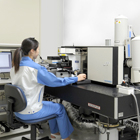
In the structural analysis of organic compounds using NMR, two-dimensional NMR is generally used in addition to one-dimensional NMR (1H-NMR and 13C-NMR) to confirm the correlations between peaks in one-dimensional NMR, allowing for the assignment of peaks and determination of the compound's structure. However, in compounds such as sugars that contain many similar structures, peaks can overlap even in two-dimensional NMR, making analysis difficult. In such cases, three-dimensional NMR is effective. This document presents examples of applying three-dimensional NMR using oligosaccharides as model compounds.

Added to bookmarks

Bookmarks list

Bookmark has been removed

Bookmarks list

You can't add any more bookmarks

By registering as a member, you can increase the number of bookmarks you can save and organize them with labels.

Free membership registration

[Analysis Case] Structural Analysis of Fluoropolymer by LDI-MS

Structural analysis of fluorine-based grease, fluorine-based lubricants, and fluorine-based oils.

Fluoropolymer materials are chemically stable and possess various properties, making them widely used in industrial machinery, semiconductors, and electronics. LDI-MS (Laser Desorption Ionization Mass Spectrometry) is an analytical method that can ionize fluoropolymers with molecular weights of around several thousand while maintaining their molecular structure, allowing for the determination of the repeating units and molecular weights of fluoropolymers, as well as the estimation of end group compositions and structures. This document presents a case study on the structural analysis of perfluoropolyether (PFPE), which is used as a base oil in lubricants and heat transfer fluids. Measurement method: MALDI-MS Product field: Polymer materials Analysis purpose: Composition evaluation and identification, chemical bonding state evaluation For more details, please download the document or contact us.

Added to bookmarks

Bookmarks list

Bookmark has been removed

Bookmarks list

You can't add any more bookmarks

By registering as a member, you can increase the number of bookmarks you can save and organize them with labels.

Free membership registration

[Analysis Case] Qualitative Evaluation of Fiber Optic Core and Cladding

Qualitative and distribution evaluation of optical fiber materials is possible using TOF-SIMS.

Optical fibers have a structure that consists of a core with a high refractive index surrounded by a cladding layer with a low refractive index. Due to the difference in refractive indices, light is totally internally reflected at the boundary and transmitted. Therefore, it is important to analyze the selection of materials, the presence of impurities, adhesion, coating conditions, and contaminants. Optical fibers can be broadly classified into two types: plastic and quartz. This document presents a case study in which the materials of the core and cladding were identified by analyzing the cross-section of plastic optical fibers using TOF-SIMS. Measurement method: TOF-SIMS Product field: Optical fibers, electronic components Analysis purpose: Qualitative evaluation, organic matter evaluation, composition distribution evaluation "For more details, please download the document or contact us."

Added to bookmarks

Bookmarks list

Bookmark has been removed

Bookmarks list

You can't add any more bookmarks

By registering as a member, you can increase the number of bookmarks you can save and organize them with labels.

Free membership registration

[Analysis Case] Evaluation of Curing Degree of Epoxy Resin by FT-IR

It is possible to evaluate the degree of curing of the resin by capturing changes in functional groups.

Resins that excel in chemical resistance and electrical insulation are used as insulators, coatings, and adhesives for various electronic components. FT-IR analysis can investigate the causes of defects such as the degree of curing of resins, making it effective for product development. As an example, we will introduce a case where the degree of curing of epoxy resin was evaluated.

Added to bookmarks

Bookmarks list

Bookmark has been removed

Bookmarks list

You can't add any more bookmarks

By registering as a member, you can increase the number of bookmarks you can save and organize them with labels.

Free membership registration

[Analysis Case] Qualitative Analysis of Epoxy Resin

Estimation of components is possible through TOF-SIMS analysis.

Epoxy resin is widely used in electronic component applications such as printed circuit boards and IC encapsulants due to its excellent mechanical properties, chemical resistance, and electrical insulation. Data measured by TOF-SIMS was obtained regarding the reagents of bisphenols, which are commonly used as raw materials for epoxy resin. By comparing the sample measurement data with standard data at MST, it is possible to investigate the origin of the detected fragment ions and estimate the materials used in the epoxy resin.

Added to bookmarks

Bookmarks list

Bookmark has been removed

Bookmarks list

You can't add any more bookmarks

By registering as a member, you can increase the number of bookmarks you can save and organize them with labels.

Free membership registration

[Analysis Case] Investigation of Curing Temperature and Glass Transition Temperature of Epoxy Resin

Evaluation of thermal properties by DSC (Differential Scanning Calorimetry) measurement.

For the two-component mixed epoxy resin, we investigated the curing temperature and the glass transition temperature (Tg), which is an indicator of heat resistance, using Differential Scanning Calorimetry (DSC). When measuring the resin before curing with DSC, it was confirmed that a rapid exothermic reaction began around 103°C (Figure 1). This was due to the polymerization (curing) of the resin occurring as a result of the temperature increase. Furthermore, after air cooling the cured resin to room temperature, a second DSC measurement was conducted, which confirmed a shift of the baseline towards the endothermic side due to the glass transition of the resin, with Tg being approximately 116°C (Figure 2).

Added to bookmarks

Bookmarks list

Bookmark has been removed

Bookmarks list

You can't add any more bookmarks

By registering as a member, you can increase the number of bookmarks you can save and organize them with labels.

Free membership registration

[Analysis Case] Structural Analysis of Epoxy Resin

Structural analysis of LED encapsulants using thermal decomposition GC/MS method.

Epoxy resin is excellent in heat resistance, chemical resistance, and insulation properties, and also has high mechanical strength, making it suitable for various applications such as insulation materials for electronic devices, adhesives, paints, and construction materials. However, due to the lack of solvent solubility, the analytical methods for structural determination are limited. This case presents an example of thermal decomposition GC/MS measurement of epoxy resin used as a sealing material for LEDs. The thermal decomposition products reflecting the structures of the main agent and curing agent were obtained, and this resin was estimated to be a bisphenol A/anhydride type epoxy resin.

Added to bookmarks

Bookmarks list

Bookmark has been removed

Bookmarks list

You can't add any more bookmarks

By registering as a member, you can increase the number of bookmarks you can save and organize them with labels.

Free membership registration

[Analysis Case] Analysis of Epoxy Resin Hardener

Structural estimation of the curing agent component of a two-component epoxy resin.

Two-component epoxy resin cures by mixing the base agent and the hardener. Unlike one-component systems, it has the advantage of curing without the need for heating, making it widely used as adhesives, paints, and resins. In its qualitative analysis, the cured resin, which is insoluble in solvents, can primarily be evaluated for the base agent using thermal decomposition GC/MS. On the other hand, for the evaluation of the hardener, it may be necessary to measure it in its pre-cured state depending on the type. This document presents a case where a polymercaptan hardener was measured in its pre-cured solution state, and structural estimation was conducted using a combination of ionization methods (EI and FI methods).

Added to bookmarks

Bookmarks list

Bookmark has been removed

Bookmarks list

You can't add any more bookmarks

By registering as a member, you can increase the number of bookmarks you can save and organize them with labels.

Free membership registration

[Analysis Case] TDS Analysis of Epoxy Resin

It is possible to investigate the degassing behavior of organic matter in a vacuum.

Epoxy resin is used as a semiconductor encapsulant, as well as an adhesive and for vacuum leak prevention both inside and outside vacuum devices. However, even after curing, heating may cause outgassing, which can negatively affect products and equipment. TDS (Thermal Desorption Gas Analysis) allows for monitoring outgassing components by heating the sample in high vacuum (1E-7 Pa) or while maintaining a constant temperature. Below, we present a case study investigating the outgassing behavior of epoxy resin using TDS with temperature maintenance.

Added to bookmarks

Bookmarks list

Bookmark has been removed

Bookmarks list

You can't add any more bookmarks

By registering as a member, you can increase the number of bookmarks you can save and organize them with labels.

Free membership registration

[Analysis Case] CO2 Adsorption Simulation on MOF using GCMC Method

The adsorption properties of nano-porous materials such as MOF and zeolite can be predicted!

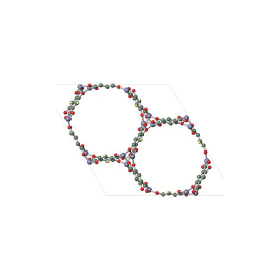
MOFs (Metal-Organic Frameworks) are attracting attention as nano-porous materials with potential applications in separation processes, catalysis, and gas storage. The combinations of MOF topology, linkers, and metal nodes are vast, and the types of synthesizable MOFs are virtually limitless. Therefore, prior screening and understanding of the structure, function, and properties are crucial for the development of new MOF materials. In this case study, we predicted the CO2 adsorption amounts for various MOFs using the GCMC (Grand Canonical Monte Carlo) method and examined the factors affecting the adsorption characteristics.

Added to bookmarks

Bookmarks list

Bookmark has been removed

Bookmarks list

You can't add any more bookmarks

By registering as a member, you can increase the number of bookmarks you can save and organize them with labels.

Free membership registration

[Analysis Case] Depth Direction State Evaluation of Tin (Sn) Surface

Evaluation of modified layers and altered layers through surface treatment is possible!

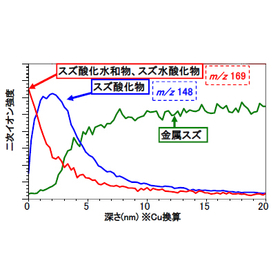
TOF-SIMS has good depth resolution and can obtain fragment ions corresponding to bonding states, allowing for the evaluation of layer structures near the surface, within a few nanometers. This document presents a case study analyzing the layer structure of a tin plate surface based on the information obtained from the measurement of standard samples of tin oxide and hydrated tin oxide. By applying this technology, it is possible to evaluate modified layers and altered layers due to surface treatment.

Added to bookmarks

Bookmarks list

Bookmark has been removed

Bookmarks list

You can't add any more bookmarks

By registering as a member, you can increase the number of bookmarks you can save and organize them with labels.

Free membership registration

[Analysis Case] Evaluation of CNF Fiber Orientation Using Nano-CT

Three-dimensional observation of fibers on the nanometer order inside the sample is possible.

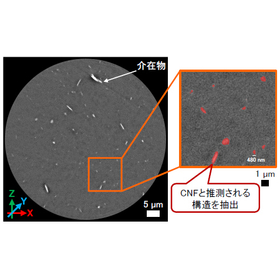
Cellulose nanofiber (CNF) is a fiber material that has been refined to the nanoscale from plant fibers primarily composed of cellulose. Due to its lightweight, high strength, and low environmental impact, it is utilized in product development across various fields. The properties of CNF can change significantly depending on its orientation, making the evaluation of orientation important. This document presents a case study where nano-CT was used to observe CNF with a short diameter of over 100 nm, which could not be captured by conventional micro-CT. Based on the data obtained from nano-CT measurements, structural analysis of CNF and evaluation of its orientation are possible.

Added to bookmarks

Bookmarks list

Bookmark has been removed

Bookmarks list

You can't add any more bookmarks

By registering as a member, you can increase the number of bookmarks you can save and organize them with labels.

Free membership registration

Notice of Website Renewal

To a more user-friendly and easier-to-read homepage.

We have completely renewed our homepage. In this renewal, we have revamped the design and structure to make it more user-friendly and comfortable for everyone, while enhancing the information provided. ◆ Key Points of the Renewal - Improved accessibility to information We have reviewed the common navigation across all pages and improved the menu structure to make it easier to understand. The structure allows for intuitive access to the necessary information. - Comfortable viewing in all environments In addition to PCs, we have made the site compatible with various viewing environments, including smartphones and tablets. You can enjoy a comfortable experience regardless of location or device. - Enhanced visual design for better visibility We have reviewed the overall color scheme and layout of the site, refreshing it to a more understandable and sophisticated design. ▼ You can view it here https://www.mst.or.jp/ We would be grateful if you could take a look. We will continue to strive for further enhancement of our content, and we appreciate your continued support.

Added to bookmarks

Bookmarks list

Bookmark has been removed

Bookmarks list

You can't add any more bookmarks

By registering as a member, you can increase the number of bookmarks you can save and organize them with labels.

Free membership registration

Supercritical fluid chromatography-mass spectrometry method

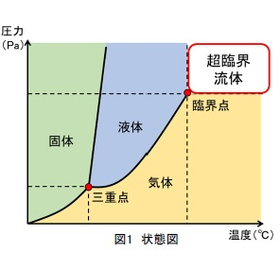
Supercritical fluid chromatography is a method that uses supercritical CO2 as the mobile phase to separate components contained in a sample and detect them with a mass detector.

■What is Supercritical Fluid? A supercritical fluid is a state that exists under conditions of temperature and pressure above the critical point, possessing properties that are intermediate between those of a liquid and a gas (see Figure 1). Supercritical CO2 can be used as a mobile phase in chromatography due to its ease of handling at conditions (7.4 MPa, 31°C). ■Extraction Using Supercritical CO2 In the SFC/MS setup, SFE (Supercritical Fluid Extraction) is connected in the preceding stage, and extraction of components contained in the sample is performed using supercritical CO2. Since the extraction, separation, and detection can be carried out automatically, it is effective for the analysis of components that are sensitive to light, water, and oxygen.

Added to bookmarks

Bookmarks list

Bookmark has been removed

Bookmarks list

You can't add any more bookmarks

By registering as a member, you can increase the number of bookmarks you can save and organize them with labels.

Free membership registration

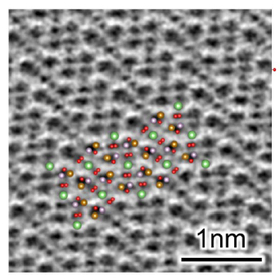
OBF STEM method (Optimal Bright Field Scanning Transmission Electron Microscopy)

OBF STEM: Optimum Bright-Field STEM Method

The OBF STEM method is a technique that reconstructs a single STEM image by applying a weighted frequency filter to multiple STEM images obtained from each segment of a segmented STEM detector, appropriately emphasizing different spatial frequency components for each segment. It is characterized by its ability to efficiently utilize the detection signal, allowing for the visualization of structures with low noise and high contrast even under conditions of low electron beam exposure.

Added to bookmarks

Bookmarks list

Bookmark has been removed

Bookmarks list

You can't add any more bookmarks

By registering as a member, you can increase the number of bookmarks you can save and organize them with labels.

Free membership registration

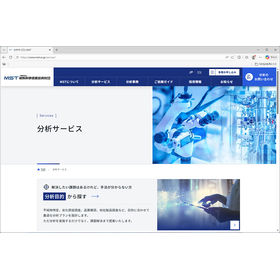
Custom analysis tailored to support research and development environments.

We will provide high-value-added analysis services by integrating AI with cutting-edge analytical technologies.

■ A consistent system that accompanies you until resolution and diverse analytical approaches We provide consistent support from hearing about the issues to reporting, collaboratively leading to optimal solutions through dialogue. With over 100 types of analytical methods and AI analysis, we cover challenges across all domains, responding to the trust that "MST is reliable" with flexible responses and proven results. ■ Abundant technical skills and experience We cater to a wide range of needs, from advanced analysis in existing fields like semiconductors to custom analysis in new areas. We have achievements in unique technologies such as the first domestic commercialization of FIB-TEM and SSDP-SIMS. ■ Fairness and reliability Since 1984, during the era when semiconductors took the world by storm, we have walked alongside the forefront of manufacturing. We maintain a fair and neutral stance, building solid trust through quality management based on ISO 9001. ■ Optimal problem-solving through AI analysis We propose solutions tailored to objectives and challenges through equipment analysis, AI analysis, and simulation. By maximizing the use of customer-owned data and designing and constructing custom AI models, we aim to generate results that meet specific needs. For inquiries regarding analysis and consultation, please feel free to contact us.

Added to bookmarks

Bookmarks list

Bookmark has been removed

Bookmarks list

You can't add any more bookmarks

By registering as a member, you can increase the number of bookmarks you can save and organize them with labels.

Free membership registration
Prev 1 Next
  • 排気熱風なく 気温-4.1℃の冷風を 工事不要で暑さ対策 店舗・工場の 安全対策に! 気化式スポットクーラー Pure Drive ピュアドライブ
  • 金属・化学・窯業 食品・医薬品などの ほぐし・解砕 ふるい分けがこれ一台 解砕機構付き佐藤式振動ふるい機 つばさ デモ実施中!
    • Contact this company

      Inquiry Form

    Products

    • Search for Products

    Company

    • Search for Companies

    Special Features

    • Special Features

    Ranking

    • Overall Products Ranking
    • Overall Company Ranking

    support

    • site map
    IPROS
    • privacy policy Regarding external transmission of information
    • terms of service
    • About Us
    • Careers
    • Advertising
    COPYRIGHT © 2001-2026 IPROS CORPORATION ALL RIGHTS RESERVED.
    Please note that the English text on this page is automatically translated and may contain inaccuracies.