- Publication year : 2026
1~7 item / All 7 items
Displayed results

Added to bookmarks
Bookmarks listBookmark has been removed
Bookmarks listYou can't add any more bookmarks
By registering as a member, you can increase the number of bookmarks you can save and organize them with labels.
Free membership registration
Contact this company
Inquiry FormBefore making an inquiry
Download Profile1~7 item / All 7 items
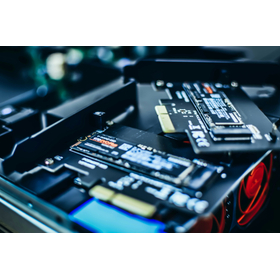
We have newly published the "Electronic Components Failure Analysis and Reliability Evaluation Service Catalog." This catalog introduces service menus that assist in investigating the causes of failures and evaluating the reliability of printed circuit boards, connectors, cables, and passive components. Additionally, it includes testing methods for failure analysis and reliability evaluation, as well as actual analysis and evaluation case studies. One of the featured case studies is the hammering micro-vibration test. This test evaluates the risk of contact failure in connectors by reproducing wear caused by minute sliding of the contacts, allowing for the capture of changes in contact resistance and momentary disconnections. The catalog includes comparative evaluation case studies of vibration tests and micro-vibration tests on the same materials, enabling you to see the differences in results obtained from each test. In addition, we have published various tests along with their evaluation and analysis case studies. We encourage you to utilize this catalog when considering outsourcing investigations of electronic component failures or reliability evaluations. We also welcome inquiries regarding evaluations and analyses, so please feel free to contact us.
Added to bookmarks
Bookmarks listBookmark has been removed
Bookmarks listYou can't add any more bookmarks
By registering as a member, you can increase the number of bookmarks you can save and organize them with labels.
Free membership registration
As the practical application of quantum computers, AI servers, and optoelectronic fusion systems progresses, printed circuit boards are required to achieve higher density and multilayering than ever before. On the other hand, the miniaturization of wiring spacing and interlayer distances increases the risk that even slight foreign substances or ionic residues can cause insulation failures, leading to short circuits, localized heating, and even burning. Particularly in AI servers and high-speed communication boards, minor insulation degradation can significantly impact the overall reliability of the system. Additionally, after burning, the foreign substances or conductive pathways that caused the issue often disappear, making fault analysis difficult in many cases. Eurofins FQL conducts advanced insulation evaluation tests at the bare board stage before component mounting, visualizing potential risks early on. ✔ Prevention of defects ✔ Improvement of quality and reliability ✔ Reduction of analysis costs and rework hours We support the realization of high-reliability products, from advanced package boards for quantum computers to high-performance boards for AI servers and ultra-high-speed transmission boards for optoelectronic fusion. Please feel free to consult us about the quality of boards that support next-generation technologies.
Added to bookmarks
Bookmarks listBookmark has been removed
Bookmarks listYou can't add any more bookmarks
By registering as a member, you can increase the number of bookmarks you can save and organize them with labels.
Free membership registration
Cross-sectional SEM observation is an effective analytical method for visualizing internal defects that cannot be confirmed through external observation, such as cracks in through-holes and voids inside solder bumps, and is useful for identifying root causes in quality improvement and failure analysis. Our company leverages the extensive knowledge and expertise accumulated over many years of observing and analyzing electronic components to provide high-quality cross-sectional processing technology, which has received high praise from many customers. In this webinar, we will introduce various cross-sectional processing techniques we possess and actual evaluation cases utilizing these techniques. We invite you to participate as a hint for solving quality issues and improving analysis accuracy. 【Program】 ■ Cross-sectional processing methods we possess and their features ・Mechanical polishing ・CP (Cross-section polisher) ・FIB ■ Actual cross-sectional evaluation cases using cross-sectional SEM ・Cross-sectional evaluation of DDR4 memory
Added to bookmarks
Bookmarks listBookmark has been removed
Bookmarks listYou can't add any more bookmarks
By registering as a member, you can increase the number of bookmarks you can save and organize them with labels.
Free membership registration
In the automotive industry, the importance of quality and process improvement in system and software development is increasingly recognized, and it is becoming standard practice to ensure that even partial controller controls comply with Automotive SPICE as software. In this webinar, we will explain the basics of Automotive SPICE for those who are considering or interested in compliance with Automotive SPICE in the future. [Program] - The background of why Automotive SPICE has become necessary - The main elements of the structure of Automotive SPICE: process dimension and capability dimension - How to read the Automotive SPICE model - Preparations to be made when undergoing an Automotive SPICE assessment We will provide explanations in as simple terms as possible. We look forward to your participation!
Added to bookmarks
Bookmarks listBookmark has been removed
Bookmarks listYou can't add any more bookmarks
By registering as a member, you can increase the number of bookmarks you can save and organize them with labels.
Free membership registration
Rechargeable lithium-ion batteries that can be used repeatedly. They are used in a wide range of fields, from small consumer products to IoT devices, industrial equipment, and, in recent years, various mobility products. On the other hand, accidents caused by smoke and fire from lithium-ion batteries used in various environments are increasing year by year. Why do smoke and fire accidents persist? One reason is that the risks of smoke and fire have not been thoroughly examined. Eurofins FQL has been evaluating and analyzing battery cells and packs provided by numerous domestic and overseas suppliers for many years since the proliferation of lithium-ion batteries. In this seminar, we will introduce the reliability, safety evaluation, and analysis methods of lithium-ion battery cells and protection circuits using case studies.
Added to bookmarks
Bookmarks listBookmark has been removed
Bookmarks listYou can't add any more bookmarks
By registering as a member, you can increase the number of bookmarks you can save and organize them with labels.
Free membership registration
In connectors that connect various hardware such as automobiles, industrial equipment, and communication devices, low-cost Sn-plated products are widely used. However, there are also cases where attention is needed regarding the reliability specific to Sn-plated contacts. In this webinar, based on actual connector failure cases that have occurred in the market, we will explain the process leading to the identification of causes for typical failure modes such as: - Whiskers (short circuit failures) - Fretting wear (contact failures) Furthermore, we will systematically introduce the organization of failures through the FTA (Fault Tree Analysis) of the entire connector, as well as each failure mechanism. ■ Technical content to be explained: - FTA structure of connector failures - Mechanism of whisker formation and evaluation methods - Mechanism of fretting wear and evaluation methods ■ Introduction of future evaluation technologies: - High-temperature and high-humidity fretting wear testing (scheduled for introduction in December 2026)
Added to bookmarks
Bookmarks listBookmark has been removed
Bookmarks listYou can't add any more bookmarks
By registering as a member, you can increase the number of bookmarks you can save and organize them with labels.
Free membership registration
At SPI Japan 2026, we will present a case study titled "Practical Application of ASPICE in CMMIL3 Organizations - The Impact of 'Differences in Evaluation Criteria' on the Field, Rather than Model Integration," which we have worked on together with our customers.
Added to bookmarks
Bookmarks listBookmark has been removed
Bookmarks listYou can't add any more bookmarks
By registering as a member, you can increase the number of bookmarks you can save and organize them with labels.
Free membership registration