iPROS Manufacturing
  • Search for products by classification category

    • Electronic Components and Modules
      Electronic Components and Modules
      61660items
    • Machinery Parts
      Machinery Parts
      75915items
    • Manufacturing and processing machinery
      Manufacturing and processing machinery
      102013items
    • Scientific and Physics Equipment
      Scientific and Physics Equipment
      36331items
    • Materials
      Materials
      37792items
    • Measurement and Analysis
      Measurement and Analysis
      55144items
    • Image Processing
      Image Processing
      15365items
    • Control and Electrical Equipment
      Control and Electrical Equipment
      54551items
    • Tools, consumables, and supplies
      Tools, consumables, and supplies
      65604items
    • Design and production support
      Design and production support
      12662items
    • IT/Network
      IT/Network
      45643items
    • Office
      Office
      14182items
    • Business support services
      Business support services
      25286items
    • Seminars and Skill Development
      Seminars and Skill Development
      6558items
    • Pharmaceutical and food related
      Pharmaceutical and food related
      34132items
    • others
      75347items
  • Search for companies by industry

    • Manufacturing and processing contract
      7338
    • others
      4984
    • Industrial Machinery
      4446
    • Machine elements and parts
      3330
    • Other manufacturing
      2883
    • Trading company/Wholesale
      2649
    • IT/Telecommunications
      2571
    • Industrial Electrical Equipment
      2319
    • Building materials, supplies and fixtures
      1816
    • software
      1667
    • Electronic Components and Semiconductors
      1587
    • Resin/Plastic
      1501
    • Service Industry
      1478
    • Testing, Analysis and Measurement
      1130
    • Ferrous/Non-ferrous metals
      986
    • environment
      699
    • Chemical
      641
    • Automobiles and Transportation Equipment
      581
    • Printing Industry
      513
    • Information and Communications
      465
    • Consumer Electronics
      412
    • Energy
      331
    • Rubber products
      317
    • Food Machinery
      308
    • Optical Instruments
      279
    • robot
      273
    • fiber
      254
    • Paper and pulp
      230
    • Pharmaceuticals and Biotechnology
      173
    • Electricity, Gas and Water Industry
      167
    • Warehousing and transport related industries
      149
    • Glass and clay products
      139
    • Food and Beverage
      130
    • CAD/CAM
      124
    • retail
      108
    • Medical Devices
      107
    • Educational and Research Institutions
      107
    • Ceramics
      98
    • wood
      87
    • Transportation
      84
    • Petroleum and coal products
      63
    • Medical and Welfare
      62
    • Shipbuilding and heavy machinery
      51
    • Aviation & Aerospace
      48
    • Fisheries, Agriculture and Forestry
      41
    • equipment
      40
    • Materials
      33
    • Public interest/special/independent administrative agency
      31
    • Research and development equipment and devices
      29
    • Government
      24
    • self-employed
      24
    • Mining
      17
    • cosmetics
      15
    • Finance, securities and insurance
      14
    • Restaurants and accommodations
      10
    • Individual
      10
    • Police, Fire Department, Self-Defense Forces
      7
    • Laboratory Equipment and Consumables
      5
    • Raw materials for reagents and chemicals
      4
    • Contracted research
      3
  • Special Features
  • Ranking

    • Overall Products Ranking
    • Overall Company Ranking
Search for Products
  • Search for products by classification category

  • Electronic Components and Modules
  • Machinery Parts
  • Manufacturing and processing machinery
  • Scientific and Physics Equipment
  • Materials
  • Measurement and Analysis
  • Image Processing
  • Control and Electrical Equipment
  • Tools, consumables, and supplies
  • Design and production support
  • IT/Network
  • Office
  • Business support services
  • Seminars and Skill Development
  • Pharmaceutical and food related
  • others
Search for Companies
  • Search for companies by industry

  • Manufacturing and processing contract
  • others
  • Industrial Machinery
  • Machine elements and parts
  • Other manufacturing
  • Trading company/Wholesale
  • IT/Telecommunications
  • Industrial Electrical Equipment
  • Building materials, supplies and fixtures
  • software
  • Electronic Components and Semiconductors
  • Resin/Plastic
  • Service Industry
  • Testing, Analysis and Measurement
  • Ferrous/Non-ferrous metals
  • environment
  • Chemical
  • Automobiles and Transportation Equipment
  • Printing Industry
  • Information and Communications
  • Consumer Electronics
  • Energy
  • Rubber products
  • Food Machinery
  • Optical Instruments
  • robot
  • fiber
  • Paper and pulp
  • Pharmaceuticals and Biotechnology
  • Electricity, Gas and Water Industry
  • Warehousing and transport related industries
  • Glass and clay products
  • Food and Beverage
  • CAD/CAM
  • retail
  • Medical Devices
  • Educational and Research Institutions
  • Ceramics
  • wood
  • Transportation
  • Petroleum and coal products
  • Medical and Welfare
  • Shipbuilding and heavy machinery
  • Aviation & Aerospace
  • Fisheries, Agriculture and Forestry
  • equipment
  • Materials
  • Public interest/special/independent administrative agency
  • Research and development equipment and devices
  • Government
  • self-employed
  • Mining
  • cosmetics
  • Finance, securities and insurance
  • Restaurants and accommodations
  • Individual
  • Police, Fire Department, Self-Defense Forces
  • Laboratory Equipment and Consumables
  • Raw materials for reagents and chemicals
  • Contracted research
Special Features
Ranking
  • Overall Products Ranking
  • Overall Company Ranking
  • privacy policy
  • terms of service
  • About Us
  • Careers
  • Advertising
  1. Home
  2. Service Industry
  3. 日本検査キューエイ
  4. Product/Service List
Service Industry
  • Added to bookmarks

    Bookmarks list

    Bookmark has been removed

    Bookmarks list

    You can't add any more bookmarks

    By registering as a member, you can increase the number of bookmarks you can save and organize them with labels.

    Free membership registration

日本検査キューエイ

addressTokyo/Chuo-ku/12th Floor, Sumitomo Irifune Building, 2-1-1 Irifune
phone03-5541-2751
  • Special site
  • Official site
last updated:Mar 18, 2026
日本検査キューエイlogo
  • Contact this company

    Inquiry Form
  • Before making an inquiry

    Download Profile
  • Company information
  • Products/Services(73)
  • catalog(28)
  • news(3)

日本検査キューエイ Product Lineup

  • category

1~45 item / All 53 items

Displayed results

Filter by category

ISO認証 ISO認証
JIS認証 JIS認証
サステナビリティ検証 サステナビリティ検証
セミナー セミナー
ISO認証

ISO認証

JICQAのISO審査登録は、お客様のニーズに合わせて、すべての規格、分野、地域で審査を行ないます。 さらにきめの細かいアフターサービスにより、お客様のシステムの定着とレベルアップのお手伝いをいたします。 JICQAのISO審査の特色 日本初の民間マネジメントシステム規格審査登録機関JICQA ほとんどすべての産業分野を対象に、大規模から中小規模組織まで対応 3年間同じ担当継続により更新も安心、登録後のアフターサービスも充実

[Organizational Improvement] ISO 14001 Internal Audit Leader Training Seminar - Advanced

A seminar focused on exercises to refine skills as an ISO 14001 internal auditor over two days.

A seminar focused on exercises to enhance skills as an ISO 14001 internal auditor over two days. Contribute to the global environment and support "business improvement and strengthening management capabilities" through internal audits! By concentrating on learning the key points and thought processes during audits through an exercise-centered curriculum, participants can improve their internal auditor skills. This seminar aims to achieve internal audits that enhance environmental performance. At the end of the seminar, a completion test will be conducted, and those who pass will receive a certificate of completion. This can be useful for obtaining qualifications as a leader of an audit team. ■ Target Participants - Individuals with sufficient experience in ISO 14001:2015 internal audits - Those seeking further skill enhancement - Individuals aspiring to become leaders of internal audit teams - Individuals aiming to become internal audit managers Through a practical curriculum centered on exercises and group discussions, participants will acquire the "perspective of internal audits."

Added to bookmarks

Bookmarks list

Bookmark has been removed

Bookmarks list

You can't add any more bookmarks

By registering as a member, you can increase the number of bookmarks you can save and organize them with labels.

Free membership registration

Invitation to the webinar 'ISO 14001: Easy-to-Understand Standard Requirements'

A webinar aimed at understanding the specifications requirements "quickly" and "focusing on the key points"!

We will hold a webinar titled "ISO 14001: Key Points of the Standard Requirements Explained in an Easy-to-Understand Manner." Due to being an international standard, the text of ISO 14001 can be difficult to understand at first glance. In this webinar, we will use over 100 slides to clearly explain what each of the standard requirements entails. This content is suitable for those who have already attended an introductory webinar and for anyone who wants to grasp an overview of the ISO 14001 standard requirements. 【Implementation Overview (Excerpt)】 ■ Date: August 27, 2025 (Wednesday) from 14:00 (approximately 2 hours, recorded distribution) ■ Method: Webinar using Zoom ■ Participation Fee: Free *For more details, please refer to the related links or feel free to contact us.

Added to bookmarks

Bookmarks list

Bookmark has been removed

Bookmarks list

You can't add any more bookmarks

By registering as a member, you can increase the number of bookmarks you can save and organize them with labels.

Free membership registration

Introduction to ISO 14001: Webinar Invitation

A clear explanation of what ISO 14001 is! A suitable webinar for beginners.

We will hold a webinar titled "Understanding ISO 14001 Made Easy!" This webinar is aimed at beginners and will focus on clearly explaining the basics of ISO 14001 in a straightforward manner, with the goal of helping participants grasp the concepts "roughly." Additionally, after the webinar, we will send out a simple questionnaire. Those who respond will receive a PDF of the text used in the webinar as a complimentary gift, which you can keep for reference and use. 【Overview of the Event (Excerpt)】 ■ Date: July 8, 2025 (Tuesday) 14:00 (approximately 50 minutes, recorded distribution) ■ Method: Web seminar using Zoom ■ Participation Fee: Free *For more details, please refer to the related links or feel free to contact us.

Added to bookmarks

Bookmarks list

Bookmark has been removed

Bookmarks list

You can't add any more bookmarks

By registering as a member, you can increase the number of bookmarks you can save and organize them with labels.

Free membership registration

Invitation to the webinar "Overview of ISO/IEC 27017"

From "First Step" to "Certification Acquisition"! You can understand the overview of ISO/IEC 27017.

We will hold a webinar titled "Overview of ISO/IEC 27017 in Cloud Security Certification." By adding ISMS cloud security management measures based on ISO/IEC 27017 to the Information Security Management System (ISMS), we can implement risk management when providing or using cloud services, and improve the level of cloud security management. This is expected to effectively address various risks associated with cloud services. In this seminar, we will concisely summarize and clearly explain the overview of ISO/IEC 27017, the audit procedures, and other matters related to obtaining certification. [Implementation Overview (Excerpt)] ■ Date: September 10, 2025 (Wednesday) from 14:00 (approximately 2 hours, archived video available) ■ Method: Webinar using Zoom ■ Participation Fee: Free *For more details, please refer to the related links or feel free to contact us.

Added to bookmarks

Bookmarks list

Bookmark has been removed

Bookmarks list

You can't add any more bookmarks

By registering as a member, you can increase the number of bookmarks you can save and organize them with labels.

Free membership registration

"Introduction to ISO 45001" Webinar Announcement

A clear explanation of what ISO 45001 is! A suitable webinar for beginners.

We will hold a webinar titled "Understanding ISO 45001 Made Easy!" ISO 45001 is an international standard that standardizes the "ideal state" of an organization's system, focusing on occupational health and safety. In this webinar, our goal is to provide a "rough" understanding of the basics of ISO 45001, with a clear and concise explanation of the key points. 【Overview (excerpt)】 ■ Date: September 18, 2025 (Thursday) at 14:00 (approximately 35 minutes, recorded distribution) ■ Method: Web seminar using Zoom ■ Participation fee: Free *For more details, please refer to the related links or feel free to contact us.

Added to bookmarks

Bookmarks list

Bookmark has been removed

Bookmarks list

You can't add any more bookmarks

By registering as a member, you can increase the number of bookmarks you can save and organize them with labels.

Free membership registration

Invitation to the webinar 'ISO 45001: Easy-to-Understand Standard Requirements'

Ideal for those who want to quickly understand the requirements of the ISO 45001 standard!

We will hold a webinar titled "ISO 45001: Key Points of the Standard Requirements Explained Clearly." This webinar aims to take a step beyond the introductory level of ISO 45001, with the goal of understanding the standard requirements "quickly" and "focusing on the key points." In this webinar, we will use over 100 slides to clearly explain what each of the standard requirements entails. [Implementation Overview (Excerpt)] ■ Date: September 25, 2025 (Thursday) from 14:00 (approximately 2 hours and 40 minutes, recorded distribution) ■ Method: Web seminar using Zoom ■ Participation fee: Free *For more details, please refer to the related links or feel free to contact us.

Added to bookmarks

Bookmarks list

Bookmark has been removed

Bookmarks list

You can't add any more bookmarks

By registering as a member, you can increase the number of bookmarks you can save and organize them with labels.

Free membership registration

"What's the system of 'skill inheritance' utilizing ISO?" Webinar Announcement

A brief explanation of how to utilize ISO for "transmitting skills and know-how" and "human resource development"!

We will hold a webinar titled "What is the System of 'Skill Transfer' Utilizing ISO?" In Japan, with the inevitable decline in the labor population, it is extremely important to properly advance skill transfer and human resource development. Amidst this situation, there are companies that have successfully organized important know-how, knowledge, and information for effective human resource development and skill transfer. In this seminar, we will simply introduce key points for implementing effective skill transfer and human resource development by skillfully utilizing the ISO management system, along with case studies. [Implementation Overview (Excerpt)] ■ Schedule - August 7, 2025 (Thursday) 14:00~ (approximately 45 minutes, recorded distribution) - September 4, 2025 (Thursday) 14:00~ (approximately 45 minutes, recorded distribution) ■ Method: Webinar using Zoom ■ Participation Fee: Free *For more details, please refer to the related links or feel free to contact us.

Added to bookmarks

Bookmarks list

Bookmark has been removed

Bookmarks list

You can't add any more bookmarks

By registering as a member, you can increase the number of bookmarks you can save and organize them with labels.

Free membership registration

Invitation to the webinar on the use of ISO 9001 for initiatives related to the SDGs

The current initiative we are working on, "Efforts towards ISO 9001," can also be applied to the trending "SDGs"! You can understand the key points in a short time.

We will hold a webinar titled "How to Utilize ISO 9001 for Initiatives towards the SDGs?" Efforts towards the SDGs have become a global trend. In this regard, ISO 9001, which is widely adopted worldwide, can be effectively utilized for initiatives towards the SDGs. In this webinar, we will explain the approach to utilization, providing examples of the correlation between the 169 targets of the SDGs and the requirements of ISO 9001. [Implementation Overview (Excerpt)] ■ Schedule - July 15, 2025 (Tuesday) 14:00~ (approximately 40 minutes, recorded distribution) - August 19, 2025 (Tuesday) 14:00~ (approximately 40 minutes, recorded distribution) - September 16, 2025 (Tuesday) 14:00~ (approximately 40 minutes, recorded distribution) ■ Method: Webinar using Zoom ■ Participation Fee: Free *For more details, please refer to the related links or feel free to contact us.

Added to bookmarks

Bookmarks list

Bookmark has been removed

Bookmarks list

You can't add any more bookmarks

By registering as a member, you can increase the number of bookmarks you can save and organize them with labels.

Free membership registration

Information about the webinar 'What is an ISO Management System?'

"What is ISO?" "How does it help in building an organization's structure?" A clear explanation of the overview!

We will hold a webinar titled "What is an ISO Management System that Helps Solve Corporate Issues?" The international standards for ISO management systems pertain to the "framework" of organizations. For example, "ISO 9001" standardizes the ideal state of an organization's management system in terms of quality, while "ISO 14001" does so in terms of the environment. This seminar provides an overview of the "ISO for Problem Solving" that is common to each ISO standard, making it suitable as an introductory session on ISO. [Implementation Overview (Excerpt)] ■ Date: July 22, 2025 (Tuesday) 14:00 (approximately 40 minutes, recorded distribution) ■ Method: Web seminar using Zoom ■ Participation Fee: Free *For more details, please refer to the related links or feel free to contact us.

Added to bookmarks

Bookmarks list

Bookmark has been removed

Bookmarks list

You can't add any more bookmarks

By registering as a member, you can increase the number of bookmarks you can save and organize them with labels.

Free membership registration

Announcement of the public seminar on the explanation of ISO 9001 standard requirements.

A one-day seminar that clearly explains the requirements of the ISO 9001 standard!

Our company will hold a public seminar titled "Explanation of ISO 9001 Standard Requirements." This seminar is recommended for those who are new to ISO 9001, such as practical staff and internal auditors, and aims to provide an understanding of the basics of management systems and the standard requirements. We will explain in an easy-to-understand manner, incorporating specific examples. [Implementation Overview (Excerpt)] ■ Training Hours ・In-person: 10:00 AM - 5:30 PM ・WEB: 9:30 AM - 5:00 PM ■ Participation Fee: 26,400 yen (including tax) ■ Schedule: July 8 (WEB), July 10 (Kinki Region/Kanto Region), July 17 (WEB/Kyushu Region), July 22 (Kanto Region), July 24 (Kinki Region), July 29 (Kanto Region), etc. *For more details, please refer to the related links or feel free to contact us.

Added to bookmarks

Bookmarks list

Bookmark has been removed

Bookmarks list

You can't add any more bookmarks

By registering as a member, you can increase the number of bookmarks you can save and organize them with labels.

Free membership registration

Invitation to the Intermediate Seminar on Improving ISO 9001 Internal Audit Performance

A one-day intensive program to elevate your auditing skills to the next level and learn practical auditing methods that lead to improvements from a multifaceted perspective!

We will hold the "ISO 9001 Internal Audit Performance Improvement Seminar [Intermediate] - Practical Audit Skills to Move Beyond Checklists." This seminar is aimed at experienced internal auditors and will focus on enhancing audit skills to a higher level. Participants will learn practical methods for conducting effective audits by utilizing questioning techniques that delve deeply into situations and backgrounds. Please acquire specific methods to connect audit results to organizational growth. [Implementation Overview (Excerpt)] ■ Date: One-day course from 9:30 AM to 5:00 PM ■ Participation Fee: 26,400 yen (including tax) ■ Scheduled Dates: August 7 (Tokai region), September 2 (Kinki region), October 2 (Kanto region), December 9 (Kyushu region), January 16, 2026 (Tokai region), March 12, 2026 (Kinki region) *For more details, please refer to the related links or feel free to contact us.

Added to bookmarks

Bookmarks list

Bookmark has been removed

Bookmarks list

You can't add any more bookmarks

By registering as a member, you can increase the number of bookmarks you can save and organize them with labels.

Free membership registration

Announcement of the public seminar on the explanation of ISO 14001 standard requirements.

Introduction to a seminar that allows you to grasp the requirements of the ISO 14001 standard in one day!

Our company will hold a public seminar titled "Explanation of ISO 14001 Standard Requirements." We will explain the requirements of the ISO 14001 standard clause by clause. This seminar is suitable not only for business owners but also for those attending for the first time, as it allows participants to grasp the overview of the standard's requirements in just one day. We sincerely look forward to your participation. 【Implementation Overview (Excerpt)】 ■Training Hours ・In-person: 10:00 AM - 5:30 PM ・WEB: 9:30 AM - 5:00 PM ■Participation Fee: 26,400 yen (including tax) ■Schedule: July 10 (WEB), July 15 (Kanto region), July 17 (Tokai region/Kinki region), July 22 (Kyushu region), July 24 (WEB), August 5 (Tokai region), etc. *For more details, please refer to the related links or feel free to contact us.

Added to bookmarks

Bookmarks list

Bookmark has been removed

Bookmarks list

You can't add any more bookmarks

By registering as a member, you can increase the number of bookmarks you can save and organize them with labels.

Free membership registration

IATF16949 registration audit and registration transfer (renewal) audit

Judging by Japanese judges only improves communication!

Our company conducts registration audits and registration transfer (renewal) audits for IATF16949. By combining our extensive experience in IATF16949 audits in the United States with auditors who are well-versed in manufacturing in Japan, we support Japanese customers (automotive-related parts manufacturers and material manufacturers) in building their quality management systems. Through a true process approach audit that emphasizes effectiveness, we can enhance the quality management systems within our customers' organizations. 【Features】 ■ It is possible to quickly obtain new information in Japan through PRI from IAOB, the supervisory body for IATF16949 in Japan. ■ IATF16949 seminars (two levels: basic and advanced) based on new information are available from experienced IATF (automotive industry) auditors. ■ Audit contracts can be signed in Japanese. ■ Payment for audit fees can be made in yen. *For more details, please download the PDF or feel free to contact us.

Added to bookmarks

Bookmarks list

Bookmark has been removed

Bookmarks list

You can't add any more bookmarks

By registering as a member, you can increase the number of bookmarks you can save and organize them with labels.

Free membership registration

Measures for individual business operators and mental education related to the revision of the Labor Safety and Health Act.

"Businesses with fewer than 50 employees will also be required to implement measures." This explains the key points for strengthening safety and health systems, including the expansion of stress checks and the obligation for individual business operators to implement safety measures.

This is a practical measures document aimed at creating a workplace environment where diverse personnel can continue to work safely, in line with the amendments to the Labor Safety and Health Act. It comprehensively promotes safety and health measures that significantly change the previous framework by positioning individual business operators as both subjects of protection and obligations. It anticipates the expansion of obligations for measures such as guidance and coordination by the primary contractor in mixed work environments, the mandatory implementation of regular self-inspections and safety and health education, and the establishment of a disaster reporting system. Additionally, it organizes changes directly related to labor management, including the mandatory stress checks and interview guidance for workplaces with fewer than 50 employees, the introduction of penalties for violations of chemical substance SDS notifications, and the obligation to record and submit information on carcinogenic substances. 【Contents】 ■ Safety and health consideration regulations widely applicable to clients other than construction projects ■ Labor accident prevention measures and obligations for businesses due to the mixing of workers ■ Stress check response measures for workplaces with fewer than 50 regular employees ■ Ensuring compliance with chemical substance SDS notifications (new penalties) and alternative notifications for trade secret components ■ Obligation to retain records of the manufacture and handling of carcinogenic substances for 30 years and to submit them upon business closure *For more details, you can download the PDF to view the full text.

Added to bookmarks

Bookmarks list

Bookmark has been removed

Bookmarks list

You can't add any more bookmarks

By registering as a member, you can increase the number of bookmarks you can save and organize them with labels.

Free membership registration

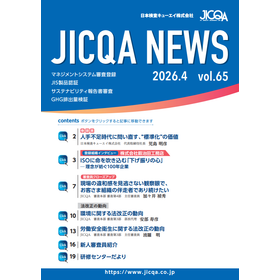
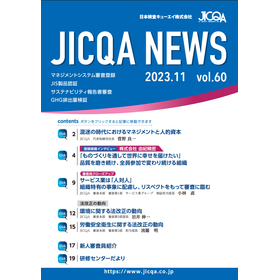
Management that Combines Philosophy and International Standards Learned from 100-Year-Old Companies

[Interview Article Published] How to Transform a Hollowed-Out System into Organizational Strength? Unraveling the Honest Management of the Labor Shortage Era from the Company Motto "The Heart of the Plumb Line."

This is a special interview with the top executive of a company that has consistently achieved sustainable growth while overcoming a rapidly changing economic crisis. They discuss the management philosophy that drives the organization and the true way to utilize international standards. The interview is filled with hints to break through challenges such as "there are manuals, but they are not permeated in the field" and "we want to break away from a personalized system that relies on individual capabilities." It teaches how to operate the "PDCWA" cycle, which eliminates formalistic approaches and pursues the essence of why actions are taken, as well as how to cultivate an organizational culture that instills a sincere mindset to the level of unconscious action. Furthermore, it reveals the raw wisdom of management needed to transform the framework of standards into a living system that aligns with the company's actual situation, building a genuine trust-based culture not only within the company but also with partner companies, in order to connect to the next era. *You can view the full text from the <PDF download>.*

Added to bookmarks

Bookmarks list

Bookmark has been removed

Bookmarks list

You can't add any more bookmarks

By registering as a member, you can increase the number of bookmarks you can save and organize them with labels.

Free membership registration

Reassessing the Value of Standardization in an Era of Labor Shortages【Article Published】

Not just ending with "rules." What is "true standardization" to eliminate personalization and create an organization that is resilient to change?

This is an introduction page for a special contribution (foreword) where top executives discuss the essential challenges of the increasingly serious "labor shortage" across Japan and the true meaning of "standardization" necessary for surviving in the coming era. It offers hints to break through the barriers many companies face, such as manuals becoming mere formalities and operations becoming dependent on specific employees. Standardization, often viewed merely as a means for business expansion and efficiency, is redefined as "the accumulation of technology and wisdom" and "the foundation of organizational building." It explains the key principles of operations that go beyond just procedural manuals, enabling the field to act spontaneously. By transforming the know-how of veterans into organizational assets, it unravels the essential approaches needed to maintain and improve quality and service levels even in today's environment of increasing workforce fluidity, from the perspective of top management. *You can view the full text via the <PDF download> link.

Added to bookmarks

Bookmarks list

Bookmark has been removed

Bookmarks list

You can't add any more bookmarks

By registering as a member, you can increase the number of bookmarks you can save and organize them with labels.

Free membership registration

Quality inspection by specialists who are well-versed in the automotive industry.

Judges with backgrounds from major automobile manufacturers are on staff. They identify weaknesses in processes from minor discrepancies observed on-site and support the organization's quality improvement.

We are featuring close-up interviews with highly specialized auditors who provide high-quality assessments in numerous manufacturing sites, focusing on quality management system standards for the automotive industry. Our team includes specialists who have experienced all processes of manufacturing, from forging and casting to assembly, at a major automotive manufacturer's transmission plant, and who understand the "pressure of the field" by having undergone recall-related operations and stringent government audits themselves. Under the belief that quality improves only when the "two wheels" of unique technology and management techniques mesh together, we practice assessments that enhance organizational performance, going beyond mere formal document reviews. Our advanced process approach using Turtle Diagrams, along with an exceptional observational ability to detect risks from "minor discrepancies" such as the brightness of lighting in manufacturing sites or the positioning of defective product boxes, is comprehensive. We break down the intent of requirements and engage in dialogue to help the field understand why corrections are necessary, continuously supporting the organization's growth along a "line." *You can view the interview article via the <PDF Download>.

Added to bookmarks

Bookmarks list

Bookmark has been removed

Bookmarks list

You can't add any more bookmarks

By registering as a member, you can increase the number of bookmarks you can save and organize them with labels.

Free membership registration

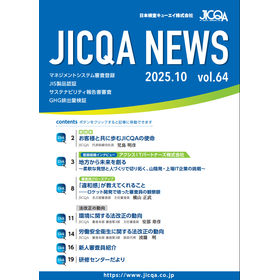
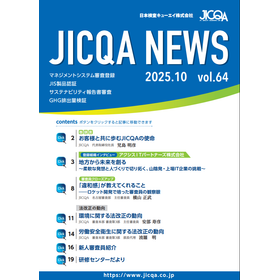
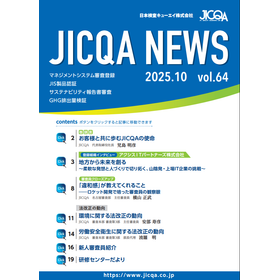
The mission of JICQA walking together with customers [Article Published]

As a pioneer of privately-led certification bodies, we support organizations across a wide range of industries by providing valuable insights and high-quality assessments.

More than 30 years have passed since the introduction of the ISO management system certification system in Japan, and the standards continue to evolve to encompass the quality of overall business activities, the environment, and information security. Established in 1992 as Japan's first private certification body, JICQA has developed a wide range of services that can cater to almost all industrial sectors. The greatest strength of this organization lies in its rare structure of directly employing a majority of its auditors, who come from various industrial backgrounds. Specialists with extensive practical experience provide high-quality audits through thorough training. By having the same auditor responsible over multiple years, they bring continuous beneficial insights to the organization. This is a message from the top that explains the trusted audit services that contribute to enhancing business levels, while addressing the needs of customers facing risks and opportunities in a rapidly changing external environment. *You can view the full text from the <PDF download>.*

Added to bookmarks

Bookmarks list

Bookmark has been removed

Bookmarks list

You can't add any more bookmarks

By registering as a member, you can increase the number of bookmarks you can save and organize them with labels.

Free membership registration

The Challenge of a Listed IT Company Creating the Future from the Local Area [Article Published]

The security system centered on ISMS certification and IT controls practiced by the first publicly listed IT company in the San'in region, along with educational investments aimed at "developing talent."

This is an interview that delves into the growth strategy of Axis IT Partners, Inc., which is headquartered in Tottori Prefecture and was the first IT company in the San'in region to go public. It explains their bold approach to human resource development by establishing the "Tottori IT Academy," where new graduates, regardless of their major, are educated over the course of a year under the belief that "talent is not something to be acquired, but something to be created." To ensure information security, which is the lifeline of a company, they strategically utilize two third-party audits: ISMS (Information Security Management System) certification by JICQA and IT controls by an external specialist company. Furthermore, they thoroughly implement security education from the stage of newcomers who have not yet been influenced by anything, embedding it into the organization's DNA. We will introduce the specific initiatives of the company, which proves that "it is possible to compete with the metropolitan area even in rural regions" and opens up regional potential through a robust system and human resource development. *You can view the full text from the <PDF download>.*

Added to bookmarks

Bookmarks list

Bookmark has been removed

Bookmarks list

You can't add any more bookmarks

By registering as a member, you can increase the number of bookmarks you can save and organize them with labels.

Free membership registration

The keen observation skills of veteran judges cultivated through rocket development.

The sensory evaluation that values the subtle "discomfort" at the scene, and the dialogue skills that clearly convey the background of the requirements.

This is a close-up article focusing on a veteran chief auditor who has been involved in the development of domestically produced rockets and system design for space stations at his previous job at Mitsubishi Heavy Industries, gaining practical experience in various departments. The article reveals the secrets to high-quality audits that can discern the essence of ISO standards, which the auditor has experienced firsthand. In the field of auditing, he values his own feelings of "discomfort" and "unease," and practices an approach that goes beyond merely checking superficial documents to deeply explore the "roots" of problems. Additionally, he emphasizes a dialogue technique that breaks down the often complex requirements of standards into understandable examples relevant to the audited organization's operations. He maintains a constant smile to ensure that the audited organization can speak candidly without fear, showcasing a professional attitude that continuously supports true improvement and performance enhancement through "opportunities for improvement." *You can view the full text from the <PDF download>.*

Added to bookmarks

Bookmarks list

Bookmark has been removed

Bookmarks list

You can't add any more bookmarks

By registering as a member, you can increase the number of bookmarks you can save and organize them with labels.

Free membership registration

Trends in Environmental Law Revisions and Their Impact on Practice

Recent trends in domestic laws related to the promotion of carbon neutrality, including the revision of the Global Warming Countermeasure Plan and the enforcement of the amended Energy Conservation Act for Buildings.

This is an explanatory article summarizing the movements of domestic laws that should be noted in the operation of environmental management systems as the promotion of carbon neutrality and decarbonization moves into the implementation phase. The document provides detailed information on the enforcement of the amended Energy Conservation Act for Buildings, which expanded the obligations for compliance with energy-saving standards, and the revision of the enforcement order of the Act on Promotion of Global Warming Countermeasures, which is associated with the strengthening of the implementation system for the bilateral credit mechanism (JCM). It clearly explains practical changes related to specific emitters, including a review of the methods for calculating greenhouse gas emissions. Furthermore, it covers the latest information on environmental laws that manufacturing and plant operations should be aware of, including the revision of standards for E. coli counts under the Water Pollution Control Act, the additional designation of specific chemical substances based on the enforcement order of the law concerning the examination and regulation of chemical substances, and amendments to testing methods related to industrial waste. *You can view the full text from the <PDF download>.*

Added to bookmarks

Bookmarks list

Bookmark has been removed

Bookmarks list

You can't add any more bookmarks

By registering as a member, you can increase the number of bookmarks you can save and organize them with labels.

Free membership registration

Revisions to Labor Safety and Health Laws and Future Roadmap

Explaining the latest regulations such as the mandatory "strengthening of heat stroke measures in the workplace" for businesses and the enhancement of safety and health measures for individual entrepreneurs, etc.

This is an explanatory article that summarizes the latest trends in labor safety and health-related legal revisions, which are rapidly advancing in response to the increase in labor accidents and changes in the work environment. A major topic this time is the obligation for businesses to implement measures for the early detection and prevention of health issues related to heat stroke, which will take effect in June of the 7th year of the Reiwa era. The article provides a practical perspective on the procedures for informing relevant workers and establishing reporting systems. Additionally, it touches on the background of legal revisions that go beyond traditional frameworks, such as the strengthening of safety and health measures for individual businesses (obligations to consider clients, etc.). It also previews important upcoming developments, such as the planned obligation for stress checks in businesses with fewer than 50 employees and a significant addition of substances (779 substances planned) to the risk assessment targets. The content is condensed with essential information for corporate labor and safety management. *You can view the full text via the <PDF download>.*

Added to bookmarks

Bookmarks list

Bookmark has been removed

Bookmarks list

You can't add any more bookmarks

By registering as a member, you can increase the number of bookmarks you can save and organize them with labels.

Free membership registration

The Strength of Japanese Society and the Nature of Management [Article Published]

A perspective that leverages the unique Japanese culture and environment of full participation to promote organizational improvement through individual human capabilities and autonomous action.

This is a message from the top that examines how Japanese companies should leverage top-down ISO standards originating from Europe while unraveling the characteristics of Japan's elementary education and social structure. The characteristic of Japanese-style management lies in the harmony of bottom-up activities involving everyone's participation. It is explained that the "human power" of individuals responsible for practical work in various departments of the organization is the key to utilizing the management system, and it is important to cultivate the ability to discern the fundamental essence without getting caught up in trivial details. This book presents the basic perspectives and ways of thinking necessary to engage in continuous improvement within the organization, not merely pursuing conformity, but with an amoeba-like autonomous capability and a high level of viewpoint. *You can view the full text from the <PDF download>.*

Added to bookmarks

Bookmarks list

Bookmark has been removed

Bookmarks list

You can't add any more bookmarks

By registering as a member, you can increase the number of bookmarks you can save and organize them with labels.

Free membership registration

Balancing stable energy supply and environmental conservation [Interview published]

Operating ISO 9001 for a quarter of a century. A global quality assurance system of a comprehensive trading company that supports the world's energy industry.

This is an interview that delves into the cutting-edge initiatives of Sumitomo Corporation, which supplies the world's highest quality seamless oil pipes to the global market, utilizing ISO 9001. It introduces flexible responses to the increasing price competition with Chinese manufacturers, the varying trends in decarbonization and environmental awareness across regions, and the unique business customs abroad. The interview touches on the differentiation factors of operations that enable rapid PDCA cycles between Tokyo and the four global hub locations where quality assurance experts are stationed. With a strong commitment to "keeping promises," the company views personnel transfers as opportunities for organizational evolution, systematically organizing manuals and procedures to maintain and enhance service quality, thus covering the realities of their sincere business practices. *You can view the full text via the <PDF download>.*

Added to bookmarks

Bookmarks list

Bookmark has been removed

Bookmarks list

You can't add any more bookmarks

By registering as a member, you can increase the number of bookmarks you can save and organize them with labels.

Free membership registration

The perspective of a judge who advances using sales experience and failures as nourishment.

A dialogue-based examination that interprets the organization's circumstances from the nuances of the manual, leveraging the insights of small and medium-sized enterprise consultants and their extensive sales experience.

This is a close-up article featuring the chief auditor of the Osaka Certification Department, who has spent nearly a quarter of a century in the certification industry and has an unusual career transition from a sales position. It explains the importance of the "optimal distance from the audited organization" learned from past sales experience and handling complaints, as well as the significance of interpersonal skills. The article discusses the essence of "reading between the lines of the manual" and introduces an approach that delves into the effectiveness of management systems by listening to the unspoken intentions and backgrounds of customers. It conveys the professional attitude that supports all audited organizations, revealing the process through which failures and accumulated experiences in challenging new industries build a "mental encyclopedia," leading to valuable insights through the stages of "shu-ha-ri" (a concept in Japanese martial arts that describes the stages of learning). *You can view the full text from the <PDF download>.*

Added to bookmarks

Bookmarks list

Bookmark has been removed

Bookmarks list

You can't add any more bookmarks

By registering as a member, you can increase the number of bookmarks you can save and organize them with labels.

Free membership registration

Trends in Environmental Law Revisions and Practical Responses

Comprehensive coverage of the latest environmental regulations, including the review of the disposal system for high-concentration PCB waste and the phased addition of specific mercury-containing products.

This is a commentary page that summarizes the movements of domestic laws that companies should be aware of for the reliable operation of their environmental management systems in a timely manner. The document provides detailed information on the latest trends regarding the review of processing systems by area following the cabinet decision on the basic plan for the disposal of polychlorinated biphenyl waste, as well as the sequential addition of specific mercury-containing products such as general lighting fluorescent lamps. It explains changes directly related to manufacturing and plants, such as the addition of air conditioners for stores and offices under the Fluorocarbon Emission Control Act. Furthermore, it condenses essential information to avoid legal risks, including the strengthening of exhaust gas regulations for specific special vehicles, the additional designation of first-class specific chemical substances, and new standards regarding carbon dioxide emission reduction indicators from ships. *You can view the full text via the <PDF download>.*

Added to bookmarks

Bookmarks list

Bookmark has been removed

Bookmarks list

You can't add any more bookmarks

By registering as a member, you can increase the number of bookmarks you can save and organize them with labels.

Free membership registration

Latest Trends in Legal Revisions Regarding Occupational Safety and Health

Organize the sequential expansion of risk assessment targets associated with the full implementation of autonomous management of chemical substances and the changes in practical operations.

This page provides a concise explanation of the movements in labor safety and health regulations that labor and safety managers in companies should pay attention to, in light of changes in the work environment and the strengthening of safety measures. In this issue, we highlight practical changes, such as the transition from traditional forms to electronic application procedures for reports on worker injuries and illnesses, as well as the appointment reports for various managers and industrial physicians. We also clearly explain the regulatory amendments that allow for the placement of registered dietitians in workplaces, which is now an obligation to strive for. Additionally, we cover technical information regarding the revision of work environment measurement standards, which has added "inductively coupled plasma mass spectrometry" as an analysis method for certain specific chemicals, including beryllium, cadmium, and lead. We also touch on the trends regarding the risk assessment targets, which are expected to expand to about 3,000 substances by the year 2028. *You can view the full text via the <PDF download>.*

Added to bookmarks

Bookmarks list

Bookmark has been removed

Bookmarks list

You can't add any more bookmarks

By registering as a member, you can increase the number of bookmarks you can save and organize them with labels.

Free membership registration

Accelerating Global Warming and Management Systems [Article Published]

An approach that recognizes climate change as a critical issue for the company and promotes a cumulative effort in energy-saving activities and improvements in work processes.

This is a message from the top that sounds the alarm on the current state of global warming, which is leading to Japan's subtropicalization, due to the recent abnormal typhoons and rising temperatures. It discusses the realistic approaches that companies should take. It points out that achieving carbon neutrality by 2050 is an extremely high barrier, particularly due to the increased power consumption from the rapid rise of data centers. It emphasizes the importance of not only placing excessive expectations on innovation but also accumulating practical energy-saving measures that Japan excels at, such as transitioning to LED lighting, high-efficiency air conditioning, and enhancing factory insulation. The message explains the key points of the supplementary version of the ISO standards related to climate change, which will be applied immediately in 2024, and provides a perspective for confronting global challenges through improvements in work systems and codes of conduct, not just at the national or corporate level. *You can view the full text via the <PDF download>.*

Added to bookmarks

Bookmarks list

Bookmark has been removed

Bookmarks list

You can't add any more bookmarks

By registering as a member, you can increase the number of bookmarks you can save and organize them with labels.

Free membership registration

Environmental Management Based on the Principles of the Analects and the Abacus [Interview Article Published]

Integrating the operation of ISO 14001 into daily business activities. Pursuing a balance between profit and public interest, and striving to be a "100-year company" that continues to contribute to society.

This is an interview article introducing the advanced initiatives of Ouei Co., Ltd., which operates a wide range of facilities such as school buildings and dormitories, as well as food service businesses, centered around SDGs and environmental management. It explains the turning point of shifting from traditional management focused solely on "paper, waste, and electricity" to integrating ISO into operations as part of environmental management, prompted by the transition to registration with JICQA. A specific success story is revealed, showcasing how the change to a made-to-order production method in the bento sales business achieved zero manufacturing waste. The article conveys the company's efforts to embody the spirit of "reconciling ethics and profit" (the Analects and the abacus), as advocated by Eiichi Shibusawa, a notable figure from the local area of Kita-ku, Tokyo. Through donations to social welfare councils addressing food loss and collaboration with local businesses, the company is actively practicing regional revitalization and sustainable corporate activities with a sense of urgency. *You can view the full text via the <PDF download> link.*

Added to bookmarks

Bookmarks list

Bookmark has been removed

Bookmarks list

You can't add any more bookmarks

By registering as a member, you can increase the number of bookmarks you can save and organize them with labels.

Free membership registration

Establishment of the review system and the expression of individuality by reviewers.

Establishing a system to ensure fairness and reliability as the behind-the-scenes support for certification bodies, along with education for diverse examiners to align in the same direction.

This is a close-up article focusing on the perspective of the head of the Technical Management Office, who supports JICQA's review services by managing internal regulatory documents, evaluating the capabilities of reviewers, and overseeing certification activities in specialized fields. It reveals the reality that certification bodies undergo rigorous accreditation audits annually based on standards, and presents how organizations can reflect not only compliance but also the concepts and individuality of each certification body in their operations. It explains the importance of standardizing the education of diverse and uniquely qualified reviewers from various industries and instilling a common set of values. The article discusses the difficulty of instilling a mindset in new reviewers, who may be constrained by their previous career experiences, about "how to provide value to customers through reviews," as well as the essence of the creative work involved in compiling objective judgment materials from third parties into clear reports. *You can view the full text via the <PDF download>.*

Added to bookmarks

Bookmarks list

Bookmark has been removed

Bookmarks list

You can't add any more bookmarks

By registering as a member, you can increase the number of bookmarks you can save and organize them with labels.

Free membership registration

Latest Trends in Environmental Law Revisions and Practical Responses

Organizing environmental regulations directly related to practice, such as the promulgation of the Resource Circulation Enhancement Act and the amendment of the greenhouse gas emission calculation and reporting order.

This is an explanatory page that clearly summarizes the movements of essential domestic environmental laws necessary for the proper operation of environmental management systems and compliance with regulations. It introduces the latest trends in detail, including the promulgation of the "Resource Circulation Promotion Act," which mandates the disclosure of recycling status for industrial waste disposal operators and encourages proactive efforts by manufacturers, as well as the strengthening of the implementation system for the bilateral credit mechanism (JCM) under the Global Warming Countermeasures Promotion Act. It also explains significant changes that have a substantial impact on practice, such as the obligation to comply with standards during renovations and expansions due to amendments to the Energy Conservation Act for Buildings. Additionally, it covers regulatory information that must be accurately understood on-site, including the establishment of new carbon dioxide reporting requirements for waste fuel usage under the Greenhouse Gas Emission Reporting Order, the revision of purification standard values for hexavalent chromium compounds in groundwater, and changes to the Poisonous and Deleterious Substances Designation Order. *You can view the full text from the <PDF Download>.*

Added to bookmarks

Bookmarks list

Bookmark has been removed

Bookmarks list

You can't add any more bookmarks

By registering as a member, you can increase the number of bookmarks you can save and organize them with labels.

Free membership registration

Revisions to labor safety and health laws and new regulations.

Response to the full implementation of autonomous management of chemical substances and the revision of regulations concerning safety for workers other than employees engaged in work.

This page provides a compact explanation of the latest trends in labor safety and health law revisions that labor and safety managers in companies should definitely be aware of. As a major topic, it addresses the trends regarding the autonomous management of chemical substances that have been fully implemented, presenting information on risk assessment targets expected to expand to approximately 3,000 substances by the year 2028. It explains, from a practical perspective, the setting of concentration standards for 112 newly added substances, such as ethyl acrylate, and the mandatory special education for tailgate lifter operation tasks. Furthermore, it touches on amendments to safety regulations concerning boilers, cranes, and gondolas, highlighting important changes regarding the expansion of the scope that mandates prohibiting entry into hazardous areas for individuals other than workers, as well as evacuation measures in the event of an accident, regardless of the existence of contractual relationships. *You can view the full text via the <PDF download>.*

Added to bookmarks

Bookmarks list

Bookmark has been removed

Bookmarks list

You can't add any more bookmarks

By registering as a member, you can increase the number of bookmarks you can save and organize them with labels.

Free membership registration

ISO management systems for adapting to the threats of climate change.

Surviving in an era of environmental crisis. Accurately assessing organizational challenges and risks, and building a PDCA that promotes self-transformation.

Since the Industrial Revolution, modern companies are being forced to respond to global crises such as rapid warming. The drastic environmental changes caused by human influence are difficult to resolve in a short period, making it essential to explore paths of "coexistence" and "adaptation" that continue transformation without worsening the current situation. In response to these threats, the ISO management system standards serve as effective tools for organizations to achieve sustainable growth. They allow for timely evaluation of internal and external challenges surrounding the company, as well as the needs and expectations of stakeholders, and the hidden risks and opportunities. By rapidly executing the PDCA cycle of planning, implementing, verifying, and improving measures to address these issues, organizations can enable self-transformation that aligns with the times. Details of various support plans that back up organizations in solving their challenges as a certification body are included in our catalog. Please download the materials to check them out.

Added to bookmarks

Bookmarks list

Bookmark has been removed

Bookmarks list

You can't add any more bookmarks

By registering as a member, you can increase the number of bookmarks you can save and organize them with labels.

Free membership registration

Third-party verification of greenhouse gas emissions to ensure corporate reliability.

Towards achieving carbon neutrality goals. We objectively verify and assure the calculation results across the entire supply chain (Scope 1 to 3).

As the government promotes its carbon neutrality goals and investors tighten their ESG evaluations, greenhouse gas (GHG) reduction activities within companies are rapidly becoming more active. This is also influenced by the obligation for companies listed on the prime market to disclose climate change risks, leading to a demand for accurate emissions data that encompasses not only direct emissions (Scope 1 and 2) but also the entire supply chain, including raw material procurement and transportation (Scope 3). To ensure the accuracy and reliability of these calculations externally, a system of third-party verification and assurance is effective. This significantly impacts companies' environmental management strategies, including improving the rating of published data, ensuring added value for products, and confirming lending conditions. The full article explaining the specific verification process to turn risks into opportunities and the key points to ensure the transparency of calculation data is included in the catalog. Please download the materials to check it out.

Added to bookmarks

Bookmarks list

Bookmark has been removed

Bookmarks list

You can't add any more bookmarks

By registering as a member, you can increase the number of bookmarks you can save and organize them with labels.

Free membership registration

ESG finance evaluation for achieving carbon neutrality

The key to successfully raising large amounts of funding. Supporting the collaboration between external evaluations of ESG bonds that meet international standards and third-party verification organizations.

As sustainable finance rapidly expands towards the realization of a decarbonized society, the ESG factors of companies are becoming increasingly important in the investment and financing decisions of private financial institutions and investors. In particular, for the massive fundraising required to achieve carbon neutrality, initiatives that align with the issuance of ESG bonds such as green bonds and lending conditions are essential. To secure funding in such markets, obtaining "external evaluations" that demonstrate compliance with various international standards and guidelines is indispensable. The acquisition of second opinions from evaluation agencies and the deepening of relationships with third-party verification organizations that substantiate the objectivity of greenhouse gas (GHG) reduction achievements, along with appropriate data disclosure, significantly influence the evaluations. A detailed article on the trends in ESG finance evaluation, the latest domestic trends, and reliable disclosure methods trusted by investors is included in the catalog. Please download the materials to check it out.

Added to bookmarks

Bookmarks list

Bookmark has been removed

Bookmarks list

You can't add any more bookmarks

By registering as a member, you can increase the number of bookmarks you can save and organize them with labels.

Free membership registration

Support for strengthening compliance in response to the latest environmental law amendments.

PCB waste, air pollution prevention, and water quality standards. Covering the trends of increasingly complex legal amendments to proactively prevent corporate legal violation risks.

Proper compliance with environmental-related laws is a significant requirement for companies to continue their business operations. In recent years, various legal amendments have been enacted, including changes to the disposal plans for products containing high concentrations of PCBs, the obligation to report preliminary survey results for dismantling work based on the Air Pollution Control Act, and responses to the Plastic Resource Circulation Promotion Act. Furthermore, there has been a tightening of standards, such as the lowering of water quality environmental standards for hexavalent chromium and amendments to reporting orders for greenhouse gas emission calculations. Companies are required to accurately understand the laws related to their business activities and to prepare for compliance by the deadlines. Delays in responding to these regulations not only lead to penalties but also expose companies to the risk of losing social credibility. The full article covering the specific impacts of each legal amendment on a company's manufacturing lines and management systems, as well as practical points for countermeasures, is included in the catalog. Please download the materials to check it out.

Added to bookmarks

Bookmarks list

Bookmark has been removed

Bookmarks list

You can't add any more bookmarks

By registering as a member, you can increase the number of bookmarks you can save and organize them with labels.

Free membership registration

Risk assessment of chemical substances and establishment of an autonomous management system.

Responding to the revision of the Labor Safety and Health Act. Supporting the transition from traditional regulations to a "self-managed system" that promotes exposure reduction driven by the workplace.

Regulations concerning labor safety and health are currently undergoing a significant transformation. In response to the increase in the number of chemical substances with unknown hazards and harmful effects, which number in the tens of thousands in domestic circulation, a shift is beginning from traditional uniform legal regulations to a "self-regulatory management system" where businesses conduct their own risk assessments (RA) and minimize the concentration of exposure for workers to these substances. Additionally, safety management standards for the entire workplace are being strengthened, including the obligation to inform sole proprietors working in the same location about hazards and to implement measures to prevent health disorders. To address these changes, it is essential to establish reliable systems, such as regular updates of SDS information, record-keeping of RA results, and discussions in health committees. The full article, which includes procedures for revising internal regulations in response to legal amendments, implementation on-site, and a checklist for obtaining special certification, is available in the catalog. Please download the materials for your review.

Added to bookmarks

Bookmarks list

Bookmark has been removed

Bookmarks list

You can't add any more bookmarks

By registering as a member, you can increase the number of bookmarks you can save and organize them with labels.

Free membership registration

Risk assessment of chemical substances and establishment of an autonomous management system.

Responding to the revision of the Labor Safety and Health Act. Supporting the transition from traditional regulations to a "self-managed system" that promotes exposure reduction driven by the workplace.

Amid the increasing number of tens of thousands of chemical substances with unknown risks and hazards circulating domestically, labor safety and health regulations are undergoing a significant transformation. With a complete shift from traditional uniform legal regulations to a "self-regulatory management system" where businesses conduct their own risk assessments (RA) and minimize the concentration of substances to which workers are exposed, proactive efforts have become more mandatory than ever before. The requirements to be covered are extremely diverse, including regular updates of SDS notification items, strengthened measures for storage in separate containers, exposure reduction measures based on RA results, and the preservation of work records for carcinogenic substances. Additionally, updates are needed for routine management of the work environment, such as revisions to office hygiene standards that involve lowering illumination criteria. The full text of the article explaining how to promote self-regulatory management in response to legal amendments, the establishment of implementation systems, and special exceptions for relaxing the frequency of health examinations based on work environment evaluations is included in the catalog. Please download the materials to check it out.

Added to bookmarks

Bookmarks list

Bookmark has been removed

Bookmarks list

You can't add any more bookmarks

By registering as a member, you can increase the number of bookmarks you can save and organize them with labels.

Free membership registration

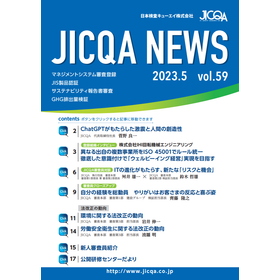
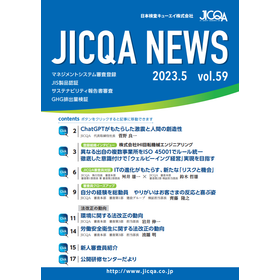
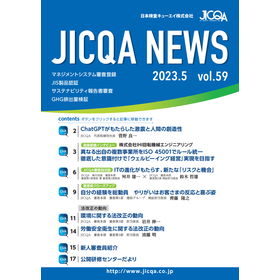
The impact of ChatGPT and organizational management that leverages human creativity.

Transforming business through conversational AI. Cultivating the "ability to define purpose" that machines cannot replicate, achieving sustainable growth for companies.

The emergence of generative AI, such as ChatGPT, has brought a seismic shift to the global business environment, beginning to significantly impact the nature of desk work and professional roles that were previously thought to be unique to humans. With advanced pattern recognition and self-learning capabilities, AI is hinting at a potential that approaches a certain kind of "creativity." The challenge for future management will be the redefinition of "value that only humans can provide." While AI can derive optimal solutions from vast amounts of data, it is only humans who can set the initial purpose or hypothesis—the starting point of "why" something is done—and create meaning from scratch. In a rapidly changing environment, the ability to effectively harness AI and accelerate organizational decision-making and the PDCA cycle will be essential for future management. For a detailed article on the nature of organizations in the age of AI utilization and the essence of the value generated by face-to-face communication, the full text is published in the catalog. Please download the materials to check it out.

Added to bookmarks

Bookmarks list

Bookmark has been removed

Bookmarks list

You can't add any more bookmarks

By registering as a member, you can increase the number of bookmarks you can save and organize them with labels.

Free membership registration

ISO 45001 leading the standardization of different bases and rules.

Unify the rules of multiple business locations with different origins and production forms. Prevent labor accidents in advance and establish a foundation for well-being management.

In organizations formed by the integration of multiple companies or business sites with different backbones, the systems and rules regarding health and safety tend to become fragmented, posing significant challenges in maintaining overall control and effectively promoting the prevention of workplace accidents. To create an environment where everyone can work happily and safely, it is essential to integrate the strengths of each location's operations and unify the internal standard rules in compliance with laws and regulations. The introduction of ISO 45001 (Occupational Health and Safety Management System) enables a quality management system that remains consistent regardless of changes in locations or personnel, as well as the establishment of practical risk assessments that reflect actual conditions. By building enforceable rules and embedding a planned PDCA cycle within the organization, we can contribute to health management and enhance employee motivation. The full article, which includes specific processes for standardizing rules through coordination among business sites of different origins and methods for raising awareness at the workplace, is available in the catalog. Please download the materials to check it out.

Added to bookmarks

Bookmarks list

Bookmark has been removed

Bookmarks list

You can't add any more bookmarks

By registering as a member, you can increase the number of bookmarks you can save and organize them with labels.

Free membership registration

Responding to new risks and opportunities brought about by the evolution of IT technology.

Oligopoly of public clouds and utilization of AI. Redesigning the rapidly changing IT environment to accelerate the transformation of the manufacturing and service industries.

The advancements in cloud computing and the rapid development of AI are promoting business efficiency while also bringing new security risks. While the use of public clouds, which allow for high convenience and rapid service deployment, is increasing, concerns such as dependency on specific vendors and large-scale information leaks across borders cannot be ignored. Modern DX (Digital Transformation) goes beyond mere digitization of paper and partial automation; it is fundamentally about "transforming the design of work itself" by leveraging IT technologies. It is essential to move away from the past mindset of "if you make good products cheaply, they will sell" and to accurately assess the risks and opportunities faced in management while redesigning business models to meet the services demanded by the market. The full article on the impact of the latest IT trends on management systems and the approach to continuously updating knowledge in audits is included in the catalog. Please download the materials to check it out.

Added to bookmarks

Bookmarks list

Bookmark has been removed

Bookmarks list

You can't add any more bookmarks

By registering as a member, you can increase the number of bookmarks you can save and organize them with labels.

Free membership registration

ISO audits that help identify organizational challenges together.

Moving away from formal audits. Supporting the development of young employees and the revitalization of the organization through questions that delve into the intentions of management and the significance of activities on the ground.

The management system is not aimed at obtaining or maintaining certification itself, but rather serves as a tool to solve the management challenges of the organization and to facilitate continuous improvement. Therefore, during the regularly conducted external audits, it is crucial that the added value is high enough for the field to genuinely feel that "the cost of the audit was worth it," rather than merely confirming compliance in a superficial manner. Experienced auditors do not simply point out deficiencies in documents; instead, they provide opportunities for each employee to reflect on the essence of their daily work by probing deeper into the meaning of their activities through questions. Recently, more organizations have been involving young employees in audits for educational purposes, thereby enhancing communication and supporting overall quality improvement within the organization. The full text of articles that explain examples of responses that have pleased customers in actual audit settings, as well as key points for effective management system operations, is included in the catalog. Please download the materials and check them out.

Added to bookmarks

Bookmarks list

Bookmark has been removed

Bookmarks list

You can't add any more bookmarks

By registering as a member, you can increase the number of bookmarks you can save and organize them with labels.

Free membership registration

Support for strengthening compliance in response to the latest environmental law amendments.

From boiler regulations and water quality prevention to energy-saving standards. We comprehensively cover the trends of increasingly complex legal amendments to proactively prevent companies from violating laws and regulations.

In order for companies to continue healthy business activities, appropriate responses to the continuously enacted environmental regulations are a top priority compliance requirement. Changes to the scale requirements for boilers due to amendments to the Air Pollution Control Act and the obligation to submit notifications for facilities generating harmful smoke are examples of how traditional standards are being reviewed, leading to many cases where a company's equipment becomes newly subject to regulation. Furthermore, there are various trends to watch, such as the addition of designated substances under the Water Pollution Control Act, the classification of environmental standards regarding the dissolved oxygen levels in the bottom layers of public water bodies, and amendments to various standards related to the Energy Conservation Act for Buildings. If these legal amendments are not timely addressed and necessary notifications or operational revisions are not made by the deadlines, it could lead to situations that affect the company's social credibility. The full article covering the impact of each legal amendment on facility management and environmental management, as well as practical considerations, is published in the catalog. Please download the materials to check it out.

Added to bookmarks

Bookmarks list

Bookmark has been removed

Bookmarks list

You can't add any more bookmarks

By registering as a member, you can increase the number of bookmarks you can save and organize them with labels.

Free membership registration

Risk assessment of chemical substances and establishment of an autonomous management system.

Responding to the revision of the Labor Safety and Health Act. Supporting the transition from traditional regulations to a "self-managed system" that promotes exposure reduction driven by the workplace.

In the field of labor safety and health, a complete transition to a "self-management system" has been implemented, allowing businesses to conduct their own risk assessments (RA) and minimize exposure to harmful chemicals, moving away from the previous uniform regulations. This new system was introduced because many substances causing work-related accidents that result in downtime were not covered by the traditional special regulations, and it requires businesses to take more proactive measures than ever before. In addition to a significant expansion of substances subject to RA, there are various items to address, including measures to reduce exposure below concentration threshold values, mandatory appointment of chemical substance managers and personal protective equipment management officers who have completed specialized training, and consultation with external experts. Furthermore, updates to routine labor and safety management are also necessary, such as the announcement of improvement standards for drivers in anticipation of the 2024 issue and revisions to noise disturbance prevention guidelines. The full text of articles covering the establishment of an implementation system in response to the new regulations and specific procedures for on-site application is included in the catalog. Please download the materials for your review.

Added to bookmarks

Bookmarks list

Bookmark has been removed

Bookmarks list

You can't add any more bookmarks

By registering as a member, you can increase the number of bookmarks you can save and organize them with labels.

Free membership registration

Risk assessment of chemical substances and establishment of an autonomous management system.

Responding to the revision of the Labor Safety and Health Act. Supporting the transition from traditional regulations to a "self-managed system" that promotes exposure reduction driven by the workplace.

In the field of labor safety and health, a transition to a "self-management system" has been fully implemented, moving away from the previous uniform regulations. This new system requires businesses to conduct their own risk assessments (RA) to minimize exposure to harmful chemicals. It was introduced in response to the fact that many work-related accidents resulting in downtime occurred with chemicals that were previously not covered by special regulations, demanding more proactive efforts from companies than ever before. The practical requirements to be addressed are extremely diverse, including the gradual expansion of substances subject to RA, control to below concentration threshold values, management of appropriate protective gear to prevent direct contact with skin-hazardous chemicals, and the addition of agenda items in hygiene committees. Additionally, updates to safety management standards on-site, such as the addition of special training for tailgate lifter operations and strengthening measures to prevent falls from scaffolding, are also necessary. The full text of the articles covering the establishment of an implementation system in response to legal revisions and specific procedures for on-site application is included in the catalog. Please download the materials to review them.

Added to bookmarks

Bookmarks list

Bookmark has been removed

Bookmarks list

You can't add any more bookmarks

By registering as a member, you can increase the number of bookmarks you can save and organize them with labels.

Free membership registration
Prev 12 Next
  • あなたの設計時間 CADに奪われていませんか? 制約から解放される新たな設計環境へ
  • 金属・化学・窯業・食品・医薬品などのほぐし・解砕・ふるい分けがこれ一台 解砕機構付き佐藤式振動ふるい機 つばさ デモ実施中!
    • Contact this company

      Inquiry Form
    • Before making an inquiry

      Download Profile

    Products

    • Search for Products

    Company

    • Search for Companies

    Special Features

    • Special Features

    Ranking

    • Overall Products Ranking
    • Overall Company Ranking

    support

    • site map
    IPROS
    • privacy policy Regarding external transmission of information
    • terms of service
    • About Us
    • Careers
    • Advertising
    IPROS Services
    • >IPROS GMS | Search site for the manufacturing industry
    • >IPROS | Search site for the B2B industry
    COPYRIGHT © 2001-2026 IPROS CORPORATION ALL RIGHTS RESERVED.
    Please note that the English text on this page is automatically translated and may contain inaccuracies.