Zero breakdowns with just 5 minutes of work every day.
Why is daily maintenance necessary? ▷ To prevent equipment failures in advance by having the users of the equipment perform maintenance tasks such as oiling, cleaning, and inspections, ensuring production proceeds according to the production plan. Are there any equipment failures or minor stoppages in your workplace? Equipment communicates its poor condition through sounds, smells, and heat, much like a "baby." By conducting daily maintenance and visualizing the equipment itself, we can receive the signals emitted by the equipment. With just 5 minutes of maintenance each day, visual control of the equipment is possible. Failures in equipment that has not undergone daily inspections can occur suddenly. When equipment fails, production is delayed, significantly disrupting the production plan, which can not only inconvenience customers but also lead to a loss of trust. In this seminar, you will learn: - How to promote equipment maintenance across the company and specific procedures - By implementing daily maintenance and equipment maintenance: → Equipment operating rates improve, leading to increased productivity → It also contributes to the elimination of defects caused by external factors and cost reduction *For more details, please download the PDF or contact us.

Inquire About This Product
basic information
**Lecture Content** 1. For the survival of the company 2. A production system that can respond immediately to market changes 3. TPM is "Participatory PM (Production Maintenance)" 4. Implementation - Key points for cleaning and inspection - Creating a system that does not require cleaning - Creating a system that facilitates work - Drafting provisional standards for cleaning, lubrication, and inspection - Improvement examples (introducing cases from other companies) 5. Autonomous maintenance and operator training - Basic and specific objectives - Desired skill levels - Fundamentals of equipment maintenance and visual control - Four pitfalls of visualization 6. Another concept of TPM - Goals for reducing losses in TPM - Structure of the 16 major losses in production system efficiency - Relationship between the 7 major losses that hinder equipment efficiency and overall equipment effectiveness - Why is identifying defects important? 7. Failures and minor stoppages - Definition of failure - Two types of failures - Five major causes of failure - Challenges in failure countermeasures - Minor stoppages We will proceed with a workshop format. *For more details, please download the PDF or contact us.*
Price information
Participation fee: 31,350 yen (including tax) per person This seminar can also be conducted as an in-house training for a single company. For more details, please contact us.
Price range
P2
Delivery Time
Applications/Examples of results
Date and Time May 19, 2023 (Friday) 10:00 AM - 4:30 PM Instructor Shinji Yoshimura, Senior Consultant, T.M.A. Co., Ltd. For those attending an online seminar for the first time, we will conduct a connection test in advance, so you can participate with confidence. Participant Feedback - I cleaned areas that I had not addressed before. I noticed rust and debris buildup, and the deterioration of joints, which eliminated system errors. - I had been concerned about unusual noises from the equipment, but since there were no issues with product quality at the time, I continued to operate it. However, problems arose a few months later. I realized again how important it is to maintain awareness of differences from normal conditions. - By cleaning, I was able to understand the concept of inspection through my own actions. By interacting with the equipment, I became aware of slight looseness, wear, and other issues. I want to use my eyes, ears, and hands to identify equipment malfunctions and reduce work losses. *For more details, please download the PDF or contact us.*
catalog(1)
Download All Catalogs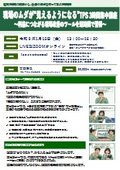
News about this product(2)


Company information

Our company was established 30 years ago, inspired by the teachings of Mr. Taiichi Ohno, the father of the Toyota Production System and former Vice President of Toyota Motor Corporation. The previous president, Shigehiko Sugawara, learned the methods of on-site improvement based on the Toyota Production System, as well as the supporting PM. After Mr. Ohno's passing, we established T.M.A. Co., Ltd. in 1992 to carry on his legacy. Manufacturing is about developing people. It involves creating sellable products based on the fundamental concepts of the Toyota Production System: "Just-In-Time" and "Jidoka." This means producing only what can be sold, when it can be sold, with a waste-free combination of people, machines, and materials, all within the shortest lead time. To achieve this, it is essential for the manufacturing, sales, and development departments to work together as one cohesive unit. We aim to realize manufacturing and human development that challenges together, leverages for the future, and creates the next stage. As a result, people grow, and a resilient corporate culture emerges. Our company strongly supports these initiatives. We operate six business areas: 1. On-site improvement consulting and seminar instructor dispatch 2. Online seminars and group seminars 3. T-Mate system 4. Book publishing and sales 5. Correspondence education 6. Video distribution