Qualitative and quantitative evaluation of odor components for VOC measurement in building materials.
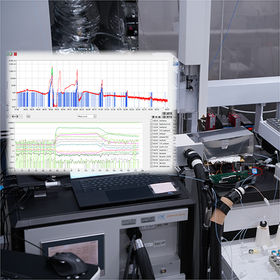
In the building materials industry, the measurement of volatile organic compounds (VOCs) is required to ensure product safety and the comfort of living environments. In particular, trace odor components emitted from building materials can potentially affect indoor air quality. Accurately understanding these odor components is crucial for product development and quality control. Our company provides scientific backing by qualitatively and quantitatively evaluating trace odor components emitted from building materials through odor analysis using gas chromatography-mass spectrometry (GC-MS) and proton transfer reaction mass spectrometry (PTR-MS). 【Application Scenarios】 - Evaluation of VOC emissions from building materials - Identification of odor components in product development - Setting odor threshold values in quality control 【Effects of Implementation】 - Improvement of product safety and comfort - Product development based on reliable data - Increased customer satisfaction
Inquire About This Product
basic information
【Features】 - High-precision analysis of odor components using GC-MS and PTR-MS - Qualitative and quantitative evaluation of trace odor components - High-sensitivity measurement (detectable even at ppt levels)
Price information
We accept orders starting from 600,000 yen for 3 samples. Please contact us for individual estimates based on the quantity.
Price range
P4
Delivery Time
Applications/Examples of results
For more details, please refer to the PDF document or feel free to contact us.
catalog(1)
Download All Catalogs
Company information

Our company is a venture firm originating from the National Institute for Materials Science (NIMS) that specializes in olfactory sensors. We established the company in 2022, believing that we need to bring the technology of membrane-type surface stress sensors (MSS), which we are well acquainted with, to the world. While sincerely engaging with the technology, we aim to advance the social implementation of odor sensors and create a future where there is a "culture of measuring odors."