1~33 item / All 33 items
Displayed results
Filter by category

Added to bookmarks
Bookmarks listBookmark has been removed
Bookmarks listYou can't add any more bookmarks
By registering as a member, you can increase the number of bookmarks you can save and organize them with labels.
Free membership registration
Contact this company
Inquiry FormBefore making an inquiry
Download Profile1~33 item / All 33 items
Filter by category

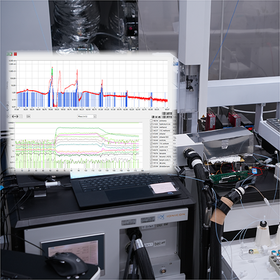
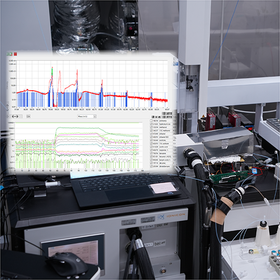
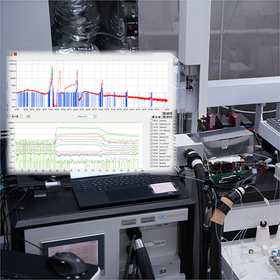
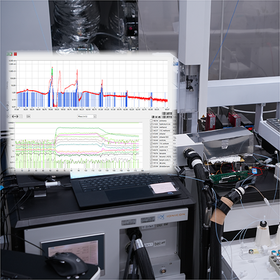
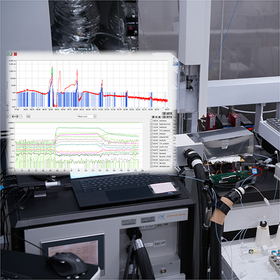
In microbial culture, various volatile organic compounds (VOCs) are generated as the microorganisms proliferate. By quantitatively evaluating the VOCs emitted from microorganisms, we can obtain various information regarding their metabolism. Our odor analysis service utilizes gas chromatography-mass spectrometry (GC-MS) and proton transfer reaction mass spectrometry (PTR-MS) to enable qualitative and quantitative assessment of trace VOC components, providing scientific support for product development. 【Application Scenarios】 - Qualitative evaluation of VOCs generated during microbial culture - Quantitative evaluation of specific gases generated during microbial culture - Observation of temporal changes in VOCs associated with cultivation 【Benefits of Implementation】 - Acquisition of metabolic information of microorganisms - Identification of VOCs emitted from microorganisms
Added to bookmarks
Bookmarks listBookmark has been removed
Bookmarks listYou can't add any more bookmarks
By registering as a member, you can increase the number of bookmarks you can save and organize them with labels.
Free membership registration
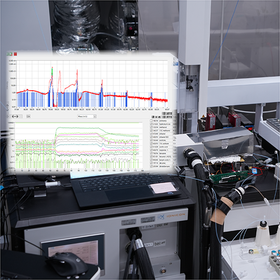
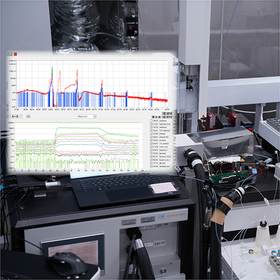
In plastic products, the evaluation of odors and volatile organic compounds (VOCs) emitted from the products is considered important. Particularly in recycled plastics, the odor often becomes a problem, and it is necessary to control the odor appropriately. Therefore, it is required to analyze the odor components and evaluate the odors emitted from the products. Our odor analysis service addresses these challenges by qualitatively and quantitatively evaluating trace odor components using gas chromatography-mass spectrometry (GC-MS) and proton transfer reaction mass spectrometry (PTR-MS). [Usage Scenarios] - Qualitative and quantitative evaluation of odors generated during the plastic manufacturing process - Qualitative and quantitative evaluation of odors emitted from the final plastic product - Qualitative and quantitative evaluation of odors emitted from recycled plastic materials [Benefits of Implementation] - Development of additives to suppress odors - Establishment of standard values for odor levels - Safe and comfortable use of recycled plastics
Added to bookmarks
Bookmarks listBookmark has been removed
Bookmarks listYou can't add any more bookmarks
By registering as a member, you can increase the number of bookmarks you can save and organize them with labels.
Free membership registration
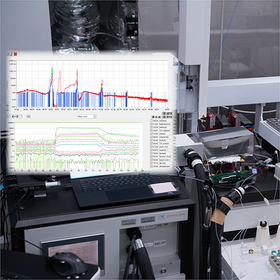
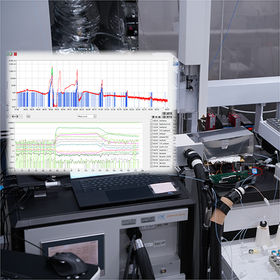
In the field of microbial culture, there is growing interest in technologies for monitoring the growth of microorganisms. Understanding the growth without altering clean, sterile, and anaerobic conditions is crucial for the stable cultivation of microbes. Odor sensors are gaining attention as a technology for this purpose; however, while there are many proven examples of odor measurement at the research level, various challenges exist for their practical application in the field. Our company listens to customer requests regarding odor sensors and provides technical support for the introduction and utilization of MSS odor sensors. Leveraging Qception's expertise in odor measurement, we contribute to growth diagnostics in agricultural settings. 【Application Scenarios】 - Understanding the growth status of bacteria in culture media - Evaluating whether the culture is progressing appropriately 【Benefits of Implementation】 - Stable microbial cultivation - Early detection of contamination occurrences
Added to bookmarks
Bookmarks listBookmark has been removed
Bookmarks listYou can't add any more bookmarks
By registering as a member, you can increase the number of bookmarks you can save and organize them with labels.
Free membership registration
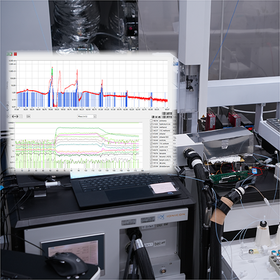
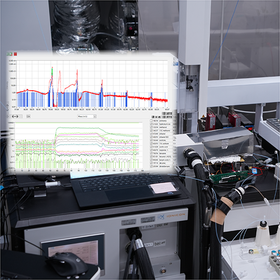
In plastic products, the evaluation of odors and volatile organic compounds (VOCs) emitted from the products is considered important. Particularly with recycled plastics, the odor often becomes a problem, and it is necessary to control the odor appropriately. In such situations, odor sensors are gaining attention as tools that can be used; however, while there are examples of proof at the research level, there are technical barriers to their actual use in industrial settings. Our company listens to customer requests regarding the introduction and utilization of odor sensors and provides technical support leveraging the know-how in odor measurement that Qception has cultivated, thereby assisting in solving this issue. We propose flexible support plans tailored to the customer's goals and approaches, promoting the social implementation of odor sensors. 【Usage Scenarios】 - Odor measurement during the plastic manufacturing process - Odor measurement of final plastic products - Odor measurement of recycled plastic raw materials 【Benefits of Introduction】 - Adjustment of the amount of additives to suppress odors - Proof that odors are below a certain threshold - Safe and comfortable use of recycled plastics
Added to bookmarks
Bookmarks listBookmark has been removed
Bookmarks listYou can't add any more bookmarks
By registering as a member, you can increase the number of bookmarks you can save and organize them with labels.
Free membership registration
In the field of medical care and healthcare, especially in disease detection, there is a demand for highly sensitive measurement technologies that can capture subtle biological changes. The detection of specific odor components present in breath and body odor is expected to be a non-invasive and simple approach for early disease detection and understanding the progression of conditions. However, while there are many demonstration cases at the research level, practical application in actual medical settings faces challenges such as measurement stability, data reliability, and the complexity of analysis. Our company provides technical support for MSS odor sensors utilizing Qception's expertise in odor measurement, assisting customers in the introduction and utilization of odor sensors. 【Application Scenarios】 - Detection of disease-related odor components from breath and body odor - Monitoring the progression of conditions and treatment effects - Development of non-invasive screening tests 【Benefits of Implementation】 - Improvement of prognosis through early disease detection - Realization of testing methods that impose less burden on patients - Contribution to the reduction of medical costs
Added to bookmarks
Bookmarks listBookmark has been removed
Bookmarks listYou can't add any more bookmarks
By registering as a member, you can increase the number of bookmarks you can save and organize them with labels.
Free membership registration
In the fragrance and cosmetics industry, it is essential to maintain a consistent quality of product scent and meet consumer expectations. Particularly, subtle changes in fragrance and degradation over time are critical factors in product evaluation. However, while there are many empirical examples of objective measurement and evaluation of odors at the research level, there are technical challenges in applying these methods in actual industrial settings. Our company provides technical support for the introduction and utilization of MSS odor sensors, assisting customers in implementing these sensors. Leveraging Qception's expertise in odor measurement, we contribute to improving the accuracy of quality evaluation in the fragrance and cosmetics industry. 【Application Scenarios】 - Evaluation of fragrance during the product development stage - Quality control on the manufacturing line - Analysis of temporal changes in the fragrance of existing products 【Benefits of Implementation】 - Enables fragrance evaluation based on objective data - Reduces variability in quality and provides stable products - Contributes to shortening and streamlining the development period
Added to bookmarks
Bookmarks listBookmark has been removed
Bookmarks listYou can't add any more bookmarks
By registering as a member, you can increase the number of bookmarks you can save and organize them with labels.
Free membership registration
In the food and beverage industry, managing the quality of aroma is a crucial issue for maintaining product quality and ensuring safety. Odor sensors are gaining attention as tools for appropriately managing aroma, but their measurement and utilization require specialized knowledge and skills. While there are many empirical examples of odor measurement at the research level, various barriers exist for their application in actual field settings. Our company provides technical support for the introduction and utilization of odor sensors for our customers, leveraging Qception's expertise in odor measurement to assist in solving their challenges. 【Application Scenarios】 - Fermentation monitoring of fermented foods - Quality control of processed foods - Quality maintenance verification during distribution and storage 【Benefits of Implementation】 - Objective evaluation of food aroma, contributing to quality maintenance - Potential reduction in waste loss - Improvement in product reliability
Added to bookmarks
Bookmarks listBookmark has been removed
Bookmarks listYou can't add any more bookmarks
By registering as a member, you can increase the number of bookmarks you can save and organize them with labels.
Free membership registration
In the field of microbial culture, there is growing interest in technologies that monitor the growth of microorganisms. Understanding the growth without altering the clean, sterile, and anaerobic conditions is crucial for stable cultivation of microbes. Our company will utilize an odor sensor based on membrane-type surface stress sensors (MSS) to detect odors generated during microbial culture, enabling monitoring of the cultivation conditions. By measuring odors, it becomes possible to understand microbial growth non-contact without sampling from the culture medium. We will first evaluate the potential of this odor sensor through contract measurements to determine whether it can detect odors generated in the microbial cultures used by our customers and assess the feasibility of utilizing the odor sensor. 【Application Scenarios】 - Understanding the growth status of microbes in the culture medium - Evaluating whether the culture is progressing appropriately 【Benefits of Implementation】 - Stable microbial cultivation - Early detection of contamination events
Added to bookmarks
Bookmarks listBookmark has been removed
Bookmarks listYou can't add any more bookmarks
By registering as a member, you can increase the number of bookmarks you can save and organize them with labels.
Free membership registration
In plastic products, the evaluation of odors and volatile organic compounds (VOCs) emitted from the products is considered important. Particularly with recycled plastics, the odor often becomes a problem, and it is necessary to control the odor appropriately. In this context, proper odor measurement in factories becomes an essential technology for evaluating the odor of plastics. Our company has developed an odor sensor using a membrane-type surface stress sensor (MSS) and has a track record in measuring the odor of plastics. We will first assess the possibility of this odor sensor detecting the odor of the plastic you wish to test through contract measurements and evaluate the potential for utilizing the odor sensor. 【Application Scenarios】 - Odor measurement during the plastic manufacturing process - Odor measurement of final plastic products - Odor measurement of recycled plastic raw materials 【Benefits of Implementation】 - Adjustment of the amount of additives to suppress odors - Proof that the odor is below a certain value - Safe and comfortable use of recycled plastics
Added to bookmarks
Bookmarks listBookmark has been removed
Bookmarks listYou can't add any more bookmarks
By registering as a member, you can increase the number of bookmarks you can save and organize them with labels.
Free membership registration
In the apparel industry, it is essential to objectively evaluate the deodorizing effects of products and provide consumers with reliable information. In particular, accurately understanding how long the deodorizing function applied to clothing lasts and what types of odors it is effective against is crucial for product development and marketing strategies. Insufficient verification of deodorizing effects can betray consumer expectations and lead to a decline in brand image. Our high-precision odor measurement using MSS supports objective evaluation of deodorizing effects through precise measurements. 【Usage Scenarios】 - Quantitative evaluation of the deodorizing effects of treated clothing - Verification of deodorizing performance against specific odor components - Assessment of the persistence of deodorizing effects 【Benefits of Implementation】 - Objective and precise data acquisition on deodorizing effects - Improved product reliability and effective appeal to consumers - Support for effective product development and marketing strategy planning
Added to bookmarks
Bookmarks listBookmark has been removed
Bookmarks listYou can't add any more bookmarks
By registering as a member, you can increase the number of bookmarks you can save and organize them with labels.
Free membership registration
In the building materials industry, measuring volatile organic compounds (VOCs) is emphasized to maintain the quality of indoor air environments. In particular, VOCs emitted from building materials can potentially affect the health and comfort of residents. Proper VOC measurement is essential for the safety evaluation of building materials and product development. Our company supports the resolution of customers' VOC measurement challenges by evaluating the potential for odor measurement of building materials through contract measurements using membrane-type surface stress sensors (MSS). 【Usage Scenarios】 - VOC emission testing for new building materials - VOC evaluation for renovation materials - Evaluation of odor components in quality control of building material products 【Benefits of Implementation】 - Objective assessment of VOC content in building materials - Support for product development aimed at reducing health risks for residents - Improvement of product safety and reliability
Added to bookmarks
Bookmarks listBookmark has been removed
Bookmarks listYou can't add any more bookmarks
By registering as a member, you can increase the number of bookmarks you can save and organize them with labels.
Free membership registration
In the pet food industry, the evaluation of aroma is considered crucial for enhancing product palatability. Specifically, accurately understanding the aromatic components that pets prefer and incorporating them into products can determine competitiveness in the market. Inadequate aroma evaluation or scents that do not align with pet preferences may lead to lost sales opportunities. Our company supports the evaluation of pet food palatability through high-precision odor measurement using membrane-type surface stress sensors (MSS). 【Application Scenarios】 - Aroma evaluation in new product development - Aroma improvement for existing products - Aroma comparison with competing products 【Benefits of Implementation】 - Development of aromas that align with pet preferences - Enhancement of product appeal - Strengthening of competitiveness in the market
Added to bookmarks
Bookmarks listBookmark has been removed
Bookmarks listYou can't add any more bookmarks
By registering as a member, you can increase the number of bookmarks you can save and organize them with labels.
Free membership registration
In the cosmetics industry, the evaluation of fragrance, which influences the appeal and individuality of products, is considered crucial. In particular, quality control of fragrances, tracking changes over time, and detecting off-odors are necessary tasks to deliver safe and reliable products to customers. Inadequate fragrance evaluation may impact the assessment of products after they are launched in the market. Our company supports your business by evaluating the detectability and distinguishability of cosmetic fragrances through high-precision odor measurement using membrane-type surface stress sensors (MSS). 【Application Scenarios】 - Evaluation and visualization of fragrance characteristics - Analysis of the temporal changes in the fragrance of existing products - Detection of off-odors 【Benefits of Implementation】 - Increased efficiency in quality control through objective evaluation - Reduction of labor costs by introducing a "machine nose" - Early detection of fragrance-related issues and consideration of solutions
Added to bookmarks
Bookmarks listBookmark has been removed
Bookmarks listYou can't add any more bookmarks
By registering as a member, you can increase the number of bookmarks you can save and organize them with labels.
Free membership registration
In chemical plants, early detection of equipment abnormalities and hazardous substance leaks is extremely important for safe operations and environmental protection. In particular, even minor gas leaks pose risks of health hazards to workers, damage to equipment, and potentially large-scale accidents. To mitigate these risks, high-sensitivity and rapid odor detection technology is required. Our company provides high-precision odor measurement services using membrane-type surface stress sensors (MSS) to support the resolution of leak detection challenges in chemical plants. 【Usage Scenarios】 - Identification of gas leak locations within the plant - Rapid odor detection during abnormal occurrences - Monitoring of odors during regular equipment inspections 【Benefits of Implementation】 - Reduction of accident risks through early leak detection - Improvement of workplace safety - Prevention of environmental pollution
Added to bookmarks
Bookmarks listBookmark has been removed
Bookmarks listYou can't add any more bookmarks
By registering as a member, you can increase the number of bookmarks you can save and organize them with labels.
Free membership registration
In the food manufacturing industry, it is essential to detect the occurrence of off-odors and changes in flavor to maintain consistent product quality. Particularly, to gain consumer trust, it is important to not overlook even subtle changes in odor and to identify their causes. Inadequate quality control can lead to product complaints and a decline in brand image. Our company leverages the odor measurement expertise we have developed over many years to support our clients in the implementation of odor sensors. Through high-precision odor measurement using MSS (Membrane-type Surface Stress Sensors), we evaluate the measurability of the target odor with MSS and present specific steps towards the introduction of odor sensors. 【Usage Scenarios】 - Early detection of off-odors on the production line - Evaluation of flavor changes in raw materials and products - Confirmation of odor transfer from packaging materials - Identification of odor sources in the manufacturing process 【Benefits of Implementation】 - Stabilization of product quality - Reduction in complaints due to off-odors - Improvement in customer satisfaction regarding flavor - Acceleration of cause investigation
Added to bookmarks
Bookmarks listBookmark has been removed
Bookmarks listYou can't add any more bookmarks
By registering as a member, you can increase the number of bookmarks you can save and organize them with labels.
Free membership registration
Trace amounts of odor components contained in breath and skin gases are known to be related to health conditions. From this, new medical and healthcare services have been devised that allow for non-invasive assessment of health status by examining breath and skin gases. Our company contributes to improving the accuracy of breath diagnostics by qualitatively and quantitatively evaluating trace odor components through odor analysis using gas chromatography-mass spectrometry (GC-MS) and proton transfer reaction mass spectrometry (PTR-MS). 【Application Scenarios】 - Detection of disease marker components in breath - Monitoring of health status - Diagnostic support 【Effects of Implementation】 - Improved diagnostic accuracy through precise analysis of breath components - Possibility of early detection through the detection of trace components - Development of non-invasive diagnostic methods
Added to bookmarks
Bookmarks listBookmark has been removed
Bookmarks listYou can't add any more bookmarks
By registering as a member, you can increase the number of bookmarks you can save and organize them with labels.
Free membership registration
In the automotive industry, managing odors in the vehicle interior is emphasized to ensure passenger comfort. In particular, trace amounts of chemicals emitted from interior materials can cause unpleasant odors. Accurately identifying these odor components and taking countermeasures is essential for improving product quality. Our odor analysis service addresses these challenges through advanced instrumental analysis such as GC-MS and PTR-MS. 【Usage Scenarios】 - Evaluation of interior odors during new car development - Odor checks before used car sales - Identification of odor components in interior material development 【Benefits of Implementation】 - Identification and reduction of substances causing unpleasant odors - Improvement of passenger satisfaction - Acquisition of objective data in product development
Added to bookmarks
Bookmarks listBookmark has been removed
Bookmarks listYou can't add any more bookmarks
By registering as a member, you can increase the number of bookmarks you can save and organize them with labels.
Free membership registration
In the pet care industry, effective odor control measures are required to provide a comfortable living environment for pets. It is particularly important to accurately identify the specific odors associated with pets, as well as the substances causing odors from waste and body odor, and to objectively verify their deodorizing effects. Inadequate odor control measures can lead to stress and health issues for pets, as well as a decline in the quality of life for their owners. Our odor analysis service provides scientific backing for deodorizing effects by qualitatively and quantitatively evaluating trace odor components using advanced analytical equipment such as GC-MS and PTR-MS. 【Usage Scenarios】 - Verification of deodorizing effects of pet deodorants - Evaluation of deodorizing performance of pet products (beds, cages, etc.) - Analysis of odor components derived from pet body odor and waste 【Benefits of Implementation】 - Acquisition of objective data on deodorizing effects - Provision of scientific evidence for product development - Planning of more effective odor control measures
Added to bookmarks
Bookmarks listBookmark has been removed
Bookmarks listYou can't add any more bookmarks
By registering as a member, you can increase the number of bookmarks you can save and organize them with labels.
Free membership registration
In the water treatment industry, the occurrence of unpleasant odors from facilities and surrounding areas is a significant issue, leading to complaints from residents and environmental impacts. Particularly, identifying trace odor components that are difficult to pinpoint is essential for implementing effective measures. Our odor analysis service utilizes gas chromatography-mass spectrometry (GC-MS) and proton transfer reaction mass spectrometry (PTR-MS) to qualitatively and quantitatively evaluate these trace odor components, scientifically supporting the investigation of odor sources. 【Application Scenarios】 - Identification of causative substances during the occurrence of unpleasant odors from water treatment facilities - Analysis of odor components in sewage and wastewater - Odor evaluation of treated water 【Benefits of Implementation】 - Accelerated identification of odor sources and rapid development of countermeasures - Enhanced reliability through scientifically-based investigations - Maintenance of trust from local residents and contribution to environmental conservation
Added to bookmarks
Bookmarks listBookmark has been removed
Bookmarks listYou can't add any more bookmarks
By registering as a member, you can increase the number of bookmarks you can save and organize them with labels.
Free membership registration
In the field of agriculture, various factors such as soil health, the impact of fertilizers, and the growing environment of crops influence the smell of the soil. Accurately understanding these odors is crucial for optimizing soil improvement and cultivation management. However, it has been difficult to identify the trace components that cause odors using only traditional sensory evaluations. Our company evaluates the odor components emitted from the soil qualitatively and quantitatively through instrumental analysis using gas chromatography-mass spectrometry (GC-MS) and proton transfer reaction mass spectrometry (PTR-MS). This enables soil management based on scientific evidence of odors. 【Application Scenarios】 - Measurement of the effects of soil improvement - Evaluation of the impact of fertilizer types and application amounts - Monitoring of odors in the crop growing environment - Investigation of the causes of unpleasant odors 【Benefits of Implementation】 - Accurate measures through the identification of odor-causing substances - Objective understanding of soil conditions - Improved precision in cultivation management
Added to bookmarks
Bookmarks listBookmark has been removed
Bookmarks listYou can't add any more bookmarks
By registering as a member, you can increase the number of bookmarks you can save and organize them with labels.
Free membership registration
In the textile and apparel industry, evaluating odors that occur during processing is crucial for maintaining product quality and comfort. Additionally, in research and development, assessing the adherence of odors to fibers and their deodorizing properties requires not only evaluations by human noses but also objective data such as the concentration of odor components. Our odor analysis service utilizes gas chromatography-mass spectrometry (GC-MS) and proton transfer reaction mass spectrometry (PTR-MS) to qualitatively and quantitatively evaluate trace odor components, providing scientific backing. 【Application Scenarios】 - Odor evaluation when introducing new processing agents - Evaluation of deodorizing properties of newly developed materials - Investigation of causes for product complaints 【Benefits of Implementation】 - Objective evaluation and identification of processing odors - Improvement of product quality and maintenance of brand image - Implementation of effective odor countermeasures
Added to bookmarks
Bookmarks listBookmark has been removed
Bookmarks listYou can't add any more bookmarks
By registering as a member, you can increase the number of bookmarks you can save and organize them with labels.
Free membership registration
In the building materials industry, the measurement of volatile organic compounds (VOCs) is required to ensure product safety and the comfort of living environments. In particular, trace odor components emitted from building materials can potentially affect indoor air quality. Accurately understanding these odor components is crucial for product development and quality control. Our company provides scientific backing by qualitatively and quantitatively evaluating trace odor components emitted from building materials through odor analysis using gas chromatography-mass spectrometry (GC-MS) and proton transfer reaction mass spectrometry (PTR-MS). 【Application Scenarios】 - Evaluation of VOC emissions from building materials - Identification of odor components in product development - Setting odor threshold values in quality control 【Effects of Implementation】 - Improvement of product safety and comfort - Product development based on reliable data - Increased customer satisfaction
Added to bookmarks
Bookmarks listBookmark has been removed
Bookmarks listYou can't add any more bookmarks
By registering as a member, you can increase the number of bookmarks you can save and organize them with labels.
Free membership registration
In the field of environment and pollution, particularly in identifying odor sources, it is essential to accurately understand the odor components that are the source of the emissions. Identifying the substances responsible and understanding their concentrations is crucial for implementing appropriate measures. Measures based on uncertain information may delay the resolution of the problem. Our company scientifically supports the identification of odor sources by qualitatively and quantitatively evaluating trace odor components through instrumental analysis using gas chromatography-mass spectrometry (GC-MS) and proton transfer reaction mass spectrometry (PTR-MS). 【Application Scenarios】 - Investigation of odor sources around factories and business sites - Analysis of odor components from waste treatment facilities - Odor evaluation of public health-related facilities such as sewage treatment plants 【Benefits of Implementation】 - Improved accuracy in identifying odor sources - Effective measure planning through identification of causative substances and understanding of their concentrations - Quantitative evaluation of odor components
Added to bookmarks
Bookmarks listBookmark has been removed
Bookmarks listYou can't add any more bookmarks
By registering as a member, you can increase the number of bookmarks you can save and organize them with labels.
Free membership registration
In the cosmetics industry, the evaluation of fragrance, which influences the appeal and individuality of products, is highly valued. In particular, to meet consumer expectations, it is essential to accurately understand the components of the fragrance and scientifically substantiate its texture. Subtle changes in fragrance or the unintended inclusion of components can potentially affect product image and customer satisfaction. Our odor analysis service utilizes gas chromatography-mass spectrometry (GC-MS) and proton transfer reaction mass spectrometry (PTR-MS) to conduct qualitative and quantitative evaluations of trace odor components, providing fragrance analysis based on scientific evidence. 【Application Scenarios】 - Fragrance analysis of perfumes and fragrance products - Fragrance evaluation of cosmetics (skincare and makeup products) - Monitoring of fragrance changes over time - Comparison of fragrances with competing products 【Benefits of Implementation】 - Improvement and stabilization of fragrance quality - Acquisition of objective data in product development - Support for component design based on fragrance concepts - Strengthening of complaint handling and quality management
Added to bookmarks
Bookmarks listBookmark has been removed
Bookmarks listYou can't add any more bookmarks
By registering as a member, you can increase the number of bookmarks you can save and organize them with labels.
Free membership registration
In the fragrance industry, it is essential to accurately understand the aromatic components that determine the quality and characteristics of products. Particularly when trace components significantly influence the scent, their identification and quantification become crucial in product development. Inadequate component analysis can lead to unintended changes in fragrance or variations in quality. Our odor analysis service utilizes Gas Chromatography-Mass Spectrometry (GC-MS) and Proton Transfer Reaction Mass Spectrometry (PTR-MS) to enable qualitative and quantitative evaluation of trace odor components, providing scientific backing for fragrance development. 【Application Scenarios】 - Identification of components in new fragrance development - Quality control of existing fragrances - Investigation of odor sources 【Benefits of Implementation】 - Quality improvement through accurate understanding of fragrance components - Streamlining of the development process - Enhanced product reliability
Added to bookmarks
Bookmarks listBookmark has been removed
Bookmarks listYou can't add any more bookmarks
By registering as a member, you can increase the number of bookmarks you can save and organize them with labels.
Free membership registration
In the food and beverage industry, the evaluation of odor components that influence product flavor is essential. Capturing the subtle differences in aroma that directly relate to consumer preferences is particularly important in product development and quality control. Inadequate evaluation can lead to flavor variability and the emergence of unintended odors. Our company conducts odor analysis using gas chromatography-mass spectrometry (GC-MS) and proton transfer reaction mass spectrometry (PTR-MS) to qualitatively and quantitatively assess trace odor components. 【Application Scenarios】 - Flavor evaluation of food and beverages - Analysis of aroma components - Quality control 【Benefits of Implementation】 - Enables objective evaluation of flavor - Identification and improvement of aroma and odor causes - Streamlining of product development
Added to bookmarks
Bookmarks listBookmark has been removed
Bookmarks listYou can't add any more bookmarks
By registering as a member, you can increase the number of bookmarks you can save and organize them with labels.
Free membership registration
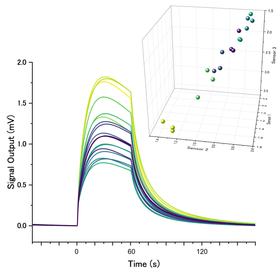
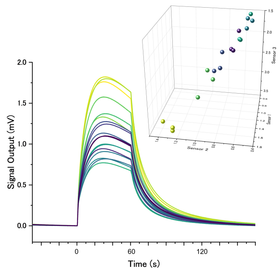
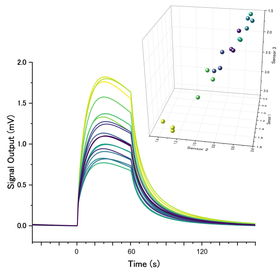
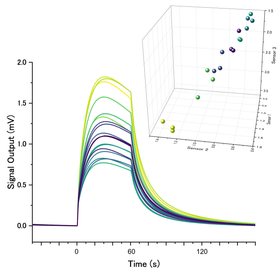
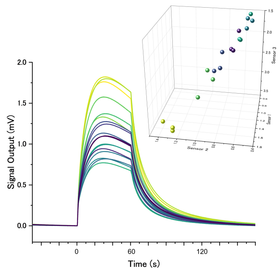
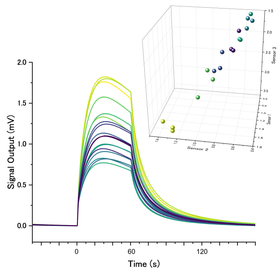
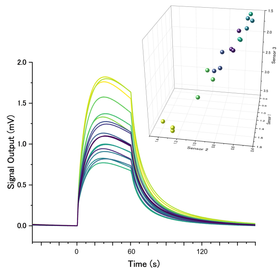
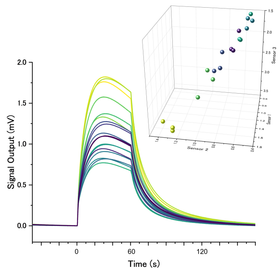
This is a measuring device equipped with 12 channels of MSS that can measure by sucking in odors using a pump. Each of the 12 MSS channels is coated with a different sensing membrane, allowing for the identification of odors through pattern recognition based on their respective responses. It has two suction ports, which are alternately switched to perform "odor introduction" and "sensor cleaning," enabling the acquisition of the "waveform" of the odor, from which odor information is obtained based on the shape of this waveform. Additionally, it is equipped with a temperature and humidity sensor, allowing for the recording of temperature and humidity as well. *Please note that this product includes items still under development, so feel free to contact us for more details.
Added to bookmarks
Bookmarks listBookmark has been removed
Bookmarks listYou can't add any more bookmarks
By registering as a member, you can increase the number of bookmarks you can save and organize them with labels.
Free membership registration
We provide support for the development of odor measurement systems using MSS. Various approaches can be considered, and we will proceed in consultation with our customers. We offer support on a monthly basis or with set goals. Please feel free to contact us if you have any requests. 【Support Details (Partial)】 ■ Verification and development led by our company - Clients send samples - Progress reports from our company through regular and irregular meetings ■ Verification and development led by the client - Experiments conducted in-house using sensors purchased from our company - Advice provided by our company through regular and irregular meetings *For more details, please refer to the PDF document or feel free to contact us.
Added to bookmarks
Bookmarks listBookmark has been removed
Bookmarks listYou can't add any more bookmarks
By registering as a member, you can increase the number of bookmarks you can save and organize them with labels.
Free membership registration
We would like to introduce our "Equipment Analysis (Odor Analysis)." The components of odors are evaluated using a Proton Transfer Reaction Mass Spectrometer (PTR-MS). Unlike sensors, we can identify the components of the odor. Please feel free to contact us if you have any requests. 【Our Policy】 ■ We emphasize scientific validation through component analysis, not just sensor responses. *For more details, please refer to the PDF materials or feel free to contact us.
Added to bookmarks
Bookmarks listBookmark has been removed
Bookmarks listYou can't add any more bookmarks
By registering as a member, you can increase the number of bookmarks you can save and organize them with labels.
Free membership registration
We would like to introduce our "High-Precision Measurement Using MSS." For the samples whose odors we want to measure, we will evaluate how accurately they can be measured with MSS by conducting precise MSS measurements utilizing the measurement know-how we have developed over the years. Based on these results, we will consider how to measure odors using MSS. Please feel free to contact us if you have any requests. 【Our Policy】 ■ Conduct measurements as precisely as possible to evaluate difficulty (strict control of temperature and humidity, using dehumidified and deodorized air for measurements, measurement time of about several tens of minutes per session) ■ Develop products that relax restrictions based on the results of precise measurements to align with actual conditions on-site ■ Evaluate odor components through instrumental analysis (odor analysis) *For more details, please refer to the PDF document or feel free to contact us.
Added to bookmarks
Bookmarks listBookmark has been removed
Bookmarks listYou can't add any more bookmarks
By registering as a member, you can increase the number of bookmarks you can save and organize them with labels.
Free membership registration
The "MSS Simple Measuring Device" is a measuring instrument that can perform measurements by attaching an MSS chip (sensitive film coating) sensor. It connects to a PC via a USB cable, allowing measurements and data storage using dedicated software (included). This product is designed for those who want to try using MSS. Please feel free to contact us if you have any requests. 【Features】 ■ Equipped with one MSS chip ■ Measurement by connecting to a PC with a USB cable ■ Sensor output values can be displayed and saved in a time series *For more details, please refer to the PDF document or feel free to contact us.
Added to bookmarks
Bookmarks listBookmark has been removed
Bookmarks listYou can't add any more bookmarks
By registering as a member, you can increase the number of bookmarks you can save and organize them with labels.
Free membership registration
We would like to introduce the "MSS Chip (Coated with Sensitive Film)" that we handle. This is a membrane-type surface stress sensor with a sensitive film applied. Since it is an analog sensor chip, you will need to design a circuit on your end to perform measurements. Please feel free to contact us if you have any requests. 【Features】 ■ MSS chip with a sensitive film applied ■ Single-channel chip ■ Information on the reading circuit is available ■ Eight types of materials available for sale ■ Suggestions for suitable sensitive films are also possible *For more details, please refer to the PDF document or feel free to contact us.
Added to bookmarks
Bookmarks listBookmark has been removed
Bookmarks listYou can't add any more bookmarks
By registering as a member, you can increase the number of bookmarks you can save and organize them with labels.
Free membership registration
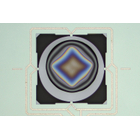
We handle membrane-type surface stress sensors (MSS) that achieve high sensitivity while being ultra-compact, and have chemical diversity that allows for various materials to be used as sensing membranes. The signal is obtained by detecting the stress generated when the central sensing membrane absorbs odor and expands. Additionally, we are engaged in the business of odor sensors centered around membrane-type surface stress sensors (MSS). Please feel free to contact us if you have any inquiries. 【Operating Principle】 1. The sensing membrane absorbs odor 2. The sensing membrane expands 3. Stress is generated 4. The change in resistance of the piezoresistive element is measured *For more details, please download the PDF or feel free to contact us.
Added to bookmarks
Bookmarks listBookmark has been removed
Bookmarks listYou can't add any more bookmarks
By registering as a member, you can increase the number of bookmarks you can save and organize them with labels.
Free membership registration