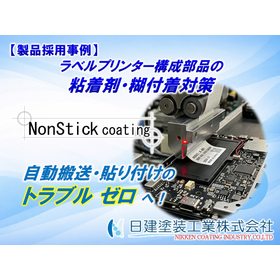
Suppress adhesive transfer and label jams, extending continuous operation time.
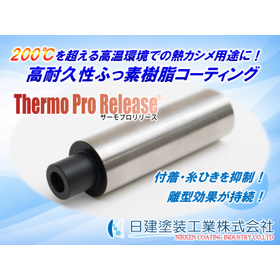
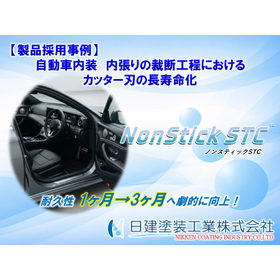
■Do you have any of these concerns? - It takes time to remove or clean contaminants. - I want to reduce the use of release agents, oils, and solvents. ■General measures and criteria for selecting surface treatments In label applicators, adhesives transfer to guides, peeling areas, and receiving parts, leading to wrinkling and clogging. If regular wiping, part replacement, and the use of release sheets still result in re-adhesion in a short period, coatings that excel in adhesive release or coatings that reduce contact area are candidates. We will check the adhesive strength and wear conditions and suggest options such as MRS or TP systems. ■You can consult with us at any stage of your concerns - Even if you haven't decided on the target object or usage conditions, please let us know your concerns. - Based on the information you provide, we will suggest candidates for surface treatments and points to check. - We will propose the provision of test pieces or prototypes depending on the situation. Please contact us first. - If you want to know about the functions and features of surface treatments, please download and view our catalog.

Inquire About This Product
basic information
■Main items to confirm at the time of proposal - Label substrate, adhesive, temperature, speed, contact pressure, material of parts, cleaning solvent, required dimensions ■Processing candidates - MRS coating, TP/Super TP series, thin film non-stick coating, etc. ■Please confirm - We will propose the provision of test pieces and prototypes, including confirmation of the impact on label peeling strength, depending on the situation. Please contact us first. Sharing drawings, photos, target objects, usage conditions, etc., to the extent possible will enhance the accuracy of our proposals.
Price range
Delivery Time
Applications/Examples of results
■Main Use Cases - Labeling machines, sticker transport devices, release plates, guides, receiving jigs. Processes troubled by misalignment due to adhesive contamination, equipment downtime, or wiping tasks. ■Next Steps - If you would like to know more about the functions and features of surface treatment, please download and view the catalog. - Even if you have not yet determined the target objects or usage conditions, please feel free to contact us if you have any concerns.
catalog(1)
Download All Catalogs
Company information

To maximize the performance of manufacturing equipment and machine parts, Yoshida SKT derives the "optimal solution" tailored to our customers from hundreds of surface treatment technologies. - Decreased productivity due to adhesive troubles - Instability in product quality due to friction - Early deterioration of equipment due to corrosion We respond to these challenges in the manufacturing field with our extensive track record and reliable technical expertise. In 1963, we began fluoropolymer processing. In 1968, we signed a licensing agreement with DuPont (now Chemours), supporting manufacturing innovations for over 2,000 customers across various industries, from automotive to medical and aerospace. Furthermore, in 2024, we are focusing on the development of next-generation products, such as PFAS-free coatings, contributing to the advancement of sustainable manufacturing. With a three-base system in Nagoya, Tokyo, and Yamaguchi, we flexibly respond to both mass production and custom orders. Our consistent quality management system ensures that we deliver reliable quality. For solving challenges in the manufacturing field, trust the surface treatment experts at Yoshida SKT.