Storage and Disposal Notifications for PCB Waste
SK-10 | PCB Special Measures Act | PCB waste | Storage and disposal notifications

For PCB waste such as old transformers and ballasts left at your plant. From annual storage notifications to planning disposal.
Old transformers, capacitors and fluorescent-lamp ballasts may contain PCBs (polychlorinated biphenyls). Under the PCB Special Measures Act, disposal deadlines are set for PCB waste, and businesses storing it must notify the storage status every year. The storage location may not be changed freely. Missing the deadline can lead to improvement orders or administrative execution. Because disposal deadlines and contractors differ for high- and low-concentration PCB waste, the first step is to confirm the category of what you store. We help confirm the category of PCB waste from information such as equipment nameplates, prepare the annual storage status notifications, and organize disposal contractors and steps.
Inquire About This Product
basic information
[For] Businesses storing transformers, ballasts or other equipment that may contain PCBs [Services] Confirming the category of stored equipment / annual storage status notifications / checking disposal contractors and organizing steps [Legal basis] Act on Special Measures concerning Promotion of Proper Treatment of PCB Wastes
Price information
We provide a quote based on the number of stored items. Disposal costs are not included. The first consultation is free.
Delivery Time
※Please contact us once you have information on the stored equipment.
Applications/Examples of results
Typical situations: - Old transformers or ballasts remain in your warehouse - You are unsure whether annual notifications have been filed - You do not know whether the PCB is high or low concentration - You want to sort things out before closing or rebuilding a plant
catalog(1)
Download All Catalogs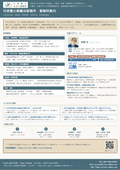
Company information

Our office is run by an administrative scrivener (gyoseishoshi) who completed a master's course at Kyoto University Graduate School of Engineering and then worked as a researcher at a chemical manufacturer, developing cosmetics, detergents, adhesives, semiconductor and optical materials. Hands-on experience also includes SDS preparation, waste liquid management and risk assessment. Because we can read structural formulas, SDSs and process flow diagrams as they are, you do not need to spend time explaining your technology. We prepare documents grounded in both science and law, and handle communication with the authorities. As a Class A Hazardous Materials Engineer and a 1st Grade Certified Skilled Worker of Financial Planning, we also support capital investment subsidies and business plans from the perspective of profitability and cash flow. The first consultation is free.